How Long Does EV Charger Installation Take?
The electrician is on site for a morning. The project takes two to four weeks, because the permit, the inspection and — if your panel is full — the utility all run on their own clocks. Here is how to tell in advance which of those apply to you.
How this is funded: we earn a commission if you buy through our links, at no extra cost to you. It never changes which product we recommend, and we’ll tell you when we’d skip one. Full disclosure.
The electrician is on site for two to six hours. The project usually takes two to four weeks. Both numbers are true at once, and the gap between them is where every frustrated expectation in this category lives. The wiring is a straightforward morning’s work for a qualified electrician. The permit, the inspectionand — if your panel is full — the utility each run on a clock nobody in your house controls.
The good news is that you can tell which path you are on before you book anyone. One question does most of the work: can your existing electrical panel carry the circuit? If yes, you are looking at a short, predictable project. If no, you are in service-upgrade territory and the timeline stops being measurable in weeks.
The stages, and who controls each clock
| Stage | Who does it | How long | What decides it |
|---|---|---|---|
| Quotes and site visit | You and 2-3 electricians | A few days to two weeks | Most of this is scheduling, not work. Getting more than one quote is where the money is saved. |
| Permit application | Your electrician, usually | Same day to several weeks | Entirely jurisdiction-dependent. Some issue over the counter or online; some take weeks. Ask your electrician which yours is. |
| Load calculation and panel check | Electrician | Part of the site visit | Decides whether you need a service upgrade — which is the one finding that changes the whole timeline. |
| The physical install | Electrician | 2-6 hours typical | A short run beside the panel is a morning. A long run, a finished wall or a detached building is a full day or more. |
| Service upgrade, if needed | Electrician + the utility | Weeks to months | A meter swap needs a utility appointment. This is the stage nobody can promise you a date for. |
| Inspection | Local inspector | Days to a few weeks after the work | Scheduled, not instant. In many places the charger can be energised before the inspection; in some it cannot. |
The one finding that changes everything
At the quote stage, ask for the load calculation. This is the arithmetic your electrician performs to the NEC to establish whether your service can carry a new continuous load on top of everything else the house runs. It is not optional and it is not a guess, and the answer sorts you into one of two very different projects.
If the panel has capacity, the job is a breaker, a conductor run, a charger on the wall and a permit. Two to four weeks door to door in most places, and the majority of that is waiting for other people’s calendars rather than work.
If the panel does not, you have three routes and they have very different durations. A subpanelif the service is adequate but the breaker space is gone — days added, not weeks. A charger with load management that throttles itself against whole-home demand, which can avoid the upgrade entirely and is the fastest fix of the three. Or a full service upgrade, which involves the utility, a meter swap and an appointment nobody can promise you. Weeks to months. Our small-panel roundup is the hardware answer to the middle route.
What stretches a straightforward install
Distance.The run from panel to charger is the single biggest variable in the labor. Fifteen feet along an open garage wall is quick. Sixty feet through a finished basement is not, and a long run also needs heavier conductors to hold the voltage drop down. A detached structure is the hardest version — see the detached-garage page.
Finished surfaces. Fishing cable through drywall is slow, occasionally impossible, and sometimes ends in cutting and patching. Exposed conduit on a garage wall is the fast and cheap alternative, and it is worth saying out loud at the quote stage that you are fine with it if you are.
The charger not being there. The most avoidable delay on this page. Order the unit when you accept the quote, and give your electrician the manufacturer’s installation instructionsin advance — that document is the authority on the terminals, the mounting and the circuit the maker specifies, and it occasionally changes what wire gets ordered. It is also where the neutral question gets settled.
Deciding late. Hardwired or plug-in is a conductor decision, and changing your mind after the wire is pulled is the expensive kind of late. Settle it with the comparison first.
The install that takes five minutes
Worth saying clearly, because a lot of people book an electrician who did not need one: if a suitable NEMA 14-50 outlet already exists within cable reach of where you park, there is no install. A plug-in or portable Level 2 charger goes on the wall or in the trunk and works today. No permit, no inspection, no appointment, and the charger comes with you when you move.
The two things to verify are that it is genuinely a 14-50 on its own dedicated circuit — an old dryer outlet is not— and that the receptacle is in good condition, because a worn 50-amp receptacle under a continuous load is a real failure mode. Our NEMA 14-50 guide covers both.
Quick picks
Ranked on published specs, charging speed, electrical fit and value. Select a row to jump to the full write-up. We have not bench-tested these chargers — here is exactly what we do instead.
| # | Product | Best for | Price |
|---|---|---|---|
| 1 | 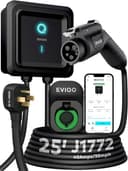 EVIQO 40A NEMA 14-50 Charger The most charger you can get without an electrician's invoice. It plugs into a NEMA 14-50 outlet for a full 40 amps, keeps the WiFi app, the ENERGY STAR listing and the 25 ft cable from EVIQO's hardwired unit, and can be unplugged and taken with you when you move. | No install on an existing 14-50 | |
| 2 | 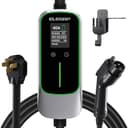 ELEGRP 40A Portable Level 2 Charger The full-speed portable. A genuine 40 amps on a NEMA 14-50, an IP67 station body rated -22F to 122F, and a 25-foot cable - the longest here by five feet - for less than the 32A unit costs. It is the heaviest thing here to coil and there is no app, but if the portable is also going to be your everyday charger, this is the one that does not make you choose. | Cheapest same-day route | $209.99 · View on Amazon Price as of October 18, 2026. #ad How we’re funded |
| 3 | 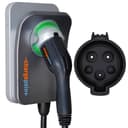 ChargePoint Home Flex The safest default for most homes: you set the amperage in the app to 16, 24, 32, 40, 48 or 50A, so one charger fits whatever circuit your panel can spare today and scales up if you upgrade later. The app is the most mature here, firmware arrives over the air, and the warranty is long. | Fits whatever circuit the quote lands on | $516.71 · View on Amazon Price as of October 18, 2026. #ad How we’re funded |
| 4 | 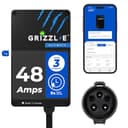 Grizzl-E Ultimate 48A The tank of the 48-amp class: cast-aluminum body, IP67 sealing, a full 11.5 kW, a 25 ft cable built to stay flexible in the cold and a DIP switch instead of a setup wizard. We recorded it as discontinued in August 2026 after its Amazon listing went dark; Grizzl-E sells it and Amazon lists it again as of our 2026-09-28 check, so that record is corrected here. | Hardwired 48 A, no app | $479.99 · View on Amazon Price as of October 18, 2026. #ad How we’re funded |
While you wait
You are not stranded. Nearly every EV ships with a Level 1 cable that works from a standard 120-volt household outlet at roughly 5 miles of range per hour— slow, but around 60 miles overnight, which covers most commutes. Our Level 1 guide is honest about where that stops being enough. If a 240-volt outlet exists anywhere you can park, a cheap portable Level 2 unit bridges the gap properly and remains useful as a travel charger afterwards. And if you are still deciding whether the whole project is worth it, we ran that arithmetic for different mileages rather than assuming the answer.
Frequently asked questions
How long does it take to install a Level 2 EV charger?
The physical work is typically two to six hours -- a short run beside the panel is a morning, and a long run through finished walls or out to a detached garage is a full day or more. The whole project usually runs two to four weeks, because the permit and the inspection are scheduled by your local building department rather than by your electrician. The exception that breaks all of this is a panel with no spare capacity: a service upgrade involves the utility and can take weeks to months, and nobody in the chain can promise you a date for it.
Can an EV charger be installed in one day?
The wiring, often yes. The project, only if no permit is required where you live or the permit is already in hand. The honest framing is that there are two clocks: the electrician's, which is hours, and the jurisdiction's, which is days to weeks. The one genuinely same-day route is a charger that needs no install at all -- a plug-in or portable unit on a NEMA 14-50 outlet that already exists, which takes about five minutes and no appointment.
Do I need a permit to install an EV charger, and does it slow things down?
In most US jurisdictions a new 240-volt branch circuit requires a permit and an inspection, and your electrician normally pulls it. Whether it slows you down is entirely local: some departments issue online or over the counter the same day, others take weeks, and that single variable is the biggest difference between a one-week project and a one-month one. Ask the electrician at the quote stage -- they deal with your building department regularly and will know. Skipping the permit is the wrong saving: an uninspected circuit is the kind of thing a warranty or insurance claim turns on.
What makes an EV charger install take longer?
Four things, in order of impact. A panel with no spare capacity, because that means a service upgrade and the utility's schedule. Distance, because a long run means more conduit, more labor and sometimes a trench. Finished walls, because fishing cable through drywall is slow and sometimes means cutting and patching. And a detached garage, which is all three at once. Our detached-garage and panel-capacity pages cover the two biggest ones in detail.
Should I buy the charger before or after booking the electrician?
Buy it when you accept the quote. An electrician standing in your garage waiting for a delivery is a wasted appointment and sometimes a second call-out fee, and the unit's own installation instructions are a document your electrician genuinely wants in advance -- it is the authority on the terminals, the mounting and the circuit the manufacturer specifies. If you have not decided which charger yet, our choosing guide is the right order to think about it.
Can I charge my EV while waiting for the install?
Yes, on Level 1, from a standard 120-volt outlet with the cable most EVs come with. It is slow -- roughly 5 miles of range per hour -- but for a typical commute it keeps up overnight, and it is the reason an install delay is an inconvenience rather than a crisis. A cheap portable Level 2 charger is the other bridge if a 240-volt outlet exists anywhere you can park, and it stays useful afterwards as a travel charger.
Sources
- NFPA — Using the Latest NEC for EV Charger Installations — NFPA on NEC (NFPA 70) Article 625: EV charging is a continuous load, so circuits are sized to 125% of load (the 80% rule) (accessed July 19, 2026)
- U.S. DOE Alternative Fuels Data Center — Charging Electric Vehicles at Home — US DOE on home EV charging: most owners charge overnight on Level 1 or Level 2, installs follow NEC Article 625, with example home-charging costs (accessed July 19, 2026)
- U.S. DOE Alternative Fuels Data Center — Electric Vehicle Charging Stations — US DOE on charging levels: Level 1 (~1.9 kW, ~5 mi/hr), Level 2 (2.9-19.2 kW, ~7.2 kW typical residential, ~25 mi/hr), and DC fast charging (accessed July 19, 2026)
- U.S. Bureau of Labor Statistics — Occupational Employment and Wage Statistics, Electricians (47-2111) — BLS's official May 2025 OEWS estimates for electricians (SOC 47-2111): 757,220 employed nationally, mean hourly wage $34.37, mean annual wage $71,490 and median annual wage $63,190. The state-level mean hourly wages used in our table were pulled series by series from the BLS public data API (api.bls.gov/publicAPI/v2, OEWS state series for occupation 47-2111, data type 03 'hourly mean wage', survey year 2025) on the date accessed, covering all 50 states and the District of Columbia (accessed September 3, 2026)
- ChargePoint — Home Flex datasheet (PDF) — ChargePoint's own datasheet: enclosure rating Type 3R per UL 50E, operating temperature -22F to 122F, 23 ft cable, plus installer notes that an outdoor plug-in install requires an outdoor-rated GFCI breaker upstream while an external GFCI may conflict with the charger's internal ground-fault protection on a hardwired install. RE-READ September 3, 2026 for the review refresh: the same datasheet also publishes maximum 12 kW (240V AC x 50A) with output amperage adjustable via the mobile app to 16A, 24A, 32A, 40A, 48A or 50A; a required dedicated dual-pole breaker rated for 125% of maximum load; 'Software Updates: Firmware updated over-the-air (OTA)'; 2.4/5 GHz Wi-Fi (802.11 a/b/g/n); local storage of up to 90 days of charging session data (100 sessions) if the network drops; power measurement accuracy +/- 2.0%; ground-fault detection by 20 mA CCID with auto retry; and UL and cUL listing per UL 2594, UL 2231-1 and UL 2231-2, NEC Article 625 compliant. Ordering information lists the plug-in station models CPH50-NEMA6-50-L23 and CPH50-NEMA14-50-L23 (accessed September 3, 2026)
- EVIQO — Level 2 EV Charger, 40A (9.6 kW), NEMA 14-50 plug-in (Gen 2) — EVIQO's own product page: 40A / 9.6 kW on a NEMA 14-50 plug, SAE J1772, 25 ft charging cable plus a 40 in input cable, IP66 / NEMA 4 enclosure, UL / ETL / FCC / ENERGY STAR listings, 3-year standard warranty, app-adjustable 6-40A output, and a note that it needs an EV-grade 4-prong 14-50 receptacle rather than a dryer outlet. RE-READ September 15, 2026 for the garage roundup: the page additionally states an operating temperature range of -22F to 122F, that the app needs a 2.4 GHz WiFi connection, that the standard 3-year warranty is extendable to 4, and that the unit ships in 1-2 business days (accessed September 15, 2026)
- ELEGRP Store - 40A Level 2 portable J1772 EV charger (NEMA 14-50) — ELEGRP's own listing: 40 A / 9.6 kW on 240 V AC at 50/60 Hz with selectable output at 16, 20, 24, 32 or 40 A, SAE J1772 connector on a NEMA 14-50 plug ('For NEMA 14-50 Outlets Only'), 25 ft cable (16 ft and 21 ft also offered), IP67 charging station and IP54 connector, operating range -22F to +122F (-30C to +50C), 1-to-12-hour delayed-start timer, 2-year warranty, 'ETL & UL' listed. RE-READ September 5, 2026 for the review: the specification table is unchanged, and the page additionally states 'Fully ETL certified and built with UL-listed components - including the J1772 plug, cable, and NEMA 14-50 connector', a built-in display reporting charging current, voltage, total energy delivered (kWh) and internal temperature with LED fault patterns, a wall-mounted holder plus anchors and a carry bag in the box, Tesla compatibility via a J1772-to-NACS adapter sold separately, a 30-day return window and 60-day price protection. The page does not name the UL standards, publish a weight, publish an ENERGY STAR certification, or publish app support for this SKU, and its marketing copy carries two conflicting range claims ('Up to 37 Miles/H' and '30 Miles Per Hour') plus an operating range ('-21F to 121F') that disagrees with its own specification table (accessed September 5, 2026)
- United Chargers — Grizzl-E Ultimate 48A specifications — Grizzl-E's own spec page for the Ultimate 48A: 11.5 kW max output on J1772 or NACS, aluminum enclosure, 25 ft output cable, 208-240 VAC, selectable 48/40/32/24/16 A input current, operating temperature -30C to +50C (-22F to 122F), IP67 protection, LED indicator, DIP-switch power selector, hardwire-only install. RE-CHECKED September 28, 2026: every spec above is unchanged, and the page sells the Ultimate 48A at $383.99 with a J1772 or a NACS connector, listed alongside the 80A / 19.2 kW unit rather than replaced by it. This corrects our August 20, 2026 note, which recorded the 48A as no longer sold on the strength of a dead Amazon listing. RE-READ October 17, 2026 for the EVIQO head-to-head, and the page HAS CHANGED in two ways worth recording. (1) Connectivity is now published: the smart-function row reads 'Wi-Fi (2.4 GHz); Mobile Application' and the communication-protocol row reads 'OCPP', where our September reading of this same page published no app support for the unit. (2) The enclosure row now reads 'UL Type 4 Indoor/Outdoor Rating' with no IP figure alongside it, where the September reading carried IP67. Also published on this visit: an adjustable-current list of '40A, 32A, 24A, 16A' (the 48 A headline is not repeated in that list), 'Hardwire Only', a 25 ft output cable, -30C to +50C (-22F to 122F), 'UL E510712', enclosure dimensions of 10.25 x 6.25 x 3.75 in, a unit weight of 11.00 kg / 24.25 lbs, country of origin Canada, a price of $479.99, SKU GRS-HW-25NACS48-B, and a warranty selector offering '3 Year' or '5 Year' without stating what either covers. No ETL and no ENERGY STAR certification is published, and no Alexa, Google Home, HomeKit, Matter or Home Assistant integration is published (accessed October 17, 2026)
Keep reading
What the electrician actually does
The install itself, step by step, so you know what you are watching and what to ask while they are still on site.
Read the guidePermits and inspection
The half of the timeline your electrician does not control, and why skipping it is the wrong saving.
Read the guideWill your panel carry it?
The load calculation that decides whether you are on the two-week path or the three-month one.
Read the guideWhat it costs
The install-cost breakdown component by component, and which parts of the timeline cost money rather than just time.
Read the guide