Lectron Nexus 48A vs Grizzl-E Ultimate
Both are hardwired, both deliver a full 48 amps, both go on an outdoor wall, and both sit within about thirty dollars of each other. What separates them is not quality - it is which half of the spec sheet each brand chose to fill in, and the two halves barely overlap.
How this is funded: we earn a commission if you buy through our links, at no extra cost to you. It never changes which product we recommend, and we’ll tell you when we’d skip one. Full disclosure.
Buy the Lectron Nexus 48A for the paperwork and the Grizzl-E Ultimate 48A for the hardware. That is an unusual way to settle a comparison, and it is the honest one here, because these two chargers are electrically the same purchase. Both are hardwired. Both publish a full 48 amps and about 11.5 kW. Both go on an outdoor wall. Both ask for the same 60-amp circuit. Neither is faster, and neither is cheap or expensive relative to the other — they sit within a few percent on price.
What separates them is which half of the spec sheet each brand bothered to fill in. Lectron publishes a warranty term, three named UL standards and an ENERGY STAR certification, and publishes no temperature range, no dimensions, no weight and no app. Grizzl-E publishes a temperature range, a weight, an enclosure size, a country of origin, WiFi, an app and OCPP — and publishes no ENERGY STAR, no standards behind its UL file number, and a warranty you select at checkout without being told what it covers. The two blank halves barely overlap, which makes this the clearest what-do-you-care-about decision on the site.
Quick picks
Ranked on published specs, charging speed, electrical fit and value. Select a row to jump to the full write-up. We have not bench-tested these chargers — here is exactly what we do instead.
| # | Product | Best for | Price |
|---|---|---|---|
| 1 | 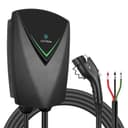 Lectron Nexus 48A J1772 A full 48 amps with nothing to log into. Lectron's Nexus body is IP66-sealed for an outdoor wall, the cable is a heavy 15 mm compound the brand says is built to stay flexible in freezing weather, and the safety paperwork is the real thing — ETL to UL 2594/2231/2251, plus ENERGY STAR. Hardwired only, and there is no app, which is the entire point. | Best paperwork | $449.99 · View on Amazon Price as of November 12, 2026. #ad How we’re funded |
| 2 | 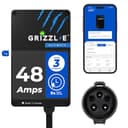 Grizzl-E Ultimate 48A The tank of the 48-amp class: cast-aluminum body, IP67 sealing, a full 11.5 kW, a 25 ft cable built to stay flexible in the cold and a DIP switch instead of a setup wizard. We recorded it as discontinued in August 2026 after its Amazon listing went dark; Grizzl-E sells it and Amazon lists it again as of our 2026-09-28 check, so that record is corrected here. | Best published hardware | |
| 3 | 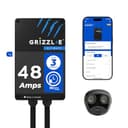 Grizzl-E Ultimate 48A NACS The same cast-aluminum Canadian tank as the J1772 Ultimate, ordered with a Tesla-style NACS cable instead of a J1772 one — which on a charger you are bolting to a wall for ten years is worth more than an adapter that works. A full 48 amps, a 25 ft cable rated to -22F, Wi-Fi and OCPP. What Grizzl-E will not tell you is what its warranty covers. | Same unit, Tesla plug | |
| 4 | EVIQO 48A Level 2 Charger A lot of charger for the money: a full 48 amps, WiFi with scheduling, ENERGY STAR, and the longest usable reach in this group thanks to a 25 ft cable plus a 40-inch input lead. A strong value alternative to Emporia if you want maximum reach. | Best value alternative |
| Spec | Lectron Nexus 48A | Grizzl-E Ultimate 48A |
|---|---|---|
| Rated output | 48 A / 11.52 kW at 240 V | “Max power 48A 11.5 kW” |
| Install | Hardwired only, “licensed electrician on a dedicated 240V circuit” | “Plug type Hardwire Only” |
| Adjustable current | Not published — 48 A is the only figure on the page | “Adjustable current 40A, 32A, 24A, 16A” (48 is not repeated in that list) |
| Output cable | 23 ft, “heavy-duty 15.0mm (±0.3mm) thick cable” | “Output cable length 25ft (7.6m)” |
| Enclosure rating | “IP66-rated, automotive-grade housing” | “Protection UL Type 4 Indoor/Outdoor Rating” — no IP figure published |
| Operating temperature | Not published. The page names rain, snow, heat and dust without a number | “Operating temperature -30C .. +50C (-22F .. 122F)” |
| Safety listing | ETL listed to UL 2594, UL 2231 and UL 2251 | “Certifications UL E510712” — a file number, no standards named |
| ENERGY STAR | Published | Not published on either of Grizzl-E's pages for this unit |
| WiFi / app | Not published — no WiFi, no app, no account | “Smart function Wi-Fi (2.4 GHz); Mobile Application” |
| Open protocol | Not published | “Communication OCPP” |
| Warranty | 3 years, stated as a single term | A “3 Year” / “5 Year” checkout selector, with no terms published for either |
| Size and weight | Not published | Enclosure 10.25″ x 6.25″ x 3.75″; “Weight 11.00 kg / 24.25 lbs” |
| Body and origin | Not published beyond “automotive-grade housing” | “Material Aluminum Enclosure”; “Country of origin Canada” |
One thing changed under the Grizzl-E this year
Before the differences, a correction that affects anything you read about this unit written before autumn 2026 — including earlier pages on this site.
The Grizzl-E Ultimate 48A is now a connected charger.When we read Grizzl-E’s own spec page in September 2026 it published no WiFi, no app and no protocol for this SKU, and the unit’s reputation — a cast-aluminum tank with a DIP switch and nothing to log into — was built on that. Today the same page publishes “Smart function Wi-Fi (2.4 GHz); Mobile Application” and “Communication OCPP”, and Grizzl-E’s own overview page describes it under an “Always connected” heading with charging statistics, schedules, cost tracking and remote management. We re-read both pages on October 31, 2026 and the rows are there.
One other row moved at the same time: the enclosure. It used to read IP67 and now reads “UL Type 4 Indoor/Outdoor Rating”with no IP figure beside it. Those are not the same claim stated two ways — NEMA itself says its NEMA-to-IP table cannot be used to convert IP designations back into NEMA types — and we report what the page says now rather than carrying forward the figure it used to say. Our NEMA and IP ratings guide explains why the two systems do not translate cleanly in either direction.
The practical consequence: if the no-app simplicity of the old Ultimate is what you wanted, the Ultimate is no longer the unit that offers it and the Lectron is. That is the first real difference between these two, and it is the opposite of how this matchup read a year ago.
Difference one: who publishes a warranty you can read
This sounds like boilerplate. It is the sharpest difference on the page, and it is the one we would weigh most heavily on a device you are bolting to a wall for a decade.
Lectron publishes a flat three-year warranty as a single stated term. Grizzl-E publishes a selector.Its own product page offers “3 Year” or “5 Year” at checkout and does not state what either covers, which components are included, or how a claim is made. A choice at a checkout is a purchase option, not a published warranty, so we record it as not published — the same way we record it for the two units in our registry that publish no term at all.
Note what this is not: it is not a claim that Grizzl-E honors fewer repairs. We own no units and test none, and we are not in a position to tell you how either company behaves when something fails. What we can tell you is which of the two lets you read the terms before you spend the money, and that is Lectron. Our longest-warranty roundup puts every published term in the registry in one table, which is the fastest way to see how unusual a selector-without-terms is in this category.
Difference two: whose laboratory, and which standard
Both units are genuinely certified. The disclosure behind the certification is not equally detailed, and the difference matters for a specific, unglamorous reason: rebate paperwork.
Lectron publishes ETL listing against three standards — UL 2594, UL 2231 and UL 2251. That is the fullest disclosure of any value charger we track. UL 2594 is the EV supply equipment standard, UL 2231 covers personnel protection, and UL 2251 covers the connector— the part you handle every night, and the part most brands never name a standard for. Lectron also publishes ENERGY STAR and FCC certification.
Grizzl-E publishes a UL file number, “UL E510712”, and no standards alongside it. A file number is a real listing and we treat it as one, but it is a thinner disclosure: it tells you the unit is in UL’s system without telling you what it was tested to. And Grizzl-E publishes no ENERGY STAR certification for the Ultimate on either of its own pages for it.
That last line is the one with money attached. ENERGY STAR is the most common eligibility filter in utility rebate programs, and it appears in the paperwork for the federal credit as well. On a program worth a few hundred dollars, a missing ENERGY STAR line can outweigh every other difference in this comparison — so check your own utility’s qualifying list before you decide, because that list, not this page, settles it. Our certifications guide explains what each mark is actually worth.
Difference three: the cold, and a number nobody published
Grizzl-E publishes an operating range of -30°C to +50°C (-22°F to 122°F). Its own manual for the Classic publishes the same range and adds a humidity figure of 95% RH non-condensing. Lectron publishes no temperature range for the Nexus 48A at all. Its page names rain, snow, heat and dust and attaches no number to any of them.
We treat that absence as a finding rather than a failure, and it has a concrete consequence on this site: the Lectron is deliberately kept off our cold-weather roundup, whose table quotes published figures only. If the charger is going on an exterior wall in a climate with real winters, buy the unit that told you where it stops.
In fairness to Lectron, the one cold-weather claim it doespublish is about the part that actually fails first: its 23-foot cable is a 15.0 mm (±0.3 mm) heavy-duty compound the brand says is “engineered to stay flexible and easy to wrap around the wall mount, even in freezing weather.” Anyone who has wrestled a stiff charging cable at 10°F knows that is not a trivial feature. It is a claim about the cord, though, not a rating for the electronics, and we do not treat the two as interchangeable.
Difference four: two feet of cable, and what it is worth
Grizzl-E publishes 25 feet; Lectron publishes 23. Two feet sounds like nothing and is occasionally the whole purchase.
The reason is that a charging cable does not have to reach the parking space — it has to reach the charge port, which on different cars sits at the left front, the right front or the rear quarter, and which may be facing away from the wall. A 23-foot cable mounted two feet too far down the garage is a cable you fight every night. Twenty-five feet is also, as far as we can find, the ceiling in this market: no home charger from any brand we track publishes more. If your run is marginal, our long-cable roundup and our placement and mounting guide are the two pages to read before anyone drills a hole.
Grizzl-E also publishes the only physical figures in this comparison — an enclosure of 10.25″ × 6.25″ × 3.75″ and a weight of 24.25 lbs — against nothing at all from Lectron. On a tight garage wall, or beside a door that has to clear the unit, published dimensions are worth having, and 24 pounds of cast aluminum on an exterior wall is a mounting consideration rather than a detail.
Where the money goes, and the third option
These two land close enough on price that we will not try to resolve it in prose — the live figures are in the table above, from our price layer, and they move. What is worth saying is that neither one is the value play in this class. The EVIQO 48Asits in the same tier with an app, a 25-foot cable on a 40-inch input lead, an IP66/NEMA 4 enclosure and an ENERGY STAR line — which is why it is in the buy table above as the alternative, and why Grizzl-E vs EVIQO is the comparison to read if the Grizzl-E is the one tempting you.
One more route worth naming, because it is the same hardware: Grizzl-E sells the Ultimate 48A with a NACS output cable as well as a J1772 one, at the same price and on the same spec page. If you drive a Tesla or another NACS-port car, that is the version to buy, and it is in the table above. Our NACS roundup covers that whole field and the cars it now applies to. Lectron does the same thing one model over with the Nexus NACS— which, unlike the J1772 Nexus, publishes an IP66 rating and is the only native-NACS unit we track with a full warranty term, three UL standards and ENERGY STAR together.
So: which one
Buy the Lectron Nexus 48Aif you want to know what you bought. A stated three-year term, three named UL standards including the connector, ENERGY STAR for the rebate form, and an IP66 body. You give up the app, the OCPP support, two feet of cable, any published temperature range and any published dimensions — and if your car schedules its own charging, which most do, the missing app costs you per-session energy data and very little else. Our smart versus dumb comparison argues that properly.
Buy the Grizzl-E Ultimate 48Aif you want the charger that tells you how it behaves in the physical world: a published cold range to -22°F, a cast-aluminum Canadian enclosure with a published weight and size, 25 feet of cable, a DIP-switch amperage list, WiFi, an app and OCPP — the open protocol almost nobody in this class publishes, and the one that keeps the unit useful if the brand’s own app ever goes away. You give up ENERGY STAR, which may cost you a rebate, and you buy a warranty whose terms you cannot read first.
Buy neither if you do not already have 60 amps of panel capacity to commit. Both of these are hardwired fixtures that need a 60-amp circuitby the NEC’s 125% continuous-load rule, and in a house where that is a stretch, a 40-amp charger on an existing 50-amp circuit delivers 34 miles of range per hour against 40, costs less, and needs no electrician at all if the outlet is already there. Check what your panel has spare before you choose between these two, not after.
Frequently asked questions
Is the Lectron Nexus 48A or the Grizzl-E Ultimate faster?
Neither. Both publish a full 48 amps at 240 volts — Lectron states 11.52 kW and Grizzl-E states 11.5 kW, which is the same number rounded differently. By our arithmetic at a reference of about 3.5 miles per kWh, that is roughly 40 miles of range per hour from either unit, and both need the same 60-amp circuit to deliver it. Any difference you notice in practice will come from your car's onboard charger, not from these two boxes.
Does the Grizzl-E Ultimate have an app?
Yes, and this changed during 2026 — which is worth knowing if you are reading older reviews, including ours. Grizzl-E's own spec page for the Ultimate 48A now publishes 'Smart function Wi-Fi (2.4 GHz); Mobile Application' and 'Communication OCPP', where the same page published no app support when we read it in September 2026. Our October 31, 2026 reading confirms it again. The Lectron publishes none of the three: no WiFi, no app, no protocol.
Which one is better outdoors?
Grizzl-E, on published evidence, and the reason is a temperature range rather than a water rating. Both are sold for outdoor walls — Lectron publishes an IP66 housing and Grizzl-E publishes 'UL Type 4 Indoor/Outdoor Rating' — but Grizzl-E also publishes an operating range of -30C to +50C (-22F to 122F) and Lectron publishes no temperature figure at all for the Nexus 48A. That absence is why we keep the Lectron off our cold-weather roundup, whose table quotes published numbers only. It is not evidence the Lectron fails in the cold; it is evidence nobody has told us where it stops.
What does Grizzl-E's warranty actually cover?
Grizzl-E does not say, and that is the single sharpest mark against it. Its own product page offers a '3 Year' or '5 Year' selector at checkout without stating what either term includes, which parts are covered or what the claim process is. A selector is not a published warranty, so we record it as not published. Lectron publishes a flat three-year warranty as a single term. If the length of cover is what you are weighing, our longest-warranty roundup has the whole registry in one table — and names the two units that publish no term at all.
Does either one let me set the amps lower?
Grizzl-E publishes a list and Lectron does not. Grizzl-E's spec row reads 'Adjustable current 40A, 32A, 24A, 16A', set with a DIP switch inside the unit — note that the 48-amp headline is not repeated in that list, which is a quirk of its own published spec rather than a limit we have tested. Lectron publishes 48 amps as the only figure on the page, with no selectable range. On a correctly sized 60-amp circuit that distinction never comes up; on an undersized or shared circuit it decides the purchase, and our load-management guide covers when it matters.
Which should I buy?
Buy the Lectron if you want the paperwork: a stated warranty term, three named UL standards including the one that covers the connector, and ENERGY STAR certification, which is the usual eligibility filter for utility rebates. Buy the Grizzl-E if you want the hardware and the data: a published cold-weather range, a cast-aluminum Canadian body with a published weight, WiFi, an app and OCPP. The rebate question is the practical tiebreaker — on a few hundred dollars of utility money, the ENERGY STAR line can outweigh everything else on this page.
Do both need a 60-amp circuit?
Yes, and neither brand says so on its own page — this is our arithmetic from the code, which we would rather show than assert. The NEC treats EV charging as a continuous load, so the circuit must be rated for 125% of the charger's output: 48 x 1.25 is 60, which is a standard breaker size. Lectron publishes only 'a dedicated 240V circuit' and Grizzl-E publishes no circuit figure at all, so in both cases the 60 comes from the rule rather than from the maker. Our wire-size and breaker guide works through the conductors that go with it.
Sources
- Lectron — NEXUS Level 2 J1772 EV Charging Station, 240V, 48 Amp, Hardwired — Lectron's own product page: up to 48 A continuous at 240 V for 11.5 kW, hardwire-only install by a licensed electrician on a dedicated 240 V circuit, IP66 weatherproof housing for indoor or outdoor use, 23 ft output cable of 15.0 mm (±0.3 mm) heavy-duty compound the brand states is 'engineered to stay flexible and easy to wrap around the wall mount, even in freezing weather', wall-mount J-hook and plug holder included, ETL listed to UL 2594 / UL 2231 / UL 2251 with ENERGY STAR and FCC certification, and a 3-year Lectron warranty. No operating-temperature range and no Wi-Fi or app support are published for this model. RE-READ October 31, 2026 for the Grizzl-E head-to-head and every figure above verified again, with the rated output now also given precisely as '11.52 kW' alongside the rounded 11.5. The ABSENCES are what this page contributes to that comparison, and there are six of them: Lectron publishes NO adjustable or selectable current list (the 48 A rating is the only figure), NO breaker or circuit amperage beyond 'a dedicated 240V circuit', NO operating-temperature range (the page names rain, snow, heat and dust without a number), NO Wi-Fi or app support, NO dimensions or weight, and no conductor gauge or jacket material behind the 15.0 mm cable thickness. One disambiguation worth recording: the UL 2252 figure that appears on this page belongs to a separately sold Vortex Plus adapter, not to the charger, whose listings are ETL to UL 2594, UL 2231 and UL 2251. Lectron's own price on this visit was $419.99 against a $479.99 list (accessed October 31, 2026)
- United Chargers — Grizzl-E Ultimate 48A specifications — Grizzl-E's own spec page for the Ultimate 48A: 11.5 kW max output on J1772 or NACS, aluminum enclosure, 25 ft output cable, 208-240 VAC, selectable 48/40/32/24/16 A input current, operating temperature -30C to +50C (-22F to 122F), IP67 protection, LED indicator, DIP-switch power selector, hardwire-only install. RE-CHECKED September 28, 2026: every spec above is unchanged, and the page sells the Ultimate 48A at $383.99 with a J1772 or a NACS connector, listed alongside the 80A / 19.2 kW unit rather than replaced by it. This corrects our August 20, 2026 note, which recorded the 48A as no longer sold on the strength of a dead Amazon listing. RE-READ October 17, 2026 for the EVIQO head-to-head, and the page HAS CHANGED in two ways worth recording. (1) Connectivity is now published: the smart-function row reads 'Wi-Fi (2.4 GHz); Mobile Application' and the communication-protocol row reads 'OCPP', where our September reading of this same page published no app support for the unit. (2) The enclosure row now reads 'UL Type 4 Indoor/Outdoor Rating' with no IP figure alongside it, where the September reading carried IP67. Also published on this visit: an adjustable-current list of '40A, 32A, 24A, 16A' (the 48 A headline is not repeated in that list), 'Hardwire Only', a 25 ft output cable, -30C to +50C (-22F to 122F), 'UL E510712', enclosure dimensions of 10.25 x 6.25 x 3.75 in, a unit weight of 11.00 kg / 24.25 lbs, country of origin Canada, a price of $479.99, SKU GRS-HW-25NACS48-B, and a warranty selector offering '3 Year' or '5 Year' without stating what either covers. No ETL and no ENERGY STAR certification is published, and no Alexa, Google Home, HomeKit, Matter or Home Assistant integration is published. RE-READ October 24, 2026 for the NACS roundup: every row above is unchanged, the displayed SKU is still the NACS one (GRS-HW-25NACS48-B), and the description still states the unit is 'Available with a J1772 or NACS output cable'. What this visit adds is the shape of Grizzl-E's wider lineup, published in the page's own product rail: 'Grizzl-E Classic Connect 40A Plug-in J1772 / NACS' at $349.99, 'Grizzl-E Duo Connect 40A Plug-in J1772 / NACS' at $899.99, 'Grizzl-E Mini Connect 40A Plug-in J1772 / NACS' at $479.99, 'Grizzl-E Ultimate 80A Hardwire J1772 / NACS' at $899.99, and 'Grizzl-E Classic 40A Plug-in' at $299.99 - the last of these being the ONLY model in the rail with no NACS option named, and also the only one without 'Connect' in its name. The page also publishes a '~7.5 hours' to-full figure and a '-30C to +50C' all-weather line in marketing copy alongside the spec rows. RE-READ October 31, 2026 for the Lectron head-to-head. Every spec row is unchanged from the October readings and is quoted here as the page renders it: 'Max power 48A 11.5 kW', 'Plug type Hardwire Only', 'Connector J1772; NACS', 'Protection UL Type 4 Indoor/Outdoor Rating', 'Communication OCPP', 'Certifications UL E510712', 'Smart function Wi-Fi (2.4 GHz); Mobile Application', 'Adjustable current 40A, 32A, 24A, 16A', 'Output cable length 25ft (7.6m)', 'Operating temperature -30C .. +50C (-22F .. 122F)', 'Material Aluminum Enclosure', 'Country of origin Canada', 'Weight 11.00 kg / 24.25 lbs', 'Enclosure dimensions 10.25" x 6.25" x 3.75"', and a '3 Year' / '5 Year' warranty selector. Two additions this visit: a MODEL NUMBER distinct from the SKU - 'GRS-077-W-HW-25N48-A-GB' against SKU 'GRS-HW-25NACS48-B' - and a second color option, 'Ultra' alongside 'Black'. The dimensions row carries shipping measurements (L 340 mm / 13.39 in, W 245 mm / 9.65 in, H 395 mm / 15.55 in) that are LARGER than the enclosure-dimensions row, so the two are not interchangeable. Still NOT published anywhere on the page, re-confirmed: IP67, ETL, ENERGY STAR, and any warranty terms behind either selector option. Price $479.99 (accessed October 31, 2026)
- United Chargers - Grizzl-E Ultimate 48A product overview — Grizzl-E's own overview for the Ultimate 48A, read alongside the spec page on the same visit and describing only ONE version of the unit - the connected one. It calls the Ultimate 'a smart Wi-Fi-enabled Level 2 EVSE' and states 'Grizzl-E Ultimate connects to Wi-Fi and the Grizzl-E Connect Application', with charging statistics, schedules, cost tracking, remote control and management under an 'Always connected' heading; the smart-function row again reads 'Wi-Fi (2.4 GHz); Mobile Application' and the protocol row 'OCPP'. Current is published as 'Adjustable current: 40A, 32A, 24A, 16A' against a '48A 11.5 kW' headline, the enclosure as 'UL Type 4 Indoor/Outdoor Rating' with no IP figure, the plug type as 'Hardwire Only', and the output cable as J1772 or NACS. The warranty selector again offers '3 Year' and '5 Year' without saying what either includes. No DIP switch is mentioned anywhere on this page, and no Alexa, Google Home, HomeKit, Matter or Home Assistant integration is published (accessed October 17, 2026)
- United Chargers — Grizzl-E Classic 40A user manual, V3.5 (PDF) — Grizzl-E's own manual: 'Installation Rating: NEMA 4, Indoor/Outdoor Rated'; 'Operational Ratings - Temperature: -22F to 122F (-30C to 50C); Humidity: 95% RH non-condensing'; a warranty caution that 'the waterproof rating of the enclosure cannot be guaranteed if the charger is mounted upside down'; and, on GFCI, 'The Charging Unit has a built in GFCI protection; Additional downstream GFCI is not required' followed by 'In locations where GFCI at the outlet is mandated by code, install a 20mA GFCI Breaker. A 5mA GFCI Breaker may cause disruptions to the charger function.' URL REPAIRED by the 2026-10-26 content audit: the V2.5 path this entry cited since launch now returns 404, and Grizzl-E's own user-manuals index links this V3.5 document instead. Every figure above was re-verified in V3.5 on that date, so no claim on any page citing this source changed (accessed October 26, 2026)
- ENERGY STAR — Electric Vehicle Chargers — ENERGY STAR on EVSE efficiency: certified chargers use about 40% less energy in standby than non-certified units (accessed July 19, 2026)
- UL Solutions — EV Charging Infrastructure Services — UL on EVSE safety certification: ANSI/UL 2594 is the Standard for Electric Vehicle Supply Equipment (accessed July 19, 2026)
- NEMA — Enclosure Types (definitions from NEMA 250) — NEMA's own definitions: Type 3R protects against falling dirt and rain, sleet and snow; Type 4 adds windblown dust, splashing and hose-directed water; Type 4X adds protection against corrosion. NEMA also states its NEMA-to-IP table cannot be used to convert IP designations back to NEMA types (accessed July 20, 2026)
- IEC 60529 — Degrees of protection provided by enclosures (IP Code), full text — The IP code standard (verbatim national adoption, IS/IEC 60529:2001): first numeral 6 = dust-tight; second numeral 6 = protected against powerful water jets; second numeral 7 = protected against temporary immersion, and a 7 alone does not imply water-jet protection unless dual coded (accessed July 20, 2026)
- NFPA — Using the Latest NEC for EV Charger Installations — NFPA on NEC (NFPA 70) Article 625: EV charging is a continuous load, so circuits are sized to 125% of load (the 80% rule) (accessed July 19, 2026)
- U.S. DOE Alternative Fuels Data Center — Electric Vehicle Charging Stations — US DOE on charging levels: Level 1 (~1.9 kW, ~5 mi/hr), Level 2 (2.9-19.2 kW, ~7.2 kW typical residential, ~25 mi/hr), and DC fast charging (accessed July 19, 2026)
- FuelEconomy.gov — Electric Vehicles: Learn More About the Label — DOE/EPA on EV efficiency: kWh per 100 miles and MPGe, accounting for AC charging losses (accessed July 19, 2026)
- U.S. DOE Alternative Fuels Data Center — Utility Incentives — DOE's catalog of utility incentives by customer type: 114 utilities listed offering residential Level 2 charging station purchase rebates and 74 offering Level 2 installation rebates, plus make-ready/pre-wiring rebates, managed-charging programs and EV time-of-use rates. RE-READ September 3, 2026: the residential counts were unchanged at 114 participating utilities for the EV Level 2 Charging Station Purchase Rebate and 74 for the EV Level 2 Charging Station Installation Rebate, alongside 17 for the Make-Ready or Pre-Wiring Rebate for EV Chargers, 109 for the EV Time-of-Use (TOU) Rate and 9 for the EV Managed Charging Program (accessed September 3, 2026)
Keep reading
Best 48-amp chargers
The whole 48-amp class ranked, and the 60-amp circuit every one of them depends on.
See the picksLectron vs Emporia
The same no-software charger against the app-first value pick, where Emporia's own footnotes do the arguing.
Read the comparisonBest 50-amp chargers
The tier above this one, and why its two extra amps cost a 70-amp circuit for under two miles of range an hour.
See the picksGrizzl-E Ultimate review
The cast-aluminum 48-amp unit in full, including the warranty selector and what it does not tell you.
Read the reviewLectron Nexus 48A review
Every published spec on the no-app 48-amp unit, the charging math, and the figures Lectron leaves blank.
Read the reviewLongest-warranty chargers
Every published term in the registry in one table — and the units that publish none, which is the crux here.
Compare warranties