Level Two Club

Best 'Dumb' EV Chargers (No App, No Account)

A charger with no radio in it cannot lose your WiFi password, cannot be orphaned when the app is discontinued, and cannot update itself into a worse state overnight. For a large number of households that is not a compromise — it is the specification.

By Stephen V.Last updated How we pick

The whole market pushes toward connected hardware, and the argument for it is real: scheduling, energy data, remote control, utility programs. But it rests on an assumption worth testing — that you need the charger to do the scheduling.

Nearly every EV sold can be given a departure time or a charging window in the car’s own app or on its own screen. If that is true of your car, then a smart charger’s headline feature is duplicating something you already own, over a WiFi link that has to reach your garage, through a cloud service that has to keep existing.

What is left is genuine but narrow: usage history through the wall, remote lockout, and utility managed-charging programs. If none of those three matter to you, an offline charger is the better-engineered purchase. These four are the ones we would buy.

How this is funded: we earn a commission if you buy through our links, at no extra cost to you. It never changes which product we recommend, and we’ll tell you when we’d skip one. Full disclosure.

Quick picks

Ranked on published specs, charging speed, electrical fit and value. Select a row to jump to the full write-up. We have not bench-tested these chargers — here is exactly what we do instead.

#ProductBest forPrice
1
Grizzl-E Classic

Grizzl-E Classic

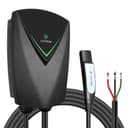
A deliberately dumb charger, and that's the point. No app, no cloud account, no firmware to fail — just a die-cast aluminum box built for a Canadian winter and rated to keep working outdoors. If you want set-and-forget, this is it.

Best overall
2
Lectron Nexus NACS (Tesla) Charger

Lectron Nexus NACS (Tesla) Charger

For a Tesla owner who doesn't want to babysit an adapter: a native NACS (J3400) connector plugs straight into the car, at a full 48 amps, with the safety listings you want. No app, but Teslas schedule charging in the car anyway.

Best for Tesla and NACS
$429.99 · View on Amazon

$459.997% off

Price as of September 2, 2026. #ad How we’re funded

3
Lectron Nexus 48A J1772

Lectron Nexus 48A J1772

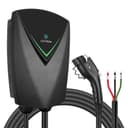
A full 48 amps with nothing to log into. Lectron's Nexus body is IP66-sealed for an outdoor wall, the cable is a heavy 15 mm compound the brand says is built to stay flexible in freezing weather, and the safety paperwork is the real thing — ETL to UL 2594/2231/2251, plus ENERGY STAR. Hardwired only, and there is no app, which is the entire point.

Best at 48 amps
$429.99 · View on Amazon

Price as of September 2, 2026. #ad How we’re funded

4
Lectron 40A Portable Level 2 Charger

Lectron 40A Portable Level 2 Charger

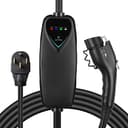
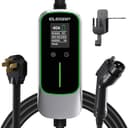
One of the cheapest honest ways into real Level 2 charging. Plug it into a NEMA 14-50 outlet, get a genuine 40A / 9.6 kW, and unplug it to take on a trip. No app and a shorter warranty are the trade-offs for the price.

Best budget and most portable
$269.99 · View on Amazon

Price as of September 2, 2026. #ad How we’re funded

The picks in full

#1Best overall

Grizzl-E Classic

A deliberately dumb charger, and that's the point. No app, no cloud account, no firmware to fail — just a die-cast aluminum box built for a Canadian winter and rated to keep working outdoors. If you want set-and-forget, this is it.

Strengths

  • Rugged die-cast aluminum, NEMA 4 / IP67 — built for outdoors and cold
  • No app or account to break; nothing to update
  • UL listed and ENERGY STAR at a mid price

Trade-offs

  • 40A caps it below the 48A chargers on charging speed
  • No scheduling or energy tracking — you'll lean on the car's app instead
  • The listed SKU ends in a NEMA 6-50 plug, not the more common 14-50
Max output
40 A
Power
9.6 kW
Connector
J1772
Install
NEMA 6-50 plug
Cable length
25 ft
Warranty
3 years
WiFi + app
No
Certifications
UL listed (file E510712), ENERGY STAR

Our charging-speed math. At 40A (9.6 kW) and ~3.5 miles per kWh it adds roughly 34 miles of range per hour — plenty for an overnight top-up.

Build note. Die-cast aluminum NEMA 4 / IP67 enclosure with no WiFi — a simple, reliable design.

Specs read from the manufacturer spec sheet, on August 20, 2026. “Not published” means the brand does not state that figure.

#2Best for Tesla and NACS

Lectron Nexus NACS (Tesla) Charger

For a Tesla owner who doesn't want to babysit an adapter: a native NACS (J3400) connector plugs straight into the car, at a full 48 amps, with the safety listings you want. No app, but Teslas schedule charging in the car anyway.

Strengths

  • Native NACS connector — no J1772-to-Tesla adapter to lose
  • Full 48A output and a weather-rated IP66 body
  • UL/ETL safety listings plus ENERGY STAR

Trade-offs

  • No WiFi app — you schedule in the Tesla app instead
  • NACS connector is best for Tesla/NACS cars; other EVs need a NACS-to-J1772 adapter
Max output
48 A
Power
11.5 kW
Connector
NACS
Install
Hardwired
Cable length
23 ft
Warranty
3 years
WiFi + app
No
Certifications
UL 2594/2231/2251 (ETL listed), ENERGY STAR, FCC

Our charging-speed math. At 48A (11.5 kW) and ~3.5 miles per kWh, about 40 miles of range per hour into a Tesla.

Build note. Native NACS (J3400) connector plugs straight into a Tesla with no adapter; includes a holster.

Specs read from the manufacturer spec sheet, on July 19, 2026. “Not published” means the brand does not state that figure.

#3Best at 48 amps

Lectron Nexus 48A J1772

A full 48 amps with nothing to log into. Lectron's Nexus body is IP66-sealed for an outdoor wall, the cable is a heavy 15 mm compound the brand says is built to stay flexible in freezing weather, and the safety paperwork is the real thing — ETL to UL 2594/2231/2251, plus ENERGY STAR. Hardwired only, and there is no app, which is the entire point.

Strengths

  • Full 48A / 11.5 kW hardwired, with ENERGY STAR and ETL listings to UL 2594/2231/2251
  • IP66 enclosure and a 15 mm cable Lectron builds to stay flexible in freezing weather
  • Ships with the wall-mount J-hook and plug holder, and there is no app or account

Trade-offs

  • Hardwired only — a licensed electrician and a 60-amp circuit, with no plug-in option
  • 23 ft cable is shorter than the 25 ft several rivals ship
  • Lectron publishes no operating-temperature range, so we can't state a cold rating
Max output
48 A
Power
11.5 kW
Connector
J1772
Install
Hardwired
Cable length
23 ft
Warranty
3 years
WiFi + app
No
Certifications
UL 2594/2231/2251 (ETL listed), ENERGY STAR, FCC

Our charging-speed math. At 48A (11.5 kW) and ~3.5 miles per kWh, about 40 miles of range per hour — a full overnight charge for almost any battery on the market.

Build note. IP66-sealed housing for indoor or outdoor mounting, with a heavy-duty 15.0 mm (±0.3 mm) 23 ft output cable Lectron states is engineered to stay flexible and easy to wrap in freezing weather. Wall-mount J-hook and plug holder included; hardwired install on a dedicated 240V circuit by a licensed electrician.

Specs read from the manufacturer spec sheet, on August 20, 2026. “Not published” means the brand does not state that figure.

#4Best budget and most portable

Lectron 40A Portable Level 2 Charger

One of the cheapest honest ways into real Level 2 charging. Plug it into a NEMA 14-50 outlet, get a genuine 40A / 9.6 kW, and unplug it to take on a trip. No app and a shorter warranty are the trade-offs for the price.

Strengths

  • A real 40A / 9.6 kW at a budget price
  • Plug-in and portable — take it with you, no hardwiring
  • ETL listed to UL 2594 / UL 2231 safety standards

Trade-offs

  • No WiFi or app on the base model — the smart version is a separate SKU
  • Shorter 16 ft cable and a 2-year warranty
  • Brand doesn't publish an outdoor/IP enclosure rating
Max output
40 A
Power
9.6 kW
Connector
J1772
Install
NEMA 14-50 plug
Cable length
16 ft
Warranty
2 years
WiFi + app
No
Certifications
ETL listed (UL 2594 / UL 2231)

Our charging-speed math. At 40A (9.6 kW) and ~3.5 miles per kWh it adds roughly 34 miles of range per hour.

Build note. Portable plug-in unit — no hardwiring needed; the base model has no WiFi or app.

Specs read from the manufacturer spec sheet, on July 19, 2026. “Not published” means the brand does not state that figure.

Published specs for the four units here. “Not published” means the manufacturer does not state that figure — the Lectron Nexus 48A is the case in point: Lectron publishes no operating-temperature range for it, so we record that as unstated rather than assuming either way, and keep it off our cold-weather list.
ChargerMax ampsConnectorInstallWiFi / app
Grizzl-E Classic40 AJ1772NEMA 6-50 plugNo
Lectron Nexus NACS (Tesla) Charger48 ANACSHardwiredNo
Lectron Nexus 48A J177248 AJ1772HardwiredNo
Lectron 40A Portable Level 2 Charger40 AJ1772NEMA 14-50 plugNo

The case for no app, stated honestly

Fewer things that can fail. A charger with no radio has no network credentials to lose, no pairing to redo after a router change, and no cloud dependency. Garages are hostile to WiFi — concrete, foil-faced insulation, a metal door and a router two rooms away — and a meaningful share of “my smart charger stopped working” is really a signal problem. Our connectivity guide covers solving it; not needing to solve it is also an option.

No abandonment risk. A charger is a fifteen-year fixture bolted to a wall. Phone apps and cloud services are not fifteen-year products. A unit whose functionality lives entirely in its own hardware cannot be degraded by a decision made somewhere else.

Nothing to update at 2am. Firmware updates are usually fine and occasionally are not. A charger that does not receive them cannot be broken by one.

Lower price for the same charging. These deliver identical amps to their connected siblings. The Grizzl-E Classic and Grizzl-E Smart are the same cast-aluminum box with the same 40 amps and the same cable — we put that comparison side by side in Classic vs Smart, and the price difference buys software.

What you actually give up

We are not going to pretend the trade is free. Three things are genuinely lost.

Usage history through the wall. The one your car cannot replace. The vehicle reports what it received; the charger reports what came through the meter, and those differ by charging losses of roughly 10%. If you want to verify what a session actually cost rather than estimate it — particularly on a time-of-use rate — you want a connected charger.

Remote lockout. Matters if the charger lives outdoors where someone else could plug in. On an enclosed garage unit, it does not.

Utility managed-charging programs. The one with money attached. DOE catalogs managed charging as a distinct incentive category, and those programs need to reach the charger. If your utility offers one and you want it, an offline unit disqualifies you — check before buying, using our utility rebate guide. Note that a straightforward purchase or installation rebate usually does not require connectivity; it more often requires ENERGY STAR certification, which the Grizzl-E Classic and the Lectron NACS both carry.

How we chose these four

Grizzl-E Classic is the definitive version of this idea. Die-cast aluminum, NEMA 4 / IP67, rated to -22°F, UL listed and ENERGY STAR certified, 40 amps on a plug. The SKU currently listed ends in a NEMA 6-50 rather than the more common 14-50, so check which receptacle you have. There is no app because there was never going to be one, and the engineering effort went into the enclosure and the cable instead. It is also the pick that keeps rebate eligibility intact, because Grizzl-E documents the ENERGY STAR certification for this model — which, notably, they do not for the Smart.

Lectron Nexus NACS is the Tesla answer, and it is the cleanest expression of the argument on this page. Teslas schedule charging in the car exceptionally well, so a charger’s scheduler is redundant by design — which leaves a native NACS connector at a full 48 amps, in an IP66 body, with UL/ETL listings and ENERGY STAR, and no adapter to lose. Our Tesla roundup covers the alternatives.

Lectron Nexus 48A is here for anyone who wants 48 amps without the software. Hardwired J1772, an IP66-sealed body, and a 23-foot cable of heavy 15 mm compound Lectron says is built to stay flexible in freezing weather, with the wall-mount J-hook and plug holder in the box. It is the best-certified offline charger on this page — ETL to UL 2594 / 2231 / 2251 plus ENERGY STAR — which also means it qualifies for the certification most purchase rebates ask for. The honest note: Lectron publishes no operating-temperature range, so we make no cold-weather claim for it and keep it off our cold-weather roundup.

This 48-amp slot used to be the Grizzl-E Ultimate 48A, which was discontinued in August 2026 — Grizzl-E has moved the Ultimate line to an 80-amp Wi-Fi-connected unit, which disqualifies it from a no-app list twice over. Its review stays up as a spec record with the buy link removed.

Lectron 40A is the cheapest way into real Level 2 charging, and it is portable — plug it into a 14-50, unplug it to take on a trip. ETL listed to UL 2594 / UL 2231. Lectron does not publish an enclosure or IP rating for it, which we record as unpublished and would treat as an indoor unit until they do.

Who should buy a smart charger instead

Four situations where we would tell you to spend the extra:

  • Your utility runs a managed-charging program you want to join. That requires connectivity, full stop.
  • Your panel is tight and you need load management. Dynamic load balancing is inherently a connected feature — see Emporia Classic vs Pro and small-panel chargers.
  • Your car does not schedule charging natively. Rare on modern EVs, worth verifying rather than assuming.
  • You genuinely want the energy data. A legitimate reason, and the one feature here that has no substitute.

The full two-sided argument is in smart vs dumb chargers, and if you land on the other side, our smart charger roundup is where to go next.
Frequently asked questions

What is a 'dumb' EV charger?

A Level 2 charger with no WiFi, no app and no cloud account — it charges the car when you plug in and does nothing else. The safety functions, the handshake with the vehicle and the current limit all run locally in the unit, exactly as they do in a connected charger.

Do I lose scheduling with a charger that has no app?

Almost certainly not. Nearly every modern EV can be given a departure time or a charging window in the car itself, and a schedule set in the car is more robust than one that depends on the charger reaching your network. Check your vehicle can do it before committing, but the answer is usually yes.

Is a dumb charger cheaper?

Generally, yes, for the same amps and often the same enclosure. The Grizzl-E Classic and Grizzl-E Smart are the same 40-amp cast-aluminum unit with the same cable; the price difference is the radio and the software. The charging you receive is identical.

Can I still get a utility rebate with a non-connected charger?

Usually for a purchase or installation rebate, provided the model meets the program's certification requirement — ENERGY STAR being the common one. What you cannot join is a managed-charging program, which by definition needs to communicate with the charger. Check your specific program's conditions before buying.

How do I set the amperage without an app?

With a physical DIP switch inside the unit, on the chargers that offer the choice. Grizzl-E's Classic uses one, with steps at 16, 24, 32 and 40 amps. It is set once at install to match the circuit, which is genuinely all the adjustment most installations ever need — and on a charger sized correctly for its circuit in the first place, it is an adjustment you never touch again.

Will a dumb charger become obsolete?

Less readily than a connected one, arguably. It has no cloud service to be discontinued and no app to stop being updated for a future phone OS. Its obsolescence risk is the connector standard, which is a slow-moving question we cover in our J1772 vs NACS guide.

Sources

  • United Chargers — Grizzl-E Classic user manual (PDF)Grizzl-E's own manual: NEMA 4 indoor/outdoor installation rating, operating temperature -22F to 122F, a caution that the enclosure's water rating cannot be guaranteed if the unit is mounted upside down, and a note to use a 20mA GFCI breaker where one is required because a 5mA breaker may cause disruptions (accessed July 20, 2026)
  • United Chargers — Grizzl-E Classic 40A product pageGrizzl-E's own current product data for the Classic, re-read for the August 20, 2026 dead-listing audit: Type 1 (SAE J1772) AC Level 2, 40 A, plug types 'NEMA 14-50, NEMA 6-50', UL Type 4 indoor/outdoor rating, certifications 'UL E510712, Energy Star', smart function 'No Internet Connection', 25 ft (7.6 m) output cable, operating temperature -30C to +50C (-22F to 122F), 3-year default warranty, aluminum enclosure (accessed August 20, 2026)
  • Lectron — NEXUS Level 2 J1772 EV Charging Station, 240V, 48 Amp, HardwiredLectron's own product page: up to 48 A continuous at 240 V for 11.5 kW, hardwire-only install by a licensed electrician on a dedicated 240 V circuit, IP66 weatherproof housing for indoor or outdoor use, 23 ft output cable of 15.0 mm (±0.3 mm) heavy-duty compound the brand states is 'engineered to stay flexible and easy to wrap around the wall mount, even in freezing weather', wall-mount J-hook and plug holder included, ETL listed to UL 2594 / UL 2231 / UL 2251 with ENERGY STAR and FCC certification, and a 3-year Lectron warranty. No operating-temperature range and no Wi-Fi or app support are published for this model (accessed August 20, 2026)
  • Lectron — Portable Level 2 J1772 EV Charger (40A) product pageLectron's own listing: 40A / 240V / 9.6 kW, NEMA 14-50 plug, 16 ft cable, UL 2594 / UL 2231 certified, 2-year warranty, app control on the WiFi version only (accessed July 23, 2026)
  • SAE International — J3400 North American Charging System (NACS)The SAE J3400 / NACS standard (the Tesla-derived connector) now being adopted industry-wide (accessed July 19, 2026)
  • ENERGY STAR — Electric Vehicle ChargersENERGY STAR on EVSE efficiency: certified chargers use about 40% less energy in standby than non-certified units (accessed July 19, 2026)
  • U.S. DOE Alternative Fuels Data Center — Utility IncentivesDOE's catalog of utility incentives by customer type: 114 utilities listed offering residential Level 2 charging station purchase rebates and 74 offering Level 2 installation rebates, plus make-ready/pre-wiring rebates, managed-charging programs and EV time-of-use rates (accessed August 18, 2026)
  • UL Solutions — EV Charging Infrastructure ServicesUL on EVSE safety certification: ANSI/UL 2594 is the Standard for Electric Vehicle Supply Equipment (accessed July 19, 2026)

Keep reading