The five picks on the axes that matter
Not amperage. The two columns that decide how long a charger remains the right charger are how many install routes it is sold for, and how far its current can be moved.
The five picks on the two axes that decide how long a charger stays the right charger: which installs it is sold for, and how far its amperage can be moved. Every figure is what the manufacturer publishes; blanks read “Not published” rather than being filled in.| Charger | Connector | Installs it is sold for | Published amp range | Cable | Enclosure |
|---|
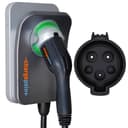
| Emporia Level 2 EV Charger | J1772 | Hardwired at 48 A, or NEMA 14-50 at 40 A | Not published as a user selector | 25 ft | NEMA 4 |
|---|
| ChargePoint Home Flex | J1772 | Hardwired, NEMA 6-50 or NEMA 14-50 (plug-in caps at 40 A) | 16 / 24 / 32 / 40 / 48 / 50 A in the app | 23 ft | NEMA 3R |
|---|
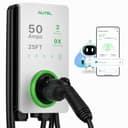
| Autel MaxiCharger Home | J1772 | Hardwired only | 16-50 A in the app | 25 ft | IP65 / NEMA 4X |
|---|
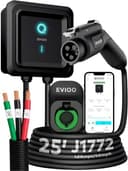
| EVIQO 48A Level 2 Charger | J1772 | Hardwired only | DIP 16/32/40/48 A; app slider 6-48 A in 1 A steps | 25 ft | IP66 / NEMA 4 |
|---|
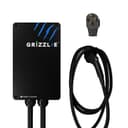
| Grizzl-E Classic | J1772 | NEMA 14-50 plug only | Not published as a user selector | 25 ft | NEMA 4 (IP67) |
|---|
Read that table and the ranking explains itself. The Emporia and the ChargePoint are the only two units here sold for more than one install route, which is the single most valuable kind of flexibility in this category — it means the receptacle you already have is not a dead end. The EVIQO has the finest amperage control we have found anywhere, a DIP switch for the ceiling plus an app slider published as 6–48 A in 1-amp steps, but it is hardwired-only. And two of the five publish no user-adjustable selector at all, which is the trade for their simplicity.
What “universal” has to mean to be useful
Four requirements, in the order we weighted them.
One: the connector that reaches the most cars.That is J1772, and the reason is the direction the adapters run rather than any technical superiority. Every non-Tesla EV sold in North America has a J1772 port. Tesla has shipped a J1772 adapter with its cars for years. And Rivian now states plainly that all 2026-and-later vehicles include a J1772 AC charging adapter for Level 2 stations — its model-year 2026 R1 support hub is literally titled around NACS vehicles and links a “J1772 AC Adapter Guide for NACS Vehicles”. So as cars move to NACS ports, they are moving with J1772 adapters, and a J1772 wall box keeps working. Our Rivian page works through that case in detail.
Two: more than one install route.A charger sold only for a hardwired install forecloses the cheap start; a charger sold only with a plug forecloses the 48-amp finish. Emporia sells one unit for both: 48 amps hardwired, 40 amps on a NEMA 14-50. ChargePoint sells the Home Flex hardwired, on a NEMA 6-50 or on a NEMA 14-50, and in either connector — with the caveat that its plug-in SKUs cap at 40 amps, so the full 50 is hardwired-only. What a proper 14-50 receptacle involves is worth reading before you count an existing outlet as a head start.
Three: a published amperage range.This is what lets one purchase survive a panel change. ChargePoint publishes six discrete settings from 16 to 50 A in the app. Autel publishes 16 to 50 A. EVIQO publishes both a DIP list and a 1-amp slider. Where a manufacturer publishes no selector — as Emporia and Grizzl-E do not for these two SKUs — the charger has to be matched to its circuit at purchase, which is a genuine constraint on a tight panel. The small-panel roundup is the page to shop from if that is your situation.
Four: reach, because it is the only spec you cannot change later. Four of these five ship a 25-foot cable; the ChargePoint ships 23. If the car ever parks on the other side of the driveway, or a second car has to share the box, measure the worst case rather than the usual one. The long-cable roundup sorts the whole registry on it, and why an extension cord is not the answer covers the tempting shortcut.
Why each pick is here
The Emporia Level 2 leadsbecause it declines to decide anything irreversible for you. One purchase covers a 40-amp plug-in install now and a 48-amp hardwired one later, the J1772 cable reaches every car on the road with the adapters already in circulation, the 25-foot cable and remote holster come in the box, and it carries UL listing plus ENERGY STAR — which is the usual eligibility filter on utility rebate forms. Emporia also publishes real energy tracking in its app rather than just on/off.
The ChargePoint Home Flexis the most install-agnostic charger in the registry and the most adjustable, with the most mature documented software — scheduling, reminders, usage history, over-the-air firmware, and 90 days of session data stored on the station if the network drops. It costs more than the Emporia for that, and its 23-foot cable is the shortest here.
The Autel MaxiCharger Homeis the pick when the wall is the problem rather than the car: Autel publishes IP65 / NEMA 4X with an operating range of −40°F to 131°F, the widest in our registry. It is hardwired-only and Autel specifies a 70-amp circuit for its full 50 amps, so it is less flexible on install and more flexible on climate.
The EVIQO 48A is here for amperage control alone, and it genuinely is the best at it. The trade-offs are documented and we do not smooth them over: EVIQO publishes several mutually inconsistent current and speed claims across its own page, and gives its temperature figures as tested rather than as an operating range. The review records each contradiction rather than picking a favorite.
The Grizzl-E Classic is the budget pick, and the argument for it is longevity rather than features. A die-cast aluminum NEMA 4 / IP67 box with no account, no firmware and nothing to deprecate is the charger most likely to still be working after the car has been replaced twice. It is 40 amps, it has no app, and its Amazon listing has gone dark before — both facts are on its review page. If you want the same build with Wi-Fi in it, that is the Classic Connect.
When to stop reading this page
If every car in your household has a NACS port and you expect that to stay true, the universal framing is costing you tidiness for nothing — buy the native cable from the NACS roundup or, for the cheaper half of that field, the under-$500 cut. If you rent and cannot wire anything in, the renter roundup is a better fit than anything here. And if the real question is how fast you need to charge rather than what fits, what size charger you actually need answers it with arithmetic instead of a shortlist.