EVIQO vs ChargePoint Home Flex
A value 48-amp charger from a young brand against the unit every other smart charger is measured against. They are closer on the wall than the price gap suggests — and the differences that remain are about your garage and your temperament, not about speed.
How this is funded: we earn a commission if you buy through our links, at no extra cost to you. It never changes which product we recommend, and we’ll tell you when we’d skip one. Full disclosure.
People search this pairing because EVIQO keeps showing up beside the Home Flex in Amazon results at a lower price, and they want to know what they are giving up. The short version: less than the gap implies. Both are 48-amp-class smart chargers with a UL-family listing and an ENERGY STAR mark, both publish a -22°F to 122°F operating range, and both charge an 11.5 kW car at the same speed. What separates them is install flexibility, reach, enclosure rating and the depth of the app and the company behind it. Which of those you weight decides the purchase.
| Spec | EVIQO 48A | ChargePoint Home Flex |
|---|---|---|
| Max output | 48 A | 50 A |
| Power | 11.5 kW | 12 kW |
| Install | Hardwired | Hardwired, NEMA 6-50 or NEMA 14-50 |
| Charging cable | 25 ft | 23 ft |
| Enclosure | IP66 / NEMA 4 | NEMA 3R |
| WiFi / app | Yes | Yes |
| ENERGY STAR | Yes | Yes |
| Listings | UL, ETL, FCC, ENERGY STAR | UL/cUL listed, ENERGY STAR |
| Warranty | 3 years | 3 years |
Speed: two amps that do not matter
The Home Flex publishes 50 amps and 12 kW hardwired; the EVIQO publishes 48 amps and 11.5 kW. By our arithmetic — amps times 240 V at about 3.5 miles per kWh — that is roughly 42 miles of range per hour against 40. To get the extra two amps you need a 70-amp circuit under the NEC 125% rule instead of the 60-amp circuit the EVIQO needs, which is a heavier wire gauge for a difference most owners never notice. And most cars cap their onboard charger at 11.5 kW or less, at which point the two chargers are identical in practice. Treat them as the same speed.
Difference one: how it connects
This is where the Home Flex earns its money. ChargePoint sells it three ways — hardwired, on a NEMA 6-50 plug, or on a NEMA 14-50 plug — and its datasheet is candid that the plug-in versions deliver up to 40 amps, with the full 50 a hardwired-only figure. Output is set in the app to 16, 24, 32, 40, 48 or 50 amps, so one unit can be dialed to whatever circuit the electrician can give you today and turned up after a panel upgrade.
The EVIQO 48A is hardwired only. If you need a plug-in install, EVIQO’s answer is its separate 40-amp Gen 2 unit, which we review here. If you already have a 14-50 outlet and want to use it, that is the EVIQO to compare against the plug-in Home Flex, not this one. Our hardwired vs plug-in guide covers when each route makes sense.
Difference two: reach
EVIQO publishes a 25 ft charging cable plus a 40-inch input cable on the 48A unit. ChargePoint publishes 23 ft. Two feet of charging cable is a real difference on a two-car garage wall; the 40-inch input lead is the bigger one, because it means the EVIQO’s box does not have to hang at the junction box. That is the longest usable span in our registry and the single strongest argument for the EVIQO. If the mounting position is dictated by where the conduit arrives, the input lead gives you three feet of say in the matter.
Difference three: the enclosure
EVIQO publishes IP66 / NEMA 4. ChargePoint publishes Type 3R per UL 50E. NEMA’s own definitions have Type 3R protecting against falling dirt, rain, sleet and snow, and Type 4 adding windblown dust, splashing and hose-directed water. Both are sold for outdoor installation and both publish the same -22°F to 122°F range; the EVIQO is simply sealed to a higher standard. On a covered garage wall it is irrelevant. On an exposed driveway post it is a point in EVIQO’s favor, and our outdoor roundup ranks on exactly that.
Difference four: the app, and the company
ChargePoint’s datasheet lists over-the-air firmware, 2.4 and 5 GHz WiFi, power measurement to ±2%, ground-fault detection by a 20 mA CCID with automatic retry, and local storage of up to 90 days of session data if the network drops. That is the premium: the most thoroughly documented product in this category, from the brand every other smart charger is compared against.
EVIQO publishes app scheduling and adjustable output over 2.4 GHz WiFi on its product pages, and the brand offers a 3-year warranty extendable to 4. It is a younger company with a shorter record, which we say plainly in the review and which is the honest reason the price is lower. For overnight charging on a cheap rate — the job most people ask of an app — both are adequate. If you want depth, ChargePoint has it.
The verdict, by situation
Hardwired install, tight reach, or outdoors: the EVIQO 48A. Same speed into your car, higher enclosure rating, three feet more usable span, lower price.
You have or want a 240 V outlet:the Home Flex on a 14-50 or 6-50 plug at 40 amps, or the EVIQO 40A plug-in — not the EVIQO 48A, which cannot plug in.
You want to set amperage from your phone, and the biggest name behind it: the Home Flex, and the premium is buying something real.
Undecided and hardwiring: the EVIQO. The things the Home Flex does better are things you will notice rarely; the things the EVIQO does better you will notice every time you reach for the cable.
Where to buy, at today’s prices
Quick picks
Ranked on published specs, charging speed, electrical fit and value. Select a row to jump to the full write-up. We have not bench-tested these chargers — here is exactly what we do instead.
| # | Product | Best for | Price |
|---|---|---|---|
| 1 | 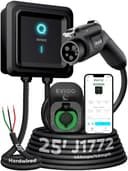 EVIQO 48A Level 2 Charger A lot of charger for the money: a full 48 amps, WiFi with scheduling, ENERGY STAR, and the longest usable reach in this group thanks to a 25 ft cable plus a 40-inch input lead. A strong value alternative to Emporia if you want maximum reach. | Hardwired value, longest reach | |
| 2 | 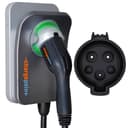 ChargePoint Home Flex The safest default for most homes: you set the amperage in the app to 16, 24, 32, 40, 48 or 50A, so one charger fits whatever circuit your panel can spare today and scales up if you upgrade later. The app is the most mature here, firmware arrives over the air, and the warranty is long. | Three install options, best app | $549.00 · View on Amazon Price as of September 18, 2026. #ad How we’re funded |
| 3 | 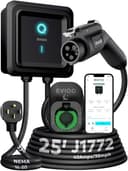 EVIQO 40A NEMA 14-50 Charger The most charger you can get without an electrician's invoice. It plugs into a NEMA 14-50 outlet for a full 40 amps, keeps the WiFi app, the ENERGY STAR listing and the 25 ft cable from EVIQO's hardwired unit, and can be unplugged and taken with you when you move. | The EVIQO that plugs in | |
| 4 | 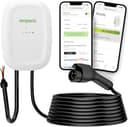 Emporia Level 2 EV Charger The value pick that doesn't feel cheap: a full 48 amps, ENERGY STAR listing, WiFi with genuine energy monitoring, and a 25 ft cable — for well under what the big names charge. It's the one we point most people to first. | The other value 48A to consider | $449.00 · View on Amazon Price as of September 18, 2026. #ad How we’re funded |
The Emporia is on that list because it is the third unit buyers cross-shop with these two: 48 amps hardwired or 40 on a 14-50 plug in one body, so it covers the Home Flex’s flexibility at closer to the EVIQO’s price. We compare it to each of them in Emporia vs EVIQO and ChargePoint vs Emporia.
Frequently asked questions
Is the EVIQO or the ChargePoint Home Flex faster?
On paper the Home Flex, by two amps: 50 A / 12 kW hardwired against EVIQO's 48 A / 11.5 kW. By our arithmetic at ~3.5 miles per kWh that is about 42 versus 40 miles of range per hour. The 50-amp figure needs a 70-amp circuit rather than a 60, and most owners run the Home Flex at 48 or 40 anyway, so in practice they charge the same car at the same speed.
Can the EVIQO 48A be plugged in?
No — it is hardwired only, because no residential plug is rated for the 60-amp circuit 48 amps needs. EVIQO sells a separate 40-amp Gen 2 unit with a NEMA 14-50 plug. The Home Flex is sold in three configurations: hardwired, NEMA 6-50 plug and NEMA 14-50 plug, with the plug-in models capped at 40 amps per ChargePoint's own datasheet.
Which one has the longer reach?
EVIQO, clearly. It publishes a 25 ft charging cable plus a 40-inch input cable; the Home Flex publishes a 23 ft cable. On a hardwired install the input lead lets the EVIQO's box sit up to about three feet from the junction, which is real freedom about where it hangs.
Which is better outdoors?
EVIQO publishes IP66 / NEMA 4 and an operating range of -22F to 122F. ChargePoint publishes Type 3R per UL 50E and the same -22F to 122F range. NEMA describes Type 3R as protection against rain, sleet and snow, and Type 4 as adding windblown dust, splashing and hose-directed water — so EVIQO's is the higher rating, though both are sold for outdoor use.
Is the ChargePoint app worth the premium?
If you will use it, yes. ChargePoint publishes over-the-air firmware, power measurement to +/- 2%, 90 days of locally stored session data if the network drops, and 2.4/5 GHz WiFi; its app is the most established in the category. EVIQO publishes app scheduling and adjustable output for its chargers (its 40A page states 6-40 A over 2.4 GHz WiFi), which is adequate for overnight charging on a cheap rate — the job most people actually ask of an app.
Which should I buy?
Buy the EVIQO 48A if your install is hardwired anyway, reach is tight, or the unit will live outdoors — you get 48 amps, the higher enclosure rating and the longest reach in the class for less. Buy the Home Flex if you want plug-in flexibility, adjustable amperage in the app, or the most established app in the category behind it for the next decade. If you cannot hardwire, compare the EVIQO 40A plug-in with the 14-50 Home Flex instead.
Sources
- EVIQO — Level 2 EV Charger, 40A (9.6 kW), NEMA 14-50 plug-in (Gen 2) — EVIQO's own product page: 40A / 9.6 kW on a NEMA 14-50 plug, SAE J1772, 25 ft charging cable plus a 40 in input cable, IP66 / NEMA 4 enclosure, UL / ETL / FCC / ENERGY STAR listings, 3-year standard warranty, app-adjustable 6-40A output, and a note that it needs an EV-grade 4-prong 14-50 receptacle rather than a dryer outlet. RE-READ September 15, 2026 for the garage roundup: the page additionally states an operating temperature range of -22F to 122F, that the app needs a 2.4 GHz WiFi connection, that the standard 3-year warranty is extendable to 4, and that the unit ships in 1-2 business days (accessed September 15, 2026)
- ChargePoint — Home Flex datasheet (PDF) — ChargePoint's own datasheet: enclosure rating Type 3R per UL 50E, operating temperature -22F to 122F, 23 ft cable, plus installer notes that an outdoor plug-in install requires an outdoor-rated GFCI breaker upstream while an external GFCI may conflict with the charger's internal ground-fault protection on a hardwired install. RE-READ September 3, 2026 for the review refresh: the same datasheet also publishes maximum 12 kW (240V AC x 50A) with output amperage adjustable via the mobile app to 16A, 24A, 32A, 40A, 48A or 50A; a required dedicated dual-pole breaker rated for 125% of maximum load; 'Software Updates: Firmware updated over-the-air (OTA)'; 2.4/5 GHz Wi-Fi (802.11 a/b/g/n); local storage of up to 90 days of charging session data (100 sessions) if the network drops; power measurement accuracy +/- 2.0%; ground-fault detection by 20 mA CCID with auto retry; and UL and cUL listing per UL 2594, UL 2231-1 and UL 2231-2, NEC Article 625 compliant. Ordering information lists the plug-in station models CPH50-NEMA6-50-L23 and CPH50-NEMA14-50-L23 (accessed September 3, 2026)
- ChargePoint — Home Flex home charger product page — ChargePoint's own current product page for the Home Flex, read for the 2026-09-03 review refresh: three install configurations are offered — hardwired, NEMA 6-50 plug and NEMA 14-50 plug — with 'up to 50 amps of power delivered to your EV' on the hardwired model and 'up to 40A of power' on the plug-in models. ChargePoint's own range claim is 'up to 37 miles of range per hour' hardwired and '30 miles of range per hour' plug-in. J1772 and NACS connectors are offered across all configurations, and ChargePoint states the unit is 'UL Listed for safety', 'ENERGY STAR certified for efficiency' and carries a '3-year warranty' (accessed September 3, 2026)
- NFPA — Using the Latest NEC for EV Charger Installations — NFPA on NEC (NFPA 70) Article 625: EV charging is a continuous load, so circuits are sized to 125% of load (the 80% rule) (accessed July 19, 2026)
- NEMA — Enclosure Types (definitions from NEMA 250) — NEMA's own definitions: Type 3R protects against falling dirt and rain, sleet and snow; Type 4 adds windblown dust, splashing and hose-directed water; Type 4X adds protection against corrosion. NEMA also states its NEMA-to-IP table cannot be used to convert IP designations back to NEMA types (accessed July 20, 2026)
- IEC 60529 — Degrees of protection provided by enclosures (IP Code), full text — The IP code standard (verbatim national adoption, IS/IEC 60529:2001): first numeral 6 = dust-tight; second numeral 6 = protected against powerful water jets; second numeral 7 = protected against temporary immersion, and a 7 alone does not imply water-jet protection unless dual coded (accessed July 20, 2026)
- ENERGY STAR — Electric Vehicle Chargers — ENERGY STAR on EVSE efficiency: certified chargers use about 40% less energy in standby than non-certified units (accessed July 19, 2026)
- UL Solutions — EV Charging Infrastructure Services — UL on EVSE safety certification: ANSI/UL 2594 is the Standard for Electric Vehicle Supply Equipment (accessed July 19, 2026)
- U.S. DOE Alternative Fuels Data Center — Electric Vehicle Charging Stations — US DOE on charging levels: Level 1 (~1.9 kW, ~5 mi/hr), Level 2 (2.9-19.2 kW, ~7.2 kW typical residential, ~25 mi/hr), and DC fast charging (accessed July 19, 2026)
Keep reading
EVIQO 48A review
The value 48-amp charger reviewed spec by spec, including what a younger brand costs you.
Read the reviewChargePoint Home Flex review
The reference smart charger in full — the app, the three install SKUs and the 40-amp plug-in cap.
Read the reviewEmporia vs EVIQO
EVIQO's other head-to-head, against the value charger it most often ties with.
Read the comparisonBest 48-amp chargers
Both units in the context of the whole 48-amp field and the 60-amp circuit they share.
See the picks