Every plug-in-capable charger under $500 right now
Computed at request time from the same daily price check that powers every button on this site, filtered to units the manufacturer sells for a plug-in install — including the ones sold for either a plug-in or a hardwired one. Portables are a different form factor and have their own page.
Plug-in-capable chargers under $500
Built from the same daily price check that powers every price on this site, not written into this page — these are the chargers we track whose live listing price was under $500 as of November 24, 2026, and which the manufacturer sells with a plug for a receptacle install (including the units sold for either plug-in or hardwired). Cheapest first. A unit that rises above the band drops out of this list on its own.

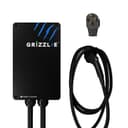
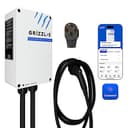
Grizzl-E Classic
Outdoor and cold-climate installs where nothing should need an app

Grizzl-E Classic Connect 40A
A tough plug-in charger that still schedules from an app

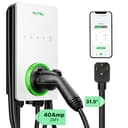
Autel MaxiCharger AC Elite Home 40A
A weather-rated smart charger on an existing 14-50 outlet

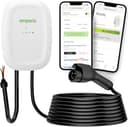
Emporia Level 2 EV Charger
Value shoppers who still want a real app and energy tracking
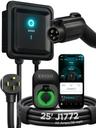
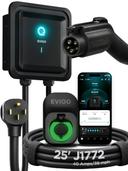
EVIQO 40A NEMA 14-50 Charger
Renters and anyone with a 14-50 outlet already in place
5 of the 9 chargers in scope qualify today.
Two things are worth noticing in that list. The first is how wide the spread is compared with the hardwired band: the hardwired-under-$500 field is famously flat, with every unit at 48 amps and in the same mid price band, while this one runs from genuinely cheap to nearly at the ceiling for the same 40 amps. The second is that the cheapest units are not the weakest ones — the two Grizzl-E plug-ins sit at the bottom of the list with the toughest published enclosures on it.
What we ranked on
With the amperage fixed by the receptacle, four narrower questions decide it.
One: does the body publish an outdoor rating, and a temperature range with it? A plug-in charger is often chosen becauseit can go up quickly, which frequently means outdoors. Grizzl-E publishes a die-cast aluminum NEMA 4 / IP67 enclosure rated −30°C to +50°C (−22°F to 122°F) on the Classic Connect, with a 25-foot cold-flexible cable on an 18-inch input lead. EVIQO publishes IP66 / NEMA 4 with its temperature figures given as tested. Autel publishes NEMA 4 for this SKU and, unlike its hardwired sibling, no temperature range at all. What the ratings promise is the guide behind that ranking.
Two: can the current be turned down, and where? This matters more on a plug-in install than people expect, because the receptacle you inherit may be on a 40-amp rather than a 50-amp circuit. EVIQO publishes app-adjustable output from 6 to 40 amps. Autel publishes adjustment up to 40 amps in the Autel Charge app. Grizzl-E sets current with a DIP switch (16/24/32/40 A), which is set once with a screwdriver and then never thought about again. Emporia publishes no user selector for the Level 2 at all, so it has to be matched to its circuit at purchase. Every published setting in one table is the reference, and the 30-amp page is the one to read if your circuit is smaller than 50.
Three: does this purchase foreclose anything?The Emporia Level 2 is here mostly for this reason. Emporia sells it for a 48-amp hardwired install or a 40-amp NEMA 14-50 one, which means plugging it in now does not spend the 48-amp option — the same box gets wired in later if the panel ever allows it. That is the only pick on this page that genuinely declines to decide for you, and on a ten-year horizon it is worth real money. Our universal page makes the broader argument for buying this way.
Four: the small mechanical things nobody photographs. The Autel wins overall partly on these. An in-body holster means the connector has somewhere to live that is not the floor, which stops mattering only if you have never coiled a cold cable in the dark. A 25-foot cable is the practical floor for reaching across a garage. A 40-inch input lead, as EVIQO publishes, decides whether the unit can be mounted where you want it rather than directly beside the outlet. The long-cable roundup is the page if reach is your binding constraint.
The receptacle, and why it dominates this decision
It is worth separating two numbers that get conflated constantly: the price of a plug-in charger, and the cost of being able to plug one in.
If an EV-grade NEMA 14-50 on a dedicated 50-amp circuit already exists where the car parks, every charger on this page is a complete, finished project at its purchase price. That is the best deal in home charging and the reason this category exists.
If it does not exist, you are buying an electrical job: a double-pole 50-amp breaker, 6 AWG copper, conduit where the run is exposed, an industrial-specification receptacle rather than a builder-grade range outlet, GFCI protection where code requires it, a permit and an inspection. At that point the honest comparison is not between plug-in chargers — it is between a 50-amp circuit with a plug-in 40-amp charger and a 60-amp circuit with a hardwired 48-amp one, where the incremental cost is conductor and breaker rather than a second visit. The install-cost breakdown has the line items, and the hardwired page is the other side of that comparison.
One specific warning, because it is the most common and most expensive mistake in this category: a 14-50 that was installed decades ago for a range or dryer is not automatically suitable. It may be on a shared or undersized circuit, it may be a residential-grade device never designed for a six-hour continuous load, and the conductors may be aluminum. The dryer-outlet page covers exactly this, and it is worth an electrician’s hour to confirm before you trust it nightly.
What this band does not include
Two things, and both are genuinely above the ceiling in the plug-in form factor.
Forty-eight amps. Not at any price, in any plug-in unit, for the code reason above. If 11.5 kW is the requirement, the answer is a hardwired charger and a 60-amp circuit. The 48-amp roundup is that field.
Load management and a native NACS plug together. The compact plug-in NACS unit that publishes OCPP and dynamic load management sits well above this ceiling, and it is still 40 amps. If your car has a NACS port and the budget is firm, the NACS-under-$500 pagehas the three units that qualify — one of which is hardwired at the full 48 amps for less than the premium plug-in costs.