Level Two Club

Best Hardwired EV Chargers

Hardwiring removes the plug — and with it the receptacle that fails, the connection that gets wet, and the 40-amp ceiling. These are the chargers worth wiring straight to the panel, and the circuit each one asks for.

By Stephen V.Last updated How we pick

A hardwired charger is wired directly to your electrical panel with no plug and no receptacle in between. People choose it for three reasons, in roughly this order: it is the only route to 48 or 50 amps, because no residential plug is rated for the circuit those need; it removes the weakest link in an outdoor install, since a receptacle behind a charger is one more thing for water and heat to attack; and it looks and behaves like part of the house rather than an appliance.

The cost is flexibility. A hardwired unit is a permanent fixture — it stays when you move, it can’t be swapped without an electrician, and it rules itself out for most renters. So we ranked this field on the criteria that matter once you’ve accepted that trade. One: rated amperage and the circuit it demands, since that is what your panel has to carry. Two: the enclosure, because hardwired chargers end up outdoors more often than plug-in ones. Three: a real UL or ETL listing to the EV-charging standard. Four: cable length, which is permanent once the box is bolted down. Five: software — scheduling and energy data, worth paying for only if you’ll use them. And six: warranty and price.

We own none of these units and haven’t bench-tested them. Specs come from each manufacturer’s own sheet on a dated visit, the charging-speed math is ours with the assumption printed, and every pick carries its honest downsides. Prices are pulled live and shown as “Check price” when we can’t confirm one.

How this is funded: we earn a commission if you buy through our links, at no extra cost to you. It never changes which product we recommend, and we’ll tell you when we’d skip one. Full disclosure.

Quick picks

Ranked on published specs, charging speed, electrical fit and value. Select a row to jump to the full write-up. We have not bench-tested these chargers — here is exactly what we do instead.

#ProductBest forPrice
1
ChargePoint Home Flex

ChargePoint Home Flex

The safest default for most homes: you set the amperage in the app anywhere from 16A to 50A, so one charger fits whatever circuit your panel can spare today and scales up if you upgrade later. The app is the most mature here, and the warranty is long.

Best overall
$456.74 · View on Amazon

Price as of September 2, 2026. #ad How we’re funded

2
Lectron Nexus 48A J1772

Lectron Nexus 48A J1772

A full 48 amps with nothing to log into. Lectron's Nexus body is IP66-sealed for an outdoor wall, the cable is a heavy 15 mm compound the brand says is built to stay flexible in freezing weather, and the safety paperwork is the real thing — ETL to UL 2594/2231/2251, plus ENERGY STAR. Hardwired only, and there is no app, which is the entire point.

Best without an app
$429.99 · View on Amazon

Price as of September 2, 2026. #ad How we’re funded

3
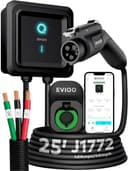
EVIQO 48A Level 2 Charger

EVIQO 48A Level 2 Charger

A lot of charger for the money: a full 48 amps, WiFi with scheduling, ENERGY STAR, and the longest usable reach in this group thanks to a 25 ft cable plus a 40-inch input lead. A strong value alternative to Emporia if you want maximum reach.

Best value
$428.98 · View on Amazon

$479.0010% off

Price as of September 2, 2026. #ad How we’re funded

4
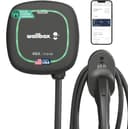
Wallbox Pulsar Plus

Wallbox Pulsar Plus

The one to buy when wall space is tight: it's among the smallest 48A units you can get, with Power Boost load balancing so it can share a circuit without tripping the main. A polished premium charger — and priced like one.

Best for a full panel
$614.99 · View on Amazon

$699.9912% off

Price as of September 2, 2026. #ad How we’re funded

5
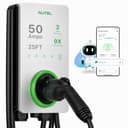
Autel MaxiCharger Home

Autel MaxiCharger Home

Built for the harshest driveway. The NEMA 4X enclosure is rated to keep charging in extreme cold and heat, it pushes a full 50 amps, and the app is capable. If your charger lives fully exposed to the weather, this is the one.

Best weatherproof
$499.00 · View on Amazon

$568.0012% off

Price as of September 2, 2026. #ad How we’re funded

6
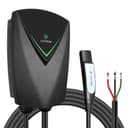
Lectron Nexus NACS (Tesla) Charger

Lectron Nexus NACS (Tesla) Charger

For a Tesla owner who doesn't want to babysit an adapter: a native NACS (J3400) connector plugs straight into the car, at a full 48 amps, with the safety listings you want. No app, but Teslas schedule charging in the car anyway.

Best for Tesla
$429.99 · View on Amazon

$459.997% off

Price as of September 2, 2026. #ad How we’re funded

The picks in full

#1Best overall

ChargePoint Home Flex

The safest default for most homes: you set the amperage in the app anywhere from 16A to 50A, so one charger fits whatever circuit your panel can spare today and scales up if you upgrade later. The app is the most mature here, and the warranty is long.

Strengths

  • Adjustable 16-50A means it fits a small panel now and a bigger circuit later
  • The most mature app of the group — scheduling, reminders, usage history
  • 3-year warranty and a long 23 ft cable

Trade-offs

  • You pay a premium over value 48A chargers for the app and brand
  • Full 50A output needs a 60A circuit most older panels don't have to spare
Max output
50 A
Power
12 kW
Connector
J1772
Install
Hardwired (plug-in NEMA 14-50 SKU also sold)
Cable length
23 ft
Warranty
3 years
WiFi + app
Yes
Certifications
UL/cUL listed, ENERGY STAR

Our charging-speed math. At its 50A max (12 kW) and a typical 3.5 miles per kWh, the Home Flex adds roughly 42 miles of range per hour. Dial it down to 40A to fit a 50A circuit and you get about 34.

Build note. Flexible amperage is adjustable in the app from 16A up to 50A.

Specs read from the manufacturer spec sheet, on July 19, 2026. “Not published” means the brand does not state that figure.

#2Best without an app

Lectron Nexus 48A J1772

A full 48 amps with nothing to log into. Lectron's Nexus body is IP66-sealed for an outdoor wall, the cable is a heavy 15 mm compound the brand says is built to stay flexible in freezing weather, and the safety paperwork is the real thing — ETL to UL 2594/2231/2251, plus ENERGY STAR. Hardwired only, and there is no app, which is the entire point.

Strengths

  • Full 48A / 11.5 kW hardwired, with ENERGY STAR and ETL listings to UL 2594/2231/2251
  • IP66 enclosure and a 15 mm cable Lectron builds to stay flexible in freezing weather
  • Ships with the wall-mount J-hook and plug holder, and there is no app or account

Trade-offs

  • Hardwired only — a licensed electrician and a 60-amp circuit, with no plug-in option
  • 23 ft cable is shorter than the 25 ft several rivals ship
  • Lectron publishes no operating-temperature range, so we can't state a cold rating
Max output
48 A
Power
11.5 kW
Connector
J1772
Install
Hardwired
Cable length
23 ft
Warranty
3 years
WiFi + app
No
Certifications
UL 2594/2231/2251 (ETL listed), ENERGY STAR, FCC

Our charging-speed math. At 48A (11.5 kW) and ~3.5 miles per kWh, about 40 miles of range per hour — a full overnight charge for almost any battery on the market.

Build note. IP66-sealed housing for indoor or outdoor mounting, with a heavy-duty 15.0 mm (±0.3 mm) 23 ft output cable Lectron states is engineered to stay flexible and easy to wrap in freezing weather. Wall-mount J-hook and plug holder included; hardwired install on a dedicated 240V circuit by a licensed electrician.

Specs read from the manufacturer spec sheet, on August 20, 2026. “Not published” means the brand does not state that figure.

#3Best value

EVIQO 48A Level 2 Charger

A lot of charger for the money: a full 48 amps, WiFi with scheduling, ENERGY STAR, and the longest usable reach in this group thanks to a 25 ft cable plus a 40-inch input lead. A strong value alternative to Emporia if you want maximum reach.

Strengths

  • 48A output with WiFi scheduling at a value price
  • 25 ft charging cable plus a 40 in input cable — excellent reach
  • UL, ETL, FCC and ENERGY STAR listings

Trade-offs

  • Hardwired version needs a 60A circuit and an electrician
  • Smaller brand with a shorter track record than ChargePoint or Wallbox
Max output
48 A
Power
11.5 kW
Connector
J1772
Install
Hardwired
Cable length
25 ft
Warranty
3 years
WiFi + app
Yes
Certifications
UL, ETL, FCC, ENERGY STAR

Our charging-speed math. At 48A (11.5 kW) and ~3.5 miles per kWh, about 40 miles of range per hour.

Build note. Ships with a 25 ft charging cable plus a 40 in input cable — among the longest reach in class.

Specs read from the manufacturer spec sheet, on July 19, 2026. “Not published” means the brand does not state that figure.

#4Best for a full panel

Wallbox Pulsar Plus

The one to buy when wall space is tight: it's among the smallest 48A units you can get, with Power Boost load balancing so it can share a circuit without tripping the main. A polished premium charger — and priced like one.

Strengths

  • Genuinely compact for a 48A charger — easy to place
  • Power Boost load balancing avoids a panel upgrade in some homes
  • Bluetooth plus WiFi, with a clean app

Trade-offs

  • One of the pricier chargers here
  • Hardwired only — no plug-in option for renters
Max output
48 A
Power
11.5 kW
Connector
J1772
Install
Hardwired
Cable length
25 ft
Warranty
3 years
WiFi + app
Yes
Certifications
ENERGY STAR

Our charging-speed math. At 48A (11.5 kW) and ~3.5 miles per kWh, about 40 miles of range per hour. Power Boost can throttle it to protect a shared circuit.

Build note. One of the most compact 48A chargers in its class, with both Bluetooth and WiFi.

Specs read from the manufacturer spec sheet, on July 19, 2026. “Not published” means the brand does not state that figure.

#5Best weatherproof

Autel MaxiCharger Home

Built for the harshest driveway. The NEMA 4X enclosure is rated to keep charging in extreme cold and heat, it pushes a full 50 amps, and the app is capable. If your charger lives fully exposed to the weather, this is the one.

Strengths

  • NEMA 4X enclosure rated for very cold and hot conditions
  • Full 50A output with a 25 ft cable
  • WiFi, Bluetooth and a capable app

Trade-offs

  • 50A needs a 60A circuit and typically a hardwired install
  • App and ecosystem are newer than ChargePoint's
Max output
50 A
Power
12 kW
Connector
J1772
Install
Hardwired
Cable length
25 ft
Warranty
3 years
WiFi + app
Yes
Certifications
CSA certified, ENERGY STAR

Our charging-speed math. At its 50A max (12 kW) and ~3.5 miles per kWh it adds roughly 42 miles of range per hour.

Build note. NEMA 4X weatherproof enclosure rated for operation down to about -40 degrees F.

Specs read from the manufacturer spec sheet, on July 19, 2026. “Not published” means the brand does not state that figure.

#6Best for Tesla

Lectron Nexus NACS (Tesla) Charger

For a Tesla owner who doesn't want to babysit an adapter: a native NACS (J3400) connector plugs straight into the car, at a full 48 amps, with the safety listings you want. No app, but Teslas schedule charging in the car anyway.

Strengths

  • Native NACS connector — no J1772-to-Tesla adapter to lose
  • Full 48A output and a weather-rated IP66 body
  • UL/ETL safety listings plus ENERGY STAR

Trade-offs

  • No WiFi app — you schedule in the Tesla app instead
  • NACS connector is best for Tesla/NACS cars; other EVs need a NACS-to-J1772 adapter
Max output
48 A
Power
11.5 kW
Connector
NACS
Install
Hardwired
Cable length
23 ft
Warranty
3 years
WiFi + app
No
Certifications
UL 2594/2231/2251 (ETL listed), ENERGY STAR, FCC

Our charging-speed math. At 48A (11.5 kW) and ~3.5 miles per kWh, about 40 miles of range per hour into a Tesla.

Build note. Native NACS (J3400) connector plugs straight into a Tesla with no adapter; includes a holster.

Specs read from the manufacturer spec sheet, on July 19, 2026. “Not published” means the brand does not state that figure.

Why people hardwire

The honest case for hardwiring rests on three things, and only one of them is about speed.

Amperage. A plug-in charger is limited by the receptacle it plugs into. The largest common one, the NEMA 14-50, sits on a 50-amp circuit, and because EV charging is a continuous load the NEC caps a plug-in unit at 80% of that — 40 amps. To go higher you need a 60-amp circuit, and code does not recognize a residential plug for that load. So every 48-amp charger, and every unit running at a full 50 amps, is hardwired by definition. That is worth about six extra miles of range per hour, as we work out in 40 amps vs 48 amps.

Durability, especially outdoors. A receptacle is a mechanical connection carrying 40 amps continuously for hours at a time. Poorly made ones heat up, and outdoors they need their own weatherproof enclosure and a GFCI arrangement that plays nicely with the charger’s internal ground-fault protection. Hardwiring deletes that whole component. If your charger lives on an exterior wall or a carport post, that is a genuine reliability argument, not an aesthetic one.

Permanence. A hardwired charger is a fixture: neater, no plug to trip over, nothing anyone can unplug. That is a benefit if you own the house and a problem if you don’t — which is the entire trade, and why we keep a separate list of chargers for renters and apartments.

What each pick asks of your panel

Before the picks, the practical constraint. Every one of these chargers can be set below its maximum, but at full output the circuit each one needs follows directly from the NEC’s 125% continuous-load rule.

What each pick needs behind the wall. Circuit size is our arithmetic from the NEC 125% continuous-load rule applied to each unit’s rated maximum amperage — several can be set lower to fit a smaller circuit.
ChargerRated maxCircuit at full outputInstallEnclosureConnector
ChargePoint Home Flex50 A70 A circuitHardwired (plug-in NEMA 14-50 SKU also sold)NEMA 3RJ1772
Lectron Nexus 48A J177248 A60 A circuitHardwiredIP66J1772
EVIQO 48A Level 2 Charger48 A60 A circuitHardwiredIP66 / NEMA 4J1772
Wallbox Pulsar Plus48 A60 A circuitHardwiredNEMA 4J1772
Autel MaxiCharger Home50 A70 A circuitHardwiredNEMA 4XJ1772
Lectron Nexus NACS (Tesla) Charger48 A60 A circuitHardwiredIP66NACS

Read that table as a shopping filter, not a spec sheet. If your panel can carry a 60-amp circuit, the whole field is open. If it can only spare 50 amps, buy a charger you can set to 40 — the Home Flex and the Autel both adjust downward — or step over to our 40-amp picks and save the difference. Work out which you are with our panel capacity guide before you buy anything.

The picks, in plain terms

The ChargePoint Home Flex is our overall hardwired pick for the same reason it wins elsewhere: it fits the most homes with the fewest regrets. The amperage is adjustable from 16 to 50 amps in the app, so one charger works on whatever circuit your panel can spare today and scales up if you upgrade later. The app is the most mature in the category, the warranty is three years, and the NEMA 3R body handles an outdoor wall. You pay a premium for that flexibility, and its full 50 amps still needs a 60-amp circuit most older panels don’t have spare. Detail in our Home Flex review.

The Lectron Nexus 48A is the offline pick. A full 48 amps in an IP66-sealed body, a 23-foot cable of heavy 15 mm compound Lectron says stays flexible in freezing weather, and the J-hook and plug holder included — with no WiFi, no account and no firmware. Unusually for a charger with nothing to log into, the paperwork is complete: ETL to UL 2594 / 2231 / 2251 plus ENERGY STAR. Assume no scheduling and no energy history and use the car’s own timer instead. The honest gap is that Lectron publishes no operating-temperature range, so we can’t give it a cold rating. See the Lectron Nexus 48A review.

This slot previously went to the Grizzl-E Ultimate 48A, discontinued in August 2026 when Grizzl-E moved the Ultimate line to an 80-amp connected unit. Its review stays on record with the buy link removed. If it was the cast-aluminum Grizzl-E build you were after rather than the 48 amps, the Grizzl-E Smart is the same IP67 box at 40 amps — though it plugs in rather than hardwires.

The EVIQO 48A is the value play: a full 48 amps, WiFi scheduling, UL/ETL/FCC and ENERGY STAR listings, an IP66 / NEMA 4 body, and the longest usable reach here thanks to a 25-foot cable plus a 40-inch input lead — for noticeably less than the premium brands. What you give up is track record; EVIQO is a younger company than ChargePoint or Wallbox, which matters most if you need warranty support in year three. Our EVIQO review goes through it.

The Wallbox Pulsar Plus earns its place for one specific problem: a panel with no room left. Its Power Boost load balancing watches the home’s total draw and throttles the charger in real time so the combined load never exceeds the service — which can let you add a fast charger instead of paying for a service upgrade. It is also the most compact 48-amp unit here, which matters in a narrow garage bay. It is the priciest pick, and hardwired-only with no plug-in variant at all. Read the Pulsar Plus review, or the Wallbox vs ChargePoint head-to-head.

The Autel MaxiCharger is the weatherproofing specialist: a NEMA 4X enclosure rated for corrosion as well as water, an operating range Autel publishes down to about -40°F, a full 50 amps and a 25-foot cable. If the charger is going somewhere genuinely hostile — a coastal driveway, a pole in an open yard, a wall that gets road salt — that 4X rating is the spec to pay for. Its full output needs a 60-amp circuit, and the app ecosystem is newer than ChargePoint’s. See the Autel MaxiCharger review and our outdoor charger picks.

The Lectron Nexus NACS is here for Tesla and NACS owners who are hardwiring anyway: a native connector that goes straight into the car with no adapter, at a full 48 amps, in a weather-rated IP66 body with UL/ETL listings and ENERGY STAR. No app — but a Tesla schedules charging in the car, so the gap is smaller than the spec sheet suggests. The limitation is the connector: a J1772-equipped car needs an adapter to use it, which makes it awkward in a mixed-car household. Our Nexus NACS review covers it, and J1772 vs NACS explains the connector landscape.

Before you commit to hardwiring

Three checks, in order. First, your panel. A 60-amp continuous circuit is a serious addition; if the load calculation says no, your options are a smaller charger, a load-management device, or a service upgrade that can cost more than the charger itself. Second, the run. The distance from panel to charger drives conductor size and therefore a large share of the labor and materials bill — a garage on the other side of the house is a different job from a wall behind the panel. Third, permits. A new 240V circuit is a permitted, inspected job nearly everywhere; that inspection is what protects you if there is ever an insurance claim.

Work all three out before choosing a model and you will not end up with a 48-amp charger running at 40. Our installation cost guide prices the whole job, and if the answer comes back “this is more than I want to spend, ” a plug-in 40-amp charger on an existing circuit does 85% of the work for a fraction of the money — see hardwired vs plug-in.
Frequently asked questions

Is a hardwired EV charger better than a plug-in one?

Better for some things, worse for others. Hardwiring is the only way to reach 48 or 50 amps, it removes the receptacle — the component most likely to fail or admit water in an outdoor install — and it makes a tidier permanent fixture. A plug-in charger is cheaper to install, can be unplugged and taken with you, and is swapped in minutes if it fails. If you rent or might move, plug in; if you own and want maximum output, hardwire.

Do I need an electrician to hardwire an EV charger?

In almost every jurisdiction, yes. Hardwiring means opening the panel, landing conductors on a new breaker and running cable to the charger — work that requires a permit and inspection nearly everywhere and that most homeowner-DIY allowances do not cover. Our DIY guide explains where the line usually falls, and your local building department has the final word.

Can a hardwired charger be installed outdoors?

Yes, if the charger's own enclosure rating allows it — that is what NEMA 3R, NEMA 4, NEMA 4X and the IP codes tell you. Hardwiring actually helps outdoors, because it removes the receptacle and plug that would otherwise need weather protection of their own. Check the manufacturer's rating for the unit, not a general claim about the brand.

Can I convert a plug-in charger to hardwired?

Sometimes. Several manufacturers sell the same charger in both configurations, and some units ship with a removable plug or an official hardwire kit. But you cannot simply cut the plug off a charger that was only listed for plug-in use — the safety listing covers the unit as sold. Check the maker's own documentation before assuming it can be converted.

Does hardwiring make charging faster?

Only because it unlocks a bigger circuit. Hardwiring itself does nothing to speed; what it enables is a 60-amp circuit and therefore 48 amps, where a plug-in charger on a NEMA 14-50 is capped at 40. If you keep the same 50-amp circuit, a hardwired charger and a plug-in charger deliver identical power.

What happens to a hardwired charger when I sell the house?

It stays. A hardwired unit is a fixture, and it generally transfers with the property — which is worth remembering if you spent premium money on it. Buyers increasingly value a working home charger, but you are not taking it with you. If you want the charger to move when you do, choose a plug-in model.

Sources

  • NFPA — Using the Latest NEC for EV Charger InstallationsNFPA on NEC (NFPA 70) Article 625: EV charging is a continuous load, so circuits are sized to 125% of load (the 80% rule) (accessed July 19, 2026)
  • U.S. DOE Alternative Fuels Data Center — Electric Vehicle Charging StationsUS DOE on charging levels: Level 1 (~1.9 kW, ~5 mi/hr), Level 2 (2.9-19.2 kW, ~7.2 kW typical residential, ~25 mi/hr), and DC fast charging (accessed July 19, 2026)
  • U.S. DOE Alternative Fuels Data Center — Charging Electric Vehicles at HomeUS DOE on home EV charging: most owners charge overnight on Level 1 or Level 2, installs follow NEC Article 625, with example home-charging costs (accessed July 19, 2026)
  • UL Solutions — EV Charging Infrastructure ServicesUL on EVSE safety certification: ANSI/UL 2594 is the Standard for Electric Vehicle Supply Equipment (accessed July 19, 2026)
  • NEMA — Enclosure Types (definitions from NEMA 250)NEMA's own definitions: Type 3R protects against falling dirt and rain, sleet and snow; Type 4 adds windblown dust, splashing and hose-directed water; Type 4X adds protection against corrosion. NEMA also states its NEMA-to-IP table cannot be used to convert IP designations back to NEMA types (accessed July 20, 2026)
  • ChargePoint — Home Flex datasheet (PDF)ChargePoint's own datasheet: enclosure rating Type 3R per UL 50E, operating temperature -22F to 122F, 23 ft cable, plus installer notes that an outdoor plug-in install requires an outdoor-rated GFCI breaker upstream while an external GFCI may conflict with the charger's internal ground-fault protection on a hardwired install (accessed July 20, 2026)
  • Lectron — NEXUS Level 2 J1772 EV Charging Station, 240V, 48 Amp, HardwiredLectron's own product page: up to 48 A continuous at 240 V for 11.5 kW, hardwire-only install by a licensed electrician on a dedicated 240 V circuit, IP66 weatherproof housing for indoor or outdoor use, 23 ft output cable of 15.0 mm (±0.3 mm) heavy-duty compound the brand states is 'engineered to stay flexible and easy to wrap around the wall mount, even in freezing weather', wall-mount J-hook and plug holder included, ETL listed to UL 2594 / UL 2231 / UL 2251 with ENERGY STAR and FCC certification, and a 3-year Lectron warranty. No operating-temperature range and no Wi-Fi or app support are published for this model (accessed August 20, 2026)
  • United Chargers — Grizzl-E Ultimate 48A specificationsGrizzl-E's own spec page for the Ultimate 48A: 11.5 kW max output on J1772 or NACS, aluminum enclosure, 25 ft output cable, 208-240 VAC, selectable 48/40/32/24/16 A input current, operating temperature -30C to +50C (-22F to 122F), IP67 protection, LED indicator, DIP-switch power selector, hardwire-only install. RE-CHECKED August 20, 2026: this spec page survives, but Grizzl-E's shop now lists the Ultimate only as an 80A / 19.2 kW Wi-Fi-connected hardwire unit and the 48A model is no longer sold (accessed August 11, 2026)
  • Wallbox — Pulsar Plus (North America) datasheet (PDF)Wallbox's own datasheet: NEMA Type 4 per UL 50E for indoor and outdoor installation, operating temperature -22F to 104F, 25 ft cable (accessed July 20, 2026)
  • Autel Energy — MaxiCharger AC Elite Home 50A product pageAutel's own listing: compliant with NEMA 4X standards, operating temperature -40F to 131F, 25 ft cable, 3-year warranty (accessed July 20, 2026)

Keep reading