What to put in the wall, in order of regret
Ranked by how much it costs to fix later. The first three are the ones worth arguing with a builder about.
One: the service size.This is the only item on the list you will probably never get another cheap shot at. A load calculation decides what the house needs, and in a new build the result is negotiable in a way it never is afterwards — specifying a larger service while the utility is already pulling a drop costs a fraction of upgrading one later, which is a permit, a meter swap and a utility appointment. Our service-upgrade page covers what that job looks like when you leave it until later, which is the best argument for not leaving it.
Two: empty conduit from the panel to the charger location.The cheapest future-proofing in construction. Conduit is inexpensive while the walls are open and nearly impossible to add afterwards without cutting drywall. Size it for a bigger conductor than you are pulling today, and leave a pull string in it. If you later want to go from a 40-amp charger to 48 amps, or add a second run for a second bay, the difference between “an afternoon” and “a renovation” is whether that conduit exists.
Three: breaker space, reserved and labelled. A 240-volt circuit takes two adjacent positions. Panels in new houses get filled by the people installing them, and a full panel means a subpanel or a tandem-breaker conversation later. Ask for two adjacent spaces to be left and marked. Our subpanel page is what this looks like when it is not done.
Four: the circuit itself, sized to the charger you might want. EV charging is a continuous loadunder the NEC, which is why the circuit is sized to 125% of the charger’s rated output rather than to the output itself: a 48-amp charger wants a 60-amp circuit, a 40-amp charger wants 50. The honest default in a new build is a 60-amp circuit, because it covers every 48-amp unit on the market and costs very little more than a 50 while the wire is being pulled anyway. Full detail is in the wire-and-breaker guide.
Five: where it lands on the wall. Free to get right now. Think about which side of the car the charge port is on, which way you will back in, and whether the cable will cross a path people walk on. Between the bays beats the end of a bay in a two-car garage. Our placement guide has the specifics, including the mounting heights the manufacturers publish.
Six: the receptacle-or-hardwire decision — which affects the wire. This is the one rough-in item that is not purely mechanical. A NEMA 14-50 receptacle needs a neutral conductor pulled to it; a hardwired charger generally does not, because it runs on two hots and a ground. If you want the option of either, tell the electrician before the wire goes in the conduit. We wrote a whole page on that distinction because it is the detail that most often surprises people mid-install, and the NEMA 14-50 guide covers what the receptacle itself has to be.
Then, and only then, the charger
With the circuit settled, the hardware question gets small. Here is what each of our picks asks of the build.
What each pick asks of the build. Every cell is read off the manufacturer’s own spec sheet on the dated visit recorded with that product; a spec a maker does not publish reads “Not published” rather than being filled in. The circuit column is OUR arithmetic from the continuous-load rule — 125% of the rated output — except where a manufacturer publishes a larger figure of its own, which is noted.| Charger | Output | Circuit it wants | Install | Enclosure | Cable | Outdoor rated |
|---|
| ChargePoint Home Flex | 50 A | 50 A | Hardwired, NEMA 6-50 or NEMA 14-50 | NEMA 3R | 23 ft | Yes |
|---|
| Autel MaxiCharger Home | 50 A | 70 A per Autel | Hardwired | IP65 / NEMA 4X | 25 ft | Yes |
|---|
| EVIQO 48A Level 2 Charger | 48 A | 60 A | Hardwired | IP66 / NEMA 4 | 25 ft | Yes |
|---|
| Grizzl-E Duo Connect 40A | 40 A | 50 A | NEMA 14-50 plug or hardwired | IP67 | 25 ft | Yes |
|---|
| Autel MaxiCharger 80A | 80 A | 100 A | Hardwired | NEMA 3S (IK10) | 25 ft | Yes |
|---|
Two columns in that table deserve a second look. The circuit it wantscolumn is where the surprises live: the Autel MaxiCharger Home is rated 50 amps but Autel’s own page specifies a 70-amp circuit for full output, and the 80-amp unit needs 100 amps— which is a whole service for some houses. Dial either one down and it installs normally; buy either one expecting the headline number on a 60-amp circuit and you will be disappointed. And outdoor ratedmatters more in new construction than people expect, because garages in a half-built house are open to the weather for weeks and plans change — a charger that can go outside gives you a free option on the mounting location.
The picks, in plain terms
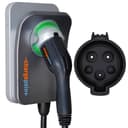
The ChargePoint Home Flex wins because it is the one unit that does not care how your circuit conversation ended. Output sets anywhere from 16 to 50 amps in the app; it is sold hardwired or on a NEMA 6-50 or 14-50 plug, in J1772 or NACS; the app is the most mature of the group and firmware arrives over the air; the warranty is three years and the cable is 23 feet. The honest costs: you pay a premium, and the full 50 amps needs a 60-amp circuit. See the review.
The Autel MaxiCharger Homeis the pick for an exterior wall, a carport or a detached structure. IP65 / NEMA 4X — the 4X adding corrosion resistance — an operating range of -40°F to 131°F, ENERGY STAR, and output adjustable 16 to 50 amps over WiFi, Bluetooth or Ethernet. The Ethernet port is quietly the best feature on a new build: you can run a data cable to the garage while the walls are open and never think about garage WiFi again. The 70-amp circuit note applies. See the review and the outdoor roundup.
The EVIQO 48A is the value answer on a 60-amp circuit: UL, ETL, FCC and ENERGY STAR published together, IP66 / NEMA 4, a 25-foot cable plus a 40-inch input lead that decides where it can mount. No adjustable range is published, so treat 48 amps as the configuration you are buying. See the review.
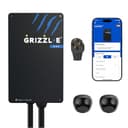
The Grizzl-E Duo Connect 40A is the two-bay answer, and the saving is real: one circuit, two cars, rather than a second 50-amp run through finished walls. Both cars charging at once halves the rate, which overnight almost never matters. Note Grizzl-E publishes no warranty term for this unit. See the review and the two-car roundup.
The Autel MaxiCharger 80Ais the only situation in which we would recommend it: you are specifying the service anyway, you want a 100-amp circuit in the garage, and you would rather overbuild once than regret it. It publishes 19.2 kW, adjustable 6 to 80 amps, a NEMA 3S / IK10 body and a five-year warranty — the longest term we track. Be clear-eyed that almost no car accepts more than 11.5 kW on AC, so most of that capability is a bet on the future rather than a benefit today. See the review and the fastest-chargers roundup.
One number to budget, and one to stop budgeting
Budget the circuit, not the charger. On a retrofit the electrical work is usually the larger half of the total; in new construction it is cheaper, because nobody is cutting drywall or fishing walls, but it is still the part that varies. Our install-cost breakdown has the components, and the state-by-state page covers the labor half.
Stop budgeting the federal credit. The IRS 30C credit for home charging equipment was terminated for property placed in service after June 30, 2026, so a charger energised in a house finishing now does not qualify. State and utility programmes are separate, locally administered and in many places still running — our utility rebates page is where to check, and the incentives page covers what the federal picture now looks like.