Grizzl-E vs ChargePoint Home Flex
One is a cast-aluminum box from a company that treats a charger as outdoor hardware. The other is the most software-heavy home charger sold. They agree on almost nothing about what matters, which makes this an easier decision than most head-to-heads — once you know which camp you are in.
How this is funded: we earn a commission if you buy through our links, at no extra cost to you. It never changes which product we recommend, and we’ll tell you when we’d skip one. Full disclosure.
Grizzl-E and ChargePoint sit at opposite ends of a single question: is a home charger a piece of electrical hardware or a connected device? Grizzl-E’s answer is a 21-pound cast-aluminum box sealed to IP67, with the amperage set by DIP switches inside the case. ChargePoint’s is a slim plastic unit whose output, schedule and firmware all live in an app. Both charge a car perfectly well. This page is about which philosophy fits your wall.
A note on which Grizzl-E: the original Classic — the no-WiFi model — is no longer sold on Amazon in any configuration, so it carries no buy link here. We compare the Classic Connect, the current 40-amp unit in the same body with the app added, which is the one you can actually buy today.
| Spec | Grizzl-E Classic Connect | ChargePoint Home Flex |
|---|---|---|
| Max output | 40 A | 50 A |
| Power | 9.6 kW | 12 kW |
| Install | NEMA 14-50 plug | Hardwired, NEMA 6-50 or NEMA 14-50 |
| Charging cable | 25 ft | 23 ft |
| Enclosure | NEMA 4 (IP67) | NEMA 3R |
| Amperage set by | DIP switch (16 / 24 / 32 / 40 A) | App (16 / 24 / 32 / 40 / 48 / 50 A) |
| WiFi / app | Yes | Yes |
| ENERGY STAR | Not published | Yes |
| Listings | UL/cUL listed (file E510712) | UL/cUL listed, ENERGY STAR |
| Warranty | 3 years | 3 years |
Speed: equal at the outlet, not at the panel
The Home Flex publishes 50 amps and 12 kW — but only hardwired. ChargePoint’s own datasheet and product page cap the NEMA 6-50 and 14-50 plug-in models at 40 amps, exactly the Grizzl-E’s figure. So if you are plugging into an existing 240 V outlet, which is how most people buy a Grizzl-E, the two deliver the same 9.6 kW: about 34 miles of range per hour by our arithmetic at 3.5 miles per kWh. The ChargePoint’s speed advantage — about 42 miles per hour at 50 amps — exists only on a hardwired 70-amp circuit, and only for a car whose onboard charger accepts more than 9.6 kW. Check that in onboard chargers explained before paying for it.
Difference one: the box
Grizzl-E publishes a cast-aluminum enclosure sealed to IP67, a UL Type 4 rating, and an operating range of -22°F to 122°F, with a 25 ft output cable the brand describes as remaining flexible in cold weather. ChargePoint publishes Type 3R per UL 50E and the same temperature range in a plastic housing. NEMA’s own definitions put Type 3R at rain, sleet and snow, and Type 4 at windblown dust, splashing and hose-directed water on top of that. For an exposed driveway post, an open carport, or a detached garage that sees real winter, the Grizzl-E is the better-specified object, and it is not close. Our ratings explainer walks through what each code promises.
Difference two: where the amperage lives
This is the practical divide. Grizzl-E sets maximum current with DIP switches — 40, 32, 24 or 16 amps for a 50, 40, 30 or 20-amp breaker — which you or the electrician configure once at install. ChargePoint sets it in the app to 16, 24, 32, 40, 48 or 50 amps, from your phone, any time. If your circuit will never change, the DIP switch is a feature: it cannot be mis-set by a guest or a software update. If you expect to hardwire later, upgrade a panel, or share a circuit, the Home Flex’s adjustability is worth having.
Difference three: what the app is for
Both have one. Grizzl-E publishes the Grizzl-E Connect app with charging statistics, schedules, utility demand-response programs, remote control, lockout to prevent unauthorized use, updates and diagnostics — a fuller list than its hardware reputation suggests, and the lockout in particular is something ChargePoint does not name. ChargePoint publishes over-the-air firmware, 2.4 and 5 GHz WiFi, power measurement to ±2% and up to 90 days of session data stored locally if the network drops. Grizzl-E publishes no OCPP support and no ENERGY STAR certification for the Classic Connect; ChargePoint publishes both a UL/cUL listing and ENERGY STAR. If a utility rebate program requires the ENERGY STAR mark, that decides it for the ChargePoint.
Two install notes from the manuals
Grizzl-E’s manual recommends a 20 mA GFCI breaker where one is required, because a 5 mA breaker may cause disruptions — the charger has its own ground-fault protection and two sensitive devices in series trip on each other. ChargePoint’s datasheet says an outdoor plug-in install needs an outdoor-rated GFCI breaker upstream, while an external GFCI may conflict with the charger’s internal protection on a hardwired install. Both are saying the same thing from different directions: tell your electrician which unit you bought before the breaker goes in. Our GFCI tripping guide has the full picture.
The verdict, by situation
Outdoors, unheated, or anywhere the weather is real: the Grizzl-E Classic Connect. Higher sealing rating, cast body, cold-flexible cable, set-and-forget amperage.
Existing 14-50 outlet on a covered wall, and you want the cheaper charger: the Grizzl-E. Same 40 amps as the plug-in Home Flex, with an app that includes a lockout, for less.
Hardwiring to 48 or 50 amps:the Home Flex. The Grizzl-E tops out at 40, and ChargePoint’s extra amps are real into a car that accepts them.
A rebate that requires ENERGY STAR, or amperage you will change: the Home Flex.
Where to buy, at today’s prices
Quick picks
Ranked on published specs, charging speed, electrical fit and value. Select a row to jump to the full write-up. We have not bench-tested these chargers — here is exactly what we do instead.
| # | Product | Best for | Price |
|---|---|---|---|
| 1 | 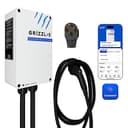 Grizzl-E Classic Connect 40A Grizzl-E's cast-aluminum build with a WiFi radio in it. You get the IP67 body and the cold-flexible 25 ft cable that made the brand's name, plus scheduling, usage history and utility demand-response programs in the Grizzl-E Connect app — in a plug-in unit that comes off the wall when you move. The amperage is still set with a DIP switch, which is either charmingly honest or annoyingly analog depending on your taste. | Sealed cast body, plug-in 40A | $349.99 · View on Amazon Price as of September 18, 2026. #ad How we’re funded |
| 2 | 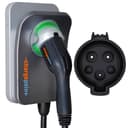 ChargePoint Home Flex The safest default for most homes: you set the amperage in the app to 16, 24, 32, 40, 48 or 50A, so one charger fits whatever circuit your panel can spare today and scales up if you upgrade later. The app is the most mature here, firmware arrives over the air, and the warranty is long. | Hardwired 50A, app-set amperage | $549.00 · View on Amazon Price as of September 18, 2026. #ad How we’re funded |
| 3 | 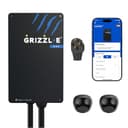 Grizzl-E Duo Connect 40A One box, two cables, one circuit. The Duo Connect lets a two-EV household charge both cars overnight without a second charger, a second breaker or a panel upgrade — because it splits one 40-amp supply between the connectors rather than doubling it. That is the whole trade: convenience and a much cheaper install, at half the speed each when both cars are plugged in. | The two-car Grizzl-E | $899.99 · View on Amazon Price as of September 18, 2026. #ad How we’re funded |
| 4 | 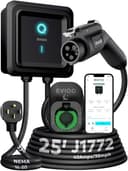 EVIQO 40A NEMA 14-50 Charger The most charger you can get without an electrician's invoice. It plugs into a NEMA 14-50 outlet for a full 40 amps, keeps the WiFi app, the ENERGY STAR listing and the 25 ft cable from EVIQO's hardwired unit, and can be unplugged and taken with you when you move. | Another 40A plug-in to cross-shop |
The Grizzl-E Duo Connect is on that list for the household reading this because they have two EVs and one outlet; the EVIQO 40A because it is the other plug-in unit buyers weigh against the Classic Connect, with IP66 and an ENERGY STAR mark at a similar price. Our plug-in roundup ranks the whole field.
Frequently asked questions
Which Grizzl-E does this compare?
The Classic Connect, Grizzl-E's current 40-amp WiFi-connected plug-in unit. The original Grizzl-E Classic — the no-WiFi model that made the brand's name — left Amazon in every plug and finish and is no longer sold there, so it carries no buy link on this site. The Classic Connect is the same cast-aluminum body with the app added, and it is the unit most people searching this comparison will actually find for sale.
Is the ChargePoint faster than the Grizzl-E?
Only if you hardwire it. The Home Flex publishes 50 amps / 12 kW hardwired, against the Grizzl-E's 40 amps / 9.6 kW — by our arithmetic at ~3.5 miles per kWh, about 42 versus 34 miles of range per hour. But ChargePoint's own datasheet caps its plug-in models at 40 amps, so on a NEMA 14-50 outlet the two charge at the same speed.
Which is better outdoors?
The Grizzl-E, on the published ratings. It states a cast-aluminum enclosure sealed to IP67 with a UL Type 4 rating and a -22F to 122F operating range. ChargePoint publishes Type 3R per UL 50E and the same temperature range. NEMA defines Type 3R as protection against rain, sleet and snow and Type 4 as adding windblown dust and hose-directed water. Both are sold for outdoor use; the Grizzl-E is sealed to a higher standard.
Does the Grizzl-E Classic Connect have an app?
Yes. Grizzl-E publishes the Grizzl-E Connect app with charging statistics, schedules, utility demand-response programs, remote control, lockout to prevent unauthorized use, updates and diagnostics. Amperage, however, is set by DIP switches inside the unit, not in the app — the opposite of the Home Flex, where output is changed from your phone.
Which is easier to install?
Both plug into a NEMA 14-50 outlet, so if the outlet exists, both are a mounting job. The Home Flex also comes in NEMA 6-50 and hardwired versions. One detail from each brand's own documents: Grizzl-E's manual recommends a 20 mA GFCI breaker where one is required because a 5 mA breaker may cause nuisance trips, and ChargePoint's datasheet says an outdoor plug-in install needs an outdoor-rated GFCI breaker upstream.
Which should I buy?
Buy the Grizzl-E Classic Connect if the charger lives outdoors, in an unheated garage, or anywhere you want a heavy sealed box that you set once and forget — and if 40 amps on an existing outlet is all you need. Buy the ChargePoint Home Flex if you want 48-50 amps hardwired, amperage you can change from your phone, and the most established app in the category. For a plug-in install on a covered wall, the Grizzl-E does the same job for less.
Sources
- United Chargers — Grizzl-E Classic Connect 40A product overview — Grizzl-E's own overview for the Classic Connect: 'the Wi-Fi Connected Smart Level 2 EVSE for home use' at 40A / 9.6 kW, shipping with the Grizzl-E Connect app for charging statistics, schedules, Demand/Response utility programs, remote control, lockout to prevent unauthorized use, updates and diagnostics; a UL Type 4 water-resistant cast aluminum enclosure with IP67 sealing, a NEMA 14-50 input cable and a 25 ft output cable with a J1772 or NACS connector, 'UL Tested and Certified' with built-in GFCI, over-current, over-voltage, ground-fault and over-temperature protections, and adjustable maximum current set with DIP switches at 40A / 32A / 24A / 16A for a 50A / 40A / 30A / 20A breaker. No ENERGY STAR certification and no OCPP support are published for this model (accessed September 3, 2026)
- United Chargers — Grizzl-E Classic Connect 40A technical specifications — Grizzl-E's own spec table for the Classic Connect: Type 1 (J1772) or NACS Level 2, aluminum enclosure, operating temperature -30C to +50C (-22F to 122F), IP67 protection, 25 ft output cable on an 18 in input lead, 208-240 VAC, nominal input current 16/24/32/40 A set by a DIP-switch power selector, maximum output current 40 A, LED indicator, 21 lb unit weight (accessed September 3, 2026)
- United Chargers — Grizzl-E Classic user manual (PDF) — Grizzl-E's own manual: NEMA 4 indoor/outdoor installation rating, operating temperature -22F to 122F, a caution that the enclosure's water rating cannot be guaranteed if the unit is mounted upside down, and a note to use a 20mA GFCI breaker where one is required because a 5mA breaker may cause disruptions (accessed July 20, 2026)
- United Chargers — Grizzl-E Classic 40A product page — Grizzl-E's own current product data for the Classic, re-read for the September 3, 2026 dead-listing audit and unchanged since the August 20 one: Type 1 (SAE J1772) AC Level 2, 40 A, plug types 'NEMA 14-50, NEMA 6-50', UL Type 4 indoor/outdoor rating, certifications 'UL E510712, Energy Star', smart function 'No Internet Connection', 25 ft (7.6 m) output cable, operating temperature -30C to +50C (-22F to 122F), 3-year default warranty, aluminum enclosure, and three finishes — 'Classic Black, Avalanche White, or Extreme Camo' (accessed September 3, 2026)
- United Chargers — Grizzl-E Classic product overview — Grizzl-E's own overview for the Classic: 'built with a sturdy, water-resistant cast aluminum enclosure and comes with a 25ft output cable that remains flexible in cold temperatures', an aluminum IP67 enclosure rated from -22F, an 18-inch input cable with either a NEMA 14-50 or a NEMA 6-50 plug, adjustable maximum output current of 40, 32, 24 or 16 amps, and 'multiple plug-in configurations of NEMA 14-50 or NEMA 6-50 and hardwire ready' (accessed September 3, 2026)
- ChargePoint — Home Flex datasheet (PDF) — ChargePoint's own datasheet: enclosure rating Type 3R per UL 50E, operating temperature -22F to 122F, 23 ft cable, plus installer notes that an outdoor plug-in install requires an outdoor-rated GFCI breaker upstream while an external GFCI may conflict with the charger's internal ground-fault protection on a hardwired install. RE-READ September 3, 2026 for the review refresh: the same datasheet also publishes maximum 12 kW (240V AC x 50A) with output amperage adjustable via the mobile app to 16A, 24A, 32A, 40A, 48A or 50A; a required dedicated dual-pole breaker rated for 125% of maximum load; 'Software Updates: Firmware updated over-the-air (OTA)'; 2.4/5 GHz Wi-Fi (802.11 a/b/g/n); local storage of up to 90 days of charging session data (100 sessions) if the network drops; power measurement accuracy +/- 2.0%; ground-fault detection by 20 mA CCID with auto retry; and UL and cUL listing per UL 2594, UL 2231-1 and UL 2231-2, NEC Article 625 compliant. Ordering information lists the plug-in station models CPH50-NEMA6-50-L23 and CPH50-NEMA14-50-L23 (accessed September 3, 2026)
- ChargePoint — Home Flex home charger product page — ChargePoint's own current product page for the Home Flex, read for the 2026-09-03 review refresh: three install configurations are offered — hardwired, NEMA 6-50 plug and NEMA 14-50 plug — with 'up to 50 amps of power delivered to your EV' on the hardwired model and 'up to 40A of power' on the plug-in models. ChargePoint's own range claim is 'up to 37 miles of range per hour' hardwired and '30 miles of range per hour' plug-in. J1772 and NACS connectors are offered across all configurations, and ChargePoint states the unit is 'UL Listed for safety', 'ENERGY STAR certified for efficiency' and carries a '3-year warranty' (accessed September 3, 2026)
- NEMA — Enclosure Types (definitions from NEMA 250) — NEMA's own definitions: Type 3R protects against falling dirt and rain, sleet and snow; Type 4 adds windblown dust, splashing and hose-directed water; Type 4X adds protection against corrosion. NEMA also states its NEMA-to-IP table cannot be used to convert IP designations back to NEMA types (accessed July 20, 2026)
- IEC 60529 — Degrees of protection provided by enclosures (IP Code), full text — The IP code standard (verbatim national adoption, IS/IEC 60529:2001): first numeral 6 = dust-tight; second numeral 6 = protected against powerful water jets; second numeral 7 = protected against temporary immersion, and a 7 alone does not imply water-jet protection unless dual coded (accessed July 20, 2026)
- NFPA — Using the Latest NEC for EV Charger Installations — NFPA on NEC (NFPA 70) Article 625: EV charging is a continuous load, so circuits are sized to 125% of load (the 80% rule) (accessed July 19, 2026)
- ENERGY STAR — Electric Vehicle Chargers — ENERGY STAR on EVSE efficiency: certified chargers use about 40% less energy in standby than non-certified units (accessed July 19, 2026)
- UL Solutions — EV Charging Infrastructure Services — UL on EVSE safety certification: ANSI/UL 2594 is the Standard for Electric Vehicle Supply Equipment (accessed July 19, 2026)
Keep reading
Grizzl-E Classic Connect review
The cast-aluminum plug-in reviewed in full — what the app adds to the Classic and what it doesn't.
Read the reviewChargePoint Home Flex review
The reference smart charger, including the 40-amp cap on the plug-in SKUs.
Read the reviewGrizzl-E Classic vs Classic Connect
The two Grizzl-E units side by side, and why the original no longer has a buy link.
Read the comparisonBest outdoor chargers
Where the enclosure rating is the ranking, not a footnote.
See outdoor picks