What a temperature rating actually promises
Every charger here publishes an operating temperature range. That figure is the manufacturer’s statement about the conditions the equipment is designed to work in — the electronics, the plastics, the seals. It is not a promise that your specific installation will be fine, and it is not the same thing as the enclosure rating, which is about water and dust rather than temperature.
Those two specs answer different questions and you want both. NEMA’s own definitions are the reference: a Type 3R enclosure protects against falling dirt and rain, sleet and snow; Type 4 adds windblown dust, splashing water and hose-directed water; Type 4X adds corrosion resistance on top. The IP codes say something similar in different language —IP67 means dust-tight and protected against temporary immersion, though NEMA itself warns you cannot convert IP ratings back into NEMA types. For a snowbelt driveway, a 3R rating and a good low-temperature figure is genuinely enough; for a coastal or road-salted install, 4X earns its money. We decode all of this in the outdoor charger guide.
Published operating-temperature ranges, quoted from each manufacturer’s own datasheet (linked in Sources). A rating is a manufacturer’s statement about where the unit is designed to operate — not a promise about your driveway.| Charger | Published operating range | Enclosure | Cable | Max amps |
|---|
| Autel MaxiCharger Home | -40°F to 131°F | IP65 / NEMA 4X | 25 ft | 50 A |
|---|
| Grizzl-E Classic Connect 40A | -22°F to 122°F | NEMA 4 (IP67) | 25 ft | 40 A |
|---|
| Emporia Level 2 EV Charger | -22°F to 122°F | NEMA 4 | 25 ft | 48 A |
|---|
| ChargePoint Home Flex | -22°F to 122°F | NEMA 3R | 23 ft | 50 A |
|---|
| Wallbox Pulsar Plus | -22°F to 104°F | NEMA 4 | 25 ft | 48 A |
|---|
Read that table with a margin in mind. If your winter low is around 0°F, a unit rated to -22°F has room to spare. If you regularly see -20°F or worse, the Autel’s published -40°F rating is the one with genuine headroom.
The cold makes the car the bottleneck, not the charger
The single most useful thing to understand about winter charging is that most of what people blame on the charger is the battery. A cold lithium-ion pack has higher internal resistance and the vehicle’s own management system deliberately limits how much power it will accept until the pack warms up — so a session that starts at 15°F may ramp rather than jump straight to full power. Nothing about the wall unit changes that; it offers power and the car takes what it will. Our guide to how Level 2 works explains that division of labor properly.
The other half is consumption. DOE and EPA figures put winter range loss at roughly 41% in mixed driving at 20°F versus 75°F with the heater running, with about two-thirds of the extra energy going to cabin heat. Practically: the same commute needs meaningfully more kilowatt-hours in January, so your overnight window has more work to do. Two things help, and both are free. Precondition while plugged in — the DOE notes that preheating on shore power rather than on the battery extends range. And schedule charging to finish near departure, so the pack is warm when you leave rather than having sat cold for six hours. A charger with an app can do that; so can nearly every EV’s own timer, which is why we don’t treat WiFi as a winter requirement.
The picks, and who each one is for
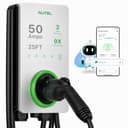
The Autel MaxiCharger is our pick for genuinely extreme cold, and the reason is on Autel’s own spec sheet: an operating range published from about -40°F to 131°F in a NEMA 4X enclosure, which adds corrosion resistance to the dust and hose-directed water protection of Type 4. It pushes a full 50 amps with a 25-foot cable and a capable WiFi and Bluetooth app. The costs are real: 50 amps needs a 60-amp circuit and a hardwired install, and Autel’s software ecosystem is younger than ChargePoint’s. If your charger lives fully exposed somewhere that hits -30, it is the one we’d specify. Full detail in the Autel MaxiCharger review.
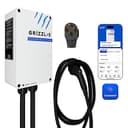
The Grizzl-E Classic Connect 40A is the winter build. Cast aluminum, IP67-sealed, rated -30°C to +50°C (-22°F to 122°F), and the one unit here whose maker specifically builds the 25-foot cable to stay flexible in cold weather — which is the difference between hanging the cable back on the holster and wrestling it. The costs are honest ones: 40 amps is its ceiling, it plugs into a NEMA 14-50 rather than hardwiring, amperage is set with a physical DIP switch rather than in software, and Grizzl-E’s own pages don’t publish an ENERGY STAR certification for this model even though some marketplace listings badge one. What you get for that is the toughest physical package here, plus the Grizzl-E Connect app for scheduling and usage history. Read the Grizzl-E Classic Connect review.
This slot was the Grizzl-E Ultimate 48A until August 2026, when we recorded it as discontinued on the strength of a dead Amazon listing. That was wrong, corrected 28 September 2026: Grizzl-E still sells the Ultimate 48A at $383.99 in J1772 or NACS, alongside the 80A, and Amazon lists it again. Its review carries a buy link once more, and its published -22°F range stands. The Classic Connect keeps this slot — it is the same cast-aluminum box and the same temperature range, at 40 amps on a plug instead of 48 hardwired.
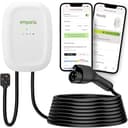
The Emporia Level 2 is the value pick that gives up almost nothing to the cold: a watertight NEMA 4 enclosure rated -22°F to 122°F, a 25-foot cable, ENERGY STAR, a real energy-monitoring app, and 48 amps hardwired (40 on a NEMA 14-50 plug) for well under premium money. If your winters are cold but not brutal, this is the sensible buy — and the plug-in option keeps a renter’s door open. The app is less polished than ChargePoint’s and support is a smaller operation. See our Emporia review.
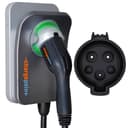
The ChargePoint Home Flex is the smart pick for a cold climate because of what the app lets you do with it: schedule around off-peak rates and finish close to departure so the pack is warm when you unplug. ChargePoint publishes a Type 3R enclosure and a -22°F to 122°F range, with adjustable 16–50A output and a 23-foot cable. Note one installer detail from ChargePoint’s own datasheet: an outdoor plug-in install wants an outdoor-rated GFCI breaker upstream, while an external GFCI can conflict with the charger’s internal ground-fault protection on a hardwired install — a genuine cause of nuisance tripping, which we cover in the GFCI guide. It is a premium price for the app and the flexibility. Our Home Flex review has more.
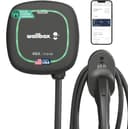
The Wallbox Pulsar Plus is the compact option, and the one whose rating we’d read most carefully: Wallbox publishes -22°F to 104°F in a NEMA 4 body — the same cold floor as most of this group, with a lower ceiling that only matters in desert heat. It is the smallest 48-amp unit here, and Power Boost load balancing can let a full panel take a charger without a service upgrade. It is the priciest pick and hardwired only. See the Pulsar Plus review.
Installing for winter, not just for today
A few decisions matter more in a cold climate than a mild one, and they cost nothing to get right at install time.
- Mount it under cover if you can. A soffit, a carport roof or the garage wall next to the door keeps snow load and ice off the unit and the holster. Rated for outdoors is not the same as happier outdoors.
- Mount it high enough. Snow drifts. A charger and a cable holster at waist height stay usable in February; ones at shin height do not.
- Think about where the cable falls. A 25-foot cable that has to lie on the ground gets frozen into ice. Position the box so the cable hangs and drapes rather than pools.
- Get the GFCI arrangement right. Moisture in a receptacle and doubled-up ground-fault protection are the two most common causes of a breaker that trips on cold, wet mornings — see why chargers trip GFCI breakers.
- Permit and inspect the work. A 240V circuit outdoors in a freeze-thaw climate is exactly the job you want an inspector to have looked at — see permits and inspection.
Do those five things and a properly rated charger becomes the least interesting part of your winter. The car will still lose range in the cold, but a Level 2 unit on the wall means you start every morning full — which is precisely when that matters most. If you’re still deciding whether the upgrade is worth it at all, we work the numbers in is a Level 2 charger worth it.