Every outdoor-rated charger under $500 right now
This list is computed at request time from the same daily price check that powers every button on this site, filtered to units whose manufacturer publishes an outdoor rating. Nothing in it is written into this page, so a unit that rises above the ceiling drops out on its own rather than leaving a claim we cannot back.
Outdoor-rated chargers under $500
Built from the same daily price check that powers every price on this site, not written into this page — these are the chargers we track whose live listing price was under $500 as of November 12, 2026, and whose manufacturer publishes an outdoor/all-weather rating for the unit. Cheapest first. A unit that rises above the band drops out of this list on its own.

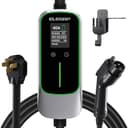
ELEGRP 40A Portable Level 2 Charger
Full 40-amp speed and the longest reach in a portable

Lectron Portable Level 2 Tesla Charger (NACS)
Tesla and NACS drivers who want a native plug on a portable

Ampure Go Portable Level 2 Charger
One charger for the garage and the road, certified for both

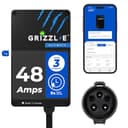
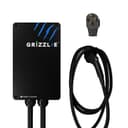
Grizzl-E Classic
Outdoor and cold-climate installs where nothing should need an app

Grizzl-E Classic Connect 40A
A tough plug-in charger that still schedules from an app

Grizzl-E Ultimate 48A
A hardwired 48-amp charger built for weather, with nothing to log into

Grizzl-E Ultimate 48A NACS
A permanently installed NACS charger built for weather

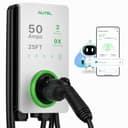
Autel MaxiCharger AC Elite Home 40A
A weather-rated smart charger on an existing 14-50 outlet

Lectron Nexus NACS (Tesla) Charger
Tesla / NACS owners who want no adapter at home

Emporia Level 2 EV Charger
Value shoppers who still want a real app and energy tracking

Lectron Nexus 48A J1772
48 amps, hardwired, with no account and no firmware

Autel MaxiCharger Home
Fully exposed outdoor installs and extreme climates
12 of the 21 chargers in scope qualify today.
Look at how long that list is relative to the unconstrained outdoor field. Almost the entire weather-rated market sits under this ceiling, which is the single most useful thing to know before you start shopping: you are not choosing between weather sealing and your budget.
What we ranked on
With price capped and sealing effectively universal, the ranking came down to four questions — and three of them are about what a maker is willing to put in writing.
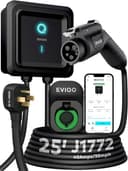
One: is there a published enclosure rating for the whole unit?Not a marketing adjective — a code. The Grizzl-E units publish “NEMA 4 (IP67)”. EVIQO publishes “IP66/NEMA-4 weatherproof enclosure”. Autel publishes “IP65 / NEMA 4X”, the only corrosion-rated figure in our registry. The ELEGRP publishes IP67 for the station and IP54 for the connector, which is a more precise and more honest disclosure than a single number would be. One unit in our registry publishes no enclosure rating at all, and we report that absence rather than reading one in from the listing copy.
Two: is there a published operating temperature range beside it?This is the spec that actually thins out, and the reason this page exists rather than being a thin slice of the outdoor roundup. Autel publishes -40°F to 131°F (-40°C to 55°C), the widest range of any charger we track at any price. The Grizzl-E units publish -22°F to 122°F. The ELEGRP publishes -22°F to 122°F. EVIQO publishes the same two figures but gives them as testedrather than as an operating range — a materially weaker claim, worded carefully, and we rank it accordingly.
Three: what happens to the cable in the cold?An enclosure rating says nothing about the thing you handle every night. Grizzl-E publishes specific claims about its 25-foot cable staying flexible in freezing weather, and Lectron publishes a comparable claim with a stated cable diameter for its own. That is not a safety issue, but a cable that goes rigid at -10°F is the part of a cold-climate install people actually complain about. The long-cable roundup covers reach separately.
Four: does it install the way an exposed charger should? Hardwiring removes a connection point from the weather, which is why the top two picks here are hardwired units. A plug-in charger outdoors is perfectly legitimate, but the receptacle and its in-use cover become the maintenance item, and GFCI protection on that circuit is typically required. Hardwired versus plug-in is the decision to settle first.
What a $500 ceiling actually costs you outdoors
Three things, and it is worth being precise because the honest answer is that none of them is weather performance.
A smaller box. The compact premium bodies are genuinely more compact than the cast-aluminium value units, which are heavy and substantial by design. On an exterior wall with space, that is irrelevant; in a narrow alcove beside a door, it is not.
Automatic load management.Nothing under this ceiling reads your whole service and throttles itself against household load. That feature lives above the line, and it is the one reason we would tell someone to cross it — see the small-panel roundup.
Software that ages well. Over-the-air firmware, long session history and utility demand-response programmes are a premium-brand proposition. Worth noting, though, that for an outdoor charger this cuts both ways: a unit with no network and a DIP switch has nothing to lose when Wi-Fi does not reach the end of the driveway, which is a common and underrated problem. Wi-Fi and connectivity covers it, and it is a real argument for the no-app picks here.
The two things to get right that are not the charger
We would rather spend your remaining budget here than on a bigger unit, because these two decisions affect an outdoor install more than any spec on this page.
Mounting height and position.The connector must never rest where snow accumulates or water stands, the cable must reach the car’s port from where you actually park, and the unit should sit where you are not reaching over a snowbank to use it. Get this wrong and you live with it daily; get it right and a mid-priced charger feels like a good one. Placement and mounting height is the page, and pedestal mounting is the answer for a driveway with no wall near the parking space.
Surge protection. An outdoor-adjacent circuit feeding an expensive electronic device is the textbook case for whole-panel surge protection, which is cheap relative to what it protects and, in recent code editions, required anyway on new or replaced service equipment in dwellings. The surge page has the detail, and charging without a garage covers the rest of the exposed-install picture.