Level Two Club

Best 240V EV Chargers

Our pick is the Emporia Level 2 EV Charger, because it is the one unit here sold for either a 50-amp or a 60-amp circuit, so it fits whichever rung you are on; the budget pick is the ELEGRP 40A portable, which delivers the full 40 amps a 50-amp circuit allows for a fraction of the price of a wall unit.

By Stephen V.Last updated How we pick

Every Level 2 EV charger is a 240-volt charger — there is no other kind — so the real question behind this search is not which charger runs on 240 volts but how many amps of 240 volts your house can give one. Our top pick is the Emporia Level 2 EV Charger, because it is sold for either route: 40 amps on a NEMA 14-50 plug and a 50-amp circuit, or 48 amps hardwired on a 60-amp circuit, as one purchase. The budget pick is the ELEGRP 40A portable, which puts the full 40 amps a 50-amp circuit permits onto a 25-foot cable with selectable output from 16 amps up, for a fraction of what a wall unit costs.

So this page is organised by circuit rather than by charger. Pick your rung from the table below — 20, 30, 40, 50, 60 or 70 amps — and the charger follows from it. The rule that converts one to the other is short: the National Electrical Code treats EV charging as a continuous load, so a charger may draw no more than 80% of the circuit it sits on. Multiply your breaker by 0.8 and you have your charger. Multiply your charger by 1.25 and you have your breaker.

Two things follow from that arithmetic and they explain most of this category. A NEMA 14-50 receptacle is on a 50-amp circuit, so every charger that plugs into onecaps at 40 amps — from every brand, with no exceptions. And 48 amps needs 60, which is a tidy pairing, while 50 amps needs 62.5 and therefore a 70-amp breaker, which is why the 50-amp tier is a worse buy than its nameplate suggests.

How this is funded: we earn a commission if you buy through our links, at no extra cost to you. It never changes which product we recommend, and we’ll tell you when we’d skip one. Full disclosure.

Quick picks

Ranked on published specs, charging speed, electrical fit and value. Select a row to jump to the full write-up. We have not bench-tested these chargers — here is exactly what we do instead.

#ProductBest forPrice
1
Emporia Level 2 EV Charger

Emporia Level 2 EV Charger

The value pick that doesn't feel cheap: a full 48 amps, ENERGY STAR listing, WiFi with genuine energy monitoring, and a 25 ft cable — for well under what the big names charge. It's the one we point most people to first.

Best overall, 50 or 60 A circuit
$449.00 · View on Amazon

Price as of November 12, 2026. #ad How we’re funded

2

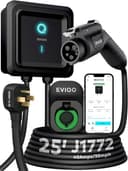
EVIQO 48A Level 2 Charger

A lot of charger for the money: a full 48 amps, WiFi with scheduling, ENERGY STAR, and the longest usable reach in this group thanks to a 25 ft cable plus a 40-inch input lead. A strong value alternative to Emporia if you want maximum reach.

Best on a 60-amp circuit
3
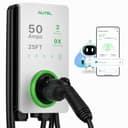
Autel MaxiCharger Home

Autel MaxiCharger Home

Built for the harshest driveway. The NEMA 4X enclosure is rated to keep charging in extreme cold and heat, it pushes a full 50 amps, and the app is capable. If your charger lives fully exposed to the weather, this is the one.

Best on a 70-amp circuit
$499.00 · View on Amazon

$568.0012% off

Price as of November 12, 2026. #ad How we’re funded

4
EVIQO 40A NEMA 14-50 Charger

EVIQO 40A NEMA 14-50 Charger

The most charger you can get without an electrician's invoice. It plugs into a NEMA 14-50 outlet for a full 40 amps, keeps the WiFi app, the ENERGY STAR listing and the 25 ft cable from EVIQO's hardwired unit, and can be unplugged and taken with you when you move.

Best on a 50-amp circuit
5
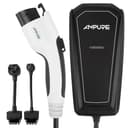
Ampure Go Portable Level 2 Charger

Ampure Go Portable Level 2 Charger

The only portable charger we track that is certified like a permanent one. UL 2594 / UL 2231, ENERGY STAR and an IP67 / NEMA 6P body rated from -22F to 122F, in a nine-pound module that ships with a NEMA 14-50 cord for 240V and a standard 5-15 cord for 120V. You give up eight amps against the 40A units and get, in exchange, a charger genuinely rated to live in a trunk and be rained on.

Best on a 40-amp circuit (and 120V)
$299.00 · View on Amazon

Price as of November 12, 2026. #ad How we’re funded

6
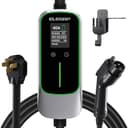
ELEGRP 40A Portable Level 2 Charger

ELEGRP 40A Portable Level 2 Charger

The full-speed portable. A genuine 40 amps on a NEMA 14-50, an IP67 station body rated -22F to 122F, and a 25-foot cable - the longest here by five feet - for less than the 32A unit costs. It is the heaviest thing here to coil and there is no app, but if the portable is also going to be your everyday charger, this is the one that does not make you choose.

Budget pick
$209.99 · View on Amazon

Price as of November 12, 2026. #ad How we’re funded

The picks in full

#1Best overall, 50 or 60 A circuit

Emporia Level 2 EV Charger

The value pick that doesn't feel cheap: a full 48 amps, ENERGY STAR listing, WiFi with genuine energy monitoring, and a 25 ft cable — for well under what the big names charge. It's the one we point most people to first.

Strengths

  • 48A output and ENERGY STAR at a value price
  • The app actually tracks energy use, not just on/off
  • Long 25 ft cable and a remote holster in the box

Trade-offs

  • 48A hardwired needs a 60A circuit; on a NEMA 14-50 plug it's limited to 40A
  • App polish trails ChargePoint's, and support is smaller
Max output
48 A
Power
11.5 kW
Connector
J1772
Install
Hardwired or NEMA 14-50 plug
Cable length
25 ft
Warranty
3 years
WiFi + app
Yes
Certifications
UL listed, ENERGY STAR

Our charging-speed math. At 48A (11.5 kW) and ~3.5 miles per kWh it adds about 40 miles of range per hour hardwired; on a 40A plug-in circuit, about 34.

Build note. 48A hardwired, or 40A on a NEMA 14-50 outlet, with a 25 ft cable and remote holder.

Specs read from the manufacturer spec sheet, on October 26, 2026. “Not published” means the brand does not state that figure.

#2Best on a 60-amp circuit

EVIQO 48A Level 2 Charger

A lot of charger for the money: a full 48 amps, WiFi with scheduling, ENERGY STAR, and the longest usable reach in this group thanks to a 25 ft cable plus a 40-inch input lead. A strong value alternative to Emporia if you want maximum reach.

Strengths

  • 48A output with WiFi scheduling at a value price
  • 25 ft charging cable plus a 40 in input cable — excellent reach
  • UL, ETL, FCC and ENERGY STAR listings

Trade-offs

  • Hardwired version needs a 60A circuit and an electrician
  • Smaller brand with a shorter track record than ChargePoint or Wallbox
Max output
48 A
Power
11.5 kW
Connector
J1772
Install
Hardwired
Cable length
25 ft
Warranty
3 years
WiFi + app
Yes
Certifications
UL, ETL, FCC, ENERGY STAR

Our charging-speed math. At 48A (11.5 kW) and ~3.5 miles per kWh, about 40 miles of range per hour.

Build note. Ships with a 25 ft charging cable plus a 40 in input cable — among the longest reach in class.

Specs read from the manufacturer spec sheet, on July 19, 2026. “Not published” means the brand does not state that figure.

#3Best on a 70-amp circuit

Autel MaxiCharger Home

Built for the harshest driveway. The NEMA 4X enclosure is rated to keep charging in extreme cold and heat, it pushes a full 50 amps, and the app is capable. If your charger lives fully exposed to the weather, this is the one.

Strengths

  • NEMA 4X enclosure rated for very cold and hot conditions
  • Full 50A output with a 25 ft cable
  • WiFi, Bluetooth and a capable app

Trade-offs

  • Autel's own page specifies a 70A circuit for full output, and the unit is hardwired only
  • App and ecosystem are newer than ChargePoint's
  • Autel publishes CSA and ENERGY STAR for this unit, not a UL listing
Max output
50 A
Power
12 kW
Connector
J1772
Install
Hardwired
Cable length
25 ft
Warranty
3 years
WiFi + app
Yes
Certifications
CSA certified, ENERGY STAR

Our charging-speed math. At its 50A max (12 kW) and ~3.5 miles per kWh it adds roughly 42 miles of range per hour.

Build note. IP65 / NEMA 4X enclosure with a published operating range of -40F to 131F (-40C to 55C), output adjustable from 16 to 50 A, a 25 ft cable, Bluetooth / WiFi / Ethernet / CAN / RS485 connectivity, and a 13.2 x 7.4 x 3.8 in body weighing 15.4 lb. Autel states a 70 A circuit is required for full output, and that its Adaptive Load Management 'requires compatible additional hardware' while charger-to-charger Dynamic Load Balancing does not.

Specs read from the manufacturer spec sheet, on October 10, 2026. “Not published” means the brand does not state that figure.

#4Best on a 50-amp circuit

EVIQO 40A NEMA 14-50 Charger

The most charger you can get without an electrician's invoice. It plugs into a NEMA 14-50 outlet for a full 40 amps, keeps the WiFi app, the ENERGY STAR listing and the 25 ft cable from EVIQO's hardwired unit, and can be unplugged and taken with you when you move.

Strengths

  • Plugs into an existing NEMA 14-50 outlet — no hardwiring, and it comes with you
  • Real WiFi app with 6-40A adjustment, scheduling and energy tracking
  • 25 ft charging cable plus a 40 in input lead, in an IP66 / NEMA 4 body

Trade-offs

  • 40 amps is the plug-in ceiling — for 48A you need the hardwired version
  • Needs a proper EV-grade 14-50 receptacle (an old dryer outlet is not the same thing)
  • Smaller brand with a shorter track record than ChargePoint or Wallbox
Max output
40 A
Power
9.6 kW
Connector
J1772
Install
NEMA 14-50 plug
Cable length
25 ft
Warranty
3 years
WiFi + app
Yes
Certifications
UL, ETL, FCC, ENERGY STAR

Our charging-speed math. At 40A (9.6 kW) and ~3.5 miles per kWh it adds roughly 34 miles of range per hour — an overnight charge for almost any daily commute.

Build note. Plug-in Gen-2 unit: 25 ft charging cable plus a 40 in NEMA 14-50 input lead, with app-adjustable output from 6 to 40 amps.

Specs read from the manufacturer spec sheet, on August 11, 2026. “Not published” means the brand does not state that figure.

#5Best on a 40-amp circuit (and 120V)

Ampure Go Portable Level 2 Charger

The only portable charger we track that is certified like a permanent one. UL 2594 / UL 2231, ENERGY STAR and an IP67 / NEMA 6P body rated from -22F to 122F, in a nine-pound module that ships with a NEMA 14-50 cord for 240V and a standard 5-15 cord for 120V. You give up eight amps against the 40A units and get, in exchange, a charger genuinely rated to live in a trunk and be rained on.

Strengths

  • Dual voltage: 32A / 7.7 kW on a 240V NEMA 14-50, or 12A / 1.4 kW on any standard 120V outlet
  • UL and cUL listed (UL 2594 / UL 2231 / UL 817) and ENERGY STAR certified - rare on a portable
  • IP67 / NEMA 6P watertight body rated -22F to 122F, and the module weighs 9 lb

Trade-offs

  • 32 amps, not 40 - about 27 miles of range an hour against 34 from a 40A unit
  • No app or scheduling is published, so the charging schedule has to live in the car
  • Costs more than 40A portables that publish far less about themselves
Max output
32 A
Power
7.7 kW
Connector
J1772
Install
NEMA 14-50 cord for 240V, NEMA 5-15 cord for 120V
Cable length
20 ft
Warranty
3 years
WiFi + app
Not published
Certifications
UL and cUL listed (UL 2594 / UL 2231 / UL 817), ENERGY STAR, FCC

Our charging-speed math. At 32A (7.7 kW) and ~3.5 miles per kWh it adds roughly 27 miles of range per hour; on the 120V cord (1.4 kW), roughly 5. Ampure's own page claims up to 25 mi/hr, so our arithmetic is the slightly more generous of the two.

Build note. Dual-voltage portable: 32A / 7.7 kW at 240V or 12A / 1.4 kW at 120V, input range 85-265 VAC, 20 ft cable, IP67 / NEMA 6P enclosure rated -30C to +50C (-22F to 122F), 9 lb module.

Specs read from the manufacturer spec sheet, on August 25, 2026. “Not published” means the brand does not state that figure.

#6Budget pick

ELEGRP 40A Portable Level 2 Charger

The full-speed portable. A genuine 40 amps on a NEMA 14-50, an IP67 station body rated -22F to 122F, and a 25-foot cable - the longest here by five feet - for less than the 32A unit costs. It is the heaviest thing here to coil and there is no app, but if the portable is also going to be your everyday charger, this is the one that does not make you choose.

Strengths

  • A real 40A / 9.6 kW, selectable down to 32, 24, 20 or 16 amps for a smaller circuit
  • 25 ft cable - the longest here, and enough to cross a garage
  • IP67 station body rated -22F to 122F, with a 1-to-12-hour delayed-start timer built in

Trade-offs

  • A 25 ft cable is the heaviest thing here to coil and carry - portability is relative
  • The connector is rated IP54, well below the station's IP67, so keep it off wet ground
  • No app, and ELEGRP does not publish an ENERGY STAR listing for this SKU
Max output
40 A
Power
9.6 kW
Connector
J1772
Install
NEMA 14-50 plug
Cable length
25 ft
Warranty
2 years
WiFi + app
No
Certifications
ETL listed

Our charging-speed math. At 40A (9.6 kW) and ~3.5 miles per kWh it adds roughly 34 miles of range per hour - the same speed as any 40A wall unit.

Build note. Portable plug-in unit with selectable output at 16, 20, 24, 32 or 40 amps and a 1-to-12-hour delayed-start timer, on a 25 ft cable; IP67 station and IP54 connector, rated -22F to 122F.

Specs read from the manufacturer spec sheet, on August 25, 2026. “Not published” means the brand does not state that figure.

Find your rung, then your charger

This is the table this page exists for. Read down the first column to the breaker you can dedicate to charging, and everything to the right of it follows.

Circuit size to charger setting to real charge speed, at 240 volts. The amp column is the NEC’s 80% continuous-load limit; the kW column is amps × 240 V; the miles-per-hour column is OUR arithmetic at a reference of roughly 3.5 miles per kWh, printed so you can re-run it for your own car. Nothing in this table is a manufacturer speed claim, and the gap that matters is at the bottom of the range, not the top.
CircuitCharger settingPowerRange addedOur pick at this rungWhen you are on it
20 A16 A3.8 kW~13 mi/hrChargePoint Home Flex or Autel 50A, dialled to 16 AA panel with almost nothing spare. Still roughly three times Level 1 speed, and enough for a 40-mile commute overnight
30 A24 A5.8 kW~20 mi/hrAny adjustable unit at 24 A; nobody builds a native 24 A chargerA reclaimed dryer circuit, or what a 100-amp service can give up without a load calculation fight
40 A32 A7.7 kW~27 mi/hrAmpure Go (native 32 A), or an adjustable unit set downAn older range circuit. Also the ceiling many plug-in hybrids and older EVs can actually use
50 A40 A9.6 kW~34 mi/hrEVIQO 40A plug-in, or the ELEGRP 40A portable on a budgetBy far the most common: this is the circuit behind a NEMA 14-50 receptacle, and the reason every plug-in charger stops at 40 A
60 A48 A11.5 kW~40 mi/hrEVIQO 48A hardwired, or the Emporia Level 2 hardwiredThe standard new-install pairing, and the fastest speed most cars on the road can accept
70 A50 A12 kW~42 mi/hrAutel MaxiCharger AC Elite Home 50ABuys under two extra miles an hour over 48 A for a bigger breaker and heavier conductors. Worth it only if the panel is being rebuilt anyway
100 A80 A19.2 kW~67 mi/hrAutel MaxiCharger 80AAlmost entirely theoretical at home: very few vehicles accept more than 48 A on AC, so the charger delivers nothing the car will take

Three things are worth drawing out of it. The first is that the speed gain is front-loaded. Going from 16 amps to 32 roughly doubles your overnight range. Going from 40 to 48 adds about six miles an hour. Going from 48 to 50 adds under two. Yet the install cost rises the other way: the top of the table is where the heavy conductors and the panel arguments are.

The second is that two rungs have no native hardware.Nobody builds a 24-amp home charger, and almost nobody builds a native 32-amp one — the Ampure Go is the only 32-amp unit in our registry. If your circuit is 30 or 40 amps, your charger is an adjustable unit set down to fit, which is the single strongest practical argument for buying adjustable.

The third is that the bottom of the table is not a consolation prize. Sixteen amps on a 20-amp circuit is about 13 miles of range an hour — roughly three times what a 120-volt outlet does, and about 130 miles over a ten-hour night. If your panel is full, that is a working home-charging setup, not a failure, and it is why our small-panel roundup exists.

The 125% rule, and the two numbers it creates

Almost every confusing thing about 240-volt charger shopping comes from one code provision, so it is worth stating plainly once. The NEC classifies EV charging as a continuous load — three hours or more at full draw, which overnight charging obviously is — and a branch circuit serving a continuous load must be rated for 125% of that load.

Run forwards it gives you the breaker: 40 × 1.25 = 50, 48 × 1.25 = 60, 50 × 1.25 = 62.5. Run backwards it gives you the charger: 50 × 0.8 = 40, 60 × 0.8 = 48. The one awkward case is 50 amps, because 62.5 is not a breaker size and the next one up is 70 — which is why two of the brands we track publish a 70-amp requirement for their 50-amp setting in plain text, and why 40 versus 48 amps is a more useful comparison than anything involving fifty.

That same rule is why every plug-in charger sold in North America stops at 40 amps, regardless of brand. A receptacle-based install puts the charger on the circuit behind the receptacle, a 14-50 sits on 50 amps, and 80% of 50 is 40. It is not a derating or a cost saving, and no manufacturer can engineer around it — which also means a plug-in listing advertising more than 40 amps is advertising a setting that circuit cannot support. Hardwired versus plug-in is the decision this creates.

Three ways to spend a 240-volt circuit

Once the circuit exists, there are genuinely three different products you can put on the end of it, and the right one is not always the obvious one.

A hardwired wall unitis the fastest and the tidiest: no receptacle, no plug to weather, and access to 48 amps. It is also wired into the building, which means an electrician both times — installing it and removing it. Our hardwired roundup ranks that field, and the under-$500 version covers it on a budget.

A receptacle plus a wall-mounted plug-in unit caps at 40 amps and buys you portability: the charger is personal property, it comes off the wall when you move, and a failed unit is a swap rather than a service call. It usually needs GFCI protection on the circuit, which is the hidden cost. The plug-in roundup is the field.

A receptacle plus a portable is the same 40 amps for considerably less money, with a bag instead of a wall bracket. The ELEGRP on this page publishes the same 40 amps and the same 25-foot cable as the wall units, and the Ampure Go adds a 120-volt cord so the same unit works at a hotel. What you give up is cable management, a holster, and in most cases a published enclosure rating on the whole assembly rather than on the station alone. The portable roundup ranks them, and portable versus wall-mounted is the head-to-head.

What 240 volts actually gets you over 120

The jump from a household outlet to a dedicated 240-volt circuit is the largest single improvement available in home charging, and it is worth quantifying rather than asserting.

A 120-volt outlet on a 15-amp circuit gives a charger 12 amps, which is about 1.4 kW and roughly 5 miles of range an hour by our arithmetic. The most modest 240-volt rung in the table above — 16 amps on a 20-amp circuit — is 3.8 kW and about 13 miles an hour. The common case, 40 amps on a 50-amp circuit, is 9.6 kW and about 34. That is a six-to-seven-fold improvement, and Hyundai, to pick one manufacturer that publishes a figure of its own, describes Level 2 as charging “up to 9 times faster than with a conventional 110-volt outlet”.

The practical effect is not really about speed, though. It is about never having to think about charging.At 5 miles an hour you plan; at 34 you plug in and the car is full in the morning whatever you did yesterday. That is the thing people actually buy, and it arrives at the 50-amp rung rather than at the top of the table — which is why we would spend a marginal budget on a longer cable or a better-sealed enclosure long before spending it on the last two amps. Is a Level 2 charger worth it works through the payback case, and Level 1 versus Level 2 is the honest comparison for anyone still deciding whether to run the circuit at all.
Frequently asked questions

Is a 240V charger the same as a Level 2 charger?

Yes. 'Level 2' is the DOE's term for AC charging at 208-240 volts, and '240V charger' is the same thing described by its voltage. Level 1 is 120 volts from an ordinary household outlet; Level 3 is DC fast charging, which is not a home product and is not what these units do. If a listing says 240V, Level 2 and J1772 or NACS, those three facts are describing the same category from three directions.

How many amps do I need for a 240V EV charger?

Whatever your panel can spare, and the answer is usually 40 or 48. Work it backwards: take the breaker you can dedicate and multiply by 0.8, because the NEC caps a continuous load at 80% of its circuit. A 50-amp circuit gives you a 40-amp charger and about 34 miles of range per hour by our arithmetic; a 60-amp circuit gives you 48 amps and about 40. Going above that needs a 70-amp circuit to buy under two extra miles an hour, which is why we rarely recommend it. The constraint is often the car rather than the panel — many EVs accept no more than 48 amps on AC, and plug-in hybrids far less.

Can I plug a 240V charger into a regular outlet?

Not a standard 120V household outlet, no — the voltage is wrong and the pinout is different. 240V chargers plug into 240V receptacles: a NEMA 14-50 (the RV and range outlet, on a 50-amp circuit), a NEMA 6-50 (a three-wire welder outlet), or a NEMA 14-30 (a dryer outlet, 30 amps, so a 24-amp ceiling). The exception worth knowing is a dual-voltage portable like the Ampure Go, which ships with cords for both and runs at 32 amps on 240V or 12 amps on 120V — the same unit covering both, at very different speeds.

Do I need 240V at all, or is 120V enough?

It depends entirely on your daily mileage, and for a surprising number of people 120V is genuinely enough. Level 1 adds roughly 3 to 5 miles of range per hour, so a twelve-hour overnight plug-in is about 40 to 60 miles — which covers the average US commute. Where it fails is a long commute, a cold climate where preconditioning eats into it, a short dwell time at home, or a second car sharing the circuit. Our Level 1 page covers the honest case for staying on 120V and our cost pages cover the difference in what you actually pay.

Is 208V the same as 240V for an EV charger?

Electrically it is close enough that every charger here accepts both, which is why spec sheets read '208/240 VAC'. The practical difference is speed: power is amps times volts, so the same 48-amp charger delivers about 10 kW at 208 volts against 11.5 kW at 240, roughly 13% slower. You see 208 volts in apartment buildings and commercial three-phase services, almost never in a detached house. If you are in a building on 208, your charger works fine and your charge times are a little longer than the marketing figures.

Can I install a 240V circuit for an EV charger myself?

In many jurisdictions a homeowner may legally pull a permit and do their own work, and in many others they may not — and this is a case where the permit matters beyond legality. A 240-volt, 60-amp continuous-load circuit is a serious piece of work: conductor sizing, a dedicated double-pole breaker, possibly a load calculation on the service, and an inspection. It also interacts with your insurance and with the resale of the house. Our DIY page sets out which parts are realistically homeowner work and which are not, and our electrician page covers what to ask for in a quote.

What does a 240V EV charger circuit cost to install?

It varies far more by house than by charger, and the charger is usually the smaller number. The drivers are the distance from the panel to the charger, whether the run is through finished space, whether the panel has a spare double-pole slot and the capacity to back it, and local permit and inspection fees. A panel at the other end of the house, or a service that needs upgrading first, changes the figure by an order of magnitude. We keep a cost breakdown page with the line items rather than a single national average, because a single average for this job is not a useful number.

Does a bigger 240V charger charge my car faster?

Only up to your car's own ceiling, and that ceiling is lower than most buyers assume. The wall unit offers current; the vehicle's onboard charger takes what it can use and no more. Many EVs cap at 48 amps on AC, plenty at 32 or 40, and a plug-in hybrid may stop at 14 or 16. Against a 32-amp car, a 50-amp charger and a 32-amp charger deliver identical charging — you have paid for amps that never leave the box. Finding your car's AC figure before you shop is the single highest-value five minutes in this purchase.

Sources

  • NFPA — Using the Latest NEC for EV Charger Installations — NFPA on NEC (NFPA 70) Article 625: EV charging is a continuous load, so circuits are sized to 125% of load (the 80% rule) (accessed July 19, 2026)
  • U.S. DOE Alternative Fuels Data Center — Electric Vehicle Charging Stations — US DOE on charging levels: Level 1 (~1.9 kW, ~5 mi/hr), Level 2 (2.9-19.2 kW, ~7.2 kW typical residential, ~25 mi/hr), and DC fast charging (accessed July 19, 2026)
  • U.S. DOE Alternative Fuels Data Center — Charging Electric Vehicles at Home — US DOE on home EV charging: most owners charge overnight on Level 1 or Level 2, installs follow NEC Article 625, with example home-charging costs (accessed July 19, 2026)
  • Emporia - EV Chargers (Classic vs Pro) — Emporia's own Classic-vs-Pro comparison page: both units publish a 25 ft cable, 'NEMA Plug or Hardwire' installation, 'Up to 48A' and a 3-year warranty. The feature rows list Smart Scheduling, Home Energy Monitoring, Solar Charging Integration, Peak Demand Management and PowerSmart Load Management, footnoted for the Classic as 'Requires Vue Home Energy Monitor' and for the Pro as 'Requires Vue Home Energy Monitor and PowerSmart upgrade'. The Classic section states 'Add the Vue Home Energy Monitor and we'll manage Peak Demand and automatically charge with your excess solar power', and Emporia's platform lists 'Excess Solar Management' as a named feature. The page also states 'PowerSmart comes standard with the Emporia Pro, but can be added to the Emporia Classic for an extra cost'. Emporia's own listed prices on the date accessed are not reprinted here. RE-READ October 17, 2026 for the smart-home roundup: every figure above is unchanged, the page additionally publishes 'Intelligent Load Sharing' for multiple chargers on one circuit and an in-app assistant ('Ask questions about your energy usage and get instant answers'), and it names NO third-party or smart-home integration of any kind - no Alexa, Google Home, Apple Home / HomeKit, Matter, Home Assistant, IFTTT, OCPP or public API appears anywhere on it (accessed October 17, 2026)
  • Emporia — Classic Level 2 EV Charger spec sheet (PDF) — Emporia's own spec sheet: watertight NEMA Type 4 indoor/outdoor enclosure, operating temperature -22F to 122F, 25 ft cable (accessed July 20, 2026)
  • EVIQO - Level 2 EV Charger, 48A hardwired (Gen 2), 240V — EVIQO's own product page for the hardwired unit, read for the Grizzl-E head-to-head. The product title reads '48A (50A Max)', and the description states that 50 A is unlocked by setting DIP switches 4 and 5 with 'a dedicated 70A circuit required'; the dedicated circuit for 48 A is given as 60 A. The FAQ's DIP-switch list offers 16A, 32A, 40A and 48A - it does not list the 50A setting - while the app slider is published as '6-48A' in 1 A steps. Other published figures: 240 V, 11.5 kW at 48 A described as '11.5 kW continuous (hardwired)', an SAE J1772 connector with a metal latch, a 25 ft charging cable on a 40 in input cable, an 'IP66/NEMA-4 weatherproof enclosure', a 3-year standard warranty with a 4-year extension offered at checkout, 'UL/ETL/FCC/Energy Star certified' in the description against 'Certified by ETL, Energy Star, and FCC' in the FAQ and 'UL & ETL listed' in its comparison table, enhanced 2.4 GHz WiFi with start/stop, current setting, reminders, consumption and cost tracking, up to three off-peak schedules and over-the-air updates, and FAQ wiring guidance of THWN-2 copper with 6 AWG L1/L2 and a 10 AWG ground. Temperature is given as 'tested' from -22F to 122F rather than as an operating range. The page's own speed claims are inconsistent with each other: '45 MPH CHARGING', 'Up to 50 miles of range per hour', 'up to 46 miles per hour (48A)' and '~23 miles per hour' in its savings calculator. NOT published: weight, dimensions, an explicit operating-temperature range, solar integration, whole-home load management, or any Alexa, Google Home, HomeKit, Matter, Home Assistant or OCPP integration. A J1772-to-NACS adapter is required for a Tesla and is not included. RE-READ October 24, 2026 for the Autel head-to-head and the NACS roundup. Unchanged on every figure above, with three additions. (1) EVIQO now publishes a 'NACS / Tesla Chargers' category of its own, and states of it: 'This NACS version is plug-and-play with all Tesla models and 2025+ Hyundai IONIQ 5/6. For other EVs (Ford, Chevy, BMW, Kia, Rivian, etc.), use a NACS-to-J1772 adapter' - so the brand sells a NACS unit, while the two hardwired and plug-in SKUs this site tracks remain J1772. (2) A fourth, wider current claim appears in the configurator copy - 'Easily set power (6-50A) for your home's capacity' - which contradicts both the app slider EVIQO publishes as '6-48A' and its own DIP list of 16/32/40/48 A. (3) The install requirements are stated plainly: 'Plug-in: NEMA 14-50 outlet on a 50A dedicated circuit. Hardwired: 60A dedicated circuit with THWN-2 copper wires (L1/L2: 6 AWG, Ground: 10 AWG)', and the plug-in route is described as capped at 40A / 9.6 kW against the hardwired unit's 48A - 'gives you 20% more speed'. RE-READ October 31, 2026 for the 50-amp roundup. The product title still reads 'EVIQO Level 2 EV Charger, 48A (50A Max), 240V, Hardwired, J1772 for Non-Tesla EVs', and the two circuit sentences that matter are still published side by side in plain text: 48 A requires 'a dedicated 60A circuit to deliver 48A (National Electrical Code requirements)' and 50 A requires 'a dedicated 70A circuit'. Two further contradictions are now recorded in full, because the 50-amp page turns on them. (1) EVIQO's own comparison table and 'What's in the Box' section describe the unit as 50A and attribute '11.5 kW continuous (hardwired)' to that 50 A - but 11.5 kW at 240 V is 48 A, not 50, which would be 12 kW. The brand's own kilowatt figure therefore describes the 48-amp setting while being labeled 50. (2) The amperage controls still disagree four ways across one page: the DIP list is '16A / 32A / 40A / 48A', the 50 A setting is reached by 'DIP switches to positions 4, 5', the app slider is published as 'set 6-48A current', and the configurator copy says 'Easily set power (6-50A) for your home's capacity'. Also re-confirmed: 'IP66/NEMA-4 weatherproof enclosure', '-22F to 122F' given as tested, THWN-2 copper with 6 AWG L1/L2 and 10 AWG ground, a 3-year warranty extendable to 4 at checkout, and the four mutually inconsistent speed claims ('45 MPH CHARGING', 'up to 46 miles per hour (48A)', 'Up to 50 miles of range per hour', '~23 miles per hour' in the savings calculator) (accessed October 31, 2026)
  • EVIQO — Level 2 EV Charger, 40A (9.6 kW), NEMA 14-50 plug-in (Gen 2) — EVIQO's own product page: 40A / 9.6 kW on a NEMA 14-50 plug, SAE J1772, 25 ft charging cable plus a 40 in input cable, IP66 / NEMA 4 enclosure, UL / ETL / FCC / ENERGY STAR listings, 3-year standard warranty, app-adjustable 6-40A output, and a note that it needs an EV-grade 4-prong 14-50 receptacle rather than a dryer outlet. RE-READ September 15, 2026 for the garage roundup: the page additionally states an operating temperature range of -22F to 122F, that the app needs a 2.4 GHz WiFi connection, that the standard 3-year warranty is extendable to 4, and that the unit ships in 1-2 business days (accessed September 15, 2026)
  • Autel Energy — MaxiCharger AC Elite Home 50A product page — Autel's own listing: compliant with NEMA 4X standards, operating temperature -40F to 131F, 25 ft cable, 3-year warranty. RE-READ October 10, 2026 for the Emporia head-to-head, and the page now publishes materially more: 'Maximum Output | 12 kW / 50 A' with output 'Adjustable 16-50 A'; installation given as 'Hardwired - 70 A Circuit for Full Output'; an 'SAE J1772' connector; an enclosure rating of 'IP65 / NEMA 4X'; an operating range of '-40 to 131 F (-40 to 55 C)'; a '3 Years' warranty quoted as a single term with no component split; 'CSA and ENERGY STAR compliance' (no UL listing is claimed on this page); connectivity listed as 'Bluetooth, Wi-Fi, Ethernet, CAN, RS485'; app control to start, stop and schedule charging, monitor activity and adjust current; dimensions of 13.2 x 7.4 x 3.8 in (336 x 187 x 97 mm) and a weight of 15.4 lbs (7 kg); and the load-management sentence this comparison turns on - 'Supports both Adaptive Load Management (ALM) and charger-to-charger Dynamic Load Balancing (DLB). ALM requires compatible additional hardware, while DLB works between chargers without additional hardware.' The page publishes no solar-specific feature. RE-READ October 24, 2026 for the EVIQO head-to-head, and three things are published that the October reading did not record. (1) The amperage steps are DISCRETE, not a continuum: the electrical line reads '208/240 VAC, 60 Hz, single phase @ 16 A, 24 A, 32 A, 40 A, 48 A, 50 A', so '16-50 A adjustable' means six settings, not every value in between. (2) Autel now publishes NACS variants of this hardware alongside the J1772 one - the configuration selector offers 'Hardwired Connection/50A NACS-Tesla' and the related AC Lite 50A is listed both as 'AC Lite 50A EV Charger' and 'AC Lite 50A EV Charger NACS'. (3) The weight is split by configuration - 'Hardwired model: about 14.8 lbs. (6.7 kg) / NEMA plug-in model: about 15.4 lbs. (7 kg)' - where our October 10 note recorded only the 15.4 lb figure. The 70-amp-circuit sentence, the IP65 / NEMA 4X rating, the -40F to 131F range, the 25 ft J1772 cable and the CSA + ENERGY STAR / no-UL certification picture are all unchanged. Autel's own store price on this visit was $525.00 against a $639.00 list. RE-READ October 31, 2026 for the 50-amp roundup. Every figure above is unchanged — '12 kW / 50 A' maximum output, 'Adjustable 16-50 A' over the six discrete steps '16 A, 24 A, 32 A, 40 A, 48 A, 50 A', 'Hardwired - 70 A Circuit for Full Output', 'SAE J1772', 'IP65 / NEMA 4X', '-40 to 131 F (-40 to 55 C)', a 25 ft cable, '3 Years', CSA and ENERGY STAR with no UL claim, and the ALM/DLB sentence. One addition: the holster is a CONFIGURATION, and it changes the depth — 13.2 x 7.4 x 3.8 in with the in-body holster against 13.2 x 7.4 x 3.3 in with a separate holster, which is the half-inch that decides whether the unit clears a tight garage wall. Autel's own store price was again $525.00 against $639.00, shown as '18% OFF' (accessed October 31, 2026)
  • Autel Energy — MaxiCharger AC 80A product page — Autel's own product page for the MaxiCharger AC 80A: NEMA 3S / IK10 enclosure, operating temperature -40F to 131F (-40C to +55C) with derating above 113F, 19 ft or 25 ft cable options, SAE J1772 or NACS connector, hardwired with wall or pedestal mounting, output adjustable 6A to 80A via the mobile app, and a stated warranty of 3 years extendable up to 5 — a figure that differs from the 5-year term on Autel's own US store listing for the same unit (accessed August 12, 2026)
  • Ampure - Ampure Go portable Level 2 EV charger product page — Ampure's own specifications for the Go: 32 A / 7.7 kW at 240 V or 12 A / 1.4 kW at 120 V, input range 85-265 VAC at 45-65 Hz, SAE J1772 coupler, NEMA 14-50 and NEMA 5-15 cords, 20 ft (6 m) cable, IP67 rated 'submersible up to 3 feet' with a NEMA 6P watertight enclosure, operating range -30C to +50C (-22F to 122F), 9 lb (4.1 kg) module, and listings to UL, cUL, UL 2594, UL 2231, UL 817, ICES, FCC, ENERGY STAR, REACH and RoHS. Ampure states 'up to 25 miles of range per hour' at 240 V. RE-READ October 10, 2026 for the review: every figure above is unchanged on the page. Confirmed again that this page publishes NO warranty term (that figure is on the store listing), NO app, WiFi or scheduling feature, and NO description of the unit's internal safety protections (no GFCI / CCID figure, no over-temperature behavior). The page describes the unit as an 'IP67-rated IC-CPD', i.e. an in-cable control and protection device, and the specification block gives the plug types as 'NEMA 14-50 & NEMA 5-15' alongside an 'IEC grid plug'. Ampure's current line separates this unit from a distinct 'Go 2 (NACS)' model; the specifications above are the Gen 1 J1772 unit Amazon lists as the 'Go 1' (accessed October 10, 2026)
  • ELEGRP Store - 40A Level 2 portable J1772 EV charger (NEMA 14-50) — ELEGRP's own listing: 40 A / 9.6 kW on 240 V AC at 50/60 Hz with selectable output at 16, 20, 24, 32 or 40 A, SAE J1772 connector on a NEMA 14-50 plug ('For NEMA 14-50 Outlets Only'), 25 ft cable (16 ft and 21 ft also offered), IP67 charging station and IP54 connector, operating range -22F to +122F (-30C to +50C), 1-to-12-hour delayed-start timer, 2-year warranty, 'ETL & UL' listed. RE-READ September 5, 2026 for the review: the specification table is unchanged, and the page additionally states 'Fully ETL certified and built with UL-listed components - including the J1772 plug, cable, and NEMA 14-50 connector', a built-in display reporting charging current, voltage, total energy delivered (kWh) and internal temperature with LED fault patterns, a wall-mounted holder plus anchors and a carry bag in the box, Tesla compatibility via a J1772-to-NACS adapter sold separately, a 30-day return window and 60-day price protection. The page does not name the UL standards, publish a weight, publish an ENERGY STAR certification, or publish app support for this SKU, and its marketing copy carries two conflicting range claims ('Up to 37 Miles/H' and '30 Miles Per Hour') plus an operating range ('-21F to 121F') that disagrees with its own specification table (accessed September 5, 2026)
  • ChargePoint — Home Flex datasheet (PDF) — ChargePoint's own datasheet: enclosure rating Type 3R per UL 50E, operating temperature -22F to 122F, 23 ft cable, plus installer notes that an outdoor plug-in install requires an outdoor-rated GFCI breaker upstream while an external GFCI may conflict with the charger's internal ground-fault protection on a hardwired install. RE-READ September 3, 2026 for the review refresh: the same datasheet also publishes maximum 12 kW (240V AC x 50A) with output amperage adjustable via the mobile app to 16A, 24A, 32A, 40A, 48A or 50A; a required dedicated dual-pole breaker rated for 125% of maximum load; 'Software Updates: Firmware updated over-the-air (OTA)'; 2.4/5 GHz Wi-Fi (802.11 a/b/g/n); local storage of up to 90 days of charging session data (100 sessions) if the network drops; power measurement accuracy +/- 2.0%; ground-fault detection by 20 mA CCID with auto retry; and UL and cUL listing per UL 2594, UL 2231-1 and UL 2231-2, NEC Article 625 compliant. Ordering information lists the plug-in station models CPH50-NEMA6-50-L23 and CPH50-NEMA14-50-L23 (accessed September 3, 2026)
  • FuelEconomy.gov — Electric Vehicles: Learn More About the Label — DOE/EPA on EV efficiency: kWh per 100 miles and MPGe, accounting for AC charging losses (accessed July 19, 2026)
  • ENERGY STAR — Electric Vehicle Chargers — ENERGY STAR on EVSE efficiency: certified chargers use about 40% less energy in standby than non-certified units (accessed July 19, 2026)

Keep reading