Level Two Club

Best ENERGY STAR Certified EV Chargers

A home charger spends about 22 hours a day doing nothing. ENERGY STAR is the only label on the box that speaks to what it costs you during those hours — and it's also, quietly, the label that unlocks a lot of utility rebates.

By Stephen V.Last updated How we pick

Of all the acronyms printed on a charger’s box, ENERGY STAR is the one most people skip. That is a mistake for two unglamorous reasons. The first is standby: EPA states that certified chargers use about 40% less energy in standbythan non-certified units, and a home charger is in standby for the overwhelming majority of its life — plugged into the wall, waiting, drawing a trickle, twenty-four hours a day for a decade. The second is money from somewhere else entirely: a large number of utility and state charger rebates list ENERGY STAR certification as an eligibility requirement. The label can be worth several hundred dollars before it saves you a single kilowatt-hour.

So we ranked on one: certification actually published by the maker — if a brand doesn’t state it on its own spec sheet, we record “not published” rather than trusting a marketplace badge; two: the safety listings alongside it, because ENERGY STAR is an efficiency program and UL/ETL listing is the one that keeps you safe; three: charging speed in amps and real miles per hour; four: whether the smart features earn their standby draw— a WiFi radio that lets you charge on off-peak rates saves far more than it costs; and five: the fundamentals— enclosure, cable, warranty, install type and price.

We own none of these units and have not measured anyone’s standby draw ourselves; the certification data below is what each manufacturer publishes, read on a dated visit. One honest caveat up front: ENERGY STAR is a small saving in absolute dollars. It is worth having, it is worth filtering on if you are chasing a rebate, and it is not worth paying a large premium for on its own.

How this is funded: we earn a commission if you buy through our links, at no extra cost to you. It never changes which product we recommend, and we’ll tell you when we’d skip one. Full disclosure.

Quick picks

Ranked on published specs, charging speed, electrical fit and value. Select a row to jump to the full write-up. We have not bench-tested these chargers — here is exactly what we do instead.

#ProductBest forPrice
1
Emporia Level 2 EV Charger

Emporia Level 2 EV Charger

The value pick that doesn't feel cheap: a full 48 amps, ENERGY STAR listing, WiFi with genuine energy monitoring, and a 25 ft cable — for well under what the big names charge. It's the one we point most people to first.

Best overall
$449.00 · View on Amazon

Price as of September 2, 2026. #ad How we’re funded

2
ChargePoint Home Flex

ChargePoint Home Flex

The safest default for most homes: you set the amperage in the app anywhere from 16A to 50A, so one charger fits whatever circuit your panel can spare today and scales up if you upgrade later. The app is the most mature here, and the warranty is long.

Best app
$456.74 · View on Amazon

Price as of September 2, 2026. #ad How we’re funded

3
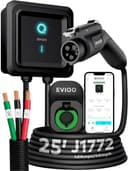
EVIQO 48A Level 2 Charger

EVIQO 48A Level 2 Charger

A lot of charger for the money: a full 48 amps, WiFi with scheduling, ENERGY STAR, and the longest usable reach in this group thanks to a 25 ft cable plus a 40-inch input lead. A strong value alternative to Emporia if you want maximum reach.

Best value 48A
$428.98 · View on Amazon

$479.0010% off

Price as of September 2, 2026. #ad How we’re funded

4
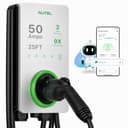
Autel MaxiCharger Home

Autel MaxiCharger Home

Built for the harshest driveway. The NEMA 4X enclosure is rated to keep charging in extreme cold and heat, it pushes a full 50 amps, and the app is capable. If your charger lives fully exposed to the weather, this is the one.

Best outdoor
$499.00 · View on Amazon

$568.0012% off

Price as of September 2, 2026. #ad How we’re funded

5
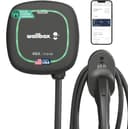
Wallbox Pulsar Plus

Wallbox Pulsar Plus

The one to buy when wall space is tight: it's among the smallest 48A units you can get, with Power Boost load balancing so it can share a circuit without tripping the main. A polished premium charger — and priced like one.

Best compact
$614.99 · View on Amazon

$699.9912% off

Price as of September 2, 2026. #ad How we’re funded

6
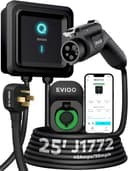
EVIQO 40A NEMA 14-50 Charger

EVIQO 40A NEMA 14-50 Charger

The most charger you can get without an electrician's invoice. It plugs into a NEMA 14-50 outlet for a full 40 amps, keeps the WiFi app, the ENERGY STAR listing and the 25 ft cable from EVIQO's hardwired unit, and can be unplugged and taken with you when you move.

Best plug-in
$395.98 · View on Amazon

$469.9916% off

Price as of September 2, 2026. #ad How we’re funded

7
Lectron Nexus NACS (Tesla) Charger

Lectron Nexus NACS (Tesla) Charger

For a Tesla owner who doesn't want to babysit an adapter: a native NACS (J3400) connector plugs straight into the car, at a full 48 amps, with the safety listings you want. No app, but Teslas schedule charging in the car anyway.

Best for Tesla
$429.99 · View on Amazon

$459.997% off

Price as of September 2, 2026. #ad How we’re funded

The picks in full

#1Best overall

Emporia Level 2 EV Charger

The value pick that doesn't feel cheap: a full 48 amps, ENERGY STAR listing, WiFi with genuine energy monitoring, and a 25 ft cable — for well under what the big names charge. It's the one we point most people to first.

Strengths

  • 48A output and ENERGY STAR at a value price
  • The app actually tracks energy use, not just on/off
  • Long 25 ft cable and a remote holster in the box

Trade-offs

  • 48A hardwired needs a 60A circuit; on a NEMA 14-50 plug it's limited to 40A
  • App polish trails ChargePoint's, and support is smaller
Max output
48 A
Power
11.5 kW
Connector
J1772
Install
Hardwired or NEMA 14-50 plug
Cable length
25 ft
Warranty
3 years
WiFi + app
Yes
Certifications
UL listed, ENERGY STAR

Our charging-speed math. At 48A (11.5 kW) and ~3.5 miles per kWh it adds about 40 miles of range per hour hardwired; on a 40A plug-in circuit, about 34.

Build note. 48A hardwired, or 40A on a NEMA 14-50 outlet, with a 25 ft cable and remote holder.

Specs read from the manufacturer spec sheet, on July 19, 2026. “Not published” means the brand does not state that figure.

#2Best app

ChargePoint Home Flex

The safest default for most homes: you set the amperage in the app anywhere from 16A to 50A, so one charger fits whatever circuit your panel can spare today and scales up if you upgrade later. The app is the most mature here, and the warranty is long.

Strengths

  • Adjustable 16-50A means it fits a small panel now and a bigger circuit later
  • The most mature app of the group — scheduling, reminders, usage history
  • 3-year warranty and a long 23 ft cable

Trade-offs

  • You pay a premium over value 48A chargers for the app and brand
  • Full 50A output needs a 60A circuit most older panels don't have to spare
Max output
50 A
Power
12 kW
Connector
J1772
Install
Hardwired (plug-in NEMA 14-50 SKU also sold)
Cable length
23 ft
Warranty
3 years
WiFi + app
Yes
Certifications
UL/cUL listed, ENERGY STAR

Our charging-speed math. At its 50A max (12 kW) and a typical 3.5 miles per kWh, the Home Flex adds roughly 42 miles of range per hour. Dial it down to 40A to fit a 50A circuit and you get about 34.

Build note. Flexible amperage is adjustable in the app from 16A up to 50A.

Specs read from the manufacturer spec sheet, on July 19, 2026. “Not published” means the brand does not state that figure.

#3Best value 48A

EVIQO 48A Level 2 Charger

A lot of charger for the money: a full 48 amps, WiFi with scheduling, ENERGY STAR, and the longest usable reach in this group thanks to a 25 ft cable plus a 40-inch input lead. A strong value alternative to Emporia if you want maximum reach.

Strengths

  • 48A output with WiFi scheduling at a value price
  • 25 ft charging cable plus a 40 in input cable — excellent reach
  • UL, ETL, FCC and ENERGY STAR listings

Trade-offs

  • Hardwired version needs a 60A circuit and an electrician
  • Smaller brand with a shorter track record than ChargePoint or Wallbox
Max output
48 A
Power
11.5 kW
Connector
J1772
Install
Hardwired
Cable length
25 ft
Warranty
3 years
WiFi + app
Yes
Certifications
UL, ETL, FCC, ENERGY STAR

Our charging-speed math. At 48A (11.5 kW) and ~3.5 miles per kWh, about 40 miles of range per hour.

Build note. Ships with a 25 ft charging cable plus a 40 in input cable — among the longest reach in class.

Specs read from the manufacturer spec sheet, on July 19, 2026. “Not published” means the brand does not state that figure.

#4Best outdoor

Autel MaxiCharger Home

Built for the harshest driveway. The NEMA 4X enclosure is rated to keep charging in extreme cold and heat, it pushes a full 50 amps, and the app is capable. If your charger lives fully exposed to the weather, this is the one.

Strengths

  • NEMA 4X enclosure rated for very cold and hot conditions
  • Full 50A output with a 25 ft cable
  • WiFi, Bluetooth and a capable app

Trade-offs

  • 50A needs a 60A circuit and typically a hardwired install
  • App and ecosystem are newer than ChargePoint's
Max output
50 A
Power
12 kW
Connector
J1772
Install
Hardwired
Cable length
25 ft
Warranty
3 years
WiFi + app
Yes
Certifications
CSA certified, ENERGY STAR

Our charging-speed math. At its 50A max (12 kW) and ~3.5 miles per kWh it adds roughly 42 miles of range per hour.

Build note. NEMA 4X weatherproof enclosure rated for operation down to about -40 degrees F.

Specs read from the manufacturer spec sheet, on July 19, 2026. “Not published” means the brand does not state that figure.

#5Best compact

Wallbox Pulsar Plus

The one to buy when wall space is tight: it's among the smallest 48A units you can get, with Power Boost load balancing so it can share a circuit without tripping the main. A polished premium charger — and priced like one.

Strengths

  • Genuinely compact for a 48A charger — easy to place
  • Power Boost load balancing avoids a panel upgrade in some homes
  • Bluetooth plus WiFi, with a clean app

Trade-offs

  • One of the pricier chargers here
  • Hardwired only — no plug-in option for renters
Max output
48 A
Power
11.5 kW
Connector
J1772
Install
Hardwired
Cable length
25 ft
Warranty
3 years
WiFi + app
Yes
Certifications
ENERGY STAR

Our charging-speed math. At 48A (11.5 kW) and ~3.5 miles per kWh, about 40 miles of range per hour. Power Boost can throttle it to protect a shared circuit.

Build note. One of the most compact 48A chargers in its class, with both Bluetooth and WiFi.

Specs read from the manufacturer spec sheet, on July 19, 2026. “Not published” means the brand does not state that figure.

#6Best plug-in

EVIQO 40A NEMA 14-50 Charger

The most charger you can get without an electrician's invoice. It plugs into a NEMA 14-50 outlet for a full 40 amps, keeps the WiFi app, the ENERGY STAR listing and the 25 ft cable from EVIQO's hardwired unit, and can be unplugged and taken with you when you move.

Strengths

  • Plugs into an existing NEMA 14-50 outlet — no hardwiring, and it comes with you
  • Real WiFi app with 6-40A adjustment, scheduling and energy tracking
  • 25 ft charging cable plus a 40 in input lead, in an IP66 / NEMA 4 body

Trade-offs

  • 40 amps is the plug-in ceiling — for 48A you need the hardwired version
  • Needs a proper EV-grade 14-50 receptacle (an old dryer outlet is not the same thing)
  • Smaller brand with a shorter track record than ChargePoint or Wallbox
Max output
40 A
Power
9.6 kW
Connector
J1772
Install
NEMA 14-50 plug
Cable length
25 ft
Warranty
3 years
WiFi + app
Yes
Certifications
UL, ETL, FCC, ENERGY STAR

Our charging-speed math. At 40A (9.6 kW) and ~3.5 miles per kWh it adds roughly 34 miles of range per hour — an overnight charge for almost any daily commute.

Build note. Plug-in Gen-2 unit: 25 ft charging cable plus a 40 in NEMA 14-50 input lead, with app-adjustable output from 6 to 40 amps.

Specs read from the manufacturer spec sheet, on August 11, 2026. “Not published” means the brand does not state that figure.

#7Best for Tesla

Lectron Nexus NACS (Tesla) Charger

For a Tesla owner who doesn't want to babysit an adapter: a native NACS (J3400) connector plugs straight into the car, at a full 48 amps, with the safety listings you want. No app, but Teslas schedule charging in the car anyway.

Strengths

  • Native NACS connector — no J1772-to-Tesla adapter to lose
  • Full 48A output and a weather-rated IP66 body
  • UL/ETL safety listings plus ENERGY STAR

Trade-offs

  • No WiFi app — you schedule in the Tesla app instead
  • NACS connector is best for Tesla/NACS cars; other EVs need a NACS-to-J1772 adapter
Max output
48 A
Power
11.5 kW
Connector
NACS
Install
Hardwired
Cable length
23 ft
Warranty
3 years
WiFi + app
No
Certifications
UL 2594/2231/2251 (ETL listed), ENERGY STAR, FCC

Our charging-speed math. At 48A (11.5 kW) and ~3.5 miles per kWh, about 40 miles of range per hour into a Tesla.

Build note. Native NACS (J3400) connector plugs straight into a Tesla with no adapter; includes a holster.

Specs read from the manufacturer spec sheet, on July 19, 2026. “Not published” means the brand does not state that figure.

What the label actually certifies

ENERGY STAR is run as an efficiency program, and for EV charging equipment the headline claim is specific: certified chargers use about 40% less energy in standby than non-certified ones. That is a narrower claim than most people assume when they see the logo, and it is worth understanding exactly why it matters here more than it would on, say, a kettle.

A home charger is an appliance with an unusual duty cycle. If you charge for two hours a night, the unit spends roughly 22 hours a day energized and idle— radio awake, contactor waiting, indicator lit. Multiply a few watts of standby by 8,000 hours a year by ten years of service, and the standby figure stops being a rounding error in the product’s lifetime energy use. It is still small in dollars — we’ll come to that — but it is the number the certification exists to control.

Certifications as published by each manufacturer on the spec sheet cited in our sources. “Not published” means the maker does not state it — which is a finding, not an assumption either way.
ChargerENERGY STARSafety listingsMax amps
Emporia Level 2 EV ChargerYesUL listed, ENERGY STAR48 A
ChargePoint Home FlexYesUL/cUL listed, ENERGY STAR50 A
EVIQO 48A Level 2 ChargerYesUL, ETL, FCC, ENERGY STAR48 A
Autel MaxiCharger HomeYesCSA certified, ENERGY STAR50 A
Wallbox Pulsar PlusYesENERGY STAR48 A
EVIQO 40A NEMA 14-50 ChargerYesUL, ETL, FCC, ENERGY STAR40 A
Lectron Nexus NACS (Tesla) ChargerYesUL 2594/2231/2251 (ETL listed), ENERGY STAR, FCC48 A

The honest arithmetic on savings

We are not going to inflate this. Standby draw on a residential charger is a handful of watts, not hundreds. At the national residential average of 17.30 cents per kWh that the EIA reports for 2025, saving a couple of watts continuously works out to a few dollars a year. Real, but not a reason to choose one charger over another on its own.

Two things make the label worth filtering on anyway:

  • Rebate eligibility.A large share of utility and state charger rebate programs use ENERGY STAR certification as a qualifying condition, because it gives them a third-party list rather than a judgment call. That can be worth hundreds of dollars — two orders of magnitude more than the electricity saving. Check your own program’s current terms; our incentives guide covers how to find the local ones, and why the federal 30C credit is no longer among them.
  • It correlates with a serious product.Certification costs a manufacturer time and money, so the units carrying it tend to be the ones from brands investing in compliance generally — which usually shows up in the safety listing, the warranty and the documentation too. It is a weak signal, but it points the right way.

The lever that doesmove real money is when you charge, not which certified box you charge with. Shifting an EV’s consumption onto an off-peak rate typically changes the bill by far more than any efficiency spec — the arithmetic is in our time-of-use guide, and what an EV adds to your electric bill puts the whole thing in monthly terms.

The picks, and why each one is here

The Emporia Level 2is the pick for most homes shopping this filter. It carries UL listing and ENERGY STAR, runs a full 48 amps hardwired (or 40 on a NEMA 14-50 plug), ships a 25-foot cable and a remote holster, and the app does genuine energy monitoring rather than just on/off — which is the feature that lets you verify the savings you came here for. Its app polish trails ChargePoint’s and the brand is smaller. See the Emporia review.

The ChargePoint Home Flex is the certified charger to buy if the app is the point. UL/cUL listed and ENERGY STAR, adjustable from 16 to 50 amps so it fits whatever circuit you have, a 23-foot cable and a three-year warranty. You pay a premium over the value 48-amp units for the software and the brand. Full detail in the Home Flex review.

The EVIQO 48A is the value 48-amp certified unit: UL, ETL, FCC and ENERGY STAR listings, WiFi scheduling, and the longest total reach in the group thanks to a 25-foot cable plus a 40-inch input lead. Hardwired only at full output. Its plug-in sibling, the EVIQO 40A, carries the same listings on a NEMA 14-50 plug with app-adjustable 6–40 A output — the certified choice when you want to avoid an electrician entirely. See the EVIQO 48A review and the EVIQO 40A review.

The Autel MaxiCharger is the certified unit for a wall that gets weather: CSA certified and ENERGY STAR, a NEMA 4Xenclosure Autel rates from -40°F to 131°F, a full 50 amps and a 25-foot cable. Read the Autel review or our outdoor picks.

The Wallbox Pulsar Plus pairs ENERGY STAR with the smallest 48-amp body here and Power Boost load balancing, which is the feature that can keep a certified charger inside a panel that has no room left. Premium price, hardwired only. The Lectron Nexus NACSis the certified answer for a Tesla owner who wants a native NACS plug and no adapter: UL 2594/2231/2251 via ETL, ENERGY STAR, 48 amps, and no app — which, for standby purposes, is not the disadvantage it sounds like. See the Pulsar Plus review and the Lectron Nexus review.

How to verify certification before you buy

If a rebate depends on it, do not take a marketplace badge as proof. Three checks, in order:

  1. Find the manufacturer’s own spec sheetfor the exact SKU — not the product family. Brands frequently sell certified and uncertified variants of the same-looking unit, and the connector or amperage variant you are buying may not be the one that was certified.
  2. Check the model number the certification is issued against, and confirm it matches the model number on the listing you are about to buy. This is the step that catches most mismatches.
  3. Read your rebate’s own qualifying-product list.Many programs publish one. If your unit is on it, nothing else matters; if it isn’t, the ENERGY STAR logo alone may not be enough.

This is also why our spec table above says “Not published” for some units rather than guessing. Where a maker does not state a certification on its own documentation, we record that plainly — it is the honest answer, and it is the one that will match what a rebate administrator finds when they check. If you want the wider picture on what every mark on the box means, start with our certifications guide, and if you are still deciding on amperage, our charger sizing guide settles that first.
Frequently asked questions

What does ENERGY STAR certification mean on an EV charger?

It is an efficiency certification, not a safety or performance one. ENERGY STAR states that certified EV chargers use about 40% less energy in standby than non-certified models. Because a home charger is idle for most of every day, standby is where a charger's own lifetime energy use is concentrated. It says nothing about how fast the unit charges, how well it is built, or whether it is safe — that is what the UL or ETL listing is for.

How much money does an ENERGY STAR charger actually save?

Not much on its own. Standby draw on a home charger is a matter of a few watts, so the annual saving from the certification is measured in single-digit dollars at typical residential electricity rates. The reason to care is the second-order one: many utility and state rebate programs require ENERGY STAR certification to qualify, so the label can be the difference between receiving a few hundred dollars back and receiving nothing.

Is ENERGY STAR the same as UL listed?

No, and they are not substitutes. UL (or ETL, which is an equally valid listing to the same standards) certifies that the product meets recognized safety standards — for EV charging equipment, principally UL 2594 and UL 2231. ENERGY STAR certifies energy efficiency. You should insist on a safety listing without exception; ENERGY STAR is a bonus. Our guide to charger certifications explains what each mark covers.

Do EV charger rebates require ENERGY STAR?

Many do, though the requirements vary by program and change over time, so verify against the specific rebate before you buy. It is one of the most common eligibility filters because it gives a utility an objective, third-party list to work from. Check your utility's current program documents and your state's incentive listings — we cover the federal side and how to find the local programs in our incentives guide.

Which ENERGY STAR charger is the best value?

For most homes the Emporia Level 2: a full 48 amps hardwired, ENERGY STAR certification, genuine energy monitoring in the app and a 25-foot cable, at well under premium-brand pricing. The EVIQO 48A is the closest alternative and adds a longer total reach thanks to its 40-inch input lead. If you want a plug-in rather than a hardwired install, the EVIQO 40A carries the same listings on a NEMA 14-50 plug.

Why do you list some chargers as 'not published' rather than saying yes or no?

Because we only record what a manufacturer states on its own documentation. Marketplace listings sometimes carry an ENERGY STAR badge that the maker's own spec page does not support, and the reverse also happens. Recording 'not published' keeps the spec table honest: it tells you we looked and the brand did not say, which is genuinely useful information when you are chasing a rebate that will ask for proof.

Sources

Keep reading