What we ranked on
A page with one qualifying product is only useful if it is honest about the other four slots. So the ranking here is not “which 80-amp charger” — it is what should actually go on your wall given the circuit you can realistically have, with the 80-amp unit first because it is the literal answer to the question.
One: what circuit does it need, and can your service carry it? This is the whole page in one question. 80 A needs 100; 50 A needs 70; 48 A needs 60. On a 200-amp service, a 100-amp dedicated circuit is half the house before you have boiled a kettle, and whether that survives a load calculation depends on your heating, cooking, water heater and laundry. Our panel-capacity page walks the calculation your electrician will run, and the service-upgrade guide covers what happens when the answer is no.
Two: what will the car accept?A charger is a tap, not a pump. The AC onboard charger inside the car sets the ceiling, and the figures manufacturers publish cluster tightly: 10.9 kW from Kia and Hyundai, 11 kW from Volkswagen and Toyota, 11.5 kW from Cadillac’s single-motor LYRIQ. The 19.2 kW module Cadillac lists on dual-motor LYRIQ trims is the only published figure in our sourced set that can use all 80 amps. Onboard chargers explained covers how to look this up for your own car before spending anything.
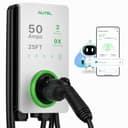
Three: can it be dialed down, and is the step list published?Because a big charger on a small circuit is a perfectly legitimate plan — if the maker publishes the settings. Autel publishes 6–80 A in the app and nine DIP steps including 64 and 72 A, which exist nowhere else in our registry. ChargePoint publishes six app-set steps from 16 to 50 A. Those two are the flexible units in this group; Emporia and Lectron publish the amperage they are rated at.
Four: what does it publish about safety and weather?At this price the paperwork should be complete, and Autel’s is: UL 2594, UL 2231-1 and 2231-2, UL 1998, CSA C22.2 No. 280, FCC Part 15 Class B, ENERGY STAR and OpenADR 2.0b, in a NEMA 3S / IK10 enclosure rated −40°F to 131°F with derating published above 113°F. The derating note is the kind of detail most makers leave out, and we would rather see it than not.
The arithmetic, laid out
Every figure below is ours, from amps × 240 volts, then divided by a stated reference of 3.5 miles per kWh. None is a manufacturer marketing claim.
80 A = 19.2 kW = about 67 miles of range per hour. On a 100-amp circuit, into a car that accepts 19.2 kW on AC.
50 A = 12 kW = about 42 miles per hour. On a 70-amp circuit. Three units in our registry advertise this, and all three publish the 70-amp requirement.
48 A = 11.5 kW = about 40 miles per hour. On a 60-amp circuit. This is the rung the whole market is built around, and it brackets every published car figure we have except the dual-motor LYRIQ.
40 A = 9.6 kW = about 34 miles per hour. On a 50-amp circuit, which is also the ceiling for anything with a NEMA 14-50 plug.
Put those side by side and the shape of the decision is obvious: the step from 40 to 48 amps is worth about six miles an hour, the step from 48 to 50 is worth under two, and the step from 50 to 80 is worth twenty-five — but only to a car that can take it, on a circuit most houses cannot spare. Over a ten-hour night, 48 amps returns about 400 miles of range. Very few people drive that between charges.
When 80 amps is the right answer
Three cases, and they are narrower than the search volume suggests.
A car with a published 19.2 kW onboard charger.In our sourced set that is the dual-motor LYRIQ trims, where Cadillac lists the module as standard or available depending on trim — the single-motor Luxury and the LYRIQ-V list 11.5 kW instead, so the trim matters as much as the model. Our LYRIQ page works through what that means for the charger you buy.
A service upgrade already happening. If the panel is being replaced or the service raised for other reasons, provisioning the larger feed during that work costs far less than returning for it later. The charger can run at 48 amps on day one and be reset in the app afterwards.
A genuinely short charging window.Not a preference for speed — a constraint. Two or three hours a night rather than eight or ten, and a car that empties most of a large battery daily. That is a rare pattern at home and a common one for a vehicle doing commercial mileage, which is a different kind of install than this site covers.
What to buy instead, and why
For everyone else the honest recommendation is one rung down, and the reason is not money but the circuit. A 48-amp charger on a 60-amp circuit is the mainstream fast install: it fills any battery on the market overnight, it leaves most of a 200-amp service for the house, and the hardware is cheap enough that several units we track sit under $400.
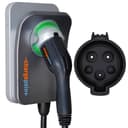
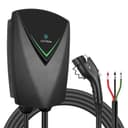
Our step-down picks reflect three different reasons for choosing one. ChargePoint’s Home Flexis the flexible one — six published amperage steps from 16 to 50 A, a mature app and over-the-air firmware, so one charger fits whatever circuit you end up with. Autel’s 50A MaxiChargeris the weather-hardened one, with an IP65 / NEMA 4X body rated −40°F to 131°F and charger-to-charger load balancing that needs no extra hardware. Emporia’s Level 2 is the value one, sold for either a hardwired 48-amp install or a 40-amp plug-in one, so the same purchase covers both routes. And the Lectron Nexus 48A is the budget pick: a full 48 amps with ETL listing to UL 2594, UL 2231 and UL 2251, ENERGY STAR and an IP66 housing, with no app at all.
If you want that tier ranked properly rather than as the back half of an 80-amp page, the 48-amp roundup and the under-$400 band are the two pages to read, and the install-cost breakdown has the line items that actually decide this budget.