Level Two Club

Best EV Chargers for Apartments & Renters

If you don't own the wall, you need a charger that plugs in, comes off cleanly and moves with you. These four do — plus the outlet question, the landlord conversation, and the honest fallback when neither is possible.

By Stephen V.Last updated How we pick

Renting doesn’t rule out Level 2 charging — it rules out hardwiring. That single constraint decides everything on this page. A hardwired charger is a permanent fixture wired straight into the panel: it needs an owner’s permission, an electrician, a permit, and it stays with the property when your lease ends. A plug-in charger runs from a 240V receptacle, comes off its bracket with a screwdriver, and goes in the moving van.

So we ranked on the criteria a renter actually weighs. One: it plugs in— specifically into a NEMA 14-50, the common 240V receptacle. Two: how easily it comes off the wall, since some units are effectively portable and others are wall-mount-first. Three: a genuine UL or ETL safety listing, which matters more when the install is improvised. Four: cable length, because in a shared garage or a carport you rarely get to choose your parking spot. Five: total cost, since a renter is buying hardware that may outlive three addresses. And six: whether it scales up later, for the day you own a garage and want to hardwire it.

Two honest caveats before the picks. Every plug-in charger is capped at 40 ampsby the NEC’s continuous-load rule, so nothing here reaches 48. And none of this works without a suitable 240V outlet — which is the real project, and the section immediately after the picks.

How this is funded: we earn a commission if you buy through our links, at no extra cost to you. It never changes which product we recommend, and we’ll tell you when we’d skip one. Full disclosure.

Quick picks

Ranked on published specs, charging speed, electrical fit and value. Select a row to jump to the full write-up. We have not bench-tested these chargers — here is exactly what we do instead.

#ProductBest forPrice
1
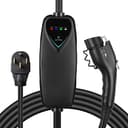
Lectron 40A Portable Level 2 Charger

Lectron 40A Portable Level 2 Charger

One of the cheapest honest ways into real Level 2 charging. Plug it into a NEMA 14-50 outlet, get a genuine 40A / 9.6 kW, and unplug it to take on a trip. No app and a shorter warranty are the trade-offs for the price.

Best portable
$269.99 · View on Amazon

Price as of September 2, 2026. #ad How we’re funded

2
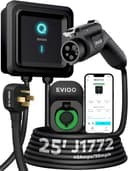
EVIQO 40A NEMA 14-50 Charger

EVIQO 40A NEMA 14-50 Charger

The most charger you can get without an electrician's invoice. It plugs into a NEMA 14-50 outlet for a full 40 amps, keeps the WiFi app, the ENERGY STAR listing and the 25 ft cable from EVIQO's hardwired unit, and can be unplugged and taken with you when you move.

Best plug-in smart
$395.98 · View on Amazon

$469.9916% off

Price as of September 2, 2026. #ad How we’re funded

3
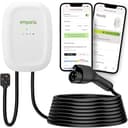
Emporia Level 2 EV Charger

Emporia Level 2 EV Charger

The value pick that doesn't feel cheap: a full 48 amps, ENERGY STAR listing, WiFi with genuine energy monitoring, and a 25 ft cable — for well under what the big names charge. It's the one we point most people to first.

Best if you'll buy a house
$449.00 · View on Amazon

Price as of September 2, 2026. #ad How we’re funded

4
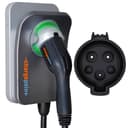
ChargePoint Home Flex

ChargePoint Home Flex

The safest default for most homes: you set the amperage in the app anywhere from 16A to 50A, so one charger fits whatever circuit your panel can spare today and scales up if you upgrade later. The app is the most mature here, and the warranty is long.

Best app
$456.74 · View on Amazon

Price as of September 2, 2026. #ad How we’re funded

The picks in full

#1Best portable

Lectron 40A Portable Level 2 Charger

One of the cheapest honest ways into real Level 2 charging. Plug it into a NEMA 14-50 outlet, get a genuine 40A / 9.6 kW, and unplug it to take on a trip. No app and a shorter warranty are the trade-offs for the price.

Strengths

  • A real 40A / 9.6 kW at a budget price
  • Plug-in and portable — take it with you, no hardwiring
  • ETL listed to UL 2594 / UL 2231 safety standards

Trade-offs

  • No WiFi or app on the base model — the smart version is a separate SKU
  • Shorter 16 ft cable and a 2-year warranty
  • Brand doesn't publish an outdoor/IP enclosure rating
Max output
40 A
Power
9.6 kW
Connector
J1772
Install
NEMA 14-50 plug
Cable length
16 ft
Warranty
2 years
WiFi + app
No
Certifications
ETL listed (UL 2594 / UL 2231)

Our charging-speed math. At 40A (9.6 kW) and ~3.5 miles per kWh it adds roughly 34 miles of range per hour.

Build note. Portable plug-in unit — no hardwiring needed; the base model has no WiFi or app.

Specs read from the manufacturer spec sheet, on July 19, 2026. “Not published” means the brand does not state that figure.

#2Best plug-in smart

EVIQO 40A NEMA 14-50 Charger

The most charger you can get without an electrician's invoice. It plugs into a NEMA 14-50 outlet for a full 40 amps, keeps the WiFi app, the ENERGY STAR listing and the 25 ft cable from EVIQO's hardwired unit, and can be unplugged and taken with you when you move.

Strengths

  • Plugs into an existing NEMA 14-50 outlet — no hardwiring, and it comes with you
  • Real WiFi app with 6-40A adjustment, scheduling and energy tracking
  • 25 ft charging cable plus a 40 in input lead, in an IP66 / NEMA 4 body

Trade-offs

  • 40 amps is the plug-in ceiling — for 48A you need the hardwired version
  • Needs a proper EV-grade 14-50 receptacle (an old dryer outlet is not the same thing)
  • Smaller brand with a shorter track record than ChargePoint or Wallbox
Max output
40 A
Power
9.6 kW
Connector
J1772
Install
NEMA 14-50 plug
Cable length
25 ft
Warranty
3 years
WiFi + app
Yes
Certifications
UL, ETL, FCC, ENERGY STAR

Our charging-speed math. At 40A (9.6 kW) and ~3.5 miles per kWh it adds roughly 34 miles of range per hour — an overnight charge for almost any daily commute.

Build note. Plug-in Gen-2 unit: 25 ft charging cable plus a 40 in NEMA 14-50 input lead, with app-adjustable output from 6 to 40 amps.

Specs read from the manufacturer spec sheet, on August 11, 2026. “Not published” means the brand does not state that figure.

#3Best if you'll buy a house

Emporia Level 2 EV Charger

The value pick that doesn't feel cheap: a full 48 amps, ENERGY STAR listing, WiFi with genuine energy monitoring, and a 25 ft cable — for well under what the big names charge. It's the one we point most people to first.

Strengths

  • 48A output and ENERGY STAR at a value price
  • The app actually tracks energy use, not just on/off
  • Long 25 ft cable and a remote holster in the box

Trade-offs

  • 48A hardwired needs a 60A circuit; on a NEMA 14-50 plug it's limited to 40A
  • App polish trails ChargePoint's, and support is smaller
Max output
48 A
Power
11.5 kW
Connector
J1772
Install
Hardwired or NEMA 14-50 plug
Cable length
25 ft
Warranty
3 years
WiFi + app
Yes
Certifications
UL listed, ENERGY STAR

Our charging-speed math. At 48A (11.5 kW) and ~3.5 miles per kWh it adds about 40 miles of range per hour hardwired; on a 40A plug-in circuit, about 34.

Build note. 48A hardwired, or 40A on a NEMA 14-50 outlet, with a 25 ft cable and remote holder.

Specs read from the manufacturer spec sheet, on July 19, 2026. “Not published” means the brand does not state that figure.

#4Best app

ChargePoint Home Flex

The safest default for most homes: you set the amperage in the app anywhere from 16A to 50A, so one charger fits whatever circuit your panel can spare today and scales up if you upgrade later. The app is the most mature here, and the warranty is long.

Strengths

  • Adjustable 16-50A means it fits a small panel now and a bigger circuit later
  • The most mature app of the group — scheduling, reminders, usage history
  • 3-year warranty and a long 23 ft cable

Trade-offs

  • You pay a premium over value 48A chargers for the app and brand
  • Full 50A output needs a 60A circuit most older panels don't have to spare
Max output
50 A
Power
12 kW
Connector
J1772
Install
Hardwired (plug-in NEMA 14-50 SKU also sold)
Cable length
23 ft
Warranty
3 years
WiFi + app
Yes
Certifications
UL/cUL listed, ENERGY STAR

Our charging-speed math. At its 50A max (12 kW) and a typical 3.5 miles per kWh, the Home Flex adds roughly 42 miles of range per hour. Dial it down to 40A to fit a 50A circuit and you get about 34.

Build note. Flexible amperage is adjustable in the app from 16A up to 50A.

Specs read from the manufacturer spec sheet, on July 19, 2026. “Not published” means the brand does not state that figure.

The outlet is the project, not the charger

Almost every renter’s charging question is really an outlet question. All four picks here run from a NEMA 14-50— the four-prong 240V receptacle used for ranges and RV hookups, on a 50-amp circuit. If one already exists within cable reach of where you park, you are done: buy a plug-in charger, plug it in, and you have real Level 2 charging with nothing permanent installed.

If one doesn’t exist, you are asking the property owner for an electrical installation, which is a completely different conversation from asking to plug something in. Make it easy for them to say yes:

  • Ask about existing capacity first. Older garages sometimes already have a 240V circuit for a welder, a dryer or a workshop. Finding one that exists is far easier than adding one.
  • Offer to pay, and say so up front. A 14-50 install is a well-defined job; our installation cost breakdown gives you a realistic number to bring to the conversation.
  • Frame it as an improvement that stays. The outlet is a permanent upgrade to their property; the charger is yours and leaves with you. That separation is what makes the ask reasonable.
  • Sort out metering. If the circuit is on a house meter rather than yours, agree how the electricity gets paid for before anything is installed. A charger with energy tracking makes that conversation factual rather than argumentative.
  • Get it permitted.A permitted, inspected install protects both of you — see permits and inspection.

And one thing not to do: don’t improvise off a dryer outlet on the assumption that 240V is 240V. Dryer receptacles are usually 30-amp NEMA 14-30 or the older three-wire 10-30, which has no separate ground. Even with an adapter you are limited to 24 amps continuous, and an aged dryer circuit was never intended to carry a continuous load for six hours a night. EVIQO’s own documentation says plainly that its charger needs an EV-grade 14-50 receptacle rather than a dryer outlet. Our NEMA 14-50 guide covers what a proper one involves.

The four, compared

Every pick here can run from a NEMA 14-50 plug, so nothing has to be wired into a wall you don’t own. Specs read from each maker’s own spec sheet.
ChargerHow it connectsAmps on a plugCableApp
Lectron 40A Portable Level 2 ChargerNEMA 14-50 plug40 A16 ftNo
EVIQO 40A NEMA 14-50 ChargerNEMA 14-50 plug40 A25 ftYes
Emporia Level 2 EV ChargerHardwired or NEMA 14-50 plug40 A25 ftYes
ChargePoint Home FlexHardwired (plug-in NEMA 14-50 SKU also sold)40 A23 ftYes

The Lectron 40Ais the portable pick and the cheapest honest route into 240V charging. It is ETL listed to the UL 2594 / UL 2231 safety standards, delivers a genuine 40 amps and 9.6 kW — about 34 miles of range an hour — and it is designed to be coiled up and carried, which is exactly right if you park in a different spot at a friend’s house or move every year. The trade-offs are real and worth stating: a shorter 16-foot cable, a two-year warrantyrather than three, no app on the base model, and no published outdoor or IP rating — so keep it in a garage or under cover rather than bolting it to an exposed wall. Full detail in our Lectron 40A review. The travel-first units — the ones that also carry a 120V cord, so they work at outlets a landlord never has to touch — are in our portable charger roundup.

The EVIQO 40A plug-inis the pick if you want the plug-in install without giving up the smart features. It is the plug-in sibling of EVIQO’s hardwired 48A unit and keeps almost everything: a WiFi app with 6–40A adjustment, scheduling, energy and cost tracking, an IP66 / NEMA 4 weatherproof body, UL/ETL/FCC and ENERGY STAR listings, and a 25-foot cableplus a 40-inch input lead — the best reach here by a wide margin, which matters when you can’t pick your parking space. It is a wall-mount unit rather than a coil-and-carry one, and the brand is younger than the big names. See the EVIQO reviewfor the hardwired sibling’s full workup.

The Emporia Level 2 is the pick for a renter who expects to buy a house. On a NEMA 14-50 plug it runs at 40 amps like everything else here; hardwired later, it goes to a full 48 amps. So the charger you buy for a rented garage becomes the charger you hardwire in your own, with no second purchase. It brings a NEMA 4 enclosure, ENERGY STAR, a 25-foot cable and a genuinely useful energy-monitoring app for a value price. The app is less refined than ChargePoint’s and support is a smaller operation. Read our Emporia review.

The ChargePoint Home Flex is the premium option, and the reason a renter might pay for it is the amperage range: adjustable from 16 to 50 ampsin the app. That means it adapts to whatever circuit each address happens to offer — a 30-amp circuit in one rental, a proper 50-amp one in the next, a hardwired 60 in the house you eventually buy — without ever buying another charger. The app is the most mature here and the warranty is three years. You pay for that, and its 23-foot cable is slightly shorter than the 25-foot units. Our Home Flex review has the detail.

When Level 2 genuinely isn’t possible

Sometimes the answer is no: no 240V circuit, no permission, no realistic path. That is worth planning for honestly rather than buying hardware and hoping.

Level 1 is a real option for some drivers. A standard 120V outlet adds roughly 3 to 5 miles of range per hour. Over a twelve-hour overnight stretch that is 40 to 60 miles — more than the average US driver covers in a day. If you have reliable access to an ordinary outlet and a modest commute, that quietly works, and it costs nothing but the cable that came with the car. We work through where it breaks down in Level 1 vs Level 2. The catch is winter: cold weather can cut range by around 40%, which means more kilowatt-hours to replace at the slowest possible rate.

Public charging as the backbone, home as the top-upis the other workable pattern — a weekly DC fast charge for the bulk of your energy, with Level 1 at home smoothing the day-to-day. It costs more per mile than home charging does, which our cost-to-charge guide quantifies, but it is a legitimate way to own an EV without a garage.

What we would not recommend is buying a 48-amp hardwired charger in the hope of sorting the wiring out later. Buy for the electricity you can actually reach today, keep the receipt, and step up when you own the wall. If your situation changes, the hardwired field will still be there.
Frequently asked questions

Can I install a Level 2 charger in an apartment?

In your own unit's parking space, sometimes — it depends on the building's electrical capacity, the landlord or HOA, and whether there is a way to meter and bill the electricity. What you can almost always do without a construction project is use a plug-in charger on an existing 240V receptacle, if one exists near your space. Start by asking whether a NEMA 14-50 or similar outlet is available, not by asking to install a charger.

What's the difference between a portable and a plug-in EV charger?

It is mostly about how it is meant to live. Both connect via a plug rather than hardwiring. A portable unit like the Lectron is designed to be coiled up and carried — it typically has a shorter cable and no wall bracket assumptions. A plug-in wall charger like the EVIQO mounts to a bracket for daily use but can be unplugged and unscrewed when you move. Both are renter-friendly; the portable one is friendlier to travel.

Can I charge a Level 2 charger from a dryer outlet?

Not by assuming they are the same thing. A dryer receptacle is usually NEMA 14-30 or 10-30 on a 30-amp circuit, not the 50-amp NEMA 14-50 most Level 2 chargers use, and the older 10-30 has no separate ground. Adapters exist, but the circuit still limits you to 24 amps continuous, and an old dryer circuit may not be in a condition to carry a continuous load for hours. EVIQO's own documentation is explicit that its charger needs an EV-grade 14-50 receptacle, not a dryer outlet. Get an electrician's opinion before improvising.

What should I ask my landlord before buying a charger?

Four things. Is there an existing 240V outlet near my parking space? If not, would you allow one to be installed, and who pays? How is the electricity metered and billed for that circuit? And can I mount a bracket on the wall, or does the charger need to stand free? Getting a written yes on the outlet is the step that actually unblocks everything else.

Is a Level 1 charger enough if I can't get 240V?

For some drivers, genuinely yes. Level 1 on a standard 120V outlet adds roughly 3 to 5 miles of range per hour, so a 12-hour overnight stretch returns 40 to 60 miles. If your daily driving is under that and you have reliable access to an ordinary outlet, it works. If you drive more than that, or your outlet access is unreliable, Level 2 or public charging becomes necessary.

Will a plug-in charger work when I eventually buy a house?

Yes, and that is a large part of its appeal. A plug-in charger moves with you and works anywhere there is a 14-50 receptacle. Several of these units — the Emporia and the ChargePoint Home Flex among them — also offer or support a hardwired configuration, so the charger you bought as a renter can become the charger you hardwire as an owner.

Sources

Keep reading