Level Two Club

Best 40-Amp Level 2 EV Chargers

A 40-amp charger is the sweet spot for most homes: it delivers a full 9.6 kW on a standard 50-amp circuit, plugs into a NEMA 14-50 outlet without a panel upgrade, and adds roughly 34 miles of range an hour. These are the ones worth buying — and what you give up to save money.

By Stephen V.Last updated How we pick

Search “best 40 amp EV charger” and you’ve usually already made the important decision. Forty amps — a full 9.6 kWat 240 volts — is the amperage most homes land on, and for good reason: it runs on a common 50-amp circuit, it’s the ceiling for a plug-in NEMA 14-50 install, and it adds about 34 miles of range per hour, which covers an overnight charge for almost anyone. Going higher, to 48 amps, means a 60-amp circuit and usually a hardwired install — more panel, more electrician, more money for eight extra amps you may never use.

So we ranked this segment on the criteria a 40-amp buyer actually weighs, in this order. One: it delivers a genuine 40 amps— either natively or by dialing a higher-rated unit down to run cleanly on a 50-amp circuit. Two: how it installs, because the whole appeal of 40 amps is that you can plug in rather than hardwire. Three: a real UL or ETL safety listing to the EV-charging standard. Four: cable length, since reach decides where you can park. Five: the smart features you’ll actually use — scheduling and energy tracking earn their price only if your utility has time-of-use rates. And six: warranty and price.

We own none of these units and haven’t bench-tested them — we read the specs off the manufacturers’ own sheets on a dated visit, do our own charging-speed math (and print the assumption), and argue the ranking in plain language with the downsides on every pick. Prices are pulled live and shown as “Check price” when we can’t confirm one, never anchored to a stale number.

How this is funded: we earn a commission if you buy through our links, at no extra cost to you. It never changes which product we recommend, and we’ll tell you when we’d skip one. Full disclosure.

Quick picks

Ranked on published specs, charging speed, electrical fit and value. Select a row to jump to the full write-up. We have not bench-tested these chargers — here is exactly what we do instead.

#ProductBest forPrice
1
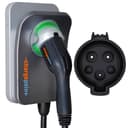
ChargePoint Home Flex

ChargePoint Home Flex

The safest default for most homes: you set the amperage in the app anywhere from 16A to 50A, so one charger fits whatever circuit your panel can spare today and scales up if you upgrade later. The app is the most mature here, and the warranty is long.

Best overall
$494.00 · View on Amazon

Price as of July 23, 2026. #ad How we’re funded

2
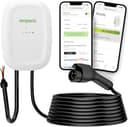
Emporia Level 2 EV Charger

Emporia Level 2 EV Charger

The value pick that doesn't feel cheap: a full 48 amps, ENERGY STAR listing, WiFi with genuine energy monitoring, and a 25 ft cable — for well under what the big names charge. It's the one we point most people to first.

Best value smart
$449.00 · View on Amazon

Price as of July 23, 2026. #ad How we’re funded

3
Grizzl-E Classic

Grizzl-E Classic

A deliberately dumb charger, and that's the point. No app, no cloud account, no firmware to fail — just a die-cast aluminum box built for a Canadian winter and rated to keep working outdoors. If you want set-and-forget, this is it.

Best no-frills
$299.99 · View on Amazon

Price as of July 23, 2026. #ad How we’re funded

4
Lectron 40A Portable Level 2 Charger

Lectron 40A Portable Level 2 Charger

The cheapest honest way into real Level 2 charging. Plug it into a NEMA 14-50 outlet, get a genuine 40A / 9.6 kW, and unplug it to take on a trip. No app and a shorter warranty are the trade-offs for the price.

Best budget
$259.99 · View on Amazon

Price as of July 23, 2026. #ad How we’re funded

5
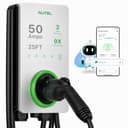
Autel MaxiCharger Home

Autel MaxiCharger Home

Built for the harshest driveway. The NEMA 4X enclosure is rated to keep charging in extreme cold and heat, it pushes a full 50 amps, and the app is capable. If your charger lives fully exposed to the weather, this is the one.

Best weatherproof
$424.00 · View on Amazon

$568.0025% off

Price as of July 23, 2026. #ad How we’re funded

The picks in full

#1Best overall

ChargePoint Home Flex

The safest default for most homes: you set the amperage in the app anywhere from 16A to 50A, so one charger fits whatever circuit your panel can spare today and scales up if you upgrade later. The app is the most mature here, and the warranty is long.

Strengths

  • Adjustable 16-50A means it fits a small panel now and a bigger circuit later
  • The most mature app of the group — scheduling, reminders, usage history
  • 3-year warranty and a long 23 ft cable

Trade-offs

  • You pay a premium over value 48A chargers for the app and brand
  • Full 50A output needs a 60A circuit most older panels don't have to spare
Max output
50 A
Power
12 kW
Connector
J1772
Install
Hardwired (plug-in NEMA 14-50 SKU also sold)
Cable length
23 ft
Warranty
3 years
WiFi + app
Yes
Certifications
UL/cUL listed, ENERGY STAR

Our charging-speed math. At its 50A max (12 kW) and a typical 3.5 miles per kWh, the Home Flex adds roughly 42 miles of range per hour. Dial it down to 40A to fit a 50A circuit and you get about 34.

Build note. Flexible amperage is adjustable in the app from 16A up to 50A.

Specs read from the manufacturer spec sheet, on July 19, 2026. “Not published” means the brand does not state that figure.

#2Best value smart

Emporia Level 2 EV Charger

The value pick that doesn't feel cheap: a full 48 amps, ENERGY STAR listing, WiFi with genuine energy monitoring, and a 25 ft cable — for well under what the big names charge. It's the one we point most people to first.

Strengths

  • 48A output and ENERGY STAR at a value price
  • The app actually tracks energy use, not just on/off
  • Long 25 ft cable and a remote holster in the box

Trade-offs

  • 48A hardwired needs a 60A circuit; on a NEMA 14-50 plug it's limited to 40A
  • App polish trails ChargePoint's, and support is smaller
Max output
48 A
Power
11.5 kW
Connector
J1772
Install
Hardwired or NEMA 14-50 plug
Cable length
25 ft
Warranty
3 years
WiFi + app
Yes
Certifications
UL listed, ENERGY STAR

Our charging-speed math. At 48A (11.5 kW) and ~3.5 miles per kWh it adds about 40 miles of range per hour hardwired; on a 40A plug-in circuit, about 34.

Build note. 48A hardwired, or 40A on a NEMA 14-50 outlet, with a 25 ft cable and remote holder.

Specs read from the manufacturer spec sheet, on July 19, 2026. “Not published” means the brand does not state that figure.

#3Best no-frills

Grizzl-E Classic

A deliberately dumb charger, and that's the point. No app, no cloud account, no firmware to fail — just a die-cast aluminum box built for a Canadian winter and rated to keep working outdoors. If you want set-and-forget, this is it.

Strengths

  • Rugged die-cast aluminum, NEMA 4 / IP67 — built for outdoors and cold
  • No app or account to break; nothing to update
  • UL listed and ENERGY STAR at a mid price

Trade-offs

  • 40A caps it below the 48A chargers on charging speed
  • No scheduling or energy tracking — you'll lean on the car's app instead
Max output
40 A
Power
9.6 kW
Connector
J1772
Install
NEMA 14-50 plug
Cable length
24 ft
Warranty
3 years
WiFi + app
No
Certifications
UL/cUL listed, ENERGY STAR

Our charging-speed math. At 40A (9.6 kW) and ~3.5 miles per kWh it adds roughly 34 miles of range per hour — plenty for an overnight top-up.

Build note. Die-cast aluminum NEMA 4 / IP67 enclosure with no WiFi — a simple, reliable design.

Specs read from the manufacturer spec sheet, on July 19, 2026. “Not published” means the brand does not state that figure.

#4Best budget

Lectron 40A Portable Level 2 Charger

The cheapest honest way into real Level 2 charging. Plug it into a NEMA 14-50 outlet, get a genuine 40A / 9.6 kW, and unplug it to take on a trip. No app and a shorter warranty are the trade-offs for the price.

Strengths

  • Real 40A / 9.6 kW at a budget price
  • Plug-in and portable — take it with you, no hardwiring
  • ETL listed to UL 2594 / UL 2231 safety standards

Trade-offs

  • No WiFi or app on the base model — the smart version is a separate SKU
  • Shorter 16 ft cable and a 2-year warranty
  • Brand doesn't publish an outdoor/IP enclosure rating
Max output
40 A
Power
9.6 kW
Connector
J1772
Install
NEMA 14-50 plug
Cable length
16 ft
Warranty
2 years
WiFi + app
No
Certifications
ETL listed (UL 2594 / UL 2231)

Our charging-speed math. At 40A (9.6 kW) and ~3.5 miles per kWh it adds roughly 34 miles of range per hour.

Build note. Portable plug-in unit — no hardwiring needed; the base model has no WiFi or app.

Specs read from the manufacturer spec sheet, on July 19, 2026. “Not published” means the brand does not state that figure.

#5Best weatherproof

Autel MaxiCharger Home

Built for the harshest driveway. The NEMA 4X enclosure is rated to keep charging in extreme cold and heat, it pushes a full 50 amps, and the app is capable. If your charger lives fully exposed to the weather, this is the one.

Strengths

  • NEMA 4X enclosure rated for very cold and hot conditions
  • Full 50A output with a 25 ft cable
  • WiFi, Bluetooth and a capable app

Trade-offs

  • 50A needs a 60A circuit and typically a hardwired install
  • App and ecosystem are newer than ChargePoint's
Max output
50 A
Power
12 kW
Connector
J1772
Install
Hardwired
Cable length
25 ft
Warranty
3 years
WiFi + app
Yes
Certifications
CSA certified, ENERGY STAR

Our charging-speed math. At its 50A max (12 kW) and ~3.5 miles per kWh it adds roughly 42 miles of range per hour.

Build note. NEMA 4X weatherproof enclosure rated for operation down to about -40 degrees F.

Specs read from the manufacturer spec sheet, on July 19, 2026. “Not published” means the brand does not state that figure.

Why 40 amps is the number most homes should buy

The appeal of a 40-amp charger isn’t the charger — it’s the circuit behind it. EV charging is a continuous load, so the National Electrical Code sizes the branch circuit to 125% of the charger’s draw(the “80% rule”). Run that math backwards and a 40-amp charger needs a 50-amp circuit, while a 48-amp charger needs a 60-amp one. A 50-amp circuit is common, it’s exactly what a NEMA 14-50 outletis wired for, and it’s far more likely to fit in an existing panel without an upgrade. That is the whole reason 40 amps and plug-in installs travel together: pick 40 amps and you can usually skip both a panel upgrade and a hardwired job.

And you give up very little speed for that. At 40 amps a charger delivers 9.6 kW, which on a reference 3.5 miles per kWh EV works out to roughly 34 miles of range per hour. A 48-amp charger makes about 40. Over a normal overnight charging window — you’re asleep for eight hours, the car needs to replace maybe 30 to 50 miles — that six-mile-per-hour gap is invisible. We work the whole comparison through in 40 amps vs 48 amps; the short version is that 48 amps earns its extra circuit only for very high-mileage drivers on a tight refill schedule.

Before you shop, confirm what your panel can actually spare with our panel-capacity guide. If a 50-amp circuit fits, a 40-amp charger is very likely the right call; if even that is a stretch, some of these units dial down further still.

Native 40-amp vs a bigger charger set to 40

There are two honest ways to get a full 40 amps, and the table below sorts our picks into both. A native 40-amp charger — the Grizzl-E Classic and the Lectron 40A— is built for exactly this circuit and priced accordingly; there’s no headroom to pay for and none to unlock. A higher-rated unit — the ChargePoint Home Flex (adjustable 16–50A), the Emporia (48A hardwired, 40A on a plug) and the Autel MaxiCharger(50A) — is set to 40 amps to run cleanly on a 50-amp circuit today, and can be turned up later if you ever move it to a bigger circuit. You pay a little more now for that option.

Every unit here delivers a full 40 amps — 9.6 kW, about 34 miles of range per hour at ~3.5 mi/kWh. Two are native 40-amp chargers; three are higher-rated units you set to 40A to run on a standard 50-amp circuit. Specs are read from each maker’s own spec sheet.
ChargerRated maxHow it makes 40AInstallCableApp
ChargePoint Home Flex50 ASet to 40A in the app (adjustable 16-50A)Hardwired (plug-in NEMA 14-50 SKU also sold)23 ftYes
Emporia Level 2 EV Charger48 A40A on a NEMA 14-50 plug (48A hardwired)Hardwired or NEMA 14-50 plug25 ftYes
Grizzl-E Classic40 ANative 40ANEMA 14-50 plug24 ftNo
Lectron 40A Portable Level 2 Charger40 ANative 40ANEMA 14-50 plug16 ftNo
Autel MaxiCharger Home50 ASet to 40A on a 50A circuit (50A max)Hardwired25 ftYes

Neither approach is “better” in the abstract — it depends on how settled your plans are. If you know 40 amps is your ceiling (renting, a modest panel, no interest in a future rewire), a native unit is the cleaner buy. If you might upgrade the panel someday, or you want the most capable app, an adjustable charger is a reasonable hedge. What you should notdo is overbuy amps you can’t reach: a 48-amp charger on a 50-amp circuit just runs at 40, so you’d be paying for a number you can’t use.

The picks, in plain terms

The ChargePoint Home Flexis our overall pick because it fits the most homes with the fewest regrets: adjustable amperage means one charger works on a 50-amp circuit now and a bigger one later, the app is the most mature here, and the warranty is long. It’s a premium price for that flexibility — if you want the same idea for less, read our full Home Flex review and then weigh the value picks below.

The Emporia Level 2is the value-smart choice: a genuine app with real energy monitoring, an ENERGY STAR listing, and a long 25-foot cable for well under the big-name price. On a NEMA 14-50 plug it runs at 40 amps, and it can be hardwired to 48 later — a tidy way to buy 40 amps now with room to grow. Our Emporia review has the detail. The Grizzl-E Classic goes the opposite direction on purpose: a native 40-amp, die-cast aluminum box with noapp, no account and no firmware to fail — you schedule charging in the car instead. If “set it and forget it” is the goal, its simplicity is the feature, as we explain in the Grizzl-E review.

The Lectron 40Ais the cheapest honest way into real Level 2 charging: a native 40 amps, ETL-listed to the UL 2594/2231 safety standards, and portable, so you can unplug it and take it along. The trade-offs are a shorter 16-foot cable, a two-year warranty, no app on the base model, and no published outdoor rating — fine for a garage, not for an exposed wall. When price is the whole story, it’s also on our budget charger list. Finally, the Autel MaxiChargeris here for one specific buyer: someone who wants a 40-amp install but whose charger has to live fully outdoors. Its NEMA 4X enclosure is rated for corrosion, cold and heat; set it to 40 amps on a 50-amp circuit now, and it has room to 50 amps if you upgrade. The catch is that its full output is a hardwired, 60-amp-circuit job — at 40 amps you’re buying the weatherproofing, not the speed.

Plug in, or hardwire?

Forty amps is where the plug-in route makes the most sense, and it’s worth being deliberate about it. A plug-incharger drops onto a NEMA 14-50 outlet, stays removable if you move, and skips the electrician’s hardwiring labor — but the receptacle itself needs a proper 50-amp install, and under current code that circuit generally needs GFCI protection, usually a GFCI breaker. A hardwiredcharger has no plug to weatherproof and can, on some units, run at higher amperage — but it’s a permanent install and removes the renter-friendly flexibility that makes 40 amps attractive in the first place. Our hardwired vs plug-in comparison weighs the whole trade, and the NEMA 14-50 guide covers the outlet and its code requirements.

Whichever way you connect it, budget the job before you buy the box. Hardware is only part of the bill — the circuit run, the outlet or hardwiring labor, the permit and any panel work all move the total, and we break every line down in the installation cost guide.

How to choose between these five

Start with how permanent your setup is. If you rent, or you just want the lowest price for real 240V charging in a garage, the Lectron 40Ais the budget answer. If you want a charger you never have to think about — no app, nothing to update — and don’t mind scheduling in the car, the Grizzl-E Classic is the rugged, native-40A workhorse. If you do want scheduling and energy data without the big-name markup, the Emporiais the value-smart pick with the longest reach. If you want the most flexible, most future-proof charger and the best app — and you’ll pay for it — the ChargePoint Home Flex is the safe default. And if your charger has to survive a fully exposed outdoor spot, step up to the Autel MaxiCharger for its weather-rated enclosure.

Every one of these delivers the same core thing: a full 40 amps, 9.6 kW, about 34 miles of range an hour, on a circuit most homes can carry. The differences are the app, the build and the cable — convenience and durability, which are real but optional. Once you’ve chosen, it’s worth a minute with our cost-to-charge calculatorto see what those overnight kilowatt-hours actually cost on your electric rate — the part no charger brand puts on the box.

Frequently asked questions

Is a 40-amp EV charger enough for a home?

For nearly everyone, yes. A 40-amp charger delivers 9.6 kW and adds roughly 34 miles of range per hour at a typical 3.5 miles per kWh, so an overnight charge easily replaces a normal day's driving and then some. The extra speed of a 48-amp charger (about 40 miles per hour) only matters if you regularly drive hundreds of miles a day and need to refill in a narrow window. For a daily commuter, 40 amps has hours of slack every night.

What size circuit and breaker does a 40-amp charger need?

A 50-amp circuit on a 50-amp breaker. EV charging is a continuous load, so the National Electrical Code sizes the circuit to 125% of the charger's draw — the '80% rule' — which means a 40-amp charger needs a 50-amp circuit, and a 48-amp charger needs a 60-amp one. That 50-amp circuit is exactly what a NEMA 14-50 outlet is wired for, which is why 40 amps and plug-in installs go together.

Can I plug a 40-amp charger into a NEMA 14-50 outlet?

Yes — a NEMA 14-50 outlet is on a 50-amp circuit, and a plug-in charger on that outlet is limited to 40 amps continuous by the 80% rule. That's the standard, code-compliant plug-in setup, and it's why every native 40-amp charger here ships with a 14-50 plug. Under current code the circuit generally also needs GFCI protection (usually a GFCI breaker); your electrician and local inspector confirm what's required.

Should I buy a 48-amp charger and just run it at 40 amps?

It can be a smart hedge. Several units here — the ChargePoint Home Flex, Emporia and Autel — are rated above 40 amps but let you set a lower limit, so you can run at 40 amps on a 50-amp circuit today and unlock more speed later if you upgrade to a 60-amp circuit. You pay a little more up front for headroom you may reach someday. If you're certain 40 amps is your ceiling, a native 40-amp unit like the Grizzl-E or Lectron costs less and does the same job now.

Do 40-amp chargers charge slower than 48-amp ones?

A little. At 40 amps you get 9.6 kW and about 34 miles of range per hour; at 48 amps, 11.5 kW and about 40 miles per hour. That's roughly six miles per hour of difference — real, but modest against a full overnight charging window. And it only exists if your panel and install can carry the bigger 60-amp circuit; on a 50-amp circuit a 48-amp charger simply runs at 40 anyway.

Does a 40-amp charger qualify for the federal tax credit?

The amperage isn't the deciding factor — eligibility for the federal 30C charger credit depends on where you live (the home must be in a qualifying census tract) and is claimed on IRS Form 8911, for up to 30% of the hardware and install cost. It applies to a 40-amp charger the same as any other qualifying home charger. We keep the current rules and the deadline date-stamped on our incentives page.

Sources

Keep reading