Best Level 2 EV Chargers by Segment
Our top home-charger picks by the way people actually shop — best value, best for Tesla/NACS, and best smart charger — each ranked on specs, charging speed and price.
“What’s the best Level 2 charger?” has no single answer, because the right charger depends on how you shop. Someone who just wants the cheapest way into real 240V charging needs a different unit from a Tesla owner who wants a native plug, or a data nerd who’ll actually open the app every night. So instead of one list, we split the field into the segments people genuinely buy by — and pick a winner in each.
Every charger here is a genuine Level 2 unit that’s currently sold, carries a real UL or ETL safety listing, and is ranked on the numbers that matter: maximum amps and the miles-per-hour they translate to, the connector (J1772 or NACS), how it installs, cable length, weather rating and warranty. Each segment page leads with a quick-pick table so the answer is on the first screen, then explains the reasoning charger by charger — including who should skip the top pick.
New in this section: our brand-by-brand guide to the nine makers we track, a table of every published warranty term in the registry, and what to buy and rough in for a new build, and the smart-home roundup— which starts from the finding that not one charger we track publishes Matter, Apple Home or Home Assistant support, and ranks the field on what each brand does publish. If you want the hardware judged one unit at a time rather than by segment, our reviews section has a page per charger, and the running-costs section covers what the electricity actually comes to on your own rate.
Everything in Best Chargers
Best Budget Level 2 EV Chargers
The cheapest home chargers worth buying — where a low price is a smart trade-off and where it quietly costs you amps, cable or a warranty.
Our top pick
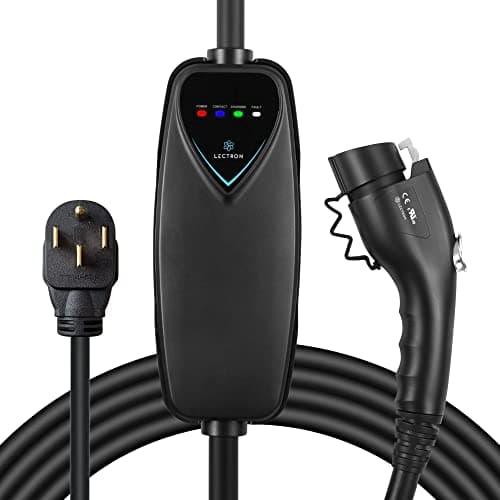
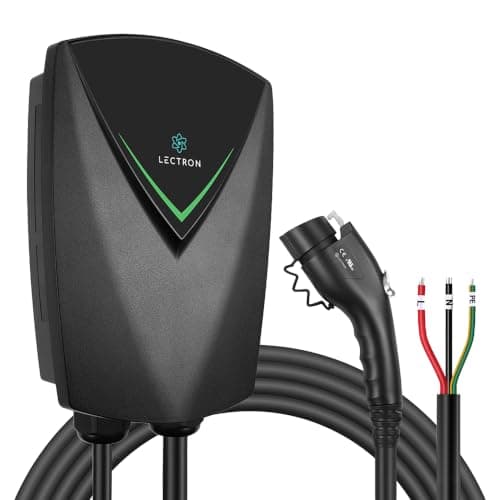
Lectron 40A Portable Level 2 Charger
$269.99 · View on AmazonPrice as of October 18, 2026. #ad How we’re funded
Best EV Chargers for Tesla (NACS)
NACS-native home chargers for Tesla owners, plus the J1772-plus-adapter route — and the truth about the official Tesla Wall Connector on Amazon.
Our top pick
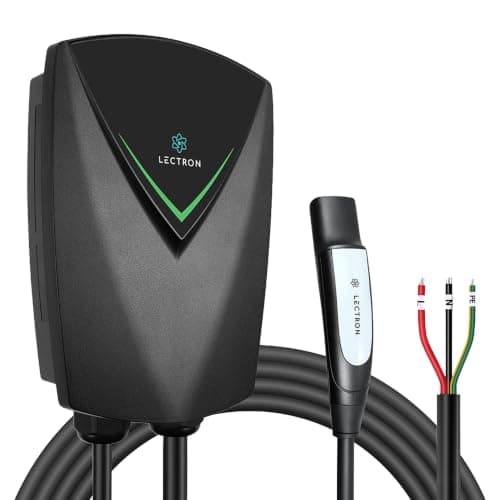
Lectron Nexus NACS (Tesla) Charger
$449.99 · View on AmazonPrice as of October 18, 2026. #ad How we’re funded
Best Smart Wi-Fi EV Chargers
App-connected chargers that schedule around cheap overnight rates and track energy use, plus the utility rebates a smart unit can unlock — and an honest note on which 'smart' features you'll actually open.
Best Outdoor & Weatherproof EV Chargers
Chargers built to live outside — what NEMA 3R, 4 and 4X and the IP codes actually protect against, and which units suit a driveway, a carport or a snowbelt winter.
Our top pick
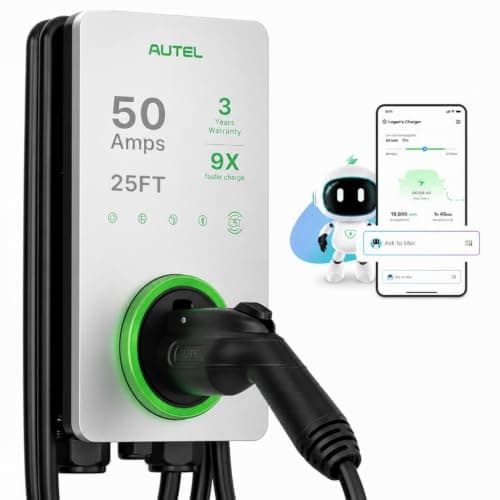
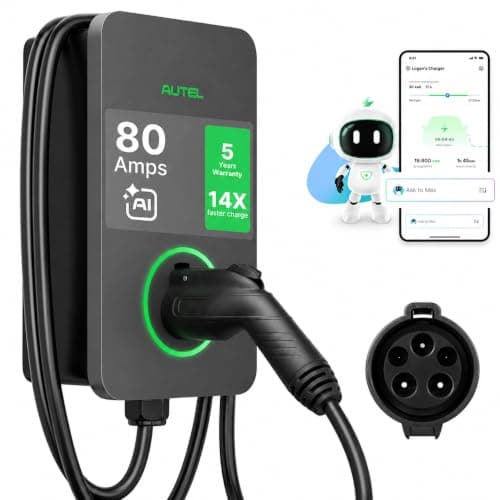
Autel MaxiCharger Home
Best 40-Amp Level 2 EV Chargers
The sweet-spot amperage for most homes — a full 9.6 kW on a common 50-amp circuit and a plug-in NEMA 14-50 install, with no panel upgrade. Native 40A units and bigger chargers you set to 40, picked apart.
Our top pick
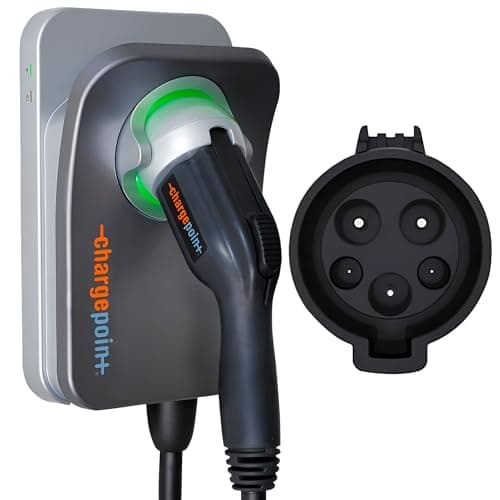
ChargePoint Home Flex
$516.71 · View on AmazonPrice as of October 18, 2026. #ad How we’re funded
Best 48-Amp Level 2 EV Chargers
The fastest home charging you can buy without a commercial install — a full 11.5 kW, about 40 miles of range an hour, and the 60-amp hardwired circuit it all depends on.
Best Hardwired EV Chargers
No plug to weatherproof, no receptacle to fail, and the only route to 48 amps — the hardwired chargers worth the electrician's visit, and what you give up by committing.
Our top pick
ChargePoint Home Flex
$516.71 · View on AmazonPrice as of October 18, 2026. #ad How we’re funded
Best EV Chargers for Cold Weather
What a charger's published low-temperature rating actually promises, which cables stay flexible at -20F, and the units built for a driveway that freezes solid.
Our top pick
Autel MaxiCharger Home
Best EV Chargers for Apartments & Renters
Chargers you can install without owning the wall — plug-in and portable units that come with you when the lease ends, plus what to ask a landlord before you buy.
Our top pick
Lectron 40A Portable Level 2 Charger
$269.99 · View on AmazonPrice as of October 18, 2026. #ad How we’re funded
Best EV Chargers With Long Cables
Cable length decides where you can park and where the box can go — the 23 to 25 ft chargers that reach, and how to measure your garage before you buy.
Our top pick
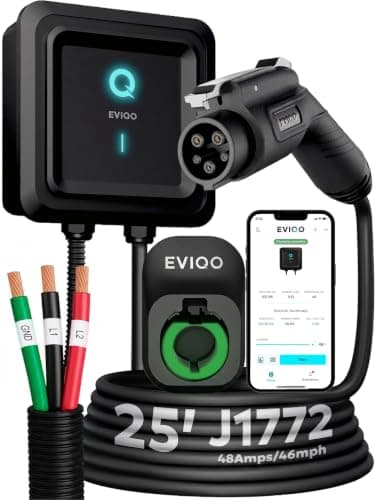
EVIQO 48A Level 2 Charger
Best EV Chargers for Two Cars
Two EVs, one panel. Dual-port chargers, load-sharing pairs and the one-charger-two-cars routine that costs nothing — and the amps arithmetic that decides between them.
Our top pick
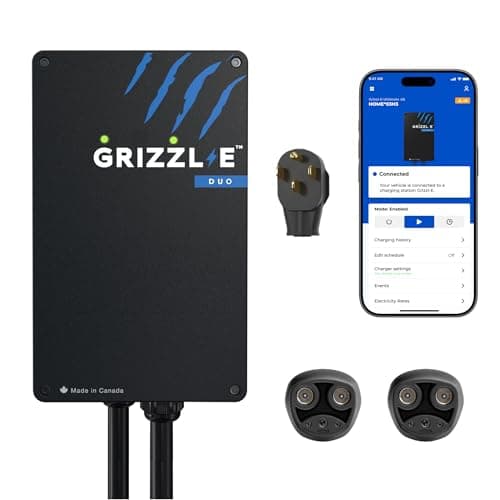
Grizzl-E Duo Connect 40A
$899.99 · View on AmazonPrice as of October 18, 2026. #ad How we’re funded
Best ENERGY STAR Certified EV Chargers
Certified chargers draw about 40% less power doing nothing — which matters because a home charger idles for roughly 22 hours a day. The units that carry the label, and what it's actually worth.
Best EV Chargers for a Small Electrical Panel
A 100-amp service doesn't rule out Level 2 charging. Chargers you can dial down to fit the amps you actually have — and the load-sharing feature that can save a panel upgrade entirely.
Our top pick
ChargePoint Home Flex
$516.71 · View on AmazonPrice as of October 18, 2026. #ad How we’re funded
Best EV Chargers for Plug-In Hybrids
A PHEV's onboard charger usually caps out around 3.3 to 7.7 kW, so most of a 48-amp charger is wasted on it. The right-sized units — and why buying bigger can still be the smart call.
Our top pick
Lectron 40A Portable Level 2 Charger
$269.99 · View on AmazonPrice as of October 18, 2026. #ad How we’re funded
Best Plug-In (NEMA 14-50) EV Chargers
Chargers that end in a plug instead of a wire nut: no electrician if the outlet exists, they come off the wall when you move, and 40 amps is the ceiling. The units worth plugging in.
Our top pick
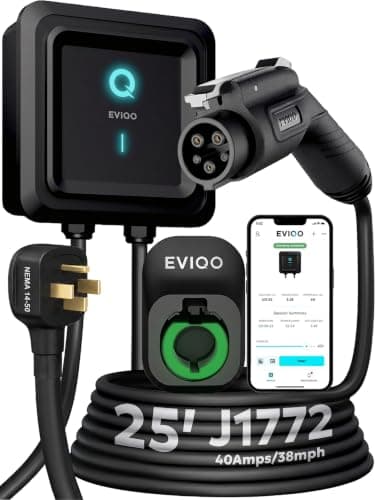
EVIQO 40A NEMA 14-50 Charger
Best 'Dumb' EV Chargers (No App, No Account)
No WiFi, no cloud account, no firmware update at 2am. The chargers built to do one job for a decade — and why your car's own scheduler makes the app redundant anyway.
Our top pick
Lectron Nexus 48A J1772
$449.99 · View on AmazonPrice as of October 18, 2026. #ad How we’re funded
Best Portable Level 2 EV Chargers
Chargers built to travel — dual-voltage bodies that take 240V at home and a standard 120V socket on the road, sealed enclosures, and a module light enough to live in the trunk.
Our top pick
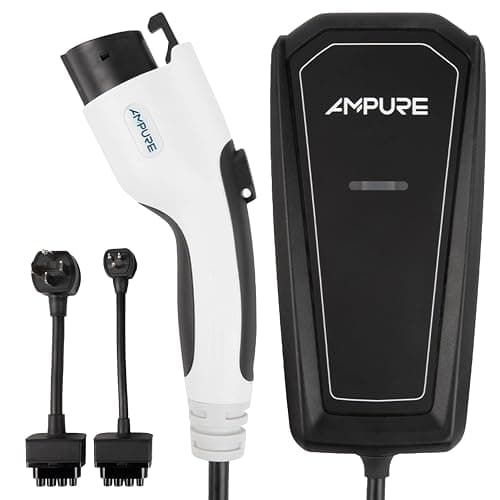
Ampure Go Portable Level 2 Charger
$299.00 · View on AmazonPrice as of October 18, 2026. #ad How we’re funded
Best EV Chargers for a Garage
The indoor counterpart to our outdoor picks. A garage changes the question: reach from a fixed wall, a NEMA 14-50 that may already be there, a router two walls away, and a winter an attached garage never fully hides from.
Our top pick
ChargePoint Home Flex
$516.71 · View on AmazonPrice as of October 18, 2026. #ad How we’re funded
Fastest Level 2 EV Chargers for Home
The top of the Level 2 range — 80-amp, 50-amp and 48-amp units ranked on real miles per hour, and the onboard-charger ceiling in your car that decides whether any of it is usable.
Our top pick
Autel MaxiCharger 80A
Best EV Chargers for Homes With Solar
Any charger runs on solar electricity; only a few can follow your production. The units with a published excess-solar mode, the ones that schedule into the midday peak instead, and which approach your setup actually needs.
Best EV Chargers for an Airbnb or Rental Property
A charger for guests you will never meet: app lockout, energy records you can bill against, a sealed body that survives a driveway, and nothing that needs a host on site to reset it.
Our top pick
Grizzl-E Classic Connect 40A
$349.99 · View on AmazonPrice as of October 18, 2026. #ad How we’re funded
Best EV Chargers for the Cadillac LYRIQ
The LYRIQ is one of the few EVs sold with a 19.2 kW onboard charger on some trims and 11.5 kW on the rest — so the right home charger depends on which one you bought, and on whether your port is NACS. The picks for each, with the circuit each needs.
Our top pick
ChargePoint Home Flex NACS
$516.71 · View on AmazonPrice as of October 18, 2026. #ad How we’re funded
Best EV Chargers for the Kia EV9
Kia fits one onboard charger to every EV9 trim - 10.9 kW - and a NACS port. That single number settles the purchase: 48 amps feeds it in full, 80 amps does nothing extra, and the cable Kia puts in the trunk is six hours slower on the big battery.
Our top pick
Lectron Nexus NACS (Tesla) Charger
$449.99 · View on AmazonPrice as of October 18, 2026. #ad How we’re funded
Best EV Chargers for the Volkswagen ID.4
Volkswagen publishes an 11 kW maximum AC acceptance rate and tells ID.4 owners not to put the NACS adapter on a Level 2 charger. So this is a 48-amp, J1772 purchase - and the cable in the trunk already does 9.6 kW, which changes who should buy at all.
Our top pick
ChargePoint Home Flex
$516.71 · View on AmazonPrice as of October 18, 2026. #ad How we’re funded
Best EV Chargers for the Kia EV6
One 10.9 kW onboard charger on every EV6 trim, a NACS port, and no J1772 AC adapter listed anywhere on Kia's own pages. So the connector decides this purchase before the amperage does — and on an 84 kWh battery, 40 amps is only about an hour behind 48.
Our top pick
Lectron Nexus NACS (Tesla) Charger
$449.99 · View on AmazonPrice as of October 18, 2026. #ad How we’re funded
Best EV Chargers for the Toyota bZ (bZ4X)
Toyota fits an 11 kW onboard charger and a NACS port to the bZ - then puts a J1772 adapter in the box. That makes it the most charger-agnostic EV we have covered: 48 amps is the ceiling worth paying for, and both connector families are genuinely on the table.
Our top pick
Lectron Nexus NACS (Tesla) Charger
$449.99 · View on AmazonPrice as of October 18, 2026. #ad How we’re funded
Best EV Chargers for the Hyundai IONIQ 5
Hyundai publishes no onboard-charger rating for the IONIQ 5 at all - so we worked the ceiling out of its own charge times, and it lands near 10 kW. That plus a native NACS port makes this a 48-amp, NACS-first purchase with a J1772 question nobody at Hyundai has answered in writing.
Our top pick
Lectron Nexus NACS (Tesla) Charger
$449.99 · View on AmazonPrice as of October 18, 2026. #ad How we’re funded
Best Cheap Smart EV Chargers
The intersection our other two roundups miss: a real app, real energy monitoring and a WiFi radio, from the brands that do not charge premium money for it. What the cheap smart chargers give up, and the one thing none of them can promise.
Our top pick
Grizzl-E Classic Connect 40A
$349.99 · View on AmazonPrice as of October 18, 2026. #ad How we’re funded
Best EV Chargers for a 30-Amp Circuit
Nobody builds a native 30-amp home charger, so the answer is a bigger charger you dial down to 24 amps. The units that publish a 24-amp setting, how to prove the setting is real before you buy, and what 5.8 kW actually gets you overnight.
Our top pick
Grizzl-E Ultimate 48A
$479.99 · View on AmazonPrice as of October 18, 2026. #ad How we’re funded
Best EV Chargers With the Longest Warranty
We pulled the published warranty term off every charger in our registry. The answer is flatter than the question assumes - almost the whole category is three years - which tells you something useful about what should actually decide your purchase.
Our top pick
Autel MaxiCharger 80A
Best EV Charger Brands for Home
Nine brands, one charger worth buying from each, and what every one of them is actually good at. The brand decides the app, the warranty paperwork and how the amperage gets set - which is most of what you live with.
Our top pick
ChargePoint Home Flex
$516.71 · View on AmazonPrice as of October 18, 2026. #ad How we’re funded
Best EV Chargers for New Construction
The one time in a charger's life when the wall is open, the conduit is cheap and the panel is yours to spec. What to put in the wall before the drywall goes up, and which charger to hang on it afterwards.
Our top pick
ChargePoint Home Flex
$516.71 · View on AmazonPrice as of October 18, 2026. #ad How we’re funded
Best EV Chargers for a Smart Home
In this category “smart” almost always means the maker’s own app and nothing else. Not one charger we track publishes Matter, HomeKit or Home Assistant support — here is what each brand does publish, ranked by how far outside its own app it will let you go.
Our top pick
ChargePoint Home Flex
$516.71 · View on AmazonPrice as of October 18, 2026. #ad How we’re funded
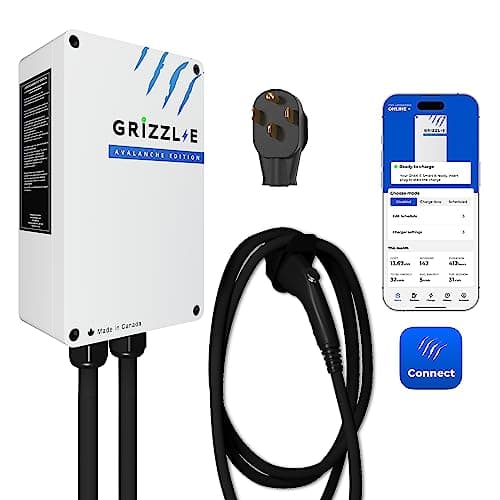
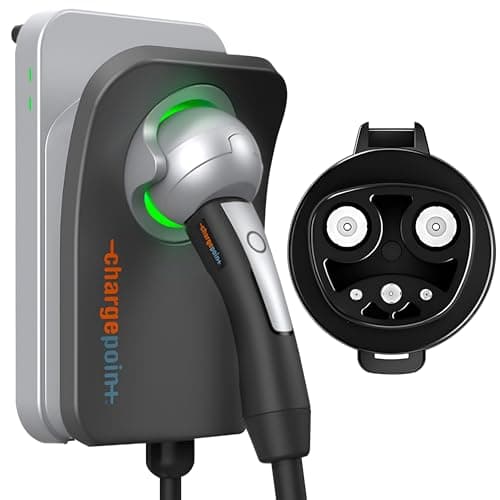
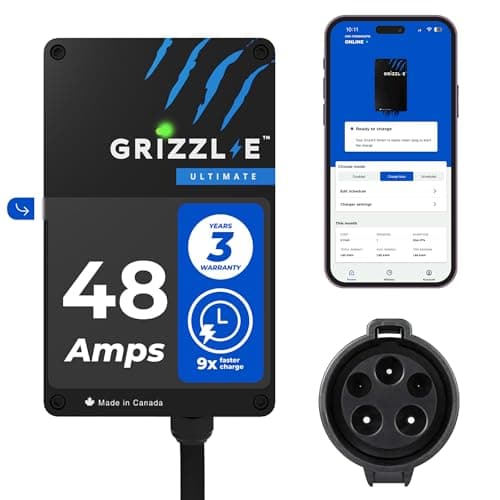
How to choose the right segment
Start with two questions, and the segment picks itself. First: what car do you drive? A Tesla (or any of the growing list of EVs shipping with a NACS port) is happiest with a native NACS charger, though a J1772 unit plus the adapter your car came with works fine too. Everything else uses J1772. Second: what’s your budget and appetite for features?If you want scheduling and energy tracking, you’re in smart-charger territory; if you just want reliable overnight charging for as little as possible, the budget segment is where to look.
Amps decide charging speed — but your panel decides amps
The headline spec on any of these chargers is amperage. A 40-amp charger adds about 34 miles of range per hour; a 48-amp charger, about 40. That difference is real but modest, and it comes with a catch: by the National Electrical Code’s 80% continuous-load rule, a 48-amp charger needs a 60-amp circuit, while a 40-amp charger runs on a more common 50-amp circuit. If your panel is already crowded, the “slower” 40-amp charger may be the smarter, cheaper install. Our panel-capacity guide shows you how to check, and our best 40-amp chargerspicks the units that deliver a full 9.6 kW on that common 50-amp circuit — the sweet spot for most homes. If your panel can carry a 60-amp circuit, our best 48-amp chargers covers the fastest home charging there is, and every one of them is in our hardwired charger picks.
Where the charger will actually live
The third question, and the one people answer last: is this going on a dry garage wall, or outside? If it is the garage, our best chargers for a garageranks on what a fixed wall actually changes — reach, a NEMA 14-50 that may already be there, an unheated winter and a router two walls away. A charger bolted to an exterior wall, a carport post or a pedestal at the end of a driveway has to survive rain, blown dust, road salt and a winter it can’t hide from — and the enclosure rating on the box (NEMA 3R, NEMA 4, NEMA 4X, or an IP code) is what tells you whether it can. Our best outdoor and weatherproof chargers decodes those ratings and picks the units built for exposed installs, while our cold-weather pickscompare the published low-temperature ratings for a driveway that freezes. If you don’t own the wall at all, our picks for apartments and renters cover the chargers that come with you, and chargers with long cables settles how far the unit can be from where you park.
What decides the price
Three things move a charger’s price, and only one is about how fast it charges: the brand and its app ecosystem (ChargePoint and Wallbox charge for polish), the build (a die-cast weatherproof enclosure costs more than plastic), and smart features (WiFi, energy monitoring, load balancing). A $260 budget unit and a $500 smart one can push the exact same amps into your car. You’re paying for convenience and durability, which are real but optional — and we flag when the cheaper option does the same core job.
The mistake buyers make
Overbuying amps they can’t use. A 48-amp charger on a panel that can only spare a 40-amp circuit will simply run at 40 amps — you paid for headroom you can’t reach. Buy for the circuit you have (or will realistically install), not for the biggest number on the box. If your panel is the binding constraint, our small electrical panel picks are the chargers you can dial down to fit, and what size charger do I need works the whole decision from your panel, your car and your mileage.
Segments people arrive at later
Three more shopping filters worth knowing about. A second EV in the household changes the question entirely — see best chargers for two cars, where the constraint is total amps rather than any one charger. If you are chasing a utility rebate, most programs filter on certification, so start with our ENERGY STAR certified picks. And if the car is a plug-in hybrid rather than a full EV, most of a big charger is wasted on it — our plug-in hybrid picks size it properly.
Three questions that arrive from the other direction
Some buyers start from a constraint that is not the panel or the wall. If the question is simply which charger is quickest, our fastest Level 2 chargersranks the 80-, 50- and 48-amp tiers on real miles per hour — and explains the onboard-charger ceiling in your car that decides whether any of it is usable. If there are panels on the roof, our picks for homes with solar separate the two units that publish an excess-solar mode from the ones that get most of the benefit with a schedule. And if the charger is going in at a property you rent out, our picks for an Airbnb or rental rank on lockout, energy records and a body that survives strangers. And where a specific car changes the answer — the Cadillac LYRIQ ships with either an 11.5 kW or a 19.2 kW onboard charger depending on trim, and a NACS port on the 2027 model — our picks for the Cadillac LYRIQ match the charger to the module and the port you actually have. The Kia EV9 is the opposite case and a much simpler one: Kia fits the same 10.9 kW onboard charger to every trim, so 48 amps is the ceiling worth paying for and the 80-amp units do nothing — our picks for the Kia EV9 work that through, including how much slower the cable Kia puts in the trunk really is. The Volkswagen ID.4 inverts the port advice entirely: VW publishes an 11 kW maximum AC acceptance rate and tells owners not to use its NACS adapter on a Level 2 charger, so our picks for the Volkswagen ID.4 are all J1772 — and they are honest about the 9.6 kW cable VW already puts in the car.
Buying a charger for someone else
Every segment above assumes you know the car, the panel and the wall. A gifter usually knows one of the three. Our gift guidesre-frame these same picks by recipient — new EV owners, Tesla owners, renters, the owner who already has a charger — and by budget tier, and our Black Friday & Cyber Monday hub records what has historically discounted in this category and whether to buy now or wait.
Buying for a specific car
Five of the segments above are per-vehicle pages, built because the single number that settles a home-charger purchase is printed on the car rather than the charger. The Toyota bZis the most permissive of them — Toyota fits a NACS port and then supplies a J1772 adapter, so both connector families work — while the Volkswagen ID.4 is the strictest, because VW tells owners not to use a NACS adapter on a Level 2 charger at all. The Kia EV6 is the one where the connector decides the purchase before the amperage does: it has a NACS port and Kia publishes no J1772 AC adapter for it, so our picks lead with native NACS hardware and say exactly what the J1772 route does and does not have behind it. The Cadillac LYRIQ and the Kia EV9 sit between them. All five land in the same place on amperage: 48 amps is the ceiling worth paying for unless your car publishes a 19.2 kW onboard charger.
The Hyundai IONIQ 5is the sixth, and it is the odd one out: Hyundai publishes no onboard-charger rating for the car anywhere on its own pages — no kW figure, no maximum AC amperage, no spec row at all. So rather than quote a number nobody printed, that page derives the ceiling from Hyundai’s own published charge times and shows the arithmetic. It lands near 10 kW, which puts the IONIQ 5 in the same place as the rest: a 48-amp, NACS-first purchase.
Buying for the circuit and the budget you actually have
Three of the segments above start from a constraint rather than a car. Our cheap smart charger picksfill the gap between the two roundups either side of them — the smart list is ranked on app capability and leads with premium hardware, the budget list is ranked on price and leads with units that have no radio at all, and the real question of what the cheapest charger that still schedules and reports is sits between them. Our picks for a 30-amp circuit answer the question nobody selling chargers wants to: no manufacturer builds a native 30-amp home charger, so the honest answer is a larger unit configured down to 24 amps, and only four chargers in our registry publish that setting. If the circuit you are eyeing is the one behind the laundry, start with the dryer-outlet guide instead — it explains why that plan is harder than it looks before you spend anything.
Frequently asked questions
Is a more expensive charger faster?
Not necessarily. Charging speed is set by amperage and your car — a 40-amp charger is a 40-amp charger whether it costs $260 or $500. The extra money buys an app, a tougher enclosure, or load balancing, not raw speed.
Do I need a smart charger?
Only if you'll use it. Smart chargers help if your utility has time-of-use rates and you want to schedule around them, or you want energy data. But most EVs can schedule charging in the car's own app, so a simple non-smart charger is fine for many people.
Should I buy a NACS or J1772 charger?
Match it to your car. Tesla and newer NACS-equipped EVs are happiest with a native NACS charger; every other EV uses J1772. Adapters bridge the two cheaply either way, so it's a convenience choice, not a compatibility trap.