Level Two Club

Best Outdoor & Weatherproof EV Chargers

Not every home charger belongs on an outside wall. These are the units their makers actually rate for it — ranked on what the enclosure protects against, how cleanly they install outdoors, and how they cope with a real winter.

By Stephen V.Last updated How we pick

Most “best EV charger” lists quietly assume a dry, attached garage. Plenty of homes don’t have one. If your charger is going on an exterior wall, a carport post, a detached garage or a pedestal at the end of the driveway, it will spend its whole life in rain, blown dust, road salt, summer sun and whatever your winter does — and the spec that decides whether that’s fine or a slow failure is the one buried at the bottom of the datasheet: the enclosure rating.

So we ranked this segment on the criteria that actually apply outdoors, in this order. One: a manufacturer-published enclosure rating. No published NEMA or IP rating, no pick — we won’t tell you to bolt an unrated box to an outside wall. Two: how cleanly it connects outdoors, because a hardwired unit has no exposed plug and pins to seal. Three: cable length, since outdoor mounting points are rarely as close to the charge port as a garage wall. Four: a real safety listing (UL or ETL to the EVSE standard). Five: warranty. And six: how much fragility the smart features addin a place you won’t notice a fault for a week.

We own none of these chargers and have not bench-tested them — we read the ratings off the manufacturers’ own spec sheets on a dated visit, print “Not published” when a brand won’t state a figure, and argue the ranking in plain language. Two units that appear on our other lists are deliberately not ranked here; the section below explains exactly why.

How this is funded:we earn a commission if you buy through our links, at no extra cost to you. It never changes which product we recommend, and we’ll tell you when we’d skip one. Full disclosure.

Quick picks

Ranked on published specs, charging speed, electrical fit and value. Select a row to jump to the full write-up. We have not bench-tested these chargers — here is exactly what we do instead.

#ProductBest forPrice
1
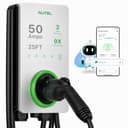
Autel MaxiCharger Home

Autel MaxiCharger Home

Built for the harshest driveway. The NEMA 4X enclosure is rated to keep charging in extreme cold and heat, it pushes a full 50 amps, and the app is capable. If your charger lives fully exposed to the weather, this is the one.

Best for full exposure
$424.00 · View on Amazon

$568.0025% off

Price as of July 20, 2026. #ad How we’re funded

2
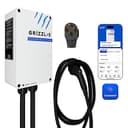
Grizzl-E Classic

Grizzl-E Classic

A deliberately dumb charger, and that's the point. No app, no cloud account, no firmware to fail — just a die-cast aluminum box built for a Canadian winter and rated to keep working outdoors. If you want set-and-forget, this is it.

Best for cold climates
$299.99 · View on Amazon

Price as of July 20, 2026. #ad How we’re funded

3
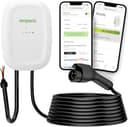
Emporia Level 2 EV Charger

Emporia Level 2 EV Charger

The value pick that doesn't feel cheap: a full 48 amps, ENERGY STAR listing, WiFi with genuine energy monitoring, and a 25 ft cable — for well under what the big names charge. It's the one we point most people to first.

Best value outdoor
$449.00 · View on Amazon

Price as of July 20, 2026. #ad How we’re funded

4
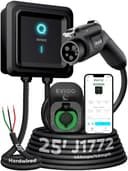
EVIQO 48A Level 2 Charger

EVIQO 48A Level 2 Charger

A lot of charger for the money: a full 48 amps, WiFi with scheduling, ENERGY STAR, and the longest usable reach in this group thanks to a 25 ft cable plus a 40-inch input lead. A strong value alternative to Emporia if you want maximum reach.

Best outdoor reach
$428.99 · View on Amazon

$479.0010% off

Price as of July 20, 2026. #ad How we’re funded

5
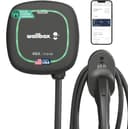
Wallbox Pulsar Plus

Wallbox Pulsar Plus

The one to buy when wall space is tight: it's among the smallest 48A units you can get, with Power Boost load balancing so it can share a circuit without tripping the main. A polished premium charger — and priced like one.

Best for tight exterior walls
$614.99 · View on Amazon

$699.9912% off

Price as of July 20, 2026. #ad How we’re funded

6
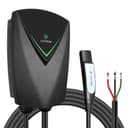
Lectron Nexus NACS (Tesla) Charger

Lectron Nexus NACS (Tesla) Charger

For a Tesla owner who doesn't want to babysit an adapter: a native NACS (J3400) connector plugs straight into the car, at a full 48 amps, with the safety listings you want. No app, but Teslas schedule charging in the car anyway.

Best outdoor pick for Tesla
$429.99 · View on Amazon

Price as of July 20, 2026. #ad How we’re funded

The picks in full

#1Best for full exposure

Autel MaxiCharger Home

Built for the harshest driveway. The NEMA 4X enclosure is rated to keep charging in extreme cold and heat, it pushes a full 50 amps, and the app is capable. If your charger lives fully exposed to the weather, this is the one.

Strengths

  • NEMA 4X enclosure rated for very cold and hot conditions
  • Full 50A output with a 25 ft cable
  • WiFi, Bluetooth and a capable app

Trade-offs

  • 50A needs a 60A circuit and typically a hardwired install
  • App and ecosystem are newer than ChargePoint's
Max output50 A
Power12 kW
ConnectorJ1772
InstallHardwired
Cable length25 ft
Warranty3 years
WiFi + appYes
CertificationsCSA certified, ENERGY STAR

Our charging-speed math. At its 50A max (12 kW) and ~3.5 miles per kWh it adds roughly 42 miles of range per hour.

Build note. NEMA 4X weatherproof enclosure rated for operation down to about -40 degrees F.

Specs read from the manufacturer spec sheet, on July 19, 2026. “Not published” means the brand does not state that figure.

#2Best for cold climates

Grizzl-E Classic

A deliberately dumb charger, and that's the point. No app, no cloud account, no firmware to fail — just a die-cast aluminum box built for a Canadian winter and rated to keep working outdoors. If you want set-and-forget, this is it.

Strengths

  • Rugged die-cast aluminum, NEMA 4 / IP67 — built for outdoors and cold
  • No app or account to break; nothing to update
  • UL listed and ENERGY STAR at a mid price

Trade-offs

  • 40A caps it below the 48A chargers on charging speed
  • No scheduling or energy tracking — you'll lean on the car's app instead
Max output40 A
Power9.6 kW
ConnectorJ1772
InstallNEMA 14-50 plug
Cable length24 ft
Warranty3 years
WiFi + appNo
CertificationsUL/cUL listed, ENERGY STAR

Our charging-speed math. At 40A (9.6 kW) and ~3.5 miles per kWh it adds roughly 34 miles of range per hour — plenty for an overnight top-up.

Build note. Die-cast aluminum NEMA 4 / IP67 enclosure with no WiFi — a simple, reliable design.

Specs read from the manufacturer spec sheet, on July 19, 2026. “Not published” means the brand does not state that figure.

#3Best value outdoor

Emporia Level 2 EV Charger

The value pick that doesn't feel cheap: a full 48 amps, ENERGY STAR listing, WiFi with genuine energy monitoring, and a 25 ft cable — for well under what the big names charge. It's the one we point most people to first.

Strengths

  • 48A output and ENERGY STAR at a value price
  • The app actually tracks energy use, not just on/off
  • Long 25 ft cable and a remote holster in the box

Trade-offs

  • 48A hardwired needs a 60A circuit; on a NEMA 14-50 plug it's limited to 40A
  • App polish trails ChargePoint's, and support is smaller
Max output48 A
Power11.5 kW
ConnectorJ1772
InstallHardwired or NEMA 14-50 plug
Cable length25 ft
Warranty3 years
WiFi + appYes
CertificationsUL listed, ENERGY STAR

Our charging-speed math. At 48A (11.5 kW) and ~3.5 miles per kWh it adds about 40 miles of range per hour hardwired; on a 40A plug-in circuit, about 34.

Build note. 48A hardwired, or 40A on a NEMA 14-50 outlet, with a 25 ft cable and remote holder.

Specs read from the manufacturer spec sheet, on July 19, 2026. “Not published” means the brand does not state that figure.

#4Best outdoor reach

EVIQO 48A Level 2 Charger

A lot of charger for the money: a full 48 amps, WiFi with scheduling, ENERGY STAR, and the longest usable reach in this group thanks to a 25 ft cable plus a 40-inch input lead. A strong value alternative to Emporia if you want maximum reach.

Strengths

  • 48A output with WiFi scheduling at a value price
  • 25 ft charging cable plus a 40 in input cable — excellent reach
  • UL, ETL, FCC and ENERGY STAR listings

Trade-offs

  • Hardwired version needs a 60A circuit and an electrician
  • Smaller brand with a shorter track record than ChargePoint or Wallbox
Max output48 A
Power11.5 kW
ConnectorJ1772
InstallHardwired
Cable length25 ft
Warranty3 years
WiFi + appYes
CertificationsUL, ETL, FCC, ENERGY STAR

Our charging-speed math. At 48A (11.5 kW) and ~3.5 miles per kWh, about 40 miles of range per hour.

Build note. Ships with a 25 ft charging cable plus a 40 in input cable — among the longest reach in class.

Specs read from the manufacturer spec sheet, on July 19, 2026. “Not published” means the brand does not state that figure.

#5Best for tight exterior walls

Wallbox Pulsar Plus

The one to buy when wall space is tight: it's among the smallest 48A units you can get, with Power Boost load balancing so it can share a circuit without tripping the main. A polished premium charger — and priced like one.

Strengths

  • Genuinely compact for a 48A charger — easy to place
  • Power Boost load balancing avoids a panel upgrade in some homes
  • Bluetooth plus WiFi, with a clean app

Trade-offs

  • One of the pricier chargers here
  • Hardwired only — no plug-in option for renters
Max output48 A
Power11.5 kW
ConnectorJ1772
InstallHardwired
Cable length25 ft
Warranty3 years
WiFi + appYes
CertificationsENERGY STAR

Our charging-speed math. At 48A (11.5 kW) and ~3.5 miles per kWh, about 40 miles of range per hour. Power Boost can throttle it to protect a shared circuit.

Build note. One of the most compact 48A chargers in its class, with both Bluetooth and WiFi.

Specs read from the manufacturer spec sheet, on July 19, 2026. “Not published” means the brand does not state that figure.

#6Best outdoor pick for Tesla

Lectron Nexus NACS (Tesla) Charger

For a Tesla owner who doesn't want to babysit an adapter: a native NACS (J3400) connector plugs straight into the car, at a full 48 amps, with the safety listings you want. No app, but Teslas schedule charging in the car anyway.

Strengths

  • Native NACS connector — no J1772-to-Tesla adapter to lose
  • Full 48A output and a weather-rated IP66 body
  • UL/ETL safety listings plus ENERGY STAR

Trade-offs

  • No WiFi app — you schedule in the Tesla app instead
  • NACS connector is best for Tesla/NACS cars; other EVs need a NACS-to-J1772 adapter
Max output48 A
Power11.5 kW
ConnectorNACS
InstallHardwired
Cable length23 ft
Warranty3 years
WiFi + appNo
CertificationsUL 2594/2231/2251 (ETL listed), ENERGY STAR, FCC

Our charging-speed math. At 48A (11.5 kW) and ~3.5 miles per kWh, about 40 miles of range per hour into a Tesla.

Build note. Native NACS (J3400) connector plugs straight into a Tesla with no adapter; includes a holster.

Specs read from the manufacturer spec sheet, on July 19, 2026. “Not published” means the brand does not state that figure.

What “weatherproof” actually means

There is no such thing as a “weatherproof” spec. What manufacturers publish instead is an enclosure rating— either a NEMA type or an IP code — and both answer the same question: what can get inside this box? These are defined test conditions, not marketing adjectives, which is exactly why we treat a published rating as the price of entry to this list and an absent one as a finding.

In NEMA’s own words, the three ratings you’ll meet on a home charger step up like this:

  • Type 3R— indoor or outdoor use, protecting the equipment against falling dirt and against rain, sleet and snow, and undamaged by ice forming on the outside. It is the entry tier for outdoor use.
  • Type 4 — everything 3R covers, plus windblown dust, splashing water and hose-directed water. This is the rating you want on an exposed wall.
  • Type 4X — Type 4 plus an additional level of protection against corrosion. Salt air and salted roads are what that buys you.

The IP code from IEC 60529 measures the same thing on a different scale: the first digit is solids, the second is water. IP66 means dust-tight and protected against powerful water jets. IP67 means dust-tight and protected against temporary immersion — and here is the detail almost nobody mentions: a plain IP67 rating does notimply IP66 unless the product is dual-coded, because immersion and high-pressure jets are different tests. The Grizzl-E Classic is dual-rated NEMA 4 and IP67, which is why it clears both bars. And despite what a hundred conversion charts imply, NEMA itself states that its NEMA-to-IP table cannot be run backwards to turn an IP number into a NEMA type — so “IP66 equals NEMA 4” is a convenience, not a fact.

Enclosure ratings as published by each manufacturer. The last two rows are units we did notpick for outdoor use — the section below explains each one.
ChargerEnclosure ratingHow it mountsCable
Autel MaxiCharger HomeNEMA 4XHardwired25 ft
Grizzl-E ClassicNEMA 4 (IP67)NEMA 14-50 plug24 ft
Emporia Level 2 EV ChargerNEMA 4Hardwired or NEMA 14-50 plug25 ft
EVIQO 48A Level 2 ChargerIP66 / NEMA 4Hardwired25 ft
Wallbox Pulsar PlusNEMA 4Hardwired25 ft
Lectron Nexus NACS (Tesla) ChargerIP66Hardwired23 ft
ChargePoint Home FlexNEMA 3RHardwired (plug-in NEMA 14-50 SKU also sold)23 ft
Lectron 40A Portable Level 2 ChargerNot publishedNEMA 14-50 plug16 ft

Ratings only describe the box, not the installation. Grizzl-E makes that explicit in its own manual: the enclosure’s water rating cannot be guaranteed if the charger is mounted upside down. Mount it the way the manual says, or the rating on the spec sheet stops describing your charger.

The temperature range is the second number to check

Enclosure ratings say nothing about heat or cold — that’s a separate published figure, and it separates these six more than you’d expect. The Autel MaxiCharger states the widest window of the group, from -40°F to 131°F. The Grizzl-E, Emporia, EVIQO and ChargePoint units all publish -22°F to 122°F. The Wallbox Pulsar Plus datasheet stops at 104°F— the lowest ceiling here by nearly 20 degrees, which is worth a thought if the charger will bake on a south-facing wall in Phoenix or Houston. None of that makes the Wallbox a bad charger; it makes it a charger to mount in shade.

Mounting outside changes the install, not just the charger

Buying a rated unit is half the job; the other half is how it connects. A hardwiredcharger runs conduit or cable straight into the enclosure, so there is no plug, no pins and no receptacle to keep dry — one sealed box on the wall. A plug-incharger needs its NEMA 14-50 receptacle in a weather-resistant, in-use cover that closes over the cord while it’s plugged in, and under current code that circuit generally needs GFCI protection too — usually a GFCI breaker, which your electrician and local inspector confirm. It works, and it keeps the charger removable if you move — but it is more parts to specify and more places for water to find. Our hardwired vs plug-in comparison weighs the whole trade, and the NEMA 14-50 guide covers the outlet itself.

There is a wrinkle here the brands are unusually candid about, and it’s worth knowing before your electrician is standing in the driveway. ChargePoint’s datasheet notes that an external GFCI can conflict with the charger’s own internal ground-fault protection, and tells installers to use a non-GFCI breaker for a hardwired install — while an outdoor plug-ininstall is the case where an outdoor-rated GFCI breaker is required upstream. Grizzl-E’s manual adds the practical fix where a breaker is mandated: specify a 20 mA GFCI breaker, because a 5 mA one may cause disruptions. In plain terms — the nuisance tripping people complain about outdoors is usually two ground-fault devices arguing, not a faulty charger, and it’s one more reason hardwiring is the simpler outdoor answer.

Three siting decisions do more for longevity than any spec on the box. Height and shelter: mounting under an eave or on the leeward wall keeps direct rain, snow load and UV off the unit and the connector. Cable reach:outdoor mounting points are rarely as convenient as a garage wall, and the difference between a 16-foot and a 25-foot cable is the difference between parking anywhere and parking exactly right — which is why cable length is one of our ranking criteria and why the EVIQO’s 25 feet earns its place. Where the connector rests:a wall holster keeps the plug out of grit, puddles and snow; letting it hang in the dirt is the easiest way to shorten a connector’s life — Grizzl-E’s warranty even excludes plugs left exposed to snow or water for prolonged periods.

And because this is a 240V circuit outdoors, the electrical side is not optional. EV charging is a continuous load, so the National Electrical Code sizes the circuit to 125% of the charger’s draw — the “80% rule” — meaning a 48-amp charger needs a 60-amp circuit and a 40-amp charger needs a 50-amp one. Check what your panel can spare before you shop, using our panel-capacity guide, and budget the job with the installation cost breakdown— an outdoor run is usually a longer, more involved one than a garage install.

Cold weather: what actually changes

The charger is rarely the thing that struggles in winter. Every pick here is a sealed unit with a published rating, and the rugged ones — the Grizzl-E Classic’s die-cast aluminum body rated to -22°F, the Autel’s NEMA 4X enclosure rated to -40°F — are built specifically for exposed, cold installs. What changes is the car. The US Department of Energy and EPA put numbers on it: in mixed driving at 20°F versus 75°F, an EV’s range can fall by roughly 41%with the cabin heater running, and about 12% with it off — and around two-thirds of that extra energy is going into heating the cabin, not moving the car. So the same overnight charge simply covers fewer miles in January than in July.

That is an argument for a home charger, not against one. The same DOE guidance notes that preheating the cabin while the car is still plugged in extends your range, because the warm-up runs on the wall instead of the battery — which only works if the charger is out there, connected, on the coldest morning of the year. It is also not a reason to buy more amps: an overnight charge has hours of slack either way, as we work through in 40 amps vs 48 amps.

The one genuinely annoying cold-weather effect is the cable. Charging cables stiffen as the temperature drops, and a long, cold cable is heavy and uncooperative to coil. It’s a handling nuisance, not a defect — but it’s another argument for a wall holster, and a reason not to buy more cable than your parking spot needs.

Sun, salt and the corrosion case for 4X

Rain gets the attention; salt does the damage. On a coastal property, or in a region where roads are salted all winter and spray reaches the driveway, the relevant upgrade is corrosion resistance — the “X” in NEMA 4X. That is the specific reason the Autel MaxiCharger leads this list rather than a faster or cheaper unit: it is the only pick here whose enclosure rating includes corrosion protection. If your charger lives inland under a carport roof, that premium buys you less, and the Emporia or EVIQO are the better value.

The two we didn’t pick — and why

The ChargePoint Home Flex is our overall favorite charger and it isoutdoor-rated, at NEMA 3R. We still left it off this list, because 3R is the entry tier: it’s built to shed falling rain and sleet, not the windblown dust and hose-directed water a NEMA 4 unit is tested against. Under a deep eave or a carport it’s a perfectly sound outdoor choice, and its adjustable 16–50A output is still the most flexible thing in the category — see the full Home Flex review. On a fully exposed wall, we’d spend the same money on a 4 or 4X unit.

The Lectron 40A portableis our budget pick everywhere else on this site, and it is emphatically not an outdoor charger — because Lectron does not publish an enclosure or IP rating for it at all. That empty cell in the table above is the whole argument. It may well tolerate a damp garage; we have no basis to tell you it will survive a driveway, so we don’t. If price is the constraint, buy it for a garage and see our budget charger picks; if the charger must live outside, this is the wrong place to save money.

How to choose between these six

Start with exposure. If the charger will be fully in the weather — no roof, coastal air or salted roads — take the Autel MaxiCharger for its NEMA 4X corrosion-rated enclosure and 50-amp output. If your problem is cold and you want nothing to go wrong, the Grizzl-E Classicis the one: a die-cast aluminum, NEMA 4 / IP67 box with no WiFi, no account and no firmware, which is the point rather than a compromise — you schedule charging in the car instead.

If you want the best value in a weather-rated unit, the Emporia Level 2gives you 48 amps, real energy monitoring and a NEMA 4 enclosure, and it’s the only pick here that will run either hardwired or on a plug. Need the charger to reach further than the wall you can mount it on? The EVIQO pairs a 25-foot cable with a long input lead and an IP66 body. On a cramped exterior wall or a narrow post, the compact Wallbox Pulsar Plusfits where the others don’t, and its load balancing helps when the panel is tight. And if you drive a Tesla or another NACS car, the Lectron Nexus NACSis the weather-rated way to skip the adapter entirely — more options for those cars are in our Tesla charger roundup.

Whichever you choose, the outdoor decision is finally an electrical one. Confirm the circuit your panel can spare, get a licensed electrician to run it, and specify a weather-rated install rather than improvising one — the enclosure rating on the box only protects the parts inside it.

Frequently asked questions

Can an EV charger be installed outside?

Yes — most Level 2 home chargers are designed for it, but only the ones the manufacturer rates for outdoor use. Look for a published enclosure rating (a NEMA type or an IP code) on the spec sheet, and a UL or ETL safety listing. If a brand doesn't publish an enclosure rating at all, treat that as a no: an unrated unit belongs inside a garage.

What NEMA rating do I need for an outdoor EV charger?

NEMA 3R is the entry point for outdoor use and handles rain and sleet; NEMA 4 goes further and adds windblown dust and hose-directed water; NEMA 4X adds corrosion resistance on top of that. For a fully exposed wall, post or pedestal — especially near the coast or where roads get salted — NEMA 4 or 4X is the safer buy. NEMA 3R is fine under real shelter such as a deep eave or a carport roof.

Is it safe to charge an EV in rain or snow?

Yes, with rated equipment. Home charging gear is certified to the UL 2594 safety standard for EV supply equipment, and an outdoor-rated unit is sealed against water to whatever level its NEMA type or IP code states. Charging in rain and snow is routine. The caution is about the equipment being rated for the location and installed to code — not about the weather itself.

Can I use a plug-in charger outdoors, or does it have to be hardwired?

You can plug in outdoors, but hardwiring is the tidier answer. A hardwired charger has no exposed plug and pins to weatherproof. A plug-in unit needs its receptacle in a proper weather-resistant, in-use ('bubble') cover that stays closed on the cord — one more component to specify, install and maintain. If the charger is fully exposed, most installers reach for hardwiring.

Does cold weather stop an outdoor charger from working?

Not if it's rated for your climate — check the manufacturer's published operating temperature range. Of our picks the Autel states -40F to 131F and the Grizzl-E, Emporia, EVIQO and ChargePoint units all state -22F to 122F. What genuinely changes in the cold is the car: DOE and EPA figures put EV range roughly 41% lower at 20F than at 75F when the cabin heater is running, so an overnight charge covers fewer miles in winter. Preheating the cabin while still plugged in claws some of that back. Cables also stiffen in the cold, which is a handling annoyance rather than a fault.

Do I need to build a cover or box over my outdoor charger?

No, if the unit is rated for outdoor use — the enclosure is the cover. What does help is siting: mounting under an eave or on the sheltered side of the house keeps sun, ice and standing water off the connector, and a holster keeps the plug out of the dirt. Never wrap a charger in a non-vented enclosure of your own making; that traps heat the design assumes it can shed.

Sources

Keep reading