Every charger we track that plugs into a 14-50
This is the field in full, including the portables — because “what can I plug into this outlet” is a question about a receptacle, not about a form factor, and three genuinely good answers to it do not hang on a wall.
Every charger we track that plugs into a NEMA 14-50 receptacle, across both form factors. Specs are read from each manufacturer’s own spec sheet on the dated visits in our sources. Note the amperage column: eight of the nine stop at 40 amps and the ninth stops at 32. That ceiling is the circuit, not the brand.| Unit | Form factor | Amps on a 14-50 | Cable | What is distinctive |
|---|
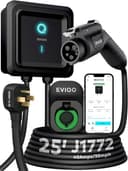
| EVIQO 40A | Wall-mounted, plug-in | 40 A, app-adjustable from 6 A | 25 ft, on a 40 in input lead | The input lead length matters more than people expect: it sets how far the body can sit from the receptacle |
|---|
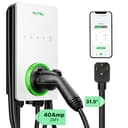
| Emporia Level 2 | Wall-mounted, sold for plug-in OR hardwired | 40 A on the plug; 48 A if hardwired later | 25 ft, with a remote holder | The only unit here that is the same purchase on both routes, which makes it the hedge if you might upgrade the circuit |
|---|
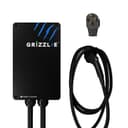
| Grizzl-E Classic | Wall-mounted, plug-in | 40 A, DIP-set | 25 ft | No app and no network at all. ENERGY STAR certified and IP67-sealed in a cast-aluminium body |
|---|
| Autel MaxiCharger 40A | Wall-mounted, plug-in | 40 A, app-adjustable | 25 ft, with an in-body holster | NEMA 4 enclosure plus Wi-Fi, Bluetooth and Ethernet — the only plug-in unit here with a wired network option |
|---|
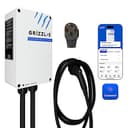
| Grizzl-E Classic Connect 40A | Wall-mounted, plug-in | 40 A, DIP-set (16/24/32/40) | 25 ft, on an 18 in input lead | The Grizzl-E body with a Wi-Fi radio in it; amperage is still a physical switch, not an app setting |
|---|
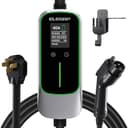
| ELEGRP 40A | Portable | 40 A, selectable 16/20/24/32/40 | 25 ft | Full wall-unit speed and reach with nothing mounted. IP67 station, IP54 connector, 1-12 hour delay timer |
|---|
| Lectron 40A | Portable | 40 A | 16 ft | The cheapest route into real Level 2 we track; the short cable is the trade |
|---|
| Lectron Portable Tesla (NACS) | Portable | 40 A | 16 ft | Same idea with a native NACS plug on the car end — the 14-50 route for a Tesla with no install at all |
|---|
| Ampure Go | Portable, dual-voltage | 32 A at 240 V (12 A at 120 V) | 20 ft | Ships with both a 14-50 cord and a 5-15 cord, so one unit covers the garage and a hotel outlet |
|---|
The column to read twice is the amperage one. Eight of the nine units stop at 40 amps and the Ampure Go stops at 32 — and not one of those numbers is a brand limitation. It is the same arithmetic every time: 50-amp circuit, 80% continuous-load limit, 40 amps. The second column worth a look is the cable: 25 feet on five of the nine, 16 on the two Lectron portables, 20 on the Ampure. In a garage that is the difference between parking where you like and parking where the cable reaches.
Before you buy: four checks on the outlet
A 14-50 you did not install yourself is the one genuine risk in this otherwise low-risk purchase, because the receptacle looks identical whether it is right or wrong. We would run all four of these first.
One: what breaker is it on?Open the panel and read the double-pole breaker feeding it. Fifty amps is what you want. A 14-50 on a 40-amp breaker is common in older houses — range circuits were often 40 — and it means a 32-amp charging ceiling, not 40. Nearly every charger here can be set down to 32, which is the fix, but you need to know. Our panel-capacity guide covers how to read what you have.
Two: what gauge are the conductors? A 50-amp residential circuit generally wants 6 AWG copper. Aluminium at a smaller gauge, or 8 AWG copper on a 50-amp breaker, is the kind of thing a charging load finds out about. This is a look-and-check job for an electrician rather than a homeowner, and it is cheap compared with the alternative. Wire size and breaker has the tables.
Three: is the receptacle built for this duty cycle?This is the check almost nobody runs and the one that causes the most damage. An inexpensive 14-50 receptacle is engineered for an RV or a range — intermittent use, a few hours at a time. EV charging pulls 40 amps continuously for six to twelve hours, every night, for years, and a thermoplastic receptacle with spring contacts will eventually heat, discolour and char at the terminals. If the receptacle is old, unbranded, or shows any browning, replacing it with a heavy-duty industrial-grade unit is the single best few dollars in this whole project. Discoloration around the slots is not cosmetic; it means stop using it.
Four: is it a dedicated circuit?The NEC wants EVSE on its own circuit, and a receptacle shared with a range, a dryer or a workshop subpanel is the most common reason a plug-in install turns into an electrician’s visit anyway. The dedicated-circuit page covers what counts and load management covers the cases where sharing can be made legitimate with hardware.
The one charger that hedges the decision
Most of this page is a choice between plugging in now and hardwiring later. One pick declines to make it.
The Emporia Level 2is sold by Emporia as “NEMA Plug or Hardwire” — a single purchase that runs at 40 amps on a 14-50 receptacle today and at 48 amps hardwired if you later put in a 60-amp circuit. Nothing else on this page does that, and it is the reason the unit sits second here despite being slower than the EVIQO is flexible. If your situation is “there is an outlet here now, but we are renovating/moving/upgrading the panel in a couple of years”, this is the charger that does not have to be bought twice. The ChargePoint Home Flex is sold on both routes too, but its plug-in SKUs are capped at 40 amps by ChargePoint, so the upgrade path there is a different SKU rather than a reinstall of the same box. Our Emporia review covers what the app does and does not publish, and Emporia Classic vs Pro covers the step up to whole-home load management.
Where the 14-50 route costs you, honestly
We would rather name the trade-offs than sell a route as free, so here is what plugging in actually gives up.
Six miles of range per hour. Forty amps is 9.6 kW and about 34 miles an hour by our arithmetic; 48 amps is 11.5 kW and about 40. If you drive forty miles a day you are replacing it in a bit over an hour either way, and the gap only matters on the nights you arrive home nearly empty and leave early. The 48-amp roundup is the page to read if that describes you.
A plug outdoors is a maintenance item.Hardwiring removes a connection point. If the charger will live on an exterior wall in weather, the receptacle and its cover become the part that ages, and an outdoor 14-50 needs a weatherproof in-use enclosure to begin with. Several picks here are rated for outdoor mounting, but the receptacle is a separate question from the charger — see our outdoor roundup and can an EV charger get wet.
You may need the GFCI breaker anyway.The plug-in route commonly requires GFCI protection on the receptacle circuit, which is a breaker swap and occasionally a nuisance-tripping problem to chase. That is a real cost that the “no electrician needed” framing tends to leave out, and it is the most common surprise in an otherwise simple install. The GFCI page and the tripping page cover both ends of it.
None of those outweigh the saving for most people with a working 14-50 already in place. They are simply the honest list, and they are the reason this page ends up recommending a different charger from the hardwired roundup rather than the same one at a lower setting.