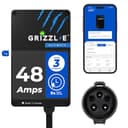
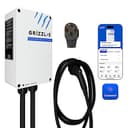
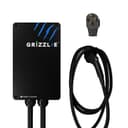
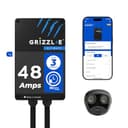
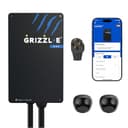
The lineup, model by model
Grizzl-E’s names describe features rather than tiers, so the table is the fastest way to see what is actually different. Everything in it comes from United Chargers’ own spec pages on the dated visits listed in our sources.
The five Grizzl-E SKUs we track, on the figures United Chargers publishes for each. Current is set with a physical DIP switch on every one of them — no Grizzl-E charger sets its amperage in the app, at any price.| Model | Rated max | Install | Connector | Current setting | Enclosure |
|---|
| Classic | 40 A | NEMA 14-50 plug | J1772 | DIP switch: 16 / 24 / 32 / 40 A | NEMA 4 (IP67) |
|---|
| Classic Connect 40A | 40 A | NEMA 14-50 plug | J1772 | DIP switch: 16 / 24 / 32 / 40 A | NEMA 4 (IP67) |
|---|
| Ultimate 48A | 48 A | Hardwired | J1772 | DIP switch: 16 / 24 / 32 / 40 / 48 A | NEMA 4 (IP67) |
|---|
| Ultimate 48A NACS | 48 A | Hardwired | NACS | DIP switch: 16 / 24 / 32 / 40 / 48 A | UL Type 4 (indoor/outdoor) |
|---|
| Duo Connect 40A | 40 A | NEMA 14-50 plug or hardwired | NACS | DIP switch: 16 / 24 / 32 / 40 A (total) | IP67 |
|---|
Three things fall out of that table. Only one model goes past 40 amps, and it is hardwired. Every model sets current the same way, with a switch you reach by opening the enclosure. And the enclosure and temperature story is the same across the range — cast aluminum, UL Type 4, −22°F to 122°F — so paying more inside this brand never buys a tougher box.
One row deserves a footnote rather than a quiet edit. The two Ultimate entries quote the enclosure differently because Grizzl-E’s own page changed between our readings of it: in September 2026 the Ultimate’s spec row carried IP67, and in October 2026 the same row read “UL Type 4 Indoor/Outdoor Rating” with no IP figure beside it. It is the same hardware with the same temperature range; what changed is what the manufacturer prints, and we would rather show you both dated readings than average them into a number nobody published.
What we ranked on
Within one brand the usual cross-market criteria collapse, because the build quality, the cable and the weather rating are the same on everything. Four questions do the work instead.
One: how does it install, and what does that cap you at? This is the first fork and it decides most buyers. The Classic, Classic Connect and Duo Connect end in a NEMA 14-50 plug, which the code caps at 40 amps because a continuous load may use only 80% of its circuit. The Ultimate is hardwire-only and reaches 48 amps on a 60-amp circuit. If an electrician is coming anyway, the Ultimate is the obvious answer; if a 14-50 is already on the wall, it is the wrong one.
Two: do you want the radio?Grizzl-E’s app does scheduling, charging statistics, remote control, lockout, diagnostics and utility demand-response enrollment. It does not set amperage. Weigh it against the one thing the plain Classic has that nothing else in the lineup does: a published ENERGY STAR certification on its own product page, which is what most utility rebate programs check.
Three: which connector is molded on the end? Grizzl-E publishes the Ultimate as available with a J1772 or a NACS output cable, and the Classic Connect and Duo Connect are offered in NACS too. The plain Classic is J1772 only. On a hardwired charger this is a decision you cannot revisit without an electrician, so check which port your car has before you order rather than after.
Four: how many cars?The Duo Connect is the only model that answers this, and it answers it by sharing rather than doubling: Grizzl-E states that dual charging “automatically splits the available current in half, or you can set individual charging currents for each connector” in the app. Two cars plugged in at once get roughly 4.8 kW each — about 17 miles of range an hour apiece by our arithmetic — which is the trade this format asks you to accept in exchange for not running a second circuit.
What Grizzl-E does not publish
A brand page that only lists features is an advertisement. Three absences are worth knowing before you buy, and all three are things we looked for and did not find.
What the warranty covers on the Ultimate.Both the spec page and the overview page offer a “3 Year” / “5 Year” selector without stating the terms of either, so our registry records the warranty term for that SKU as not published. The Classic is the clear case in the lineup, with a 3-year default warranty in its own product data. Our warranty table has every published term in the category.
ENERGY STAR on anything but the Classic.Marketplace listings for the connected models carry an ENERGY STAR badge in their imagery, and Grizzl-E’s own pages for those models do not state the certification. We record that as “not published” rather than resolving it in either direction, and the practical consequence is a rebate form, so check your own utility’s approved equipment list before buying. Our rebates page covers how those programs are usually structured.
A stable answer on the Ultimate’s connectivity.The same page published no app support in September 2026 and “Wi-Fi (2.4 GHz); Mobile Application” plus OCPP in October 2026. We publish both readings with their dates because that is what we actually saw. If the app matters to you on this specific model, check the SKU on the listing you are buying rather than trusting any page — including this one — written before you looked.
Who should buy a Grizzl-E, and who should not
Buy one if the charger lives outside and you want nothing to administer. A cast-aluminum box rated to −22°F with a cold-flexible 25-foot cable and a current setting that is a physical switch is a genuinely different proposition from a plastic enclosure and a cloud account, and it is why this brand has the reputation it does. The outdoor roundup and the cold-weather roundup both rank on exactly those published figures.
Look elsewhere if you want to change amps from your phone, or need load management.No Grizzl-E sets current in software, and none publishes whole-home load management — the Duo splits one circuit between its own two cables, which is a different feature. If your panel is the constraint, start with the load-management roundup; if app amperage control is the requirement, the adjustable-amperage roundup names the makers that publish it.