Level Two Club

Best EV Chargers With the Longest Warranty

The longest published term we can find is five years, on the Autel MaxiCharger 80A. Everything else worth buying is three. That flatness is the useful answer: in this category the warranty is a floor to check, not a feature to shop on.

By Stephen V.Last updated How we pick

The longest published warranty on a home EV charger we track is five years, on the Autel MaxiCharger 80A — and it is the right buy for almost nobody, because 80 amps needs a 100-amp circuit and very few cars can use the output. If you want the longest term on a charger that suits a normal house, you are choosing between a lot of three-year warranties, and the one we would take is the ChargePoint Home Flex: three years, from the oldest and best-documented brand in the group, on a unit whose amperage you can dial from 16 to 50 amps so it fits whatever circuit you have.

We built this page because “best EV charger warranty” is a question people search and nobody in this category answers with a table. So here is the table — every charger in our registry, sorted by the term their own manufacturer publishes. The shape of it is the real finding: one unit at five years, the large majority at three, two portables at two, and two units whose maker publishes no warranty term at all. There is no ten-year outlier to go hunting for.

One thing this page deliberately will not do is tell you what those warranties cover. The term in years is the only warranty fact these manufacturers publish on the pages we read. Whether labor is included, whether a replacement is new or refurbished, who pays the shipping, and whether an outdoor install or a self-install voids anything — none of that is in a published spec sheet, and we are not going to invent it. Where a figure is missing, our table says “Not published,” which is a finding in itself.

How this is funded: we earn a commission if you buy through our links, at no extra cost to you. It never changes which product we recommend, and we’ll tell you when we’d skip one. Full disclosure.

Quick picks

Ranked on published specs, charging speed, electrical fit and value. Select a row to jump to the full write-up. We have not bench-tested these chargers — here is exactly what we do instead.

#ProductBest forPrice
1
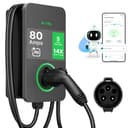
Autel MaxiCharger 80A

Autel MaxiCharger 80A

The ceiling of home AC charging: 19.2 kW on a 100-amp circuit, which is roughly double what a 48-amp charger does. Almost no car can actually take it — most cap their onboard charger somewhere between 7.7 and 11.5 kW — so buy this for a specific vehicle that accepts 80 amps, or for a future-proofed circuit you already have. Otherwise it is a very good, very expensive 48-amp charger.

Longest published term
$908.65 · View on Amazon

$1,299.0030% off

Price as of October 18, 2026. #ad How we’re funded

2
ChargePoint Home Flex

ChargePoint Home Flex

The safest default for most homes: you set the amperage in the app to 16, 24, 32, 40, 48 or 50A, so one charger fits whatever circuit your panel can spare today and scales up if you upgrade later. The app is the most mature here, firmware arrives over the air, and the warranty is long.

Best three-year to actually buy
$516.71 · View on Amazon

Price as of October 18, 2026. #ad How we’re funded

3
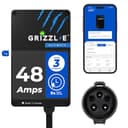
Grizzl-E Ultimate 48A

Grizzl-E Ultimate 48A

The tank of the 48-amp class: cast-aluminum body, IP67 sealing, a full 11.5 kW, a 25 ft cable built to stay flexible in the cold and a DIP switch instead of a setup wizard. We recorded it as discontinued in August 2026 after its Amazon listing went dark; Grizzl-E sells it and Amazon lists it again as of our 2026-09-28 check, so that record is corrected here.

Best with nothing to log into
$479.99 · View on Amazon

Price as of October 18, 2026. #ad How we’re funded

4
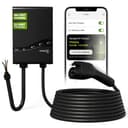
Emporia Pro

Emporia Pro

The answer to a panel that says no. The Pro ships with Emporia's Vue 3 energy monitor in the same box, watches what the rest of the house is drawing, and throttles the car in real time so the total never exceeds what the service can carry — which is how a 48-amp charger ends up on a panel that a load calculation says has no room for one. You pay roughly Home Flex money for it, and only the load management justifies that.

Best for a tight panel
$599.00 · View on Amazon

Price as of October 18, 2026. #ad How we’re funded

5
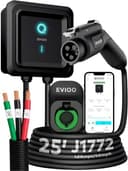
EVIQO 48A Level 2 Charger

EVIQO 48A Level 2 Charger

A lot of charger for the money: a full 48 amps, WiFi with scheduling, ENERGY STAR, and the longest usable reach in this group thanks to a 25 ft cable plus a 40-inch input lead. A strong value alternative to Emporia if you want maximum reach.

Cheapest covered 48 amps
$449.99 · View on Amazon

$510.0012% off

Price as of October 18, 2026. #ad How we’re funded

The picks in full

#1Longest published term

Autel MaxiCharger 80A

The ceiling of home AC charging: 19.2 kW on a 100-amp circuit, which is roughly double what a 48-amp charger does. Almost no car can actually take it — most cap their onboard charger somewhere between 7.7 and 11.5 kW — so buy this for a specific vehicle that accepts 80 amps, or for a future-proofed circuit you already have. Otherwise it is a very good, very expensive 48-amp charger.

Strengths

  • 80 A / 19.2 kW — the fastest AC charging you can install at a house
  • Output adjustable from 6 A to 80 A in the app, so it can be dialed to any circuit
  • NEMA 3S / IK10 enclosure rated -40F to 131F, with UL and CSA listings and ENERGY STAR

Trade-offs

  • Needs a 100-amp circuit for full output — a service upgrade for most homes
  • Very few EVs accept more than 11.5 kW on AC, so the extra amps often go unused
  • Autel's own pages disagree on the warranty term (5 years on the body vs 3 extendable to 5)
Max output
80 A
Power
19.2 kW
Connector
J1772
Install
Hardwired
Cable length
25 ft
Warranty
5 years
WiFi + app
Yes
Certifications
UL 2594, UL 2231-1/2, UL 1998, CSA C22.2 No. 280, ENERGY STAR

Our charging-speed math. At its full 80A (19.2 kW) and ~3.5 miles per kWh it would add roughly 67 miles of range per hour — but only into a car that accepts 19.2 kW on AC. Dialed to 48A (11.5 kW) it is about 40 miles per hour, the same as any other 48-amp charger.

Build note. Hardwired 19.2 kW unit with a 25 ft cable; output is adjustable 6-80 A in the Autel Charge app and by DIP switch (16/24/32/40/48/50/64/72/80 A), in a NEMA 3S / IK10 enclosure rated -40F to 131F, with WiFi, Ethernet and RS485.

Specs read from the manufacturer spec sheet, on August 12, 2026. “Not published” means the brand does not state that figure.

#2Best three-year to actually buy

ChargePoint Home Flex

The safest default for most homes: you set the amperage in the app to 16, 24, 32, 40, 48 or 50A, so one charger fits whatever circuit your panel can spare today and scales up if you upgrade later. The app is the most mature here, firmware arrives over the air, and the warranty is long.

Strengths

  • Adjustable 16-50A means it fits a small panel now and a bigger circuit later
  • The most mature app of the group — scheduling, reminders, usage history, over-the-air firmware
  • 3-year warranty and a long 23 ft cable
  • Sold hardwired or on a NEMA 6-50 or NEMA 14-50 plug, in J1772 or NACS

Trade-offs

  • You pay a premium over value 48A chargers for the app and brand
  • Full 50A output needs a 60A circuit most older panels don't have to spare
  • The plug-in SKUs cap at 40A, so the top speed is a hardwired-only feature
Max output
50 A
Power
12 kW
Connector
J1772
Install
Hardwired, NEMA 6-50 or NEMA 14-50
Cable length
23 ft
Warranty
3 years
WiFi + app
Yes
Certifications
UL/cUL listed, ENERGY STAR

Our charging-speed math. At its 50A max (12 kW) and a typical 3.5 miles per kWh, the Home Flex adds roughly 42 miles of range per hour. Dial it down to 40A to fit a 50A circuit and you get about 34. ChargePoint's own, more conservative claim is up to 37 miles per hour hardwired and 30 on the plug-in SKUs.

Build note. Amperage is set in the app to 16, 24, 32, 40, 48 or 50A. The plug-in SKUs are capped at 40A, so the full 50A is a hardwired-only figure. UL and cUL listed per UL 2594 and UL 2231; firmware updates over the air, and the station stores up to 90 days of session data locally if the network drops.

Specs read from the manufacturer spec sheet, on September 3, 2026. “Not published” means the brand does not state that figure.

#3Best with nothing to log into

Grizzl-E Ultimate 48A

The tank of the 48-amp class: cast-aluminum body, IP67 sealing, a full 11.5 kW, a 25 ft cable built to stay flexible in the cold and a DIP switch instead of a setup wizard. We recorded it as discontinued in August 2026 after its Amazon listing went dark; Grizzl-E sells it and Amazon lists it again as of our 2026-09-28 check, so that record is corrected here.

Strengths

  • Full 48A / 11.5 kW in Grizzl-E's cast-aluminum, IP67-sealed body
  • Rated to -22F, with a 25 ft cable built to stay flexible in cold weather
  • Amperage set by DIP switch (16/24/32/40/48A) — no account or setup wizard

Trade-offs

  • Its Amazon listing went dark for five weeks in 2026 — stock can be patchy
  • Hardwired only — no plug-in option, and 48A needs a 60-amp circuit
  • Grizzl-E does not publish WiFi/app support for this SKU, so no scheduling or energy data
Max output
48 A
Power
11.5 kW
Connector
J1772
Install
Hardwired
Cable length
25 ft
Warranty
3 years
WiFi + app
Not published
Certifications
UL tested and certified

Our charging-speed math. At 48A (11.5 kW) and ~3.5 miles per kWh, about 40 miles of range per hour. The DIP switch drops it to 40A (about 34 mi/hr) for a 50-amp circuit.

Build note. Cast-aluminum enclosure with IP67 sealing, rated -22F to 122F; amperage is set by a DIP switch (16/24/32/40/48A) and status shown on an LED.

Specs read from the manufacturer spec sheet, on September 28, 2026. “Not published” means the brand does not state that figure.

#4Best for a tight panel

Emporia Pro

The answer to a panel that says no. The Pro ships with Emporia's Vue 3 energy monitor in the same box, watches what the rest of the house is drawing, and throttles the car in real time so the total never exceeds what the service can carry — which is how a 48-amp charger ends up on a panel that a load calculation says has no room for one. You pay roughly Home Flex money for it, and only the load management justifies that.

Strengths

  • PowerSmart throttles charging against real-time whole-home load, so a small service can host a big charger
  • 48 A hardwired or 40 A on a NEMA 14-50 plug — one unit covers both installs
  • UL listed, ENERGY STAR certified and NEMA 4 rated for indoor or outdoor, with a 25 ft cable

Trade-offs

  • PowerSmart depends on the bundled Vue 3 monitor being installed in your panel too — it is not a charger-only feature
  • Costs meaningfully more than Emporia's own Classic, which charges just as fast
  • 48 A still needs a 60-amp circuit; PowerSmart manages the load, it does not create capacity
Max output
48 A
Power
11.5 kW
Connector
J1772
Install
Hardwired or NEMA 14-50 plug
Cable length
25 ft
Warranty
3 years
WiFi + app
Yes
Certifications
UL listed, ENERGY STAR

Our charging-speed math. At 48A hardwired (11.5 kW by our arithmetic of 48 x 240 V) and ~3.5 miles per kWh it adds about 40 miles of range per hour; on a NEMA 14-50 plug it is capped at 40A, about 34 miles per hour. When PowerSmart is protecting the service it will deliberately deliver less than that at peak household load.

Build note. Ships bundled with Emporia's Vue 3 energy monitor, which reads the whole home's draw at the panel; the charger then raises or lowers its own current to keep total service load inside its limit. NEMA 4 body, 25 ft cable, and a J1772 or NACS cable option.

Specs read from the manufacturer spec sheet, on August 18, 2026. “Not published” means the brand does not state that figure.

#5Cheapest covered 48 amps

EVIQO 48A Level 2 Charger

A lot of charger for the money: a full 48 amps, WiFi with scheduling, ENERGY STAR, and the longest usable reach in this group thanks to a 25 ft cable plus a 40-inch input lead. A strong value alternative to Emporia if you want maximum reach.

Strengths

  • 48A output with WiFi scheduling at a value price
  • 25 ft charging cable plus a 40 in input cable — excellent reach
  • UL, ETL, FCC and ENERGY STAR listings

Trade-offs

  • Hardwired version needs a 60A circuit and an electrician
  • Smaller brand with a shorter track record than ChargePoint or Wallbox
Max output
48 A
Power
11.5 kW
Connector
J1772
Install
Hardwired
Cable length
25 ft
Warranty
3 years
WiFi + app
Yes
Certifications
UL, ETL, FCC, ENERGY STAR

Our charging-speed math. At 48A (11.5 kW) and ~3.5 miles per kWh, about 40 miles of range per hour.

Build note. Ships with a 25 ft charging cable plus a 40 in input cable — among the longest reach in class.

Specs read from the manufacturer spec sheet, on July 19, 2026. “Not published” means the brand does not state that figure.

Every published warranty term we can find

This is the whole registry, sorted longest first. 18 of 20 manufacturers publish a term at all.

Every charger in our registry, sorted by the warranty term its manufacturer publishes. Each figure is read off the maker’s own spec sheet or product page on the dated visit recorded with that product. A blank is not a short warranty — it is a maker who does not publish a term, and it reads “Not published” rather than being filled in.
ChargerPublished warrantyMax outputInstallEnclosure
Autel MaxiCharger 80A5 years80 AHardwiredNEMA 3S (IK10)
ChargePoint Home Flex3 years50 AHardwired, NEMA 6-50 or NEMA 14-50NEMA 3R
Emporia Level 2 EV Charger3 years48 AHardwired or NEMA 14-50 plugNEMA 4
Grizzl-E Classic3 years40 ANEMA 14-50 plugNEMA 4 (IP67)
Wallbox Pulsar Plus3 years48 AHardwired (40A model plugs in)NEMA 4
Autel MaxiCharger Home3 years50 AHardwiredIP65 / NEMA 4X
EVIQO 48A Level 2 Charger3 years48 AHardwiredIP66 / NEMA 4
Lectron Nexus NACS (Tesla) Charger3 years48 AHardwiredIP66
ChargePoint Home Flex NACS3 years50 AHardwiredNEMA 3R
Grizzl-E Ultimate 48A3 years48 AHardwiredNEMA 4 (IP67)
Lectron Nexus 48A J17723 years48 AHardwiredIP66
EVIQO 40A NEMA 14-50 Charger3 years40 ANEMA 14-50 plugIP66 / NEMA 4
Grizzl-E Classic Connect 40A3 years40 ANEMA 14-50 plugNEMA 4 (IP67)
Emporia Pro3 years48 AHardwired or NEMA 14-50 plugNEMA 4
Autel MaxiCharger AC Elite Home 40A3 years40 ANEMA 14-50 plugNEMA 4
Ampure Go Portable Level 2 Charger3 years32 ANEMA 14-50 cord for 240V, NEMA 5-15 cord for 120VIP67 (NEMA 6P watertight)
Lectron 40A Portable Level 2 Charger2 years40 ANEMA 14-50 plugNot published
ELEGRP 40A Portable Level 2 Charger2 years40 ANEMA 14-50 plugIP67 (station), IP54 (connector)
Grizzl-E Duo Connect 40ANot published40 ANEMA 14-50 plug or hardwiredIP67
Lectron Portable Level 2 Tesla Charger (NACS)Not published40 ANEMA 14-50 plugNot published

Three things in that table are worth saying out loud.

The category is flat. 15 of the 20chargers publish exactly three years. That is not a coincidence or a cartel; it is what happens when a young category settles on a number its competitors have all matched. The practical consequence is that the warranty almost never breaks a tie between two chargers you are actually choosing between — so you should stop using it as a shopping filter after the first pass and go back to the things that do differ.

The leader is a specialist. The five-year term belongs to the Autel MaxiCharger 80A, which is the fastest AC charger you can install at a house and the wrong answer for most houses. It needs a 100-amp circuitfor full output, which is a service upgrade in most homes, and almost no EV accepts more than 11.5 kW on AC — the limit lives inside the car, not on the wall. Buy it for a specific vehicle that genuinely takes 80 amps, or for a panel you already have; do not buy it for the extra two years.

Two makers publish nothing. Grizzl-E Duo Connect 40A and Lectron Portable Level 2 Tesla Charger (NACS) carry no warranty term on the pages we read. We have not downgraded them for it beyond recording it, because a missing line on a spec sheet is a documentation gap rather than proof there is no coverage. But it is yours to ask about before you pay, and it is the honest reason neither one appears in our picks on this page.

What a warranty term does not tell you

The number of years is the only warranty fact any of these manufacturers publishes on the pages we cite. Everything a claim actually turns on is unpublished:

  • Labor. Does the coverage pay the electrician who removes a dead hardwired unit and installs the replacement? No spec sheet we read says. On a hardwired charger that is a real cost; on a plug-in charger it is zero.
  • New or refurbished. Whether a replacement unit is new is not stated anywhere we read.
  • Shipping and downtime. Who pays to send a failed charger back, and how you charge in the meantime, are both unaddressed. If you have a portable charger in the trunk you have a free answer to the second one.
  • What voids it.Outdoor mounting, a self-install, an uninspected circuit, a surge event — all plausible exclusions, none published. Our surge-protection page covers the one of those you can actually do something about.

We are not implying the manufacturers are hiding something. Warranty documents normally ship in the box or live behind a support portal rather than on a product page. But a page that told you “three years, parts and labor, no questions” would be making it up, so this one tells you what is published and what is not.

The one warranty that is not the charger’s

Worth knowing, because it is the warranty people actually worry about: the DOE notes that many automakers cover the EV’s own traction batteryfor 8 years / 100,000 miles, while also stating plainly that comprehensive data on EV battery failures is not available. Nothing about choosing a Level 2 charger changes that coverage — and if you are here because you are worried that a home charger will wear the pack out faster, we wrote a whole page on why it does not.

How we would actually use this table

Treat the warranty as a filter, not a ranking. Three passes:

One: rule out the blanks, deliberately. If two chargers suit you equally and one publishes a term, take the one that publishes a term. That is the entire legitimate use of this data on a tie.

Two: be honest about the two-year portables. The Lectron 40A and the ELEGRP 40A publish two years, and both are inexpensive portable units. For a charger that lives in the trunk as a backup, two years on a cheap unit is a fair trade. For the charger your household depends on every night, we would spend the difference.

Three: then forget it and buy on fit. Once the blanks are out, every charger left publishes three years and the warranty has told you everything it can. What is left is the stuff that actually changes your life with the thing: whether 48 amps is usable in your car and your panel, whether it needs to survive a winter outdoors, whether the cable reaches the charge port, and whether you want an app at all. Our choosing guide walks that in order, and the install-cost page covers the half of the budget that is not the charger.
Frequently asked questions

Which home EV charger has the longest warranty?

Of the 20 chargers in our registry, the Autel MaxiCharger 80A publishes the longest term at five years. Everything else near the top of the category publishes three years, including the ChargePoint Home Flex, the Emporia Level 2 and Pro, both Grizzl-E hardwired units, the Wallbox Pulsar Plus, the Autel MaxiCharger Home, all three Lectron Nexus units and both EVIQO units. Two portables publish two years (the Lectron 40A and the ELEGRP 40A) and two units publish no term at all (the Grizzl-E Duo Connect and the Lectron portable NACS charger). One honest caveat on the leader: Autel's own pages disagree with each other on the 80A's warranty, describing five years in one place and three years extendable to five in another, so we record it as five while flagging the discrepancy.

Is a three-year EV charger warranty good?

It is the category standard, which makes it neither good nor bad so much as the price of entry. Most of the units we track publish exactly three years. The way to read that is as a floor: a charger publishing less than three years in 2026 is behind its competitors, and a charger publishing nothing is asking you to take a risk its rivals are not asking you to take. What a longer term would genuinely buy you is coverage past the point where a WiFi radio or a contactor is most likely to fail, which is why we weight it at all.

Does the warranty cover the electrician if a charger fails?

Not that any manufacturer we read publishes. Every warranty term in our table covers the equipment, and none of the spec sheets or product pages we read states whether labor to remove and reinstall a failed unit is included. On a hardwired charger that matters, because swapping one is an electrician's visit rather than unplugging a cord. It is a real and underrated argument for a plug-in charger on an existing NEMA 14-50 outlet: a warranty replacement is a box in the mail and five minutes of your time.

Do I lose the warranty if I install an EV charger myself?

We cannot tell you, because none of the manufacturers we read publishes an answer on the pages we cite. What we can tell you is that manufacturer install instructions uniformly specify a dedicated circuit sized by a qualified electrician to the local code, and that most jurisdictions require a permit and an inspection for a new 240-volt circuit. An uninspected install is the kind of thing a warranty claim or a homeowner's insurance claim can turn on, and that risk is separate from the charger's own paperwork.

Should the warranty decide which EV charger I buy?

No, and the table on this page is the reason. When thirteen units publish the identical three-year term, the warranty cannot separate them, so it drops to a tiebreaker and other things decide: whether your car can use 48 amps, whether the charger lives outdoors, how far the cable has to reach, and whether you want an app at all. Use the warranty as a filter instead -- rule out anything publishing no term, be deliberate about the two-year portables, then rank on fit.

What about a charger that publishes no warranty at all?

Two units in our registry are in that position: the Grizzl-E Duo Connect 40A and the Lectron Portable Level 2 Tesla Charger. Neither is a bad charger -- the Duo is the only unit we track that charges two cars from one circuit, which is exactly why it keeps its place on our two-car roundup -- but you are buying it without a published term, and that belongs in the decision rather than in the small print. Ask the retailer in writing before you buy, and keep the receipt somewhere you will find it.

Sources

  • ChargePoint — Home Flex datasheet (PDF) — ChargePoint's own datasheet: enclosure rating Type 3R per UL 50E, operating temperature -22F to 122F, 23 ft cable, plus installer notes that an outdoor plug-in install requires an outdoor-rated GFCI breaker upstream while an external GFCI may conflict with the charger's internal ground-fault protection on a hardwired install. RE-READ September 3, 2026 for the review refresh: the same datasheet also publishes maximum 12 kW (240V AC x 50A) with output amperage adjustable via the mobile app to 16A, 24A, 32A, 40A, 48A or 50A; a required dedicated dual-pole breaker rated for 125% of maximum load; 'Software Updates: Firmware updated over-the-air (OTA)'; 2.4/5 GHz Wi-Fi (802.11 a/b/g/n); local storage of up to 90 days of charging session data (100 sessions) if the network drops; power measurement accuracy +/- 2.0%; ground-fault detection by 20 mA CCID with auto retry; and UL and cUL listing per UL 2594, UL 2231-1 and UL 2231-2, NEC Article 625 compliant. Ordering information lists the plug-in station models CPH50-NEMA6-50-L23 and CPH50-NEMA14-50-L23 (accessed September 3, 2026)
  • United Chargers — Grizzl-E Ultimate 48A specifications — Grizzl-E's own spec page for the Ultimate 48A: 11.5 kW max output on J1772 or NACS, aluminum enclosure, 25 ft output cable, 208-240 VAC, selectable 48/40/32/24/16 A input current, operating temperature -30C to +50C (-22F to 122F), IP67 protection, LED indicator, DIP-switch power selector, hardwire-only install. RE-CHECKED September 28, 2026: every spec above is unchanged, and the page sells the Ultimate 48A at $383.99 with a J1772 or a NACS connector, listed alongside the 80A / 19.2 kW unit rather than replaced by it. This corrects our August 20, 2026 note, which recorded the 48A as no longer sold on the strength of a dead Amazon listing. RE-READ October 17, 2026 for the EVIQO head-to-head, and the page HAS CHANGED in two ways worth recording. (1) Connectivity is now published: the smart-function row reads 'Wi-Fi (2.4 GHz); Mobile Application' and the communication-protocol row reads 'OCPP', where our September reading of this same page published no app support for the unit. (2) The enclosure row now reads 'UL Type 4 Indoor/Outdoor Rating' with no IP figure alongside it, where the September reading carried IP67. Also published on this visit: an adjustable-current list of '40A, 32A, 24A, 16A' (the 48 A headline is not repeated in that list), 'Hardwire Only', a 25 ft output cable, -30C to +50C (-22F to 122F), 'UL E510712', enclosure dimensions of 10.25 x 6.25 x 3.75 in, a unit weight of 11.00 kg / 24.25 lbs, country of origin Canada, a price of $479.99, SKU GRS-HW-25NACS48-B, and a warranty selector offering '3 Year' or '5 Year' without stating what either covers. No ETL and no ENERGY STAR certification is published, and no Alexa, Google Home, HomeKit, Matter or Home Assistant integration is published (accessed October 17, 2026)
  • Emporia Energy — Pro EV Charger product page — Emporia's own listing for the Pro: up to 48 A hardwired on a 60-amp circuit or up to 40 A on a NEMA 14-50 outlet, 25 ft cable, NEMA 4 rated for indoor or outdoor, UL listed and ENERGY STAR certified, 3-year warranty, and PowerSmart load management that requires the bundled Vue 3 energy monitor (accessed August 18, 2026)
  • EVIQO — Level 2 EV Charger, 40A (9.6 kW), NEMA 14-50 plug-in (Gen 2) — EVIQO's own product page: 40A / 9.6 kW on a NEMA 14-50 plug, SAE J1772, 25 ft charging cable plus a 40 in input cable, IP66 / NEMA 4 enclosure, UL / ETL / FCC / ENERGY STAR listings, 3-year standard warranty, app-adjustable 6-40A output, and a note that it needs an EV-grade 4-prong 14-50 receptacle rather than a dryer outlet. RE-READ September 15, 2026 for the garage roundup: the page additionally states an operating temperature range of -22F to 122F, that the app needs a 2.4 GHz WiFi connection, that the standard 3-year warranty is extendable to 4, and that the unit ships in 1-2 business days (accessed September 15, 2026)
  • Autel Energy — MaxiCharger 80A 19.2kW Residential EV Charger (US store listing) — Autel's own US listing: 19.2 kW (240V AC 80A), 208/240V AC 50/60 Hz, SAE J1772, hardwired, 25 ft (7.5 m) cable, output adjustable from 6A to 80A in the app and 16/24/32/40/48/50/64/72/80 A by DIP switch, UL 2594, UL 2231-1, UL 2231-2, UL 1998, CSA C22.2 No. 280, FCC Part 15 Class B, ENERGY STAR, OpenADR 2.0b, NEC Article 625, Wi-Fi / Ethernet / RS485 with the Autel Charge app and cloud, and a warranty of 5 years on the charger body, backplate and internal components with 1 year on the display screen, charging cable and connector (accessed August 12, 2026)
  • Autel Energy — MaxiCharger AC 80A product page — Autel's own product page for the MaxiCharger AC 80A: NEMA 3S / IK10 enclosure, operating temperature -40F to 131F (-40C to +55C) with derating above 113F, 19 ft or 25 ft cable options, SAE J1772 or NACS connector, hardwired with wall or pedestal mounting, output adjustable 6A to 80A via the mobile app, and a stated warranty of 3 years extendable up to 5 — a figure that differs from the 5-year term on Autel's own US store listing for the same unit (accessed August 12, 2026)
  • Lectron — Portable Level 2 J1772 EV Charger (40A) product page — Lectron's own listing: 40A / 240V / 9.6 kW, NEMA 14-50 plug, 16 ft cable, UL 2594 / UL 2231 certified, 2-year warranty, app control on the WiFi version only (accessed July 23, 2026)
  • ELEGRP Store - 40A Level 2 portable J1772 EV charger (NEMA 14-50) — ELEGRP's own listing: 40 A / 9.6 kW on 240 V AC at 50/60 Hz with selectable output at 16, 20, 24, 32 or 40 A, SAE J1772 connector on a NEMA 14-50 plug ('For NEMA 14-50 Outlets Only'), 25 ft cable (16 ft and 21 ft also offered), IP67 charging station and IP54 connector, operating range -22F to +122F (-30C to +50C), 1-to-12-hour delayed-start timer, 2-year warranty, 'ETL & UL' listed. RE-READ September 5, 2026 for the review: the specification table is unchanged, and the page additionally states 'Fully ETL certified and built with UL-listed components - including the J1772 plug, cable, and NEMA 14-50 connector', a built-in display reporting charging current, voltage, total energy delivered (kWh) and internal temperature with LED fault patterns, a wall-mounted holder plus anchors and a carry bag in the box, Tesla compatibility via a J1772-to-NACS adapter sold separately, a 30-day return window and 60-day price protection. The page does not name the UL standards, publish a weight, publish an ENERGY STAR certification, or publish app support for this SKU, and its marketing copy carries two conflicting range claims ('Up to 37 Miles/H' and '30 Miles Per Hour') plus an operating range ('-21F to 121F') that disagrees with its own specification table (accessed September 5, 2026)
  • United Chargers — Grizzl-E Duo Connect 40A technical specifications — Grizzl-E's own spec table for the Duo Connect 40A: two output cables, Type 1 (J1772) and NACS Level 2 connections, aluminum enclosure, operating temperature -30C to +50C, IP67 protection, 25 ft output cable length, 18 in input cable, 208-240 VAC, nominal input current 16/24/32/40 A, maximum output current 40 A, one LED indicator per connector, DIP-switch power selector, 40 lb unit weight (accessed August 12, 2026)
  • Lectron - Portable Level 2 Tesla (NACS) EV Charger, 240V, 40 Amp, NEMA 14-50 — Lectron's own product page: 40 A / 240 V / 9.6 kW on a NEMA 14-50 plug with a native NACS connector for Tesla Models S/3/X/Y/Cybertruck and any NACS EV, 16 ft cable, ETL listed to UL 2594 / UL 2231 with a UL 2251 handle plus ENERGY STAR and FCC, LED status indicators on the base SKU with app control only on the separate WiFi version. Lectron describes the unit as weather-resistant for indoor or outdoor use while advising against extreme weather exposure, and its spec block publishes no enclosure rating, no operating-temperature range and no warranty term. RE-READ October 17, 2026 for the review, and the page is unchanged on every spec above. Additional detail captured on that visit: the page sells two SKUs at different prices, a WiFi version and a 'Plug & Play' version, and states that the Lectron App works on the 'WiFi version ONLY'; the range claims are inconsistent across the same page - '260+ miles overnight', 'up to 36 miles of range per hour' and '30+ miles of range per hour' - with a disclaimer that actual speed depends on the vehicle, state of charge and temperature; the enclosure figures appear only in image copy and disagree with each other (IP65 described as dust and water resistance, IP54 described as dust-tight and splash-resistant), while the body copy publishes no rating at all; the UL references are likewise inconsistent (the sidebar and FAQ read 'UL2594 / UL2231 Certified' while the body text attributes UL 2251 to the handle); a carrying case is included; a CCS1-to-NACS adapter is offered as a paid bundle add-on rather than included; J1772 cars are said to work through a Tesla/NACS-to-J1772 adapter; shipping is quoted at 1-2 working days with 30-day returns. Still NOT published anywhere on the page: operating-temperature range, warranty term, weight, dimensions, a complete box inventory, a single consistent IP rating or a single consistent UL standard for the charger itself (accessed October 17, 2026)
  • ENERGY STAR — Electric Vehicle Chargers — ENERGY STAR on EVSE efficiency: certified chargers use about 40% less energy in standby than non-certified units (accessed July 19, 2026)
  • UL Solutions — EV Charging Infrastructure Services — UL on EVSE safety certification: ANSI/UL 2594 is the Standard for Electric Vehicle Supply Equipment (accessed July 19, 2026)

Keep reading