Level Two Club

Best EV Chargers for a Small Electrical Panel

A panel upgrade is the single largest line item that can appear on a home-charging quote — and for a great many houses it is avoidable. The chargers that fit the amps you already have.

By Stephen V.Last updated How we pick

The most expensive sentence in home EV charging is “you’ll need a service upgrade.” It can add several thousand dollars to a job that was otherwise going to cost a few hundred, and it frequently arrives as a surprise after the charger has already been bought. The good news is that it is often avoidable — not by finding a clever electrician, but by buying a charger that is happy to run at fewer amps.

The specification that matters here is adjustable output. A charger that can be set to 24 amps instead of 48 needs a 30-amp circuit instead of a 60-amp one, which is a completely different conversation with a full panel. So we ranked on one: how low the unit will go, and how easily — in an app, on a DIP switch, or only at install; two: whether it can throttle dynamically, watching the rest of the house and backing off when the dryer starts, which is the feature that can rescue the tightest panels; three: whether it can plug into a circuit you already have, because an existing 240-volt receptacle is the cheapest circuit there is; four: headroom to grow, so the charger you buy today at 24 amps can run at 48 after a future upgrade; and five: the fundamentals— enclosure, cable, safety listing, warranty and price.

We own none of these units and have not tested them; every figure below is a manufacturer specification from a dated visit. Before you buy anything, do the load calculation — our panel capacity guide walks through it, and it is the only thing on this page that is genuinely mandatory.

How this is funded: we earn a commission if you buy through our links, at no extra cost to you. It never changes which product we recommend, and we’ll tell you when we’d skip one. Full disclosure.

Quick picks

Ranked on published specs, charging speed, electrical fit and value. Select a row to jump to the full write-up. We have not bench-tested these chargers — here is exactly what we do instead.

#ProductBest forPrice
1
ChargePoint Home Flex

ChargePoint Home Flex

The safest default for most homes: you set the amperage in the app anywhere from 16A to 50A, so one charger fits whatever circuit your panel can spare today and scales up if you upgrade later. The app is the most mature here, and the warranty is long.

Best overall
$456.74 · View on Amazon

Price as of September 2, 2026. #ad How we’re funded

2
Wallbox Pulsar Plus

Wallbox Pulsar Plus

The one to buy when wall space is tight: it's among the smallest 48A units you can get, with Power Boost load balancing so it can share a circuit without tripping the main. A polished premium charger — and priced like one.

Best load balancing
$614.99 · View on Amazon

$699.9912% off

Price as of September 2, 2026. #ad How we’re funded

3
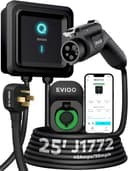
EVIQO 40A NEMA 14-50 Charger

EVIQO 40A NEMA 14-50 Charger

The most charger you can get without an electrician's invoice. It plugs into a NEMA 14-50 outlet for a full 40 amps, keeps the WiFi app, the ENERGY STAR listing and the 25 ft cable from EVIQO's hardwired unit, and can be unplugged and taken with you when you move.

Best plug-in
$395.98 · View on Amazon

$469.9916% off

Price as of September 2, 2026. #ad How we’re funded

4
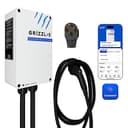
Grizzl-E Smart 40A

Grizzl-E Smart 40A

Grizzl-E's cast-aluminum build with a WiFi radio bolted on. You get the IP67 body and the cold-flexible 25 ft cable that made the brand's name, plus scheduling and usage history in the Grizzl-E Connect app — in a plug-in unit that comes off the wall when you move. The amperage is still set with a DIP switch, which is either charmingly honest or annoyingly analog depending on your taste.

Best build
5
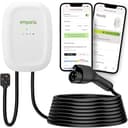
Emporia Level 2 EV Charger

Emporia Level 2 EV Charger

The value pick that doesn't feel cheap: a full 48 amps, ENERGY STAR listing, WiFi with genuine energy monitoring, and a 25 ft cable — for well under what the big names charge. It's the one we point most people to first.

Best value
$449.00 · View on Amazon

Price as of September 2, 2026. #ad How we’re funded

6
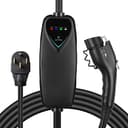
Lectron 40A Portable Level 2 Charger

Lectron 40A Portable Level 2 Charger

One of the cheapest honest ways into real Level 2 charging. Plug it into a NEMA 14-50 outlet, get a genuine 40A / 9.6 kW, and unplug it to take on a trip. No app and a shorter warranty are the trade-offs for the price.

Best budget
$269.99 · View on Amazon

Price as of September 2, 2026. #ad How we’re funded

The picks in full

#1Best overall

ChargePoint Home Flex

The safest default for most homes: you set the amperage in the app anywhere from 16A to 50A, so one charger fits whatever circuit your panel can spare today and scales up if you upgrade later. The app is the most mature here, and the warranty is long.

Strengths

  • Adjustable 16-50A means it fits a small panel now and a bigger circuit later
  • The most mature app of the group — scheduling, reminders, usage history
  • 3-year warranty and a long 23 ft cable

Trade-offs

  • You pay a premium over value 48A chargers for the app and brand
  • Full 50A output needs a 60A circuit most older panels don't have to spare
Max output
50 A
Power
12 kW
Connector
J1772
Install
Hardwired (plug-in NEMA 14-50 SKU also sold)
Cable length
23 ft
Warranty
3 years
WiFi + app
Yes
Certifications
UL/cUL listed, ENERGY STAR

Our charging-speed math. At its 50A max (12 kW) and a typical 3.5 miles per kWh, the Home Flex adds roughly 42 miles of range per hour. Dial it down to 40A to fit a 50A circuit and you get about 34.

Build note. Flexible amperage is adjustable in the app from 16A up to 50A.

Specs read from the manufacturer spec sheet, on July 19, 2026. “Not published” means the brand does not state that figure.

#2Best load balancing

Wallbox Pulsar Plus

The one to buy when wall space is tight: it's among the smallest 48A units you can get, with Power Boost load balancing so it can share a circuit without tripping the main. A polished premium charger — and priced like one.

Strengths

  • Genuinely compact for a 48A charger — easy to place
  • Power Boost load balancing avoids a panel upgrade in some homes
  • Bluetooth plus WiFi, with a clean app

Trade-offs

  • One of the pricier chargers here
  • Hardwired only — no plug-in option for renters
Max output
48 A
Power
11.5 kW
Connector
J1772
Install
Hardwired
Cable length
25 ft
Warranty
3 years
WiFi + app
Yes
Certifications
ENERGY STAR

Our charging-speed math. At 48A (11.5 kW) and ~3.5 miles per kWh, about 40 miles of range per hour. Power Boost can throttle it to protect a shared circuit.

Build note. One of the most compact 48A chargers in its class, with both Bluetooth and WiFi.

Specs read from the manufacturer spec sheet, on July 19, 2026. “Not published” means the brand does not state that figure.

#3Best plug-in

EVIQO 40A NEMA 14-50 Charger

The most charger you can get without an electrician's invoice. It plugs into a NEMA 14-50 outlet for a full 40 amps, keeps the WiFi app, the ENERGY STAR listing and the 25 ft cable from EVIQO's hardwired unit, and can be unplugged and taken with you when you move.

Strengths

  • Plugs into an existing NEMA 14-50 outlet — no hardwiring, and it comes with you
  • Real WiFi app with 6-40A adjustment, scheduling and energy tracking
  • 25 ft charging cable plus a 40 in input lead, in an IP66 / NEMA 4 body

Trade-offs

  • 40 amps is the plug-in ceiling — for 48A you need the hardwired version
  • Needs a proper EV-grade 14-50 receptacle (an old dryer outlet is not the same thing)
  • Smaller brand with a shorter track record than ChargePoint or Wallbox
Max output
40 A
Power
9.6 kW
Connector
J1772
Install
NEMA 14-50 plug
Cable length
25 ft
Warranty
3 years
WiFi + app
Yes
Certifications
UL, ETL, FCC, ENERGY STAR

Our charging-speed math. At 40A (9.6 kW) and ~3.5 miles per kWh it adds roughly 34 miles of range per hour — an overnight charge for almost any daily commute.

Build note. Plug-in Gen-2 unit: 25 ft charging cable plus a 40 in NEMA 14-50 input lead, with app-adjustable output from 6 to 40 amps.

Specs read from the manufacturer spec sheet, on August 11, 2026. “Not published” means the brand does not state that figure.

#4Best build

Grizzl-E Smart 40A

Grizzl-E's cast-aluminum build with a WiFi radio bolted on. You get the IP67 body and the cold-flexible 25 ft cable that made the brand's name, plus scheduling and usage history in the Grizzl-E Connect app — in a plug-in unit that comes off the wall when you move. The amperage is still set with a DIP switch, which is either charmingly honest or annoyingly analog depending on your taste.

Strengths

  • Cast-aluminum NEMA 4 / IP67 body rated -22F to 122F, in a plug-in unit
  • WiFi and the Grizzl-E Connect app for scheduling, usage history and remote lockout
  • 25 ft output cable, and OCPP 1.6J support if you ever want third-party software

Trade-offs

  • 40 amps is the plug-in ceiling — no 48A option in this model
  • Amperage is set by a physical DIP switch, not in the app
  • Grizzl-E's own pages don't publish an ENERGY STAR certification for this model
Max output
40 A
Power
9.6 kW
Connector
J1772
Install
NEMA 14-50 plug
Cable length
25 ft
Warranty
3 years
WiFi + app
Yes
Certifications
UL tested and certified

Our charging-speed math. At 40A (9.6 kW) and ~3.5 miles per kWh it adds roughly 34 miles of range per hour. The DIP switch also sets 32, 24 or 16 amps if your circuit is smaller.

Build note. Cast-aluminum enclosure with IP67 sealing, rated -30C to +50C (-22F to 122F); 25 ft output cable on an 18 in input lead, current set by DIP switch (16/24/32/40 A), status on an LED, and WiFi to the Grizzl-E Connect app.

Specs read from the manufacturer spec sheet, on August 12, 2026. “Not published” means the brand does not state that figure.

#5Best value

Emporia Level 2 EV Charger

The value pick that doesn't feel cheap: a full 48 amps, ENERGY STAR listing, WiFi with genuine energy monitoring, and a 25 ft cable — for well under what the big names charge. It's the one we point most people to first.

Strengths

  • 48A output and ENERGY STAR at a value price
  • The app actually tracks energy use, not just on/off
  • Long 25 ft cable and a remote holster in the box

Trade-offs

  • 48A hardwired needs a 60A circuit; on a NEMA 14-50 plug it's limited to 40A
  • App polish trails ChargePoint's, and support is smaller
Max output
48 A
Power
11.5 kW
Connector
J1772
Install
Hardwired or NEMA 14-50 plug
Cable length
25 ft
Warranty
3 years
WiFi + app
Yes
Certifications
UL listed, ENERGY STAR

Our charging-speed math. At 48A (11.5 kW) and ~3.5 miles per kWh it adds about 40 miles of range per hour hardwired; on a 40A plug-in circuit, about 34.

Build note. 48A hardwired, or 40A on a NEMA 14-50 outlet, with a 25 ft cable and remote holder.

Specs read from the manufacturer spec sheet, on July 19, 2026. “Not published” means the brand does not state that figure.

#6Best budget

Lectron 40A Portable Level 2 Charger

One of the cheapest honest ways into real Level 2 charging. Plug it into a NEMA 14-50 outlet, get a genuine 40A / 9.6 kW, and unplug it to take on a trip. No app and a shorter warranty are the trade-offs for the price.

Strengths

  • A real 40A / 9.6 kW at a budget price
  • Plug-in and portable — take it with you, no hardwiring
  • ETL listed to UL 2594 / UL 2231 safety standards

Trade-offs

  • No WiFi or app on the base model — the smart version is a separate SKU
  • Shorter 16 ft cable and a 2-year warranty
  • Brand doesn't publish an outdoor/IP enclosure rating
Max output
40 A
Power
9.6 kW
Connector
J1772
Install
NEMA 14-50 plug
Cable length
16 ft
Warranty
2 years
WiFi + app
No
Certifications
ETL listed (UL 2594 / UL 2231)

Our charging-speed math. At 40A (9.6 kW) and ~3.5 miles per kWh it adds roughly 34 miles of range per hour.

Build note. Portable plug-in unit — no hardwiring needed; the base model has no WiFi or app.

Specs read from the manufacturer spec sheet, on July 19, 2026. “Not published” means the brand does not state that figure.

Why the panel decides everything

EV charging is a continuous loadin the NEC’s sense — it runs at full current for hours at a time — so the circuit is sized at 125% of the charger’s current. That is the whole reason a 40-amp charger needs a 50-amp breaker and a 48-amp charger needs a 60. Run that backwards and it becomes a useful shopping tool:

  • A 60-amp circuitgives you 48 amps — 11.5 kW, about 40 miles of range per hour.
  • A 50-amp circuitgives you 40 amps — 9.6 kW, about 34 miles per hour.
  • A 40-amp circuitgives you 32 amps — 7.7 kW, about 27 miles per hour.
  • A 30-amp circuitgives you 24 amps — 5.8 kW, about 20 miles per hour.
  • A 20-amp circuitgives you 16 amps — 3.8 kW, about 13 miles per hour.

Look at that bottom entry for a moment. Even the smallest 240-volt circuit in the list is roughly two and a half timesthe speed of Level 1 charging from an ordinary household outlet, and it will still put around 130 miles into a car across a ten-hour night. The idea that a small panel rules out Level 2 charging is simply not true — it rules out fast Level 2 charging, which is a much smaller problem than it sounds.

Adjustable output range as published by each maker, and the circuit each needs at its useful setting. A charger you can set down is a charger that fits a panel with no headroom.
ChargerAdjustable rangeCircuitInstall
ChargePoint Home Flex16-50 A (app)20 A minimumHardwired (plug-in NEMA 14-50 SKU also sold)
Wallbox Pulsar PlusSet at install; Power Boost throttles live60 A for full outputHardwired
EVIQO 40A NEMA 14-50 Charger6-40 A (app)Existing 50 A / 14-50NEMA 14-50 plug
Grizzl-E Smart 40A16 / 24 / 32 / 40 A (DIP switch)20 A minimumNEMA 14-50 plug
Emporia Level 2 EV ChargerSet at install; 40 A on a 14-50 plug50 A plug-in / 60 A hardwiredHardwired or NEMA 14-50 plug
Lectron 40A Portable Level 2 ChargerFixed 40 A50 A / 14-50NEMA 14-50 plug

Do the load calculation first

Everything above is theoretical until you know what your service can actually spare. That is a load calculation, and it is not guesswork — there is a defined method, and an electrician will do it properly. What determines the answer is less about the panel’s rating than about what else in the house is electric:

  • Electric range, dryer, water heater, heat pump or resistance heat are the big consumers. A house with several of them on a 100-amp service is usually the tight case.
  • Gas heat, gas range and gas water heat free up an enormous amount of calculated load. Plenty of 100-amp services in such houses have room for 32 or even 40 amps of charging.
  • Physical breaker spaceis a separate constraint from calculated load. A panel can have capacity on paper and no free slots — sometimes solved with tandem breakers, sometimes with a subpanel.

Our panel capacity guidewalks the arithmetic so that you arrive at the quote already knowing roughly where you stand. That is worth doing, because the difference between “I want the fastest charger” and “I want the fastest charger that avoids a service upgrade” is often several thousand dollars, and most electricians will quote the first if you don’t say the second.

The picks, by how they solve the problem

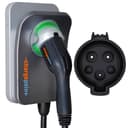
The ChargePoint Home Flex is the pick for a small panel because its range is the widest here: 16 to 50 amps, set in the app. That means it fits a 20-amp circuit today and a 60-amp circuit after a future upgrade, with no new hardware and no electrician visit to change the setting. Add the most mature app in the category and a three-year warranty. It is a premium price for what is, at 24 amps, a modest charging rate — but you are buying the range, not the rate. Full detail in the Home Flex review.

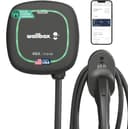
The Wallbox Pulsar Plus is the answer when the load calculation says there is genuinely no room. Power Boostmonitors total household consumption and throttles the charger in real time, so the car takes whatever is spare rather than a fixed allocation. Practically, that means charging fast at 2am when the house is asleep and backing off at 7pm when the oven is on. It is hardwired only, the priciest unit here, and the feature needs to be specified and installed correctly — see our load management guide and the Pulsar Plus review.

The EVIQO 40Aplug-in is the pick when a suitable receptacle already exists, because the cheapest circuit is one you don’t have to install. Its output is app-adjustable from 6 to 40 amps, which is an unusually low floor, so it can be dialed to suit whatever the existing circuit is actually rated for. It keeps the 25-foot cable, the IP66/NEMA 4 body and the UL/ETL/FCC/ENERGY STAR listings of its hardwired sibling. Read the EVIQO 40A review.

The Grizzl-E Smart takes a different approach to the same problem: a physical DIP switchfor 16, 24, 32 or 40 amps. That is less convenient than an app slider — you need the cover off to change it — but it is also impossible to change by accident or by firmware update, which is a genuine argument when the setting is the thing keeping you inside your service capacity. You get the cast-aluminum NEMA 4 / IP67 body and a 25-foot cable, in a plug-in unit, at a low price. Grizzl-E does not publish an ENERGY STAR certification for this model. See the Grizzl-E Smart review.

The Emporia Level 2is the value 48-amp unit that will also live happily at 40 on a NEMA 14-50 plug, and its energy monitoring is genuinely useful on a constrained panel — being able to see what the car actually drew last night makes the whole capacity question concrete rather than theoretical. The Lectron 40A portable is the budget floor: a fixed 40 amps on a 14-50 plug, no app, no adjustment, but the cheapest honest route into 240-volt charging if you already have the right receptacle. See the Emporia review and the Lectron 40A review.

Three things to say out loud when you get a quote

  1. “Please quote this at the highest amperage that avoids a service upgrade.”Many quotes default to the charger’s nameplate rating because nobody asked for anything else. Getting the same job quoted at 32 amps instead of 48 sometimes changes the total by thousands.
  2. “What does the load calculation say, and can I see it?” It is a defined calculation, not an opinion. If the answer to your charger is a service upgrade, the number should be visible.
  3. “Would load management change the answer?” Sometimes the honest reply is no; sometimes it turns a service upgrade into a $200 accessory. It is worth thirty seconds of conversation either way.

With those three answers you can compare offers properly against the installation cost breakdown, and you will know whether you are being quoted for the charging you need or the charging the catalog defaults to. If you are still weighing amperage in the abstract, our charger sizing guide and the 40 vs 48 amp comparisonsettle it from the car’s side rather than the panel’s.
Frequently asked questions

Can I install a Level 2 charger on a 100-amp panel?

Very often, yes — at a reduced amperage. The question is not the panel's headline rating but how much of it is already spoken for by your other loads. A house with gas heat, a gas range and a gas water heater can have a surprising amount of room on a 100-amp service; an all-electric house on the same service usually has very little. A load calculation gives you a number, and a charger set to 24 or 32 amps fits inside numbers that a 48-amp charger cannot.

How slow is a 24-amp charger, really?

At 24 amps and 240 volts you get 5.8 kW, which at a reference of about 3.5 miles per kWh is roughly 20 miles of range per hour. Across a ten-hour overnight window that is around 200 miles — far more than most people drive in a day. It is about four times faster than Level 1 charging from a standard outlet. Slower than 48 amps matters far less than most buyers expect, because the constraint is how many hours the car sits still, not how fast it drinks.

What is load management and will it avoid a panel upgrade?

Load management means the charger's draw is limited automatically so that the total load never exceeds what the service can carry — either by watching the whole house, or by sharing a circuit with another charger. Wallbox publishes this as Power Boost on the Pulsar Plus. Because the electrician's load calculation can then be based on the managed maximum rather than the charger's nameplate rating, it can genuinely be the difference between fitting and not fitting. Confirm the arrangement with your electrician and local inspector.

Is it cheaper to upgrade the panel or buy a lower-amperage charger?

Almost always the charger, by a wide margin. Setting a charger to 32 amps instead of 48 costs nothing at all and loses you around six miles of range per hour of charging — which for most drivers is invisible across a night. A service upgrade is a permit, an electrician, potentially the utility, and often several thousand dollars. Upgrade the panel when you need the capacity for other reasons, not to charge a car faster than you need to.

Can I use an existing dryer or range outlet for a charger?

Sometimes, and carefully. A dryer receptacle is typically NEMA 14-30 on a 30-amp circuit, which is not the same thing as a NEMA 14-50 on a 50-amp circuit — the charger must be limited to 24 amps for a 30-amp circuit under the continuous-load rule, and the receptacle must be in good condition and correctly wired. Never assume an existing outlet is EV-grade because the plug fits. Have an electrician confirm the circuit rating and the receptacle's condition first.

Will a charger I set low today run faster after a panel upgrade?

That depends entirely on the model, which is exactly why adjustability is the top criterion on this page. A ChargePoint Home Flex set to 24 amps today can be raised to 50 in the app once a bigger circuit exists, with no new hardware. A charger with a fixed 40-amp output cannot go higher no matter what you do to the panel. If a future upgrade is plausible, buy the range now — it costs little and saves buying twice.

Sources

Keep reading