Every hardwired charger under $500 right now
Computed at request time from the same daily price check that powers every button on this site, filtered to units that install hardwired. Nothing in it is written into this page, so if a unit rises above the ceiling it drops out on its own.
Hardwired-capable chargers under $500
Built from the same daily price check that powers every price on this site, not written into this page — these are the chargers we track whose live listing price was under $500 as of November 12, 2026, and which the manufacturer sells for a hardwired install (including the units sold for either hardwired or plug-in). Cheapest first. A unit that rises above the band drops out of this list on its own.

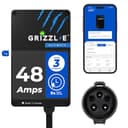
Grizzl-E Ultimate 48A
A hardwired 48-amp charger built for weather, with nothing to log into

Grizzl-E Ultimate 48A NACS
A permanently installed NACS charger built for weather

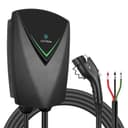
Lectron Nexus NACS (Tesla) Charger
Tesla / NACS owners who want no adapter at home

Emporia Level 2 EV Charger
Value shoppers who still want a real app and energy tracking

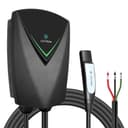
Lectron Nexus 48A J1772
48 amps, hardwired, with no account and no firmware

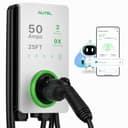
Autel MaxiCharger Home
Fully exposed outdoor installs and extreme climates
6 of the 12 chargers in scope qualify today.
The thing to notice is how tightly that list clusters, and the registry’s own banding says the same thing without needing a number: every unit on it is a mid-band charger, with no budget tier and no premium tier in the segment at all. This is not a band with a cheap end and an expensive end, which is why the rest of this page is about fit rather than about value.
What we ranked on
When hardware prices converge, the ranking has to come from the specifications, and four of them did the work here.
One: how is the amperage set, and by whom?On a hardwired install this matters more than on any other kind, because the person setting it is usually the electrician and they are billing by the hour. EVIQO uses a DIP switch for the ceiling plus an app slider published as “6-48A” in 1-amp steps — the finest control we have found. Grizzl-E uses a DIP switch alone (16/24/32/40/48 A), which is set with the cover off and then never thought about again. Autel uses six discrete app settings from 16 to 50 amps. Lectron’s Nexus units publish no user-adjustable selector, which is simpler and less flexible. The adjustable roundup tabulates every mechanism we have.
Two: what does the enclosure publish, and is there a temperature range with it?A hardwired charger is usually permanent and often exterior. Grizzl-E publishes NEMA 4 with IP67 sealing in cast aluminium, rated -22°F to 122°F. Autel publishes IP65 / NEMA 4X with -40°F to 131°F, the widest range we track. Lectron publishes IP66. EVIQO publishes “IP66/NEMA-4” with its temperature figures given as tested rather than as an operating range. Our outdoor-under-$500 page ranks on this axis specifically.
Three: which laboratory, to which standard?Lectron publishes ETL listing to UL 2594, UL 2231 and UL 2251 plus ENERGY STAR and FCC — the most specific disclosure in the band. Emporia publishes UL listing and ENERGY STAR. EVIQO publishes three different certification strings on one page, which we note without resolving. Autel publishes CSA and ENERGY STAR and makes no UL claim anywhere, which is a documentation difference between accredited laboratories rather than a safety gap — but it can matter on a utility rebate form.
Four: connector, and whether it is the one your car has.This band contains both. Four picks here are J1772, which fits every non-Tesla EV sold in North America; the Lectron Nexus NACS is the same 48-amp hardwired proposition with a native Tesla-style cable. Buying the connector your car actually has always beats buying an adapter — and the adapter direction manufacturers warn about is NACS-to-J1772 on an AC charger, not the reverse. The J1772 roundup and the NACS roundup are the two sides of that choice.
Why this segment is so flat, and what to do about it
It is worth understanding why the hardware converges here, because it tells you where the remaining decisions actually are.
A 48-amp hardwired home charger is, electrically, a fairly settled product: a 240-volt contactor, a control board, a ground-fault monitor, a J1772 or NACS cable, and an enclosure. Several brands build something very close to the same thing, certify it to the same standards, publish the same 25-foot cable and the same three-year term, and land in the same price band. There is no mystery differentiator hiding at the bottom of the band.
So the sensible way to choose is to stop comparing the chargers against each other and start comparing them against your install:
If the panel is tight, buy adjustability — the EVIQO’s 1-amp steps or the Autel’s six settings — so the unit can be dialled to whatever circuit you can actually have. Panel capacity is the page to read first.
If the charger will live outdoors in a cold climate, buy the published temperature range rather than the IP number — which points at the Autel, and then at the Grizzl-E.
If nobody in the house will ever open an app, buy the unit with nothing to log into. The Lectron Nexus and the Grizzl-E Ultimate are both deliberate non-connected products, and our no-app roundup makes the case for that choice properly.
If you might move inside five years, buy the Emporia and plug it in now. It is the only unit in this band sold for both routes, so the 40-amp plug-in install today does not foreclose the 48-amp hardwired install later.
What this band does not include
Two capabilities sit above the ceiling and both are worth crossing it for in specific houses, so here they are named rather than glossed.
Automatic load management. Nothing under $500 reads your whole service and throttles itself. The Emporia Pro ships with an energy monitor that does exactly that; the Wallbox publishes static and dynamic load management, footnoted as possibly needing a power-meter accessory; the Autel 50A publishes charger-to-charger Dynamic Load Balancing that needs no additional hardware. On a 100-amp service with a range, a dryer and an AC unit already on it, that feature is the difference between a 48-amp install and no install. The small-panel roundup and the load-management guide are the two pages for it.
A second connector on one circuit. If two EVs need charging and the panel cannot give a second circuit, the dual-port route is a structural answer rather than a luxury, and it is well above this ceiling. The two-car roundup covers the alternatives, including the two-chargers-sharing-one-circuit arrangement.
Note what is noton that list: speed. Forty-eight amps is 11.5 kW, which is the most most cars on the road will accept on AC, and every pick here reaches it. Paying more does not charge your car faster — onboard chargers explained is the page that settles it, and 48 amps versus 80 is the proof by counter-example.