Level Two Club

Best 48-Amp Level 2 EV Chargers

Forty-eight amps is the fastest AC charging a normal house can deliver: a full 11.5 kW, roughly 40 miles of range an hour, and a hardwired 60-amp circuit that decides whether you can have it at all. These are the units worth that circuit.

By Stephen V.Last updated How we pick

Forty-eight amps is the top of the residential Level 2 ladder. At 240 volts that’s 11.5 kW, or about 40 miles of range per hour on a car doing 3.5 miles per kWh — roughly six miles an hour more than a 40-amp charger. The catch is not the charger. It’s the circuit: because EV charging is a continuous load, the National Electrical Code sizes the breaker at 125% of the draw, so 48 amps needs a 60-amp circuit, and no residential plug is rated for that. Every genuine 48-amp charger is therefore hardwired, and needs an electrician and panel capacity to match.

So we ranked this segment on what actually separates 48-amp chargers from each other, since the headline number is identical across all of them. One: whether it truly delivers 48 amps hardwired, rather than claiming a number it only reaches on a circuit you don’t have. Two: the enclosure and cable, because at this price the box should survive wherever you mount it and reach wherever you park. Three: a real UL or ETL listing to the EV-charging standard. Four: the software — scheduling and energy tracking are worth money only if your utility charges time-of-use rates. Five: connector, J1772 or native NACS. And six: warranty and price, where this class ranges more widely than any other.

We own none of these units and haven’t bench-tested them. We read the specs off the manufacturers’ own sheets on a dated visit, do our own charging-speed arithmetic and print the assumption behind it, and argue the ranking in plain language with the downsides on every pick. Prices are pulled live and shown as “Check price” when we can’t confirm one.

How this is funded: we earn a commission if you buy through our links, at no extra cost to you. It never changes which product we recommend, and we’ll tell you when we’d skip one. Full disclosure.

Quick picks

Ranked on published specs, charging speed, electrical fit and value. Select a row to jump to the full write-up. We have not bench-tested these chargers — here is exactly what we do instead.

#ProductBest forPrice
1
Emporia Level 2 EV Charger

Emporia Level 2 EV Charger

The value pick that doesn't feel cheap: a full 48 amps, ENERGY STAR listing, WiFi with genuine energy monitoring, and a 25 ft cable — for well under what the big names charge. It's the one we point most people to first.

Best overall
$449.00 · View on Amazon

Price as of September 2, 2026. #ad How we’re funded

2
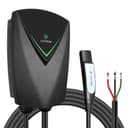
Lectron Nexus 48A J1772

Lectron Nexus 48A J1772

A full 48 amps with nothing to log into. Lectron's Nexus body is IP66-sealed for an outdoor wall, the cable is a heavy 15 mm compound the brand says is built to stay flexible in freezing weather, and the safety paperwork is the real thing — ETL to UL 2594/2231/2251, plus ENERGY STAR. Hardwired only, and there is no app, which is the entire point.

Best without an app
$429.99 · View on Amazon

Price as of September 2, 2026. #ad How we’re funded

3
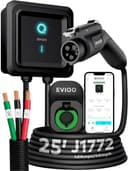
EVIQO 48A Level 2 Charger

EVIQO 48A Level 2 Charger

A lot of charger for the money: a full 48 amps, WiFi with scheduling, ENERGY STAR, and the longest usable reach in this group thanks to a 25 ft cable plus a 40-inch input lead. A strong value alternative to Emporia if you want maximum reach.

Best reach
$428.98 · View on Amazon

$479.0010% off

Price as of September 2, 2026. #ad How we’re funded

4
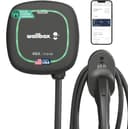
Wallbox Pulsar Plus

Wallbox Pulsar Plus

The one to buy when wall space is tight: it's among the smallest 48A units you can get, with Power Boost load balancing so it can share a circuit without tripping the main. A polished premium charger — and priced like one.

Best compact
$614.99 · View on Amazon

$699.9912% off

Price as of September 2, 2026. #ad How we’re funded

5
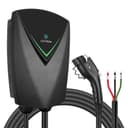
Lectron Nexus NACS (Tesla) Charger

Lectron Nexus NACS (Tesla) Charger

For a Tesla owner who doesn't want to babysit an adapter: a native NACS (J3400) connector plugs straight into the car, at a full 48 amps, with the safety listings you want. No app, but Teslas schedule charging in the car anyway.

Best for Tesla
$429.99 · View on Amazon

$459.997% off

Price as of September 2, 2026. #ad How we’re funded

The picks in full

#1Best overall

Emporia Level 2 EV Charger

The value pick that doesn't feel cheap: a full 48 amps, ENERGY STAR listing, WiFi with genuine energy monitoring, and a 25 ft cable — for well under what the big names charge. It's the one we point most people to first.

Strengths

  • 48A output and ENERGY STAR at a value price
  • The app actually tracks energy use, not just on/off
  • Long 25 ft cable and a remote holster in the box

Trade-offs

  • 48A hardwired needs a 60A circuit; on a NEMA 14-50 plug it's limited to 40A
  • App polish trails ChargePoint's, and support is smaller
Max output
48 A
Power
11.5 kW
Connector
J1772
Install
Hardwired or NEMA 14-50 plug
Cable length
25 ft
Warranty
3 years
WiFi + app
Yes
Certifications
UL listed, ENERGY STAR

Our charging-speed math. At 48A (11.5 kW) and ~3.5 miles per kWh it adds about 40 miles of range per hour hardwired; on a 40A plug-in circuit, about 34.

Build note. 48A hardwired, or 40A on a NEMA 14-50 outlet, with a 25 ft cable and remote holder.

Specs read from the manufacturer spec sheet, on July 19, 2026. “Not published” means the brand does not state that figure.

#2Best without an app

Lectron Nexus 48A J1772

A full 48 amps with nothing to log into. Lectron's Nexus body is IP66-sealed for an outdoor wall, the cable is a heavy 15 mm compound the brand says is built to stay flexible in freezing weather, and the safety paperwork is the real thing — ETL to UL 2594/2231/2251, plus ENERGY STAR. Hardwired only, and there is no app, which is the entire point.

Strengths

  • Full 48A / 11.5 kW hardwired, with ENERGY STAR and ETL listings to UL 2594/2231/2251
  • IP66 enclosure and a 15 mm cable Lectron builds to stay flexible in freezing weather
  • Ships with the wall-mount J-hook and plug holder, and there is no app or account

Trade-offs

  • Hardwired only — a licensed electrician and a 60-amp circuit, with no plug-in option
  • 23 ft cable is shorter than the 25 ft several rivals ship
  • Lectron publishes no operating-temperature range, so we can't state a cold rating
Max output
48 A
Power
11.5 kW
Connector
J1772
Install
Hardwired
Cable length
23 ft
Warranty
3 years
WiFi + app
No
Certifications
UL 2594/2231/2251 (ETL listed), ENERGY STAR, FCC

Our charging-speed math. At 48A (11.5 kW) and ~3.5 miles per kWh, about 40 miles of range per hour — a full overnight charge for almost any battery on the market.

Build note. IP66-sealed housing for indoor or outdoor mounting, with a heavy-duty 15.0 mm (±0.3 mm) 23 ft output cable Lectron states is engineered to stay flexible and easy to wrap in freezing weather. Wall-mount J-hook and plug holder included; hardwired install on a dedicated 240V circuit by a licensed electrician.

Specs read from the manufacturer spec sheet, on August 20, 2026. “Not published” means the brand does not state that figure.

#3Best reach

EVIQO 48A Level 2 Charger

A lot of charger for the money: a full 48 amps, WiFi with scheduling, ENERGY STAR, and the longest usable reach in this group thanks to a 25 ft cable plus a 40-inch input lead. A strong value alternative to Emporia if you want maximum reach.

Strengths

  • 48A output with WiFi scheduling at a value price
  • 25 ft charging cable plus a 40 in input cable — excellent reach
  • UL, ETL, FCC and ENERGY STAR listings

Trade-offs

  • Hardwired version needs a 60A circuit and an electrician
  • Smaller brand with a shorter track record than ChargePoint or Wallbox
Max output
48 A
Power
11.5 kW
Connector
J1772
Install
Hardwired
Cable length
25 ft
Warranty
3 years
WiFi + app
Yes
Certifications
UL, ETL, FCC, ENERGY STAR

Our charging-speed math. At 48A (11.5 kW) and ~3.5 miles per kWh, about 40 miles of range per hour.

Build note. Ships with a 25 ft charging cable plus a 40 in input cable — among the longest reach in class.

Specs read from the manufacturer spec sheet, on July 19, 2026. “Not published” means the brand does not state that figure.

#4Best compact

Wallbox Pulsar Plus

The one to buy when wall space is tight: it's among the smallest 48A units you can get, with Power Boost load balancing so it can share a circuit without tripping the main. A polished premium charger — and priced like one.

Strengths

  • Genuinely compact for a 48A charger — easy to place
  • Power Boost load balancing avoids a panel upgrade in some homes
  • Bluetooth plus WiFi, with a clean app

Trade-offs

  • One of the pricier chargers here
  • Hardwired only — no plug-in option for renters
Max output
48 A
Power
11.5 kW
Connector
J1772
Install
Hardwired
Cable length
25 ft
Warranty
3 years
WiFi + app
Yes
Certifications
ENERGY STAR

Our charging-speed math. At 48A (11.5 kW) and ~3.5 miles per kWh, about 40 miles of range per hour. Power Boost can throttle it to protect a shared circuit.

Build note. One of the most compact 48A chargers in its class, with both Bluetooth and WiFi.

Specs read from the manufacturer spec sheet, on July 19, 2026. “Not published” means the brand does not state that figure.

#5Best for Tesla

Lectron Nexus NACS (Tesla) Charger

For a Tesla owner who doesn't want to babysit an adapter: a native NACS (J3400) connector plugs straight into the car, at a full 48 amps, with the safety listings you want. No app, but Teslas schedule charging in the car anyway.

Strengths

  • Native NACS connector — no J1772-to-Tesla adapter to lose
  • Full 48A output and a weather-rated IP66 body
  • UL/ETL safety listings plus ENERGY STAR

Trade-offs

  • No WiFi app — you schedule in the Tesla app instead
  • NACS connector is best for Tesla/NACS cars; other EVs need a NACS-to-J1772 adapter
Max output
48 A
Power
11.5 kW
Connector
NACS
Install
Hardwired
Cable length
23 ft
Warranty
3 years
WiFi + app
No
Certifications
UL 2594/2231/2251 (ETL listed), ENERGY STAR, FCC

Our charging-speed math. At 48A (11.5 kW) and ~3.5 miles per kWh, about 40 miles of range per hour into a Tesla.

Build note. Native NACS (J3400) connector plugs straight into a Tesla with no adapter; includes a holster.

Specs read from the manufacturer spec sheet, on July 19, 2026. “Not published” means the brand does not state that figure.

What 48 amps really buys you

Start with the arithmetic, because the marketing rarely does. At 240 volts, 48 amps is 11.5 kW (48 × 240 = 11,520 watts). Divide by a reference efficiency of 3.5 miles per kWh and you get roughly 40 miles of range per hour. A 40-amp charger delivers 9.6 kW, or about 34 miles per hour. So the entire upgrade is worth about six miles of range per hour.

Whether that is a lot depends entirely on your charging window. If you plug in at 6pm and leave at 7am, you have thirteen hours to replace a day’s driving — and the average US driver covers well under 50 miles a day, which either charger finishes before the ten o’clock news. Forty-eight amps starts earning its circuit when the window shrinks or the demand grows: a large-battery truck or SUV run genuinely low, a two-EV household sharing one wall unit, a high-mileage commute, or a narrow off-peak rate window where cheap electricity is only available for a few hours and you want as many kilowatt-hours as possible inside it. We work the whole trade through in 40 amps vs 48 amps.

One more ceiling worth checking before you spend: your car. The wall unit can only offer power; the vehicle’s on-board charger decides how much it accepts. Plenty of EVs cap out at 32 or 40 amps on AC, and for those cars a 48-amp charger changes nothing at all. Our guide to how Level 2 charging works explains why the box on the wall isn’t really the charger.

The circuit is the real purchase

This is the part that surprises people. Because EV charging is a continuous load, NEC Article 625 requires the branch circuit to be sized at 125% of the charger’s current — the “80% rule” read backwards. A 48-amp charger therefore needs a 60-amp circuit, with conductors rated for it, and it must be hardwired: the biggest common household receptacle, the NEMA 14-50, lives on a 50-amp circuit and caps a plug-in charger at 40 amps.

That has three consequences worth pricing before you choose a unit. You need panel capacity for a 60-amp continuous load, which an older 100-amp service often cannot spare — check with our panel capacity guide. You need heavier wire, and the longer the run from panel to garage wall, the more that costs; our wire and breaker guide has the sizing table. And you need a permitted, inspected install, which is true of any charger circuit but is not optional on a hardwired 60-amp one. Budget the whole job, not the box — our installation cost breakdown lays out every line.

The five, compared

All five deliver the same 11.5 kW. What separates them is the body, the cable, the connector and the software — so that is what the table compares.

Every unit here delivers a full 48 amps — 11.5 kW, about 40 miles of range per hour at ~3.5 mi/kWh — on a 60-amp circuit. Specs read from each maker’s own spec sheet.
ChargerConnectorInstallCableEnclosureApp
Emporia Level 2 EV ChargerJ1772Hardwired or NEMA 14-50 plug25 ftNEMA 4Yes
Lectron Nexus 48A J1772J1772Hardwired23 ftIP66No
EVIQO 48A Level 2 ChargerJ1772Hardwired25 ftIP66 / NEMA 4Yes
Wallbox Pulsar PlusJ1772Hardwired25 ftNEMA 4Yes
Lectron Nexus NACS (Tesla) ChargerNACSHardwired23 ftIP66No

The Emporia Level 2 is our overall pick because it is the least compromised way to buy 48 amps: a genuine app with real energy monitoring, an ENERGY STAR listing, a watertight NEMA 4 enclosure and a 25-foot cable, at a price that undercuts the premium brands substantially. It is also the most flexible unit here — it can be hardwired for the full 48 amps or run at 40 on a NEMA 14-50 plug, which means you can install it today on a 50-amp circuit and hardwire it later. The catches: the app is less polished than ChargePoint’s, and the company is smaller if you ever need support. Our full Emporia review has the detail.

The Lectron Nexus 48A is the one to buy if you want the amps and nothing to log into. It is the rare 48-amp charger with no WiFi radio, no cloud account and no firmware — and, unusually for an offline unit, a complete set of listings: ETL to UL 2594 / 2231 / 2251 plus ENERGY STAR. The body is IP66-sealed for an outdoor wall and the 23-foot cable is a heavy 15 mm compound Lectron says stays flexible in freezing weather, with the J-hook and plug holder in the box. Two honest catches: the cable is two feet shorter than the 25-foot units here, and Lectron publishes no operating-temperature range, so we can’t give it a cold rating — which is why it stays off our cold-weather picks. See the Lectron Nexus 48A review for the full spec picture.

This slot used to belong to the Grizzl-E Ultimate 48A, which was discontinued in August 2026 — Grizzl-E has moved the Ultimate line to an 80-amp connected unit. We have kept its review on record with the buy link removed rather than quietly point it at a different charger.

The EVIQO 48A wins on reach. A 25-foot charging cable plus a 40-inch input lead is the longest usable span in this group, which matters more than people expect: it decides whether the box can go where the wiring is easy and still reach where the car parks. It carries UL, ETL, FCC and ENERGY STAR listings and a WiFi app with scheduling, in an IP66 / NEMA 4 body, for a value price. The trade is brand track record — EVIQO is newer than ChargePoint or Wallbox — and a hardwired-only install at 48 amps. Full detail in our EVIQO review, and see chargers with long cables if reach is your deciding factor.

The Wallbox Pulsar Plus is the pick for a tight garage or a tight panel. It is among the smallest 48-amp units you can buy, and its Power Boost load-balancing feature can share an existing circuit — dialing the charger back when the dryer and oven are running — which in some homes avoids a panel upgrade that would cost more than the charger. It is the priciest unit here and hardwired only, with no plug-in version at all, so renters should look elsewhere. Our Pulsar Plus review covers Power Boost properly, and Wallbox vs ChargePoint settles the premium head-to-head.

The Lectron Nexus NACS is the 48-amp answer for a Tesla or any EV with a native NACS port: the connector plugs straight into the car with no adapter to lose or leave in the other vehicle, at a full 11.5 kW, in a weather-rated IP66 body with UL/ETL listings and ENERGY STAR. There is no app — but Teslas schedule charging in the car, which makes that omission much smaller than it sounds. The real limitation is the connector itself: a NACS cable is awkward for a J1772 car without an adapter, so it is a poor choice for a mixed-car household. See the Nexus NACS review and our Tesla charger picks.

When you should not buy 48 amps

We would rather you spend the money well than spend it here. Skip 48 amps if any of these describe you:

  • Your panel can’t spare a 60-amp circuit. A charger you have to dial down to 40 amps is a 40-amp charger that cost more. Buy for the circuit you actually have.
  • Your car caps below 48 amps on AC. Many do. The extra amps are simply never delivered.
  • You rent, or you might move. A hardwired charger stays with the house. Our renter-friendly picks cover the plug-in alternatives.
  • You drive an ordinary amount and charge overnight. Then 40 amps on a cheaper, simpler install genuinely does the same job — see the best 40-amp chargers.

If none of those apply and your panel has the room, 48 amps is the right ceiling to buy: it is the fastest AC charging a home can deliver, it future-proofs you against a bigger battery in the next car, and the price gap over 40-amp units has narrowed to the point where the circuit, not the charger, is the expensive part. Once it’s in, spend five minutes with our cost-to-charge calculator to see what those overnight kilowatt-hours actually cost on your rate.

Two footnotes for the edges of this segment. If you are wondering whether to go further still, 48 amps vs 80 amps explains why 19.2 kW needs a 100-amp circuit and a car almost nobody owns. And if the reason you want 48 amps is a second EV, read best chargers for two cars first — the answer there is usually about total amps rather than any single charger.

Frequently asked questions

Does a 48-amp EV charger have to be hardwired?

In a home, yes. The largest common receptacle, NEMA 14-50, sits on a 50-amp circuit, and the NEC's 80% continuous-load rule caps anything plugged into it at 40 amps. Reaching 48 amps means a 60-amp circuit, and code does not recognize a residential plug for that load — so every 48-amp charger here is hardwired to the panel by an electrician.

What size breaker and circuit does a 48-amp charger need?

A 60-amp breaker on a dedicated 60-amp circuit. EV charging is a continuous load, so the circuit is sized to 125% of the charger's current: 48 x 1.25 = 60. That also means heavier conductors than a 50-amp circuit uses, and enough spare capacity in your panel to carry the extra load — which is the part that stops many homes.

How much faster is 48 amps than 40 amps in practice?

About six miles of range per hour. A 40-amp charger delivers 9.6 kW (roughly 34 mi/hr at 3.5 miles per kWh); 48 amps delivers 11.5 kW (roughly 40 mi/hr). Across a full overnight window that difference is usually invisible — most drivers replace 30 to 60 miles a night, which either charger finishes in under two hours. It matters for high-mileage drivers, big batteries, two EVs sharing one charger, or a narrow off-peak rate window.

Can I buy a 48-amp charger now and run it at 40 amps?

Yes, and it is a common hedge. Most of these units let you set a lower maximum in the app, so you can run at 40 amps on a 50-amp circuit today and turn the output up if you later upgrade to a 60-amp hardwired circuit. You pay for headroom you can't use yet. If you're certain 40 amps is your ceiling, a native 40-amp charger costs less and charges exactly as fast.

What happened to the Grizzl-E Ultimate 48A?

It was discontinued. As of 20 August 2026 its Amazon listing returns 'Currently unavailable', no other Amazon listing for a 48-amp Ultimate exists in any finish or connector, and Grizzl-E's own shop now sells the Ultimate only as an 80A / 19.2 kW Wi-Fi-connected hardwire unit. We have kept our Grizzl-E Ultimate review up as a spec record with the buy link removed, and its place on this list has gone to the Lectron Nexus 48A — the closest current equivalent, and the only other 48-amp charger here with no app. If it is the Grizzl-E build you wanted rather than the 48 amps, the Grizzl-E Smart is the same cast-aluminum IP67 box at 40 amps on a plug.

Will my electrical panel support a 48-amp charger?

That is the question to answer before you shop. A 60-amp continuous circuit is a significant addition to a residential service, and older 100-amp panels frequently cannot spare it without a load calculation, a load-management device, or a service upgrade. Our panel-capacity guide walks the arithmetic, and a licensed electrician confirms it for your home.

Do 48-amp chargers charge a Tesla faster?

Only up to what the car accepts. Most Teslas take a maximum of 48 amps on AC, so a 48-amp charger keeps a compatible car at its ceiling — but some EVs have on-board chargers limited to 32, 40 or even 11.5 kW-equivalent inputs, and those cars will draw their own limit no matter what the wall unit is rated for. Check your car's maximum AC charge rate before paying for amps it can't take.

Sources

Keep reading