EV Charger Comparisons
The head-to-head decisions people actually get stuck on — tethered vs untethered, hardwired vs plug-in, and 40 amps vs 48 amps — settled by use case, not hype.
Most of the confusion in buying a home charger isn’t about which brand — it’s about a handful of either/or decisions that every buyer hits and few guides explain clearly. Tethered or untethered? Plug it in or hardwire it? Pay up for 48 amps or settle for 40? These aren’t trick questions, but the right answer genuinely depends on your garage, your panel and your car, and getting one wrong means either overspending or living with a daily annoyance.
Each comparison here lays the two options side by side on the things that actually differ — cost, charging speed, install complexity, code and flexibility — and then gives a clear recommendation by use case rather than a wishy-washy “it depends.” Where one option is right for most people, we say so; where it’s a genuine coin-flip, we tell you what tips it.
Newest here: portable versus wall-mounted— the format question that sits underneath most of the comparisons above, and the one where the honest answer depends almost entirely on whether a 240-volt outlet already exists where you park. Also new: Grizzl-E vs EVIQO, the head-to-head between the two value brands — where the decision turns out to be a connector, an ENERGY STAR certification and the 70-amp circuit one of them quietly asks for. For the money side of any of these decisions, the running-costs section is the companion, and who we are explains why we rank on published specs rather than claiming tests we have not run.
Everything in Comparisons
Tethered vs Untethered EV Charger
Attached cable or a socket you plug your own cable into? Which suits your garage, your budget and how future-proof you want to be.
Hardwired vs Plug-In EV Charger
NEMA 14-50 plug or hardwired to the panel? The real differences in cost, amps, outdoor use and code — and why 48 amps forces the decision.
40-Amp vs 48-Amp EV Charger
The extra 8 amps adds real miles per hour — but only if your panel and install can carry a 60-amp circuit. When it's worth it and when it isn't.
ChargePoint Home Flex vs Emporia Level 2
The premium default against the value smart charger — adjustable amperage and the best app versus a full 48 amps and real energy data for a lot less.
Emporia vs Grizzl-E EV Chargers
An app-first value charger against a cast-aluminum tank built for winter. Same amps, opposite philosophies — and the climate and habits that decide it.
Wallbox Pulsar Plus vs ChargePoint Home Flex
Two premium 48-50A smart chargers with opposite strengths: the smallest body and load balancing versus adjustable amperage and the most mature app.
Smart vs Dumb EV Charger
WiFi, an app and energy data, or a box that just charges the car? What the smart premium actually buys — and why your car's own scheduler may make it moot.
Emporia vs EVIQO Level 2 Chargers
The two value 48-amp smart chargers that undercut the big names, separated by the details: energy monitoring against total cable reach, and which one your install actually suits.
Autel MaxiCharger vs ChargePoint Home Flex
Two 50-amp smart chargers at similar money: a NEMA 4X body rated to -40F against the most mature app and the widest amperage range in the category.
48-Amp vs 80-Amp EV Charger
19.2 kW doubles 11.5 kW on paper. In a real driveway it needs a 100-amp circuit and a car that can accept it — and almost none can. When the top tier is worth buying.
NEMA 14-50 vs NEMA 6-50 for EV Charging
Both give you 40 amps of plug-in charging. One has a neutral wire and a resale advantage; the other is cheaper to run. Which receptacle to ask your electrician for.
32-Amp vs 40-Amp EV Charger
Eight amps apart, and one circuit apart: 32 amps runs on a 40-amp breaker, 40 amps needs a 50. The step that decides whether your existing wiring is enough.
Emporia Level 2 vs Wallbox Pulsar Plus
Two 48-amp smart chargers at opposite ends of the price list. What Wallbox's compact body and Power Boost load balancing buy you over Emporia's energy monitoring.
Grizzl-E Classic vs Grizzl-E Classic Connect
The same cast-aluminum box, one with a WiFi radio in it. Whether the app is worth the difference when the amperage is still set with a DIP switch either way.
Emporia Level 2 vs Emporia Pro
Same brand, same 48 amps, very different price. The Pro's PowerSmart load management is the entire difference — and it only earns its money on a panel that's already full.
EVIQO vs ChargePoint Home Flex
The value 48-amp challenger against the category's reference smart charger. Where EVIQO's longer reach and lower price win, and what ChargePoint's app, adjustable 50 amps and track record are still worth.
Grizzl-E vs ChargePoint Home Flex
A cast-aluminum 40-amp plug-in built for weather against a 50-amp smart charger with the most mature app in the category. Two different answers to what a home charger is for.
Lectron Nexus 48A vs Emporia Level 2
Two 48-amp chargers at a similar price with opposite philosophies: Lectron ships no app and no account at all, Emporia ships the energy monitoring that is the whole reason to have one. Which absence you will actually notice.
Lectron Nexus 48A vs ChargePoint Home Flex
The cheapest honest 48 amps against the category's default pick. One is hardwire-only with a fixed output and no software; the other sets its amperage in an app, plugs in if you want and updates itself. The gap is almost entirely software.
Wallbox Pulsar Plus vs Autel MaxiCharger
The smallest premium charger against the toughest one. Wallbox publishes dynamic load management and a 104F ceiling; Autel publishes NEMA 4X and a range from -40F to 131F. Your wall decides this, not the spec sheet.
Emporia vs Autel MaxiCharger
Autel is the only one of the two that goes past 48 amps, and it wants a 70-amp circuit to do it. Emporia is the only one of the two you can put on a plug. Both brands gate their load management behind extra hardware — and both say so in a footnote.
Level 2 Charger vs a 240V Outlet
A 240-volt outlet on its own charges nothing — something has to plug into it. What a NEMA 14-50 does and does not give you, why a dryer outlet is not the same thing, and when the outlet-plus-portable route beats a wall unit.
Grizzl-E vs Autel MaxiCharger
A cast-aluminum box with a DIP switch against a connected unit with an app, an Ethernet port and the widest published temperature range we track. One of these you can unplug and take with you; the other wants an electrician and a 70-amp circuit for its headline number.
Portable vs Wall-Mounted EV Charger
A charger that lives in the trunk against one that lives on the wall. The honest difference is about eight amps, one electrician and whether the thing is yours to take when you move - not charging speed in the way people expect.
Grizzl-E vs EVIQO: Which Value Charger?
The two brands that undercut the big names, four units between them, and a 50-amp setting on the EVIQO that quietly asks for a 70-amp circuit. Published specs side by side, plus the one open protocol only one of them publishes.
Our top pick
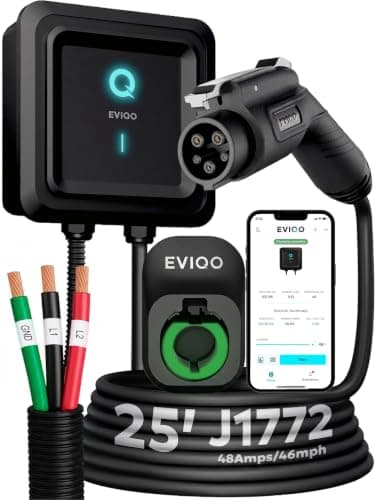
EVIQO 48A Level 2 Charger

The three decisions, in order of importance
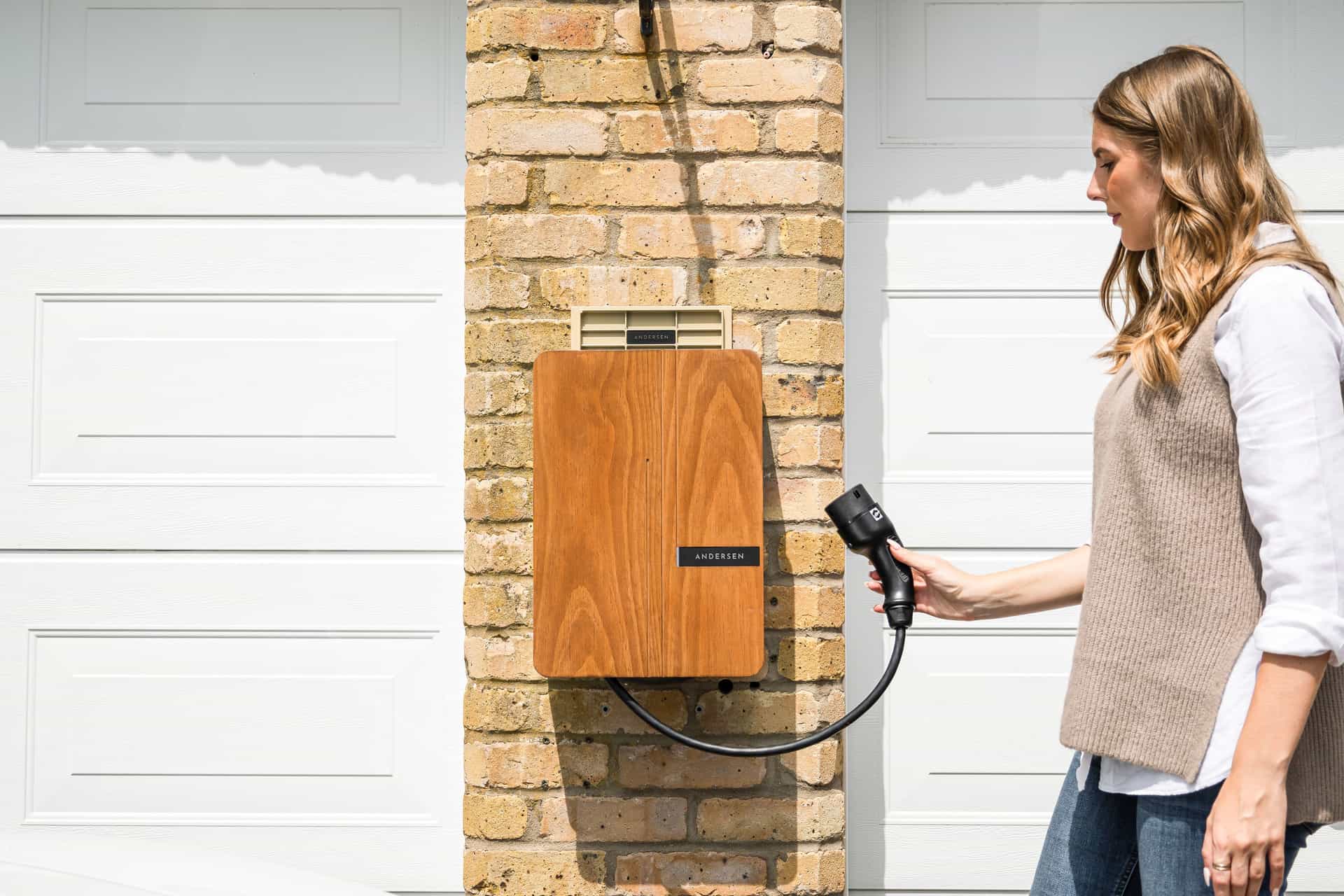
If you only settle one of these, make it hardwired vs plug-in, because it cascades into everything else. A plug-in charger (into a NEMA 14-50 outlet) is flexible, movable and renter-friendly, but code caps it at 40 amps. Hardwiring is required to reach a full 48 amps, is the cleaner permanent install, and is generally preferred for fully outdoor locations. So this one decision often decides your amperage for you.
Then: how many amps?
40 amps vs 48 ampsis the next fork. The extra 8 amps buys about 6 more miles of range per hour — nice, but rarely decisive for overnight charging, since most people top up far less than a full battery each night. It only matters if you drive a lot of miles daily or have a large battery you regularly run low. And 48 amps demands that 60-amp circuit and a hardwired install, so it’s a real cost step, not a free upgrade.
Finally: tethered or untethered?
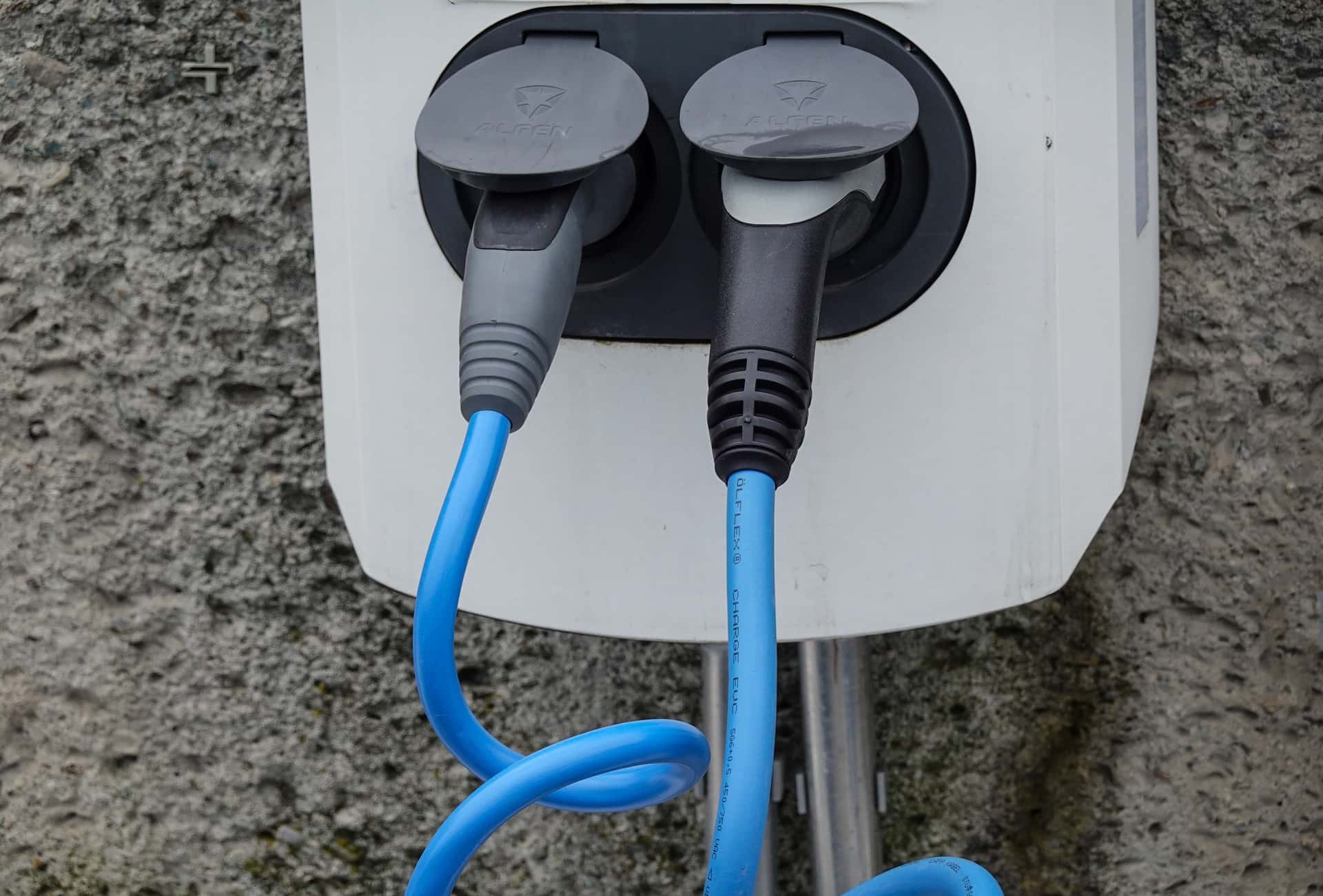
In North America this one is nearly settled: almost every home charger is tethered(cable permanently attached), because it’s more convenient day to day. Untethered units — a socket you plug your own cable into — are common in Europe and future-proof against connector changes, but they add a step every charge and are a niche choice at home here. For most US buyers, tethered is the default and untethered is the exception.
How these decisions interact
They’re not independent. Choosing 48 amps forces hardwired, which usually means tethered and a more involved install. Choosing plug-in caps you at 40 amps but keeps the unit movable. Reading the three comparisons together — rather than in isolation — is the fastest way to a charger that actually fits your home, and each page links to the others.
Then the model-versus-model questions
Once the install type and amperage are settled, the remaining decisions are between specific chargers. We’ve settled the ones that come up most: ChargePoint Home Flex vs Emporia is the premium-versus-value question, Wallbox vs ChargePoint is the premium head-to-head, and Emporia vs Grizzl-Epits an app-first charger against a cast-aluminum tank. If you’re not sure you want an app at all, start with smart vs dumb chargers. Two more model matchups worth reading are Emporia vs EVIQO, the value 48-amp question, and Autel vs ChargePoint, which comes down to enclosure against adjustability.
The two questions people ask last
If you have already settled amperage and install type, two smaller comparisons still catch people out. NEMA 14-50 vs NEMA 6-50decides which receptacle to ask your electrician for on a plug-in install — both give you 40 amps, and only one of them is worth the extra wire. And if you are tempted by the very top of the market, 48 amps vs 80 amps explains why 19.2 kW is unusable in almost every home.
One comparison sits before all of these, because it corrects a common misunderstanding: a Level 2 charger vs a 240V outlet explains that the outlet charges nothing on its own, what a NEMA 14-50 actually gives you, and why a dryer outlet is a different circuit. And two brand head-to-heads answer the pairings people search most often: EVIQO vs ChargePoint Home Flex, the value 48-amp challenger against the reference smart charger, and Grizzl-E vs ChargePoint Home Flex, a sealed cast-aluminum plug-in against the most software-heavy unit sold.
Brand against brand
Once the either/or decisions are settled, the question becomes which box. Our head-to-heads pair units that genuinely compete: Lectron Nexus 48A vs Emporia is two 48-amp chargers at a similar price where the only real difference is whether you get energy measurement; Lectron vs the ChargePoint Home Flex is the cheapest honest 48 amps against the category default, where the gap is almost entirely software; and Wallbox Pulsar Plus vs the Autel MaxiCharger is the smallest premium charger against the toughest, decided by a 27-degree difference in published temperature ceiling. And Emporia vs the Autel MaxiCharger settles the pairing people shortlist most often by accident: Autel is the only one of the two that goes past 48 amps, and its own documentation asks for a 70-amp circuit to do it, while Emporia is the only one you can put on a plug — and both brands gate their load management behind a second device.
And if you are still stuck on the connector question rather than the brand, tethered vs untethered is the page that settles it — in North America the answer is nearly always tethered, and it is worth knowing why before you go looking for a socket-only unit.
When the two brands disagree about what a charger is
Most of the head-to-heads above compare similar products. One does not: Grizzl-E vs the Autel MaxiCharger sets two genuinely different philosophies against each other — a cast aluminum box with the amperage on a DIP switch and nothing to log into, against a connected unit with WiFi, Bluetooth, an Ethernet port and the widest published temperature range we track. Two of the Grizzl-E units plug in and come off the wall when you move; the Autel does not. That one row decides this comparison for more people than any charging-speed figure, and the page says so.
Frequently asked questions
Is 48 amps worth it over 40 amps?
For most people, no. The extra 8 amps adds roughly 6 miles of range per hour, and it requires a 60-amp circuit and a hardwired install. It's worth it only if you drive high daily mileage or have a large battery you regularly deplete.
Should I hardwire or plug in my charger?
Plug in (NEMA 14-50) if you value flexibility, might move, or want a 40-amp setup on a common 50-amp circuit. Hardwire if you want a full 48 amps, a permanent clean install, or a fully outdoor location.
Do I need a tethered or untethered charger?
In North America, tethered (attached cable) is the standard and the more convenient choice for nearly everyone. Untethered is a European norm and future-proofs against connector changes, but it's a niche pick for US homes.