The Wall Connector against the five alternatives
Every figure in the Tesla row comes from the EPA’s ENERGY STAR certification register, read on 21 November 2026. Every figure in the other rows comes from the manufacturer’s own published specification, dated in our source list.
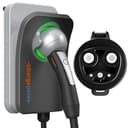
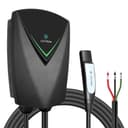
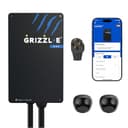
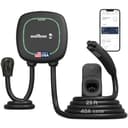
The Tesla Wall Connector as the EPA’s ENERGY STAR certification register publishes it, with the five alternatives we track underneath. The Tesla row carries no buy link because we do not track that product — it is the reference, not a pick. Every other row’s live price and buy button are in the quick-picks table above.| Charger | Connector | Max output | Cord | Install | Networked |
|---|
| Tesla Wall Connector (reference) | NACS | 48 A / 11.52 kW | 22 ft, 8 AWG | Hardwired | Yes — Wi-Fi, Ethernet, cellular |
|---|
| ChargePoint Home Flex NACS | NACS | 50 A / 12 kW | 23 ft | Hardwired | Yes |
|---|
| Lectron Nexus NACS (Tesla) Charger | NACS | 48 A / 11.5 kW | 23 ft | Hardwired | No |
|---|
| Grizzl-E Duo Connect 40A | NACS | 40 A / 9.6 kW | 25 ft | NEMA 14-50 plug or hardwired | Yes |
|---|
| Wallbox Pulsar Plus 40A NACS | NACS | 40 A / 9.6 kW | 25 ft | NEMA 14-50 plug | Yes |
|---|
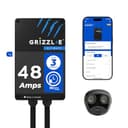
| Grizzl-E Ultimate 48A NACS | NACS | 48 A / 11.5 kW | 25 ft | Hardwired | Yes |
|---|
Three readings of that table are worth spelling out. On output, two picks beat 48 amps, two match it, and one is below it — and the one below it is the only one you can plug in rather than hardwire. On cord length, the Wall Connector’s 22 feet is the shortest figure in the table; three alternatives ship 25 feet. On networking, four of the five publish Wi-Fi and an app, so the connected-charger box is comfortably ticked outside Tesla too.
What the certification record does and does not tell us
We want to be precise about the limits of our own source here, because an alternatives page that overstates what it knows about the original is worthless.
The ENERGY STAR register is an EPA certification database, not a marketing page. It publishes what a model was certified at: nameplate current, input voltage, maximum output power, number of outputs, cord length and gauge, network capability and wake protocol, and the measured no-vehicle, partial-on and idle-mode power draws the certification is awarded on. For the Wall Connector that last set is unusually interesting — an idle-mode input power of 3.36 W against a 22.80 W allowance — and it is the actual substance of an ENERGY STAR listing, which is about standby efficiency rather than charging speed.
What the register does notpublish is the enclosure or IP rating, the warranty term, the operating-temperature range, the adjustable-amperage list, or the physical dimensions. So this page makes no claim about any of those for the Tesla unit, and the comparison table leaves them out rather than guessing. If you want those figures for the Wall Connector, Tesla is the only place to get them — and for the record, tesla.com and shop.tesla.com have returned HTTP 403 to this environment on every attempt across seven content waves, which is why this page took until now to exist.
What we ranked on
One: does it have a native NACS cable?Three picks do, and they are ranked above the J1772 options for the obvious reason that nobody replacing a Wall Connector wants to introduce an adapter. The NACS connector is SAE J3400, and Lectron’s own Nexus NACS page carries the most specific compatibility list in our registry — naming the Tesla range plus the Chevrolet Bolt (2027), Hyundai IONIQ 5 (2025), Kia EV6 (2025), Lexus RZ (2026), Rivian R2 (2026) and Toyota bZ4X (2026) among cars with native NACS ports.
Two: does it match or beat 48 amps and 11.5 kW?The ChargePoint Home Flex NACS is rated 50 A / 12 kW and adjustable in the app to 16, 24, 32, 40, 48 or 50 — so it covers the Wall Connector’s figure and then some, though the full 50 needs a 70-amp circuit by ChargePoint’s own 125% rule. Both Grizzl-E and Lectron hardwired NACS units are 48 A / 11.5 kW, which is the same ceiling. The Wallbox plug-in is 40 A, which is the receptacle’s limit and not a Wallbox decision.
Three: cable length, where Tesla is beatable.Twenty-two feet is short for this market. The two Grizzl-E units and the Wallbox all ship 25-foot cables; the ChargePoint and the Lectron ship 23. On a wall-mounted charger this is the spec people regret most, because it cannot be changed afterwards — the long-cable roundup sorts the whole registry on it.
Four: the paperwork, and where it is thin.Lectron publishes ETL listing to UL 2594, UL 2231 and UL 2251 plus ENERGY STAR and FCC — the most specific disclosure of any brand we track, which is why it ranks second despite having no app. ChargePoint publishes UL and cUL listing with ENERGY STAR. Grizzl-E publishes UL certification E510712 and noENERGY STAR certification for its NACS Ultimate, with a warranty offered as a “3 Year” / “5 Year” checkout selector whose terms it does not publish. Those two gaps are the reason our budget pick is a budget pick rather than the outright winner, and they matter most on a rebate form.
Which one, for which situation
If you want the Wall Connector experience from a different company, buy the ChargePoint Home Flex NACS. It is the only pick here that pairs a native NACS cable with genuinely mature software: scheduling, plug-in reminders, usage history, Alexa and Siri control, over-the-air firmware, and 90 days of session data stored on the station if the network drops. You pay for that, and its 23-foot cable is a foot longer than Tesla’s rather than dramatically better.
If you want the most charger per dollar, buy the Grizzl-E Ultimate 48A NACS. Same amps as Tesla, three more feet of cable, a 24-pound cast-aluminum box with a published cold rating, Wi-Fi and OCPP. Know what you are accepting: no published ENERGY STAR certification, no published warranty terms, and a spec page whose adjustable-current list (40/32/24/16 A) does not include the 48 A in its own headline.
If nobody will open an app, buy the Lectron Nexus NACS. It is the same 48-amp hardwired proposition with the best-documented safety listings in our registry and no account to create. In a Tesla this costs you nothing at all, because the car schedules its own charging — the no-app case is argued properly elsewhere.
If there are two EVs and one circuit, buy the Grizzl-E Duo Connect. It is the only answer on this page to a problem the Wall Connector solves by selling you two Wall Connectors and a load-sharing configuration.
If you cannot hardwire— a rented wall, a parking pad with only a receptacle, a move on the horizon — buy the Wallbox Pulsar Plus 40A NACS, accept 40 amps, and read the plug-in-under-$500 page for the cheaper J1772 options in the same form factor.
And if the adapter genuinely does not bother you, the widest and cheapest field is the J1772 one: the Emporia Level 2 reaches the same 48 amps hardwired with UL listing and ENERGY STAR for less than any NACS unit here, and our hardwired-under-$500 page has six more like it. Buying the connector your car has is the better default; buying the adapter route to save real money is a perfectly defensible second.