Level Two Club

Best Level 2 EV Chargers for the Kia EV6

Every 2026 EV6 trim has the same 10.9 kW onboard charger and the same NACS port, and the EV6 is the most efficient car we have written a charger guide for. Both facts push the same way: buy for the connector and the cable, not for the amperage.

By Stephen V.Last updated How we pick

Our top pick for a Kia EV6 is the Lectron Nexus NACS 48A.It puts a native North American Charging System plug on the wall, so it goes straight into the EV6’s port with nothing in between, and its 48 amps deliver more than the car can accept — which is exactly what you want from a charger. If you want an app and the brand Kia itself names, the ChargePoint Home Flex NACS does the same job for more money. If you already have a 240-volt outlet where the car parks, the cheapest sensible answer on this page is a 40-amp NACS unit you plug in yourself.

Two lines on Kia’s own 2026 EV6 specification tables decide this purchase. The first is “Onboard Charger Power 10.9 kW”, and it reads the same on all four trims — Light, Light Long Range, Wind and GT-Line. At 240 volts that is about 45 amps, which is our arithmetic rather than Kia’s; Kia does not publish a maximum amperage. A 48-amp charger covers it completely. An 80-amp charger adds nothing but a 100-amp circuit.

The second is the charge port: North American Charging System (NACS), standard on every trim. Kia lists one adapter for the car, a “NACS to CCS Adapter” available in ZEV states, and that one is for DC fast charging. We could not find a J1772-to-NACS AC adapterpublished anywhere on Kia’s EV6 pages. That absence is why this guide leads with native-NACS hardware, and why the J1772 chargers further down carry a caveat instead of a shrug. It is the mirror image of our Toyota bZ guide, where Toyota puts the J1772 adapter in the box and says so.

How this is funded: we earn a commission if you buy through our links, at no extra cost to you. It never changes which product we recommend, and we’ll tell you when we’d skip one. Full disclosure.

Quick picks

Ranked on published specs, charging speed, electrical fit and value. Select a row to jump to the full write-up. We have not bench-tested these chargers — here is exactly what we do instead.

#ProductBest forPrice
1
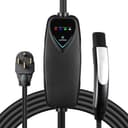
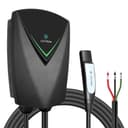
Lectron Nexus NACS (Tesla) Charger

Lectron Nexus NACS (Tesla) Charger

For a Tesla owner who doesn't want to babysit an adapter: a native NACS (J3400) connector plugs straight into the car, at a full 48 amps, with the safety listings you want. No app, but Teslas schedule charging in the car anyway.

Best overall for the EV6
$449.99 · View on Amazon

Price as of October 18, 2026. #ad How we’re funded

2
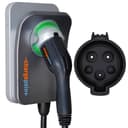
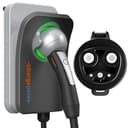
ChargePoint Home Flex NACS

ChargePoint Home Flex NACS

The Home Flex smarts with a factory NACS cable. Tesla owners who want ChargePoint's mature app and adjustable 16-50A amperage — rather than a plain no-app NACS unit — pay a premium for exactly that.

Best NACS charger with an app
$516.71 · View on Amazon

Price as of October 18, 2026. #ad How we’re funded

3
Lectron Portable Level 2 Tesla Charger (NACS)

Lectron Portable Level 2 Tesla Charger (NACS)

The portable to buy if your car has a NACS port and you would rather not travel with an adapter. It is the Lectron 40A portable with a Tesla connector on the end: a full 40 amps on a NEMA 14-50, a 16-foot cable, ETL to UL 2594 / UL 2231 and an ENERGY STAR listing. The gap is documentation - Lectron publishes no enclosure rating, temperature range or warranty term for this SKU.

Best NACS charger you can plug in
$279.89 · View on Amazon

$319.9913% off

Price as of October 18, 2026. #ad How we’re funded

4
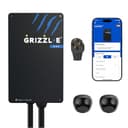
Grizzl-E Duo Connect 40A

Grizzl-E Duo Connect 40A

One box, two cables, one circuit. The Duo Connect lets a two-EV household charge both cars overnight without a second charger, a second breaker or a panel upgrade — because it splits one 40-amp supply between the connectors rather than doubling it. That is the whole trade: convenience and a much cheaper install, at half the speed each when both cars are plugged in.

Best for two NACS cars on one circuit
$899.99 · View on Amazon

Price as of October 18, 2026. #ad How we’re funded

5
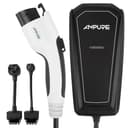
Ampure Go Portable Level 2 Charger

Ampure Go Portable Level 2 Charger

The only portable charger we track that is certified like a permanent one. UL 2594 / UL 2231, ENERGY STAR and an IP67 / NEMA 6P body rated from -22F to 122F, in a nine-pound module that ships with a NEMA 14-50 cord for 240V and a standard 5-15 cord for 120V. You give up eight amps against the 40A units and get, in exchange, a charger genuinely rated to live in a trunk and be rained on.

Best portable, and the one Kia names
$299.00 · View on Amazon

Price as of October 18, 2026. #ad How we’re funded

6
ChargePoint Home Flex

ChargePoint Home Flex

The safest default for most homes: you set the amperage in the app to 16, 24, 32, 40, 48 or 50A, so one charger fits whatever circuit your panel can spare today and scales up if you upgrade later. The app is the most mature here, firmware arrives over the air, and the warranty is long.

Best if a J1772 car shares the driveway
$516.71 · View on Amazon

Price as of October 18, 2026. #ad How we’re funded

The picks in full

#1Best overall for the EV6

Lectron Nexus NACS (Tesla) Charger

For a Tesla owner who doesn't want to babysit an adapter: a native NACS (J3400) connector plugs straight into the car, at a full 48 amps, with the safety listings you want. No app, but Teslas schedule charging in the car anyway.

Strengths

  • Native NACS connector — no J1772-to-Tesla adapter to lose
  • Full 48A output and a weather-rated IP66 body
  • UL/ETL safety listings plus ENERGY STAR

Trade-offs

  • No WiFi app — you schedule in the Tesla app instead
  • NACS connector is best for Tesla/NACS cars; other EVs need a NACS-to-J1772 adapter
Max output
48 A
Power
11.5 kW
Connector
NACS
Install
Hardwired
Cable length
23 ft
Warranty
3 years
WiFi + app
No
Certifications
UL 2594/2231/2251 (ETL listed), ENERGY STAR, FCC

Our charging-speed math. At 48A (11.5 kW) and ~3.5 miles per kWh, about 40 miles of range per hour into a Tesla.

Build note. Native NACS (J3400) connector plugs straight into a Tesla with no adapter; includes a holster.

Specs read from the manufacturer spec sheet, on July 19, 2026. “Not published” means the brand does not state that figure.

#2Best NACS charger with an app

ChargePoint Home Flex NACS

The Home Flex smarts with a factory NACS cable. Tesla owners who want ChargePoint's mature app and adjustable 16-50A amperage — rather than a plain no-app NACS unit — pay a premium for exactly that.

Strengths

  • Native NACS cable with ChargePoint's flexible 16-50A amperage
  • The most mature app of the NACS options here
  • 3-year warranty and outdoor-rated NEMA 3R body

Trade-offs

  • Priciest NACS pick — you're paying for the app and brand
  • 50A output needs a 60A circuit to use fully
Max output
50 A
Power
12 kW
Connector
NACS
Install
Hardwired
Cable length
23 ft
Warranty
3 years
WiFi + app
Yes
Certifications
UL/cUL listed, ENERGY STAR

Our charging-speed math. At its 50A max (12 kW) and ~3.5 miles per kWh, roughly 42 miles of range per hour into a Tesla.

Build note. Same Home Flex hardware with a factory NACS cable for Tesla and NACS EVs.

Specs read from the manufacturer spec sheet, on July 19, 2026. “Not published” means the brand does not state that figure.

#3Best NACS charger you can plug in

Lectron Portable Level 2 Tesla Charger (NACS)

The portable to buy if your car has a NACS port and you would rather not travel with an adapter. It is the Lectron 40A portable with a Tesla connector on the end: a full 40 amps on a NEMA 14-50, a 16-foot cable, ETL to UL 2594 / UL 2231 and an ENERGY STAR listing. The gap is documentation - Lectron publishes no enclosure rating, temperature range or warranty term for this SKU.

Strengths

  • Native NACS connector - no adapter to lose in a hotel parking lot
  • A genuine 40A / 9.6 kW on a NEMA 14-50, and ENERGY STAR certified
  • ETL listed to UL 2594 / UL 2231, with a UL 2251 handle

Trade-offs

  • Lectron publishes no enclosure rating, temperature range or warranty term for this SKU
  • A 16 ft cable is short if the charger has to reach across a garage
  • The base unit has no app - the WiFi version is a separate, dearer SKU
Max output
40 A
Power
9.6 kW
Connector
NACS
Install
NEMA 14-50 plug
Cable length
16 ft
Warranty
Not published
WiFi + app
No
Certifications
ETL listed (UL 2594 / UL 2231), ENERGY STAR, FCC; UL 2251 handle

Our charging-speed math. At 40A (9.6 kW) and ~3.5 miles per kWh it adds roughly 34 miles of range per hour.

Build note. Portable NACS unit on a NEMA 14-50 plug with a 16 ft cable and LED status indicators; Lectron describes it as weather-resistant for indoor or outdoor use while advising against extreme weather exposure, and publishes no enclosure rating for it.

Specs read from the manufacturer spec sheet, on August 25, 2026. “Not published” means the brand does not state that figure.

#4Best for two NACS cars on one circuit

Grizzl-E Duo Connect 40A

One box, two cables, one circuit. The Duo Connect lets a two-EV household charge both cars overnight without a second charger, a second breaker or a panel upgrade — because it splits one 40-amp supply between the connectors rather than doubling it. That is the whole trade: convenience and a much cheaper install, at half the speed each when both cars are plugged in.

Strengths

  • Charges two EVs from one 40 A circuit — no second breaker, no panel upgrade
  • Grizzl-E's cast-aluminum, IP67-sealed body with two 25 ft cold-flexible cables
  • Per-connector current limits and scheduling in the Grizzl-E Connect app

Trade-offs

  • 40 A is the TOTAL, not per car — two cars charging at once get about 4.8 kW each
  • Costs roughly what two single chargers cost, so the saving is in the wiring, not the box
  • This Amazon SKU is NACS-to-NACS; a mixed-fleet household needs a different cable pairing
Max output
40 A
Power
9.6 kW
Connector
NACS
Install
NEMA 14-50 plug or hardwired
Cable length
25 ft
Warranty
Not published
WiFi + app
Yes
Certifications
UL tested and certified

Our charging-speed math. The 40 A / 9.6 kW rating is for the whole unit. One car alone gets the full 9.6 kW — about 34 miles of range per hour at ~3.5 mi/kWh. Two cars at once split it: roughly 4.8 kW, or about 17 miles per hour, each.

Build note. Two 25 ft output cables from a single cast-aluminum, IP67-sealed body rated -30C to +50C, with an LED per connector and a DIP-switch current selector (16/24/32/40 A). Grizzl-E states dual charging automatically splits the available current in half, or you can set each connector's current in the Grizzl-E Connect app.

Specs read from the manufacturer spec sheet, on August 12, 2026. “Not published” means the brand does not state that figure.

#5Best portable, and the one Kia names

Ampure Go Portable Level 2 Charger

The only portable charger we track that is certified like a permanent one. UL 2594 / UL 2231, ENERGY STAR and an IP67 / NEMA 6P body rated from -22F to 122F, in a nine-pound module that ships with a NEMA 14-50 cord for 240V and a standard 5-15 cord for 120V. You give up eight amps against the 40A units and get, in exchange, a charger genuinely rated to live in a trunk and be rained on.

Strengths

  • Dual voltage: 32A / 7.7 kW on a 240V NEMA 14-50, or 12A / 1.4 kW on any standard 120V outlet
  • UL and cUL listed (UL 2594 / UL 2231 / UL 817) and ENERGY STAR certified - rare on a portable
  • IP67 / NEMA 6P watertight body rated -22F to 122F, and the module weighs 9 lb

Trade-offs

  • 32 amps, not 40 - about 27 miles of range an hour against 34 from a 40A unit
  • No app or scheduling is published, so the charging schedule has to live in the car
  • Costs more than 40A portables that publish far less about themselves
Max output
32 A
Power
7.7 kW
Connector
J1772
Install
NEMA 14-50 cord for 240V, NEMA 5-15 cord for 120V
Cable length
20 ft
Warranty
3 years
WiFi + app
Not published
Certifications
UL and cUL listed (UL 2594 / UL 2231 / UL 817), ENERGY STAR, FCC

Our charging-speed math. At 32A (7.7 kW) and ~3.5 miles per kWh it adds roughly 27 miles of range per hour; on the 120V cord (1.4 kW), roughly 5. Ampure's own page claims up to 25 mi/hr, so our arithmetic is the slightly more generous of the two.

Build note. Dual-voltage portable: 32A / 7.7 kW at 240V or 12A / 1.4 kW at 120V, input range 85-265 VAC, 20 ft cable, IP67 / NEMA 6P enclosure rated -30C to +50C (-22F to 122F), 9 lb module.

Specs read from the manufacturer spec sheet, on August 25, 2026. “Not published” means the brand does not state that figure.

#6Best if a J1772 car shares the driveway

ChargePoint Home Flex

The safest default for most homes: you set the amperage in the app to 16, 24, 32, 40, 48 or 50A, so one charger fits whatever circuit your panel can spare today and scales up if you upgrade later. The app is the most mature here, firmware arrives over the air, and the warranty is long.

Strengths

  • Adjustable 16-50A means it fits a small panel now and a bigger circuit later
  • The most mature app of the group — scheduling, reminders, usage history, over-the-air firmware
  • 3-year warranty and a long 23 ft cable
  • Sold hardwired or on a NEMA 6-50 or NEMA 14-50 plug, in J1772 or NACS

Trade-offs

  • You pay a premium over value 48A chargers for the app and brand
  • Full 50A output needs a 60A circuit most older panels don't have to spare
  • The plug-in SKUs cap at 40A, so the top speed is a hardwired-only feature
Max output
50 A
Power
12 kW
Connector
J1772
Install
Hardwired, NEMA 6-50 or NEMA 14-50
Cable length
23 ft
Warranty
3 years
WiFi + app
Yes
Certifications
UL/cUL listed, ENERGY STAR

Our charging-speed math. At its 50A max (12 kW) and a typical 3.5 miles per kWh, the Home Flex adds roughly 42 miles of range per hour. Dial it down to 40A to fit a 50A circuit and you get about 34. ChargePoint's own, more conservative claim is up to 37 miles per hour hardwired and 30 on the plug-in SKUs.

Build note. Amperage is set in the app to 16, 24, 32, 40, 48 or 50A. The plug-in SKUs are capped at 40A, so the full 50A is a hardwired-only figure. UL and cUL listed per UL 2594 and UL 2231; firmware updates over the air, and the station stores up to 90 days of session data locally if the network drops.

Specs read from the manufacturer spec sheet, on September 3, 2026. “Not published” means the brand does not state that figure.

Start with the connector, not the amps

On most of this site the first question is how many amps you need. On the EV6 it is which plug goes into the car, because Kia has moved the EV6 to a NACS port and has not published an AC adapter to bridge back to J1772.

Here is what Kia actually publishes, which is less than you would hope. The specification tables list “North American Charging System (NACS)” as standard across the 2026 line, a “Dual Level 120V / 240V Portable Charging Cable” as standard equipment, and a “NACS to CCS Adapter” as available in ZEV states only. Kia does not publish the connector on the end of that included portable cable, and it does not list a J1772 adapter at all.

Then, on the EV6’s own vehicle page, Kia’s home-charging section names exactly two chargers — and one of them is a J1772 unit. The ChargePoint Home Flex is described as “available with J1772 or NACS connectors,” which is fine. But the Ampure Go it names alongside is the J1772 portable we review in full here, and Kia recommends it for the EV6 without saying a word about how a J1772 handle gets into a NACS port. We are not going to invent the missing sentence. What we will say is this: third-party J1772-to-NACS AC adapters are sold, plenty of owners use them, and Kia has published nothing endorsing one. If you want a charger that works the day it is on the wall, with no part Kia has never mentioned, buy native NACS.

That is the whole reason the first four picks on this page are NACS units. The two J1772 picks are here for one specific household: the one where a second, older EV with a J1772 port shares the driveway, and where one J1772 charger plus an adapter is genuinely cheaper than two chargers. If that is not you, ignore them.

Why 48 amps is the ceiling, and 40 is barely behind it

Home charging speed is set by the lower of two numbers: what the charger offers and what the car’s onboard charger accepts. Kia publishes the second one at 10.9 kW on every EV6 trim, so the ladder is short.

A 48-amp charger delivers 11.5 kW and saturates the car. A 50-amp charger delivers 12 kW and throws the extra kilowatt away inside the EV6. The 80-amp unit we rank first in our fastest-charger roundup charges an EV6 at precisely the same rate as a charger costing a third as much, while demanding a 100-amp circuit to do it. On this car, paying for amps above 48 is paying for nothing.

The interesting comparison is the step down. A 40-amp charger delivers 9.6 kW, which is 88% of what the EV6 accepts. Kia publishes its own Level 2 charge times, so we can scale them instead of guessing: 10% to 100% is listed as about 7 hours 20 minutes on the 84.0 kWh battery and about 5 hours 40 minutes on the 63.0 kWh Light. Scaled to 9.6 kW those become roughly 8 hours 20 minutes and 6 hours 25 minutes. So dropping from 48 amps to 40 costs about an hour on the big battery and about forty-five minutes on the small one, on a full charge most owners almost never do.

One honest oddity in Kia’s own numbers, which we publish rather than tidy: the onboard charger is rated 10.9 kW, but the Level 2 charge-time row is labeled “@ 240V / 11kw via Electric Vehicle Supply Equipment.” Those are two different figures on the same page for the same thing. The gap is about 1%, so it changes no buying decision, but we are not going to pick one and present it as settled.

The EV6 is efficient, and that changes the miles-per-hour math

Everywhere else on this site we convert kilowatts into miles using a stated reference of about 3.5 miles per kWh, because most cars do not publish enough to do better. The EV6 publishes enough. Kia gives both battery capacity and EPA-estimated range: 63.0 kWh / 237 miles on the Light and 84.0 kWh / 319 miles on the Light Long Range, Wind and GT-Line. Those pairs work out to about 3.8 miles per kWhon both batteries — better than our site reference, and well ahead of the 3.0 or so the much larger Kia EV9 manages from its own published pairs.

Using Kia’s figures rather than ours, then: at 10.9 kW the EV6 gains roughly 41 miles of range per hour. At 9.6 kW on a 40-amp charger, about 36. At 7.7 kW on the 32-amp Ampure Go, about 29. On the 120-volt cord in the trunk, Kia’s own in-cable figures are the honest ones — about 54 hours for the small battery and about 72 hours for the large one, which makes Level 1 a top-up tool rather than a charging plan.

Put that against real driving and the case for restraint gets stronger. Forty miles of daily driving is about 10.5 kWh in an EV6, which is an hour on a 48-amp charger and about seventeen minutes more on a 32-amp one. Nobody is awake for the difference. That is why we rank reach, weather rating and install type above amperage on this particular car, and why our charger sizing guide tells most readers to buy less charger than they think.

The circuit is the real cost, and it is not the charger

Under the National Electrical Code a charger is a continuous load, so the circuit is sized at 125% of the charger’s output. That is the arithmetic that turns a charger choice into an electrical project: 48 amps needs a 60-amp circuit, 40 amps needs a 50-amp circuit, and 32 amps fits a 40-amp circuit. Kia names Qmerit as its install partner and does not publish a price, which is the right call on their part — the number depends entirely on your panel and the distance from it to the car.

Two consequences worth planning around. First, if your panel is already close to full, the step from 60 amps to 50 can be the difference between a simple install and a service upgrade, and on an EV6 that step costs you about an hour of overnight charging. Check whether your panel has room before you choose amperage, not after. Second, if a NEMA 14-50 outlet already exists where the car parks, a plug-in 40-amp charger skips the electrician entirely — which is why the Lectron NACS portable sits third on this page despite being the cheapest unit on it.

Hardwiring is still the better permanent install where the budget allows: it removes the receptacle, which is the component that ages under daily high-current use, and it is the only way to reach 48 amps. We argue both sides properly in hardwired vs plug-in.

What a charger will not do for your EV6

Two features get attached to charger shopping and belong to the car instead.

Vehicle-to-load. Kia lists V2L as standard on the Wind and GT-Line and not available on the Light trims. It runs through the car, not through the wall unit, so no charger on this page enables, improves or blocks it. If you want to power tools or a fridge from the car, that decision was made at the dealership.

Scheduling.The EV6 schedules its own charging, which makes the most-advertised smart-charger feature largely redundant. What a connected charger still gives you that the car cannot is per-session energy measurement at the wall — the number your utility bills against — plus eligibility for utility managed-charging programs, which by definition have to reach the charger. If neither applies to you, buy the offline unit and keep the money. We lay out which app features people actually open in smart vs dumb chargers.

What we deliberately did not rank

The dual-voltage portable cable Kia includes with the car is real Level 2 hardware on a 240-volt outlet, and for a low-mileage owner with an outlet already in place it may be all you need. We have not ranked it, because Kia publishes no amperage, no kW, no cord length and no connector type for it. We will not build a recommendation on four blanks.

We have also not ranked a Kia-branded or dealer-supplied wall charger, for the same reason: there are no published specifications to rank. And we have left out every 80-amp unit on purpose — covered above, the EV6 cannot use them.
Frequently asked questions

What size charger does a Kia EV6 need?

A 48-amp charger is the most the car can use. Kia publishes an onboard charger rating of 10.9 kW on every 2026 EV6 trim, which is about 45 amps at 240 volts by our arithmetic, so a 48-amp unit (11.5 kW) saturates it and anything larger is wasted. A 40-amp charger delivers 9.6 kW, about 88% of the car's ceiling, which scales Kia's own 10-to-100% figure from about 7 hours 20 minutes to about 8 hours 20 minutes on the 84 kWh battery. For most owners that is the better buy, because 40 amps needs a 50-amp circuit instead of a 60-amp one.

Does the Kia EV6 use NACS or J1772?

NACS. Kia lists a North American Charging System charge port as standard on all four 2026 EV6 trims. That is why our first four picks are native-NACS chargers: they plug straight in with no adapter in the path.

Can I use a J1772 charger with a Kia EV6?

Only through a J1772-to-NACS AC adapter, and Kia does not publish one. The only adapter listed on Kia's own EV6 pages is a NACS-to-CCS adapter for DC fast charging, available in ZEV states. Third-party J1772-to-NACS adapters are sold and widely used, but since Kia has not endorsed one we will not tell you it is a supported configuration. Worth knowing: Kia's own EV6 page names the Ampure Go, a J1772 portable charger, in its home-charging section without addressing the adapter question at all.

How long does it take to charge a Kia EV6 on a Level 2 charger?

Kia publishes about 5 hours 40 minutes for 10-100% on the 63.0 kWh Light and about 7 hours 20 minutes on the 84.0 kWh trims, on a row its own specs page labels 240V / 11 kW. Scaled to a 40-amp charger's 9.6 kW those become roughly 6 hours 25 minutes and 8 hours 20 minutes. On the 120-volt cord that ships with the car, Kia's own figures are about 54 hours and about 72 hours, which is why Level 1 is a top-up rather than a charging plan.

Is an 80-amp charger worth it for an EV6?

No. The car accepts 10.9 kW, so an 80-amp charger delivers exactly the same charging rate as a 48-amp one while requiring a 100-amp circuit and costing substantially more. The only reason to buy one is a second vehicle that can genuinely take 19.2 kW, and very few can.

How many miles per hour of charging does an EV6 gain?

About 41 miles per hour at the car's 10.9 kW ceiling, about 36 on a 40-amp charger and about 29 on a 32-amp portable. Those are our figures, computed from Kia's own published battery-and-range pairs (63.0 kWh / 237 miles and 84.0 kWh / 319 miles, both about 3.8 miles per kWh) rather than from the roughly 3.5 miles per kWh reference we use when a manufacturer publishes less. Your real number moves with temperature, speed and climate-control use.

Do I need a smart charger for a Kia EV6?

Not for scheduling - the EV6 does that itself from the car's own menu. A connected charger still earns its place if you want per-session kWh measured at the wall, if you are reconciling solar generation, or if your utility runs a managed-charging program that pays and needs to reach the charger. Otherwise an offline unit charges identically for less.

Sources

  • Kia - 2026 EV6 Features & Specifications (official specs-compare page) — Kia's own EV6 specification tables, read across the 2026 trims (Light, Light Long Range, Wind, GT-Line). 'Onboard Charger Power' reads '10.9 kW' on EVERY trim. 'Drive Battery Energy' is 63.0 kWh on Light and 84.0 kWh on Light Long Range, Wind and GT-Line. A 'North American Charging System (NACS)' port and a 'Dual Level 120V / 240V Portable Charging Cable' are standard across the line; a 'NACS to CCS Adapter' is listed as available in ZEV States only, and no J1772-to-NACS AC adapter is listed anywhere on the page. Charge times: the Level 2 row, labeled '@ 240V / 11kw via Electric Vehicle Supply Equipment', reads 'Approx. 5 hrs. and 40 min.' on the 63.0 kWh battery and 'Approx. 7 hrs. 20 min.' on the 84.0 kWh battery, while the 120V in-cable-control-box row reads 'Approx. 54 hrs. and 5 min.' and 'Approx. 72 hrs.' respectively. DC fast charging: approx. 20 min. at 350 kW on every trim, approx. 24 / 29 min. at 150 kW and approx. 61 / 81 min. at 50 kW. EPA-estimated range is 237 miles (Light) and 319 miles (Light Long Range, Wind, GT-Line). V2L is listed as standard on Wind and GT-Line and not available on the Light trims. Note the internal mismatch we publish rather than resolve: the onboard charger is rated 10.9 kW while Kia's own Level 2 charge-time row is labeled 11 kW. Kia does NOT publish a maximum onboard-charger amperage, so the ~45 A figure on our page is our own arithmetic from 10.9 kW at 240 V, and the miles-per-hour figures are ours from Kia's own range-and-battery pairs (accessed October 10, 2026)
  • Kia - 2026 EV6 (official vehicle page, 'Charge up at home and on the go') — Kia's own EV6 vehicle page. Its home-charging section, headed 'Charge up at home and on the go', names exactly two chargers - the same two it names for the EV9. ChargePoint Home Flex: 'Charge confidently at home and take everyday by storm with a powerful Level 2 home charger-available with J1772 or NACS connectors and backed by a 3-year limited warranty.' Ampure Go Portable Charger: 'Designed for drivers on the move, the Ampure Go portable charger delivers dependable Level 1 and Level 2 charging using standard 120V or 240V outlets... backed by a 3-year limited warranty.' Neither entry carries a price. The page also names Qmerit as Kia's home-install partner, lists the 'Kia Charge Pass' with 'access to over 47,000 DC fast chargers, including more than 30,000 Tesla Superchargers', publishes '10%-80% w/ DC Fast Chargers in 20 min' with an 800V charger (adapter sold separately), an 'EPA-est. available range 319 miles' on the 'Larger Extended Range Battery (84.0 kWh)', and a 'North American Charging System (NACS) Port' as standard. It does NOT publish the included portable cable's amperage or connector type, and does not publish V2L on this page (accessed October 10, 2026)
  • Lectron — NEXUS Level 2 J1772 EV Charging Station, 240V, 48 Amp, Hardwired — Lectron's own product page: up to 48 A continuous at 240 V for 11.5 kW, hardwire-only install by a licensed electrician on a dedicated 240 V circuit, IP66 weatherproof housing for indoor or outdoor use, 23 ft output cable of 15.0 mm (±0.3 mm) heavy-duty compound the brand states is 'engineered to stay flexible and easy to wrap around the wall mount, even in freezing weather', wall-mount J-hook and plug holder included, ETL listed to UL 2594 / UL 2231 / UL 2251 with ENERGY STAR and FCC certification, and a 3-year Lectron warranty. No operating-temperature range and no Wi-Fi or app support are published for this model (accessed August 20, 2026)
  • ChargePoint — Home Flex datasheet (PDF) — ChargePoint's own datasheet: enclosure rating Type 3R per UL 50E, operating temperature -22F to 122F, 23 ft cable, plus installer notes that an outdoor plug-in install requires an outdoor-rated GFCI breaker upstream while an external GFCI may conflict with the charger's internal ground-fault protection on a hardwired install. RE-READ September 3, 2026 for the review refresh: the same datasheet also publishes maximum 12 kW (240V AC x 50A) with output amperage adjustable via the mobile app to 16A, 24A, 32A, 40A, 48A or 50A; a required dedicated dual-pole breaker rated for 125% of maximum load; 'Software Updates: Firmware updated over-the-air (OTA)'; 2.4/5 GHz Wi-Fi (802.11 a/b/g/n); local storage of up to 90 days of charging session data (100 sessions) if the network drops; power measurement accuracy +/- 2.0%; ground-fault detection by 20 mA CCID with auto retry; and UL and cUL listing per UL 2594, UL 2231-1 and UL 2231-2, NEC Article 625 compliant. Ordering information lists the plug-in station models CPH50-NEMA6-50-L23 and CPH50-NEMA14-50-L23 (accessed September 3, 2026)
  • Ampure - Ampure Go portable Level 2 EV charger product page — Ampure's own specifications for the Go: 32 A / 7.7 kW at 240 V or 12 A / 1.4 kW at 120 V, input range 85-265 VAC at 45-65 Hz, SAE J1772 coupler, NEMA 14-50 and NEMA 5-15 cords, 20 ft (6 m) cable, IP67 rated 'submersible up to 3 feet' with a NEMA 6P watertight enclosure, operating range -30C to +50C (-22F to 122F), 9 lb (4.1 kg) module, and listings to UL, cUL, UL 2594, UL 2231, UL 817, ICES, FCC, ENERGY STAR, REACH and RoHS. Ampure states 'up to 25 miles of range per hour' at 240 V. RE-READ October 10, 2026 for the review: every figure above is unchanged on the page. Confirmed again that this page publishes NO warranty term (that figure is on the store listing), NO app, WiFi or scheduling feature, and NO description of the unit's internal safety protections (no GFCI / CCID figure, no over-temperature behavior). The page describes the unit as an 'IP67-rated IC-CPD', i.e. an in-cable control and protection device, and the specification block gives the plug types as 'NEMA 14-50 & NEMA 5-15' alongside an 'IEC grid plug'. Ampure's current line separates this unit from a distinct 'Go 2 (NACS)' model; the specifications above are the Gen 1 J1772 unit Amazon lists as the 'Go 1' (accessed October 10, 2026)
  • Lectron - Portable Level 2 Tesla (NACS) EV Charger, 240V, 40 Amp, NEMA 14-50 — Lectron's own product page: 40 A / 240 V / 9.6 kW on a NEMA 14-50 plug with a native NACS connector for Tesla Models S/3/X/Y/Cybertruck and any NACS EV, 16 ft cable, ETL listed to UL 2594 / UL 2231 with a UL 2251 handle plus ENERGY STAR and FCC, LED status indicators on the base SKU with app control only on the separate WiFi version. Lectron describes the unit as weather-resistant for indoor or outdoor use while advising against extreme weather exposure, and its spec block publishes no enclosure rating, no operating-temperature range and no warranty term. RE-READ October 17, 2026 for the review, and the page is unchanged on every spec above. Additional detail captured on that visit: the page sells two SKUs at different prices, a WiFi version and a 'Plug & Play' version, and states that the Lectron App works on the 'WiFi version ONLY'; the range claims are inconsistent across the same page - '260+ miles overnight', 'up to 36 miles of range per hour' and '30+ miles of range per hour' - with a disclaimer that actual speed depends on the vehicle, state of charge and temperature; the enclosure figures appear only in image copy and disagree with each other (IP65 described as dust and water resistance, IP54 described as dust-tight and splash-resistant), while the body copy publishes no rating at all; the UL references are likewise inconsistent (the sidebar and FAQ read 'UL2594 / UL2231 Certified' while the body text attributes UL 2251 to the handle); a carrying case is included; a CCS1-to-NACS adapter is offered as a paid bundle add-on rather than included; J1772 cars are said to work through a Tesla/NACS-to-J1772 adapter; shipping is quoted at 1-2 working days with 30-day returns. Still NOT published anywhere on the page: operating-temperature range, warranty term, weight, dimensions, a complete box inventory, a single consistent IP rating or a single consistent UL standard for the charger itself (accessed October 17, 2026)
  • United Chargers — Grizzl-E Duo Connect 40A technical specifications — Grizzl-E's own spec table for the Duo Connect 40A: two output cables, Type 1 (J1772) and NACS Level 2 connections, aluminum enclosure, operating temperature -30C to +50C, IP67 protection, 25 ft output cable length, 18 in input cable, 208-240 VAC, nominal input current 16/24/32/40 A, maximum output current 40 A, one LED indicator per connector, DIP-switch power selector, 40 lb unit weight (accessed August 12, 2026)
  • SAE International — J3400 North American Charging System (NACS) — The SAE J3400 / NACS standard (the Tesla-derived connector) now being adopted industry-wide (accessed July 19, 2026)
  • SAE International — J1772 Conductive Charge Coupler — The SAE J1772 connector standard for AC Level 1 and Level 2 charging in North America (accessed July 19, 2026)
  • NFPA — Using the Latest NEC for EV Charger Installations — NFPA on NEC (NFPA 70) Article 625: EV charging is a continuous load, so circuits are sized to 125% of load (the 80% rule) (accessed July 19, 2026)
  • U.S. DOE Alternative Fuels Data Center — Electric Vehicle Charging Stations — US DOE on charging levels: Level 1 (~1.9 kW, ~5 mi/hr), Level 2 (2.9-19.2 kW, ~7.2 kW typical residential, ~25 mi/hr), and DC fast charging (accessed July 19, 2026)
  • FuelEconomy.gov — Electric Vehicles: Learn More About the Label — DOE/EPA on EV efficiency: kWh per 100 miles and MPGe, accounting for AC charging losses (accessed July 19, 2026)

Keep reading