Lectron Nexus 48A vs Emporia Level 2
Both deliver a full 48 amps. Both carry ENERGY STAR and a three-year warranty. Both sit in the same part of the price list. The difference is software - and once you read Emporia's own footnotes, that difference is smaller and more conditional than the feature list suggests.
How this is funded: we earn a commission if you buy through our links, at no extra cost to you. It never changes which product we recommend, and we’ll tell you when we’d skip one. Full disclosure.
Buy the Emporia Level 2 if you want a record of what your car used, and the Lectron Nexus 48A if you do not. That is the whole decision, and it is unusually clean because almost everything else about these two chargers matches: 48 amps, 11.5 kW, J1772, three-year warranty, ENERGY STAR, both sold for outdoor installation. Neither is faster. Neither is better built in any way either brand publishes. One has an app and one has nothing to log into.
Where it gets interesting is the footnotes. Emporia’s app is the reason to pay for an app — it is one of the few that measures energy rather than just switching the charger on and off — but Emporia’s own comparison page marks the headline features as requiring a separate piece of hardware. That changes who should pay for them.
| Spec | Lectron Nexus 48A | Emporia Level 2 |
|---|---|---|
| Max output | 48 A | 48 A |
| Power | 11.5 kW | 11.5 kW |
| Connector | J1772 | J1772 |
| Install | Hardwired | Hardwired or NEMA 14-50 plug |
| Charging cable | 23 ft | 25 ft |
| Enclosure | IP66 | NEMA 4 |
| WiFi / app | No | Yes |
| ENERGY STAR | Yes | Yes |
| Listings | UL 2594/2231/2251 (ETL listed), ENERGY STAR, FCC | UL listed, ENERGY STAR |
| Warranty | 3 years | 3 years |
Install: this is the real constraint
Lectron’s own product page is unambiguous that the Nexus 48A is hardwire-only, installed by a licensed electrician on a dedicated 240-volt circuit. Emporia sells one unit for both routes — its page lists installation as “NEMA Plug or Hardwire” — which means it can go on a 14-50 outlet you already have, at 40 amps, or be hardwired for the full 48.
If you do not already have a 240-volt circuit where the car parks, this changes nothing: you are hiring an electrician either way, and hardwiring is the cheaper and cleaner end of that visit. If you do have a 14-50 outlet in the garage, the Emporia is the only one of the two you can install yourself this afternoon, and the eight amps you give up cost about six miles of range per hour. Our hardwired-versus-plug-in comparison is the longer version of that argument, and it is the decision that cascades into everything else.
The app, and what Emporia’s footnotes actually say
Emporia’s EV charger page lists Smart Scheduling, Home Energy Monitoring, Solar Charging Integration, Peak Demand Management and PowerSmart Load Management as features of the Classic. Four of those five carry a footnote: “Requires Vue Home Energy Monitor.” Emporia’s own store listing adds that PowerSmart “can also be added to the Classic charger for an additional cost if your electrical panel doesn’t have enough capacity for a Level 2 charger.”
So the Emporia you buy on its own gives you an app with scheduling and the charger’s own session data. The whole-home picture — the solar following, the demand management, the panel-aware throttling — arrives with a monitor that goes in your panel and costs extra. That is not a criticism; Emporia publishes it plainly, which is more than several competitors do. It just means the honest comparison is “app with scheduling” against “no app,” not “whole-home energy platform” against “no app.” If the whole-home platform is what you want, the Emporia Pro ships the monitor in the box, and our solar-homes roundup is where that capability actually earns its money.
Against that, the Lectron offers nothing and does not pretend otherwise: Lectron’s page publishes no WiFi and no app support for this model. The case for it is that most EVs schedule their own charging from the car’s menu, so for an owner who just wants cheap overnight rates, the charger’s scheduler is a duplicate of a feature they already own. What the car cannot do is measure the energy at the wall, which is the one app feature with no substitute.
Reach, weather and the specs each brand does not publish
Emporia publishes a 25-foot cable; Lectron publishes 23 feet. Two feet decides nothing on its own, but measure before you assume either reaches — from the mounting point to the charge port in the position the car actually parks, along the cable’s real route, with slack.
On weather the published evidence favours Emporia, and the interesting part is what is missing. Emporia’s spec sheet gives a watertight NEMA Type 4 enclosure and an operating temperature range of -22F to 122F. Lectron publishes an IP66 housing for indoor or outdoor use — IP66 is dust-tight and rated against powerful water jets — but publishes no operating-temperature range for the Nexus 48A anywhere we can find. On the other hand Lectron does publish something unusually specific about the part that fails first: a 23-foot output cable of 15.0 mm (±0.3 mm) heavy-duty compound it describes as “engineered to stay flexible and easy to wrap around the wall mount, even in freezing weather.” If the charger lives outside in a cold climate, read what an outdoor rating covers and our cold-weather picks before either of these.
So which one
Buy the Emporia if you want energy measurement, if you have a 14-50 outlet and want to skip the electrician, or if you can see yourself adding the Vue monitor to manage a tight panel or a solar array. Buy the Lectron Nexus 48A if you are hardwiring anyway, your car already schedules its own charging, and you would rather have no account, no firmware and no cloud dependency than a dashboard you will check twice. Both are the same 48 amps, and both are a defensible answer to the same question.
Quick picks
Ranked on published specs, charging speed, electrical fit and value. Select a row to jump to the full write-up. We have not bench-tested these chargers — here is exactly what we do instead.
| # | Product | Best for | Price |
|---|---|---|---|
| 1 | 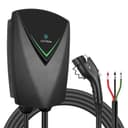 Lectron Nexus 48A J1772 A full 48 amps with nothing to log into. Lectron's Nexus body is IP66-sealed for an outdoor wall, the cable is a heavy 15 mm compound the brand says is built to stay flexible in freezing weather, and the safety paperwork is the real thing — ETL to UL 2594/2231/2251, plus ENERGY STAR. Hardwired only, and there is no app, which is the entire point. | Hardwired 48A, nothing to log into | $449.99 · View on Amazon Price as of October 18, 2026. #ad How we’re funded |
| 2 | 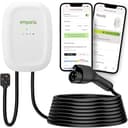 Emporia Level 2 EV Charger The value pick that doesn't feel cheap: a full 48 amps, ENERGY STAR listing, WiFi with genuine energy monitoring, and a 25 ft cable — for well under what the big names charge. It's the one we point most people to first. | 48A with real energy measurement | |
| 3 | 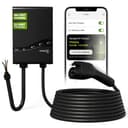 Emporia Pro The answer to a panel that says no. The Pro ships with Emporia's Vue 3 energy monitor in the same box, watches what the rest of the house is drawing, and throttles the car in real time so the total never exceeds what the service can carry — which is how a 48-amp charger ends up on a panel that a load calculation says has no room for one. You pay roughly Home Flex money for it, and only the load management justifies that. | If you want the monitor in the box | $599.00 · View on Amazon Price as of October 18, 2026. #ad How we’re funded |
| 4 | 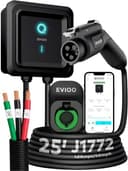 EVIQO 48A Level 2 Charger A lot of charger for the money: a full 48 amps, WiFi with scheduling, ENERGY STAR, and the longest usable reach in this group thanks to a 25 ft cable plus a 40-inch input lead. A strong value alternative to Emporia if you want maximum reach. | If you want an app and the longest reach |
Frequently asked questions
Is the Lectron Nexus 48A or the Emporia Level 2 faster?
Neither, on a hardwired circuit. Both publish 48 amps and 11.5 kW, which at a typical 3.5 miles per kWh is roughly 40 miles of range per hour by our arithmetic. The only speed difference appears if you install the Emporia on a NEMA 14-50 plug instead of hardwiring it, which caps it at 40 amps and 9.6 kW. The Lectron has no plug-in option at all, so it is always at 48.
Does the Emporia Level 2 need the Vue monitor to work?
No - it charges fine without it. But Emporia's own comparison page footnotes Home Energy Monitoring, Solar Charging Integration, Peak Demand Management and PowerSmart Load Management as 'Requires Vue Home Energy Monitor', and its store listing says PowerSmart 'can also be added to the Classic charger for an additional cost'. So the features that distinguish it from a no-app charger are a separate purchase. Scheduling is not.
Can you install the Lectron Nexus 48A on a NEMA 14-50 outlet?
No. Lectron's own product page specifies hardwire-only installation by a licensed electrician on a dedicated 240-volt circuit. If a plug-in install is what you want, the Emporia is sold for either, and our plug-in roundup covers the segment properly.
Which one is better outdoors?
Emporia, on published evidence. Both are sold for outdoor use - Lectron publishes an IP66 housing and Emporia publishes a watertight NEMA Type 4 enclosure - but Emporia's spec sheet also publishes an operating temperature range of -22F to 122F and Lectron publishes no temperature range for the Nexus 48A at all. That absence is a finding, not a gap in our research.
Do I lose anything by buying a charger with no app?
Scheduling, mainly - and most EVs schedule charging themselves from the car's own menu, which makes the charger's scheduler redundant. What you cannot replace from the car is per-session energy measurement, which is what you want if you are billing someone, chasing a utility rebate, or reconciling a solar setup. Our smart-versus-dumb comparison lays out which app features people actually open.
Sources
- Lectron — NEXUS Level 2 J1772 EV Charging Station, 240V, 48 Amp, Hardwired — Lectron's own product page: up to 48 A continuous at 240 V for 11.5 kW, hardwire-only install by a licensed electrician on a dedicated 240 V circuit, IP66 weatherproof housing for indoor or outdoor use, 23 ft output cable of 15.0 mm (±0.3 mm) heavy-duty compound the brand states is 'engineered to stay flexible and easy to wrap around the wall mount, even in freezing weather', wall-mount J-hook and plug holder included, ETL listed to UL 2594 / UL 2231 / UL 2251 with ENERGY STAR and FCC certification, and a 3-year Lectron warranty. No operating-temperature range and no Wi-Fi or app support are published for this model (accessed August 20, 2026)
- Emporia — Classic Level 2 EV Charger spec sheet (PDF) — Emporia's own spec sheet: watertight NEMA Type 4 indoor/outdoor enclosure, operating temperature -22F to 122F, 25 ft cable (accessed July 20, 2026)
- Emporia - EV Chargers (Classic vs Pro) — Emporia's own Classic-vs-Pro comparison page: both units publish a 25 ft cable, 'NEMA Plug or Hardwire' installation, 'Up to 48A' and a 3-year warranty. The feature rows list Smart Scheduling, Home Energy Monitoring, Solar Charging Integration, Peak Demand Management and PowerSmart Load Management, footnoted for the Classic as 'Requires Vue Home Energy Monitor' and for the Pro as 'Requires Vue Home Energy Monitor and PowerSmart upgrade'. The Classic section states 'Add the Vue Home Energy Monitor and we'll manage Peak Demand and automatically charge with your excess solar power', and Emporia's platform lists 'Excess Solar Management' as a named feature. The page also states 'PowerSmart comes standard with the Emporia Pro, but can be added to the Emporia Classic for an extra cost'. Emporia's own listed prices on the date accessed are not reprinted here. RE-READ October 17, 2026 for the smart-home roundup: every figure above is unchanged, the page additionally publishes 'Intelligent Load Sharing' for multiple chargers on one circuit and an in-app assistant ('Ask questions about your energy usage and get instant answers'), and it names NO third-party or smart-home integration of any kind - no Alexa, Google Home, Apple Home / HomeKit, Matter, Home Assistant, IFTTT, OCPP or public API appears anywhere on it (accessed October 17, 2026)
- Emporia - Classic Level 2 EV Charger (store listing) — Emporia's own store listing for the Classic: 'Need advanced features like home energy monitoring, solar charging, or PowerSmart Load Management? Check out the Emporia Pro EV Charger', and 'PowerSmart can also be added to the Classic charger for an additional cost if your electrical panel doesn't have enough capacity for a Level 2 charger'. The listing's install notes describe continuous Level 2 charging as 'a fundamentally different demand than the dryers and ranges most NEMA 14-50 outlets were designed for' (accessed September 17, 2026)
- ENERGY STAR — Electric Vehicle Chargers — ENERGY STAR on EVSE efficiency: certified chargers use about 40% less energy in standby than non-certified units (accessed July 19, 2026)
- UL Solutions — EV Charging Infrastructure Services — UL on EVSE safety certification: ANSI/UL 2594 is the Standard for Electric Vehicle Supply Equipment (accessed July 19, 2026)
- NFPA — Using the Latest NEC for EV Charger Installations — NFPA on NEC (NFPA 70) Article 625: EV charging is a continuous load, so circuits are sized to 125% of load (the 80% rule) (accessed July 19, 2026)
- U.S. DOE Alternative Fuels Data Center — Electric Vehicle Charging Stations — US DOE on charging levels: Level 1 (~1.9 kW, ~5 mi/hr), Level 2 (2.9-19.2 kW, ~7.2 kW typical residential, ~25 mi/hr), and DC fast charging (accessed July 19, 2026)
- FuelEconomy.gov — Electric Vehicles: Learn More About the Label — DOE/EPA on EV efficiency: kWh per 100 miles and MPGe, accounting for AC charging losses (accessed July 19, 2026)
Keep reading
Lectron vs ChargePoint Home Flex
The same no-software charger against the category's default pick, where the software gap is much wider.
Read the comparisonBest 48-amp chargers
The whole 48-amp class ranked, with the 60-amp circuit every one of them depends on.
See the picksSmart vs dumb chargers
The decision underneath this comparison, argued on which app features get opened twice.
Read the comparisonBest chargers with no app
Where the Lectron leads: the units built to do one job with nothing to log into.
See the picks