Level 2 EV Charger Installation Cost
The charger is often the cheapest part. Here's the full cost of a working home setup — hardware, labor, permit and the panel upgrade that can double the bill — with the numbers that move it.
How this is funded: we earn a commission if you buy through our links, at no extra cost to you. It never changes which product we recommend, and we’ll tell you when we’d skip one. Full disclosure.
The price on a charger’s box tells you almost nothing about what a working setup in your garage will cost, because most of the money is in the electrical work behind it. That work varies enormously — a charger mounted next to a modern panel is a quick, cheap job; one on the far side of an old house with a full panel is a project. Here’s the whole thing, itemized, so the electrician’s quote holds no surprises. These are typical ranges, not a quote — your only real number comes from a licensed electrician who sees your panel.
The cost, line by line
| Line item | Typical range | What moves it |
|---|---|---|
| The charger (hardware) | $250–$700 | Amps, smart features, brand, build quality |
| Electrician labor + materials | $300–$1,200 | Distance from panel, conduit, wall type, outdoor run, local wage rates |
| Breaker + circuit | $50–$300 | 40A vs 48A; GFCI breaker for a plug-in circuit |
| Permit + inspection | $50–$300 | Local jurisdiction fees |
| Panel upgrade (if needed) | $1,000–$3,000+ | Only if your panel lacks spare capacity |
For a common, uncomplicated install — a modern panel with room, a charger a short run away — most people land somewhere around $700 to $2,000 all-in, charger included. The panel-upgrade row is the one that turns a routine job into an expensive one, which is why we’d check that before anything else.
Two of those five rows are effectively fixed and three are not. The charger is a price you can shop for. The permit is set by your city. Everything else — labor, materials, and whether the panel row appears at all — is decided by your house. The rest of this page takes those three apart in order of how much money is at stake.
1. Panel capacity: the row that decides everything else
A Level 2 charger is a continuous load in the eyes of the National Electrical Code, which means the circuit feeding it is sized at 125% of its output — the familiar “80% rule” read from the other end. A 40-amp charger needs a 50-amp circuit. A 48-amp charger needs a 60-amp one. That is not a recommendation you can shave; it is what the inspector checks.
So the question is not “does my panel have a free slot” but “does my service have 50 or 60 spare amps of headroom after everything else in the house”. A 200-amp service in a modern home usually does. A 100-amp service feeding electric heat, a range and a dryer usually does not, and that is where the $1,000–$3,000+ row appears. Our panel capacity guide walks the load calculation an electrician will run, and service upgrades covers what the expensive version of the answer involves.
Three cheaper ways out exist and are worth asking about before you accept an upgrade quote:
- Dial the charger down. Nearly every good charger lets you set its amperage. A 48-amp unit run at 32 amps needs a 40-amp circuit and still adds around 27 miles of range an hour — more than most people use in a day. You keep the hardware and drop the upgrade.
- Use a load manager. A load-management device or a charger with dynamic load balancing watches the whole-house draw and throttles the charger when the dryer and oven are running, so the combined load never exceeds the service. See load management; it turns a service upgrade into an accessory surprisingly often.
- Feed it from a subpanel. On a long run or a detached garage, a subpanel is sometimes cheaper than one long dedicated circuit, and it leaves capacity for whatever comes next.
If the panel is genuinely the constraint, chargers for a small electrical panel is the shortlist built around it.
2. Labor: what you are actually paying for, and why it varies
This is the line people underestimate, because it is priced by the job rather than printed on a box. What the electrician is billing for is roughly this: a load calculation, the breaker, the conductor run from panel to charger, conduit and boxes, mounting, terminations at both ends, testing, and the paperwork for the permit and inspection. On a short, simple run that can be a few hours. Across a finished house it can be a day or more, and the materials climb with the copper.
The two variables that move it most:
Distance from the panel. Labor and materials both scale with the run. A charger on the garage wall beside the panel is the cheap case. One across the house needs long conduit, possibly fished through finished walls, and the hours climb with every obstacle. Ten minutes with a tape measure before anyone quotes is the cheapest saving available on this whole page — where the charger goes covers how to pick the spot. Long runs also invite voltage drop, which pushes the electrician to a heavier conductor: wire size and breaker sizing has the table.
Where you live. The same job is not the same price in two states, because the labor behind it is not. The Bureau of Labor Statistics puts the mean hourly wage for electricians at $34.37 nationally in May 2025, ranging from $25.71 in Arkansas to $47.96 in Oregon — about a 1.9-to-1 spread, and it flows straight into this row. We have indexed the $300–$1,200 range above by every state’s wage in EV charger installation cost by state, so you can see what a normal quote looks like where you actually live before you get one.
One thing that wage figure is not: your billed rate. A contractor’s hourly charge carries overhead, insurance, the vehicle, the licence and margin on top of what the technician earns, and typically runs to a multiple of it. The wage is useful as an index across states, not as a number to multiply by hours. Hiring the electrician covers how to read a quote and what should be itemized in it.
3. Plug-in vs hardwired: a real fork in the bill
A NEMA 14-50 outlet plus a plug-in charger is often marginally cheaper than hardwiring and keeps the unit movable, which matters if you rent or expect to move. Two things narrow the gap. The receptacle itself needs to be an EV-grade one rather than the cheapest dryer outlet on the shelf, and the code generally requires a GFCI breaker on that circuit — a part that costs several times a standard breaker and is the reason the “breaker + circuit” row above stretches to $300.
Hardwiring is required to reach a full 48 amps, because no residential receptacle is rated for the 60-amp circuit that needs, and it is the better answer for a fully exposed outdoor wall — no plug and no receptacle to weatherproof. Our hardwired vs plug-in comparison works through the trade properly, and NEMA 14-50 vs NEMA 6-50 covers the two receptacle types you will be offered.
There is one case where this whole page mostly stops applying: if a suitable 240V outlet is already on the garage wall, a plug-in charger turns an installation into a purchase. Have an electrician confirm the circuit and breaker are right for continuous EV duty first — an existing dryer outlet is often on a circuit that is not.
4. The permit: small, non-optional, and worth it
A new 240V branch circuit is a permitted job in most jurisdictions. The fee is typically $50 to $300, set locally, and a competent electrician pulls it as a matter of course and builds it into the quote. If a quote is conspicuously cheap and makes no mention of a permit, that is usually the reason.
What the fee buys is an independent inspection of a high-current circuit in your house, which is exactly the circuit you want someone to check. It also protects two things people forget until they matter: your insurance position if there is ever a fire, and the sale of your home, where an unpermitted circuit surfaces during the buyer’s inspection at the worst possible moment. Several utility rebate programs also require a permitted, inspected install as a condition of paying out. Permits and inspection covers what the inspector actually looks at.
How to bring the cost down
Four levers, in descending order of how much they save.
Avoid the panel upgrade if you honestly can. Dialing a charger down or adding load management is a few hundred dollars against a few thousand. Buy the amps you can actually use — paying for a 48-amp charger and a panel upgrade to feed it only pays off if you genuinely need the speed, and 40A vs 48A is the honest comparison.
Mount the charger close to the panel. If your garage layout allows it, this is the cheapest way to cut labor, and the decision costs nothing to make.
Claim a rebate — before the work, not after. The federal 30C credit ended for chargers placed in service after June 30, 2026, but the utility programs did not go with it. DOE’s Alternative Fuels Data Center currently lists 114 utilities offering a residential Level 2 charger purchase rebate, 74 offering an installation rebate and 17 offering a make-ready or pre-wiring rebate, alongside 109 utilities with an EV time-of-use rate that cuts what you pay to charge afterwards. Most require pre-approval and many require an ENERGY STAR certified unit, so check utility rebates and our incentives guide before you buy anything.
Get more than one quote, and compare like for like. Quotes for this job vary more than the work does. Ask each electrician to itemize the breaker, the run length, the conduit and the permit, so you are comparing scope rather than confidence.
What we’d buy for the install you’re planning
The cheapest install is the one that fits the circuit you already have, which is why a charger with adjustable amperage is worth more on this page than on a spec sheet.
Quick picks
Ranked on published specs, charging speed, electrical fit and value. Select a row to jump to the full write-up. We have not bench-tested these chargers — here is exactly what we do instead.
| # | Product | Best for | Price |
|---|---|---|---|
| 1 | 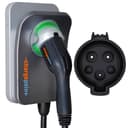 ChargePoint Home Flex The safest default for most homes: you set the amperage in the app to 16, 24, 32, 40, 48 or 50A, so one charger fits whatever circuit your panel can spare today and scales up if you upgrade later. The app is the most mature here, firmware arrives over the air, and the warranty is long. | Best if the circuit is uncertain | $516.71 · View on Amazon Price as of October 18, 2026. #ad How we’re funded |
| 2 |  Emporia Level 2 EV Charger The value pick that doesn't feel cheap: a full 48 amps, ENERGY STAR listing, WiFi with genuine energy monitoring, and a 25 ft cable — for well under what the big names charge. It's the one we point most people to first. | Best value, hardwired or plug-in | |
| 3 | 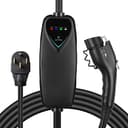 Lectron 40A Portable Level 2 Charger One of the cheapest honest ways into real Level 2 charging. Plug it into a NEMA 14-50 outlet, get a genuine 40A / 9.6 kW, and unplug it to take on a trip. No app and a shorter warranty are the trade-offs for the price. | Cheapest if a 14-50 already exists | $269.99 · View on Amazon Price as of October 18, 2026. #ad How we’re funded |
Two more pages if this one hasn’t settled it. If you’re weighing doing part of the work yourself, can you install a Level 2 charger yourself splits the job into the half that’s a homeowner task and the half that isn’t. And if you want to see the whole sequence before you commit, the installation process walks from first call to final inspection.
General guidance, not electrical advice. Level Two Club is written by an EV-charging enthusiast, not a licensed electrician. A Level 2 charger runs on a 240V circuit; hardwiring, breaker sizing and load calculations must follow the National Electrical Code and your local code, and a permitted install is done by (or inspected for) a licensed electrician. Use our numbers to plan the conversation, not to skip it.
Frequently asked questions
How much does it cost to install a Level 2 EV charger?
For a typical install, budget roughly $700 to $2,000 all-in: $250-$700 for the charger and a few hundred to about $1,200 for the electrical work, depending mainly on how far the charger sits from your panel and whether the panel has spare capacity. A panel upgrade, if you need one, can add $1,000-$3,000 or more.
What makes EV charger installation more expensive?
Four things: a long wiring run from the panel to the charger, a full electrical panel that needs upgrading or a subpanel, running conduit through finished walls or outdoors, and a location like a detached garage that requires trenching. A charger next to a panel with spare capacity is the cheap case.
How much of the bill is labor?
On a straightforward job, most of it. The charger is a fixed price you can shop for; the electrical work is priced by the hour and by the run, and it is the line that varies by where you live. Electrician wages range from $25.71 an hour in Arkansas to $47.96 in Oregon on BLS's May 2025 data — a spread of about 1.9 to 1 that flows straight into the labor line.
Is it cheaper to plug in or hardwire an EV charger?
Installing a NEMA 14-50 outlet and plugging in is often slightly cheaper and keeps the charger movable, but code generally requires a GFCI breaker on that circuit, which narrows the gap. Hardwiring is required for a full 48 amps and is preferred for fully outdoor installs.
Does a Level 2 charger install include a permit?
It should. Most jurisdictions require a permit and inspection for a new 240V circuit, usually a modest line item of roughly $50 to $300. That inspection protects you and your insurance — skipping it to save money is a false economy, and an unpermitted circuit can surface expensively when you sell the house.
How much does a panel upgrade for an EV charger cost?
Roughly $1,000 to $3,000 or more, and it is by far the largest single variable on this bill. It is only needed if your service cannot spare the capacity for a new continuous 40 or 48-amp load. Before accepting one, ask whether a load manager or a charger dialed down to a lower amperage solves the problem instead — often it does, for a fraction of the money.
Can I reduce the installation cost?
Three levers work. Mount the charger as close to the panel as your layout allows, because labor scales with the run. Buy only the amps you can actually use, so you are not paying for a panel upgrade to feed a charger you don't need. And check for a utility rebate before the work starts — DOE lists 114 utilities rebating the charger and 74 rebating the installation, and nearly all require you to apply first.
Sources
- U.S. DOE Alternative Fuels Data Center — Charging Electric Vehicles at Home — US DOE on home EV charging: most owners charge overnight on Level 1 or Level 2, installs follow NEC Article 625, with example home-charging costs (accessed July 19, 2026)
- NFPA — Using the Latest NEC for EV Charger Installations — NFPA on NEC (NFPA 70) Article 625: EV charging is a continuous load, so circuits are sized to 125% of load (the 80% rule) (accessed July 19, 2026)
- U.S. Bureau of Labor Statistics — Occupational Employment and Wage Statistics, Electricians (47-2111) — BLS's official May 2025 OEWS estimates for electricians (SOC 47-2111): 757,220 employed nationally, mean hourly wage $34.37, mean annual wage $71,490 and median annual wage $63,190. The state-level mean hourly wages used in our table were pulled series by series from the BLS public data API (api.bls.gov/publicAPI/v2, OEWS state series for occupation 47-2111, data type 03 'hourly mean wage', survey year 2025) on the date accessed, covering all 50 states and the District of Columbia (accessed September 3, 2026)
- U.S. DOE Alternative Fuels Data Center — Utility Incentives — DOE's catalog of utility incentives by customer type: 114 utilities listed offering residential Level 2 charging station purchase rebates and 74 offering Level 2 installation rebates, plus make-ready/pre-wiring rebates, managed-charging programs and EV time-of-use rates. RE-READ September 3, 2026: the residential counts were unchanged at 114 participating utilities for the EV Level 2 Charging Station Purchase Rebate and 74 for the EV Level 2 Charging Station Installation Rebate, alongside 17 for the Make-Ready or Pre-Wiring Rebate for EV Chargers, 109 for the EV Time-of-Use (TOU) Rate and 9 for the EV Managed Charging Program (accessed September 3, 2026)
- ENERGY STAR — Electric Vehicle Chargers — ENERGY STAR on EVSE efficiency: certified chargers use about 40% less energy in standby than non-certified units (accessed July 19, 2026)
Keep reading
Black Friday & Cyber Monday EV charger deals
The install never goes on sale, but the charger sometimes does. What has historically discounted, and whether waiting for November is worth it.
See the deals hubInstall cost by state
The labor line is priced locally. Every state's electrician wage from BLS, indexed into an electrical-work and all-in range.
Find your stateHiring the electrician
Where to find one who has done this, the five questions to ask, and how to read the quotes.
Vet your installerPanel capacity
The single biggest cost wildcard — check whether your panel needs an upgrade first.
Check your panelNEMA 14-50 outlet
The plug-in route explained, including the GFCI-breaker code that adds cost.
About the outletBest Level 2 EV chargers
Once you know the install cost, pick the charger — ranked, with live prices.
See the best chargersCharger tax credits & rebates
Utility and state rebates can still cut the install bill — and why the federal 30C credit no longer does.
Find incentives