Level Two Club

Best J1772 EV Chargers

Our top pick is the Emporia Level 2 EV Charger, for anyone who wants 48 amps, a real app and a 25-foot cable without paying brand money; the budget pick is the ELEGRP 40A portable, the cheapest way we can find onto a genuine 40-amp J1772 cable. Every unit here plugs straight into every non-Tesla EV sold in North America.

By Stephen V.Last updated How we pick

If you drive anything other than a Tesla, J1772 is your connector and there is nothing to decide about it — so this page is really about which J1772 charger to buy. Our top pick is the Emporia Level 2 EV Charger, which gives you 48 amps hardwired or 40 on a NEMA 14-50 plug, a 25-foot cable, a NEMA 4 body and an app that actually tracks energy, for mid-market money. The budget pick is the ELEGRP 40A portable— the cheapest route we can find to a full 40-amp J1772 cable, with the same 25-foot reach and selectable output from 16 to 40 amps, and nothing to log into.

J1772 is the SAE standard AC connector, and it is on the charge port of every non-Tesla electric and plug-in hybrid vehicle sold in North America for the last decade — Chevrolet, Ford, Hyundai, Kia, Volkswagen, BMW, Nissan, Toyota, Volvo, Rivian, Polestar and the rest. Sixteen of the twenty-two chargers in our registry ship with a J1772 cable, which makes it the deepest field on this site and the one with the most genuine price competition in it.

The question worth asking in 2026 is not which J1772 charger but whether— because NACS, the Tesla-derived connector now standardised as SAE J3400, is appearing on new non-Tesla cars. We answer that below, with the brand-by-brand availability table, and the short version is that it changes much less than it sounds like it should. If you have already decided the other way, our NACS picks are the mirror of this page, and J1772 vs NACS explains the two connectors without a buying agenda.

How this is funded: we earn a commission if you buy through our links, at no extra cost to you. It never changes which product we recommend, and we’ll tell you when we’d skip one. Full disclosure.

Quick picks

Ranked on published specs, charging speed, electrical fit and value. Select a row to jump to the full write-up. We have not bench-tested these chargers — here is exactly what we do instead.

#ProductBest forPrice
1
Emporia Level 2 EV Charger

Emporia Level 2 EV Charger

The value pick that doesn't feel cheap: a full 48 amps, ENERGY STAR listing, WiFi with genuine energy monitoring, and a 25 ft cable — for well under what the big names charge. It's the one we point most people to first.

Best overall
$449.00 · View on Amazon

Price as of November 12, 2026. #ad How we’re funded

2
ChargePoint Home Flex

ChargePoint Home Flex

The safest default for most homes: you set the amperage in the app to 16, 24, 32, 40, 48 or 50A, so one charger fits whatever circuit your panel can spare today and scales up if you upgrade later. The app is the most mature here, firmware arrives over the air, and the warranty is long.

Best adjustable
$549.00 · View on Amazon

Price as of November 12, 2026. #ad How we’re funded

3

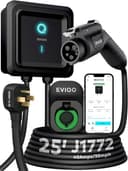
EVIQO 48A Level 2 Charger

A lot of charger for the money: a full 48 amps, WiFi with scheduling, ENERGY STAR, and the longest usable reach in this group thanks to a 25 ft cable plus a 40-inch input lead. A strong value alternative to Emporia if you want maximum reach.

Best value at 48 amps
4
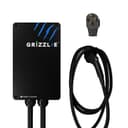
Grizzl-E Classic

Grizzl-E Classic

A deliberately dumb charger, and that is the point: no app, no cloud account, no firmware to fail — just a die-cast aluminum box built for a Canadian winter and rated to keep working outdoors. It went missing from Amazon for most of September 2026 and is listed again as of our 2026-09-28 check. If you want the same build with a WiFi radio in it, that is the Classic Connect.

Best with no app at all
$299.99 · View on Amazon

$399.0025% off

Price as of November 12, 2026. #ad How we’re funded

5
EVIQO 40A NEMA 14-50 Charger

EVIQO 40A NEMA 14-50 Charger

The most charger you can get without an electrician's invoice. It plugs into a NEMA 14-50 outlet for a full 40 amps, keeps the WiFi app, the ENERGY STAR listing and the 25 ft cable from EVIQO's hardwired unit, and can be unplugged and taken with you when you move.

Best plug-in
6
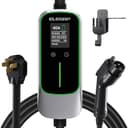
ELEGRP 40A Portable Level 2 Charger

ELEGRP 40A Portable Level 2 Charger

The full-speed portable. A genuine 40 amps on a NEMA 14-50, an IP67 station body rated -22F to 122F, and a 25-foot cable - the longest here by five feet - for less than the 32A unit costs. It is the heaviest thing here to coil and there is no app, but if the portable is also going to be your everyday charger, this is the one that does not make you choose.

Budget pick
$209.99 · View on Amazon

Price as of November 12, 2026. #ad How we’re funded

The picks in full

#1Best overall

Emporia Level 2 EV Charger

The value pick that doesn't feel cheap: a full 48 amps, ENERGY STAR listing, WiFi with genuine energy monitoring, and a 25 ft cable — for well under what the big names charge. It's the one we point most people to first.

Strengths

  • 48A output and ENERGY STAR at a value price
  • The app actually tracks energy use, not just on/off
  • Long 25 ft cable and a remote holster in the box

Trade-offs

  • 48A hardwired needs a 60A circuit; on a NEMA 14-50 plug it's limited to 40A
  • App polish trails ChargePoint's, and support is smaller
Max output
48 A
Power
11.5 kW
Connector
J1772
Install
Hardwired or NEMA 14-50 plug
Cable length
25 ft
Warranty
3 years
WiFi + app
Yes
Certifications
UL listed, ENERGY STAR

Our charging-speed math. At 48A (11.5 kW) and ~3.5 miles per kWh it adds about 40 miles of range per hour hardwired; on a 40A plug-in circuit, about 34.

Build note. 48A hardwired, or 40A on a NEMA 14-50 outlet, with a 25 ft cable and remote holder.

Specs read from the manufacturer spec sheet, on October 26, 2026. “Not published” means the brand does not state that figure.

#2Best adjustable

ChargePoint Home Flex

The safest default for most homes: you set the amperage in the app to 16, 24, 32, 40, 48 or 50A, so one charger fits whatever circuit your panel can spare today and scales up if you upgrade later. The app is the most mature here, firmware arrives over the air, and the warranty is long.

Strengths

  • Adjustable 16-50A means it fits a small panel now and a bigger circuit later
  • The most mature app of the group — scheduling, reminders, usage history, over-the-air firmware
  • 3-year warranty and a long 23 ft cable
  • Sold hardwired or on a NEMA 6-50 or NEMA 14-50 plug, in J1772 or NACS

Trade-offs

  • You pay a premium over value 48A chargers for the app and brand
  • Full 50A output needs a 70A circuit by ChargePoint's own 125% breaker rule
  • The plug-in SKUs cap at 40A, so the top speed is a hardwired-only feature
Max output
50 A
Power
12 kW
Connector
J1772
Install
Hardwired, NEMA 6-50 or NEMA 14-50
Cable length
23 ft
Warranty
3 years
WiFi + app
Yes
Certifications
UL/cUL listed, ENERGY STAR

Our charging-speed math. At its 50A max (12 kW) and a typical 3.5 miles per kWh, the Home Flex adds roughly 42 miles of range per hour. Dial it down to 40A to fit a 50A circuit and you get about 34. ChargePoint's own, more conservative claim is up to 37 miles per hour hardwired and 30 on the plug-in SKUs.

Build note. Amperage is set in the app to 16, 24, 32, 40, 48 or 50A. The plug-in SKUs are capped at 40A, so the full 50A is a hardwired-only figure. ChargePoint's own page gives the circuit as a range rather than a single figure — "circuits rated from 20 to 80A" hardwired and "40 or 50A" plug-in — and the datasheet requires the dedicated dual-pole breaker be rated for 125% of maximum load, which puts the full 50A on a 70A circuit. UL and cUL listed per UL 2594 and UL 2231; firmware updates over the air, and the station stores up to 90 days of session data locally if the network drops.

Specs read from the manufacturer spec sheet, on October 31, 2026. “Not published” means the brand does not state that figure.

#3Best value at 48 amps

EVIQO 48A Level 2 Charger

A lot of charger for the money: a full 48 amps, WiFi with scheduling, ENERGY STAR, and the longest usable reach in this group thanks to a 25 ft cable plus a 40-inch input lead. A strong value alternative to Emporia if you want maximum reach.

Strengths

  • 48A output with WiFi scheduling at a value price
  • 25 ft charging cable plus a 40 in input cable — excellent reach
  • UL, ETL, FCC and ENERGY STAR listings

Trade-offs

  • Hardwired version needs a 60A circuit and an electrician
  • Smaller brand with a shorter track record than ChargePoint or Wallbox
Max output
48 A
Power
11.5 kW
Connector
J1772
Install
Hardwired
Cable length
25 ft
Warranty
3 years
WiFi + app
Yes
Certifications
UL, ETL, FCC, ENERGY STAR

Our charging-speed math. At 48A (11.5 kW) and ~3.5 miles per kWh, about 40 miles of range per hour.

Build note. Ships with a 25 ft charging cable plus a 40 in input cable — among the longest reach in class.

Specs read from the manufacturer spec sheet, on July 19, 2026. “Not published” means the brand does not state that figure.

#4Best with no app at all

Grizzl-E Classic

A deliberately dumb charger, and that is the point: no app, no cloud account, no firmware to fail — just a die-cast aluminum box built for a Canadian winter and rated to keep working outdoors. It went missing from Amazon for most of September 2026 and is listed again as of our 2026-09-28 check. If you want the same build with a WiFi radio in it, that is the Classic Connect.

Strengths

  • Rugged die-cast aluminum, NEMA 4 / IP67 — built for outdoors and cold
  • No app or account to break; nothing to update
  • UL listed (file E510712) and ENERGY STAR, with a 3-year warranty

Trade-offs

  • Its Amazon listing went dark for most of September 2026 — stock can be patchy
  • 40A caps it below the 48A chargers on charging speed
  • No scheduling or energy tracking — you'd lean on the car's app instead
Max output
40 A
Power
9.6 kW
Connector
J1772
Install
NEMA 14-50 plug
Cable length
25 ft
Warranty
3 years
WiFi + app
No
Certifications
UL listed (file E510712), ENERGY STAR

Our charging-speed math. At 40A (9.6 kW) and ~3.5 miles per kWh it adds roughly 34 miles of range per hour — plenty for an overnight top-up.

Build note. Die-cast aluminum NEMA 4 / IP67 enclosure with no WiFi — a simple, reliable design.

Specs read from the manufacturer spec sheet, on September 28, 2026. “Not published” means the brand does not state that figure.

#5Best plug-in

EVIQO 40A NEMA 14-50 Charger

The most charger you can get without an electrician's invoice. It plugs into a NEMA 14-50 outlet for a full 40 amps, keeps the WiFi app, the ENERGY STAR listing and the 25 ft cable from EVIQO's hardwired unit, and can be unplugged and taken with you when you move.

Strengths

  • Plugs into an existing NEMA 14-50 outlet — no hardwiring, and it comes with you
  • Real WiFi app with 6-40A adjustment, scheduling and energy tracking
  • 25 ft charging cable plus a 40 in input lead, in an IP66 / NEMA 4 body

Trade-offs

  • 40 amps is the plug-in ceiling — for 48A you need the hardwired version
  • Needs a proper EV-grade 14-50 receptacle (an old dryer outlet is not the same thing)
  • Smaller brand with a shorter track record than ChargePoint or Wallbox
Max output
40 A
Power
9.6 kW
Connector
J1772
Install
NEMA 14-50 plug
Cable length
25 ft
Warranty
3 years
WiFi + app
Yes
Certifications
UL, ETL, FCC, ENERGY STAR

Our charging-speed math. At 40A (9.6 kW) and ~3.5 miles per kWh it adds roughly 34 miles of range per hour — an overnight charge for almost any daily commute.

Build note. Plug-in Gen-2 unit: 25 ft charging cable plus a 40 in NEMA 14-50 input lead, with app-adjustable output from 6 to 40 amps.

Specs read from the manufacturer spec sheet, on August 11, 2026. “Not published” means the brand does not state that figure.

#6Budget pick

ELEGRP 40A Portable Level 2 Charger

The full-speed portable. A genuine 40 amps on a NEMA 14-50, an IP67 station body rated -22F to 122F, and a 25-foot cable - the longest here by five feet - for less than the 32A unit costs. It is the heaviest thing here to coil and there is no app, but if the portable is also going to be your everyday charger, this is the one that does not make you choose.

Strengths

  • A real 40A / 9.6 kW, selectable down to 32, 24, 20 or 16 amps for a smaller circuit
  • 25 ft cable - the longest here, and enough to cross a garage
  • IP67 station body rated -22F to 122F, with a 1-to-12-hour delayed-start timer built in

Trade-offs

  • A 25 ft cable is the heaviest thing here to coil and carry - portability is relative
  • The connector is rated IP54, well below the station's IP67, so keep it off wet ground
  • No app, and ELEGRP does not publish an ENERGY STAR listing for this SKU
Max output
40 A
Power
9.6 kW
Connector
J1772
Install
NEMA 14-50 plug
Cable length
25 ft
Warranty
2 years
WiFi + app
No
Certifications
ETL listed

Our charging-speed math. At 40A (9.6 kW) and ~3.5 miles per kWh it adds roughly 34 miles of range per hour - the same speed as any 40A wall unit.

Build note. Portable plug-in unit with selectable output at 16, 20, 24, 32 or 40 amps and a 1-to-12-hour delayed-start timer, on a 25 ft cable; IP67 station and IP54 connector, rated -22F to 122F.

Specs read from the manufacturer spec sheet, on August 25, 2026. “Not published” means the brand does not state that figure.

What we ranked on

Every charger on this page has the same connector, which strips out the one variable that usually dominates this category and leaves the honest ones. Four questions did the ranking, and all four are answerable from a manufacturer’s own published page rather than from an impression.

One: how many amps, and can the car use them?Forty-eight amps on a 60-amp circuit is 11.5 kW, which by our reference arithmetic of roughly 3.5 miles per kWh is about 40 miles of range an hour. Forty amps on a 50-amp circuit is 9.6 kW and about 34. That six-mile-an-hour gap is the entire difference between the two tiers this page ranks, and over a ten-hour overnight charge it is sixty miles — real, but not usually worth a panel upgrade. The ceiling is often the car rather than the wall unit: onboard chargers explained is the page to read before paying for amps, and what size charger do I need works it through for a specific vehicle.

Two: how does it install, and does that cap the amps? Hardwired units reach 48 amps. Plug-in units cap at 40, universally and without exception, because a NEMA 14-50 receptacle sits on a 50-amp circuit and the National Electrical Code treats charging as a continuous load that may use no more than 80% of it. That is not a brand decision, which is why every plug-in charger from every manufacturer stops at forty. Hardwired versus plug-in is the decision to settle before you shortlist hardware.

Three: what is published about the enclosure, and is there a temperature range to go with it?An enclosure rating with no temperature range beside it is half a claim. The Grizzl-E units publish IP67 sealing in a cast-aluminium body rated -22°F to 122°F. Autel publishes IP65 / NEMA 4X with -40°F to 131°F, the widest range in our registry. EVIQO publishes “IP66/NEMA-4” and gives its temperature figures as tested rather than as an operating range, which is a weaker claim worded carefully. The two cheap portables publish an IP figure for the station and nothing about temperature at all. NEMA and IP ratings explained covers what each code actually promises.

Four: which laboratory tested it, and to which standard?The standard number matters less than who did the testing, and the field is uneven. The ChargePoint publishes UL and cUL listing to UL 2594 and UL 2231. Lectron publishes ETL listing to UL 2594, UL 2231 and UL 2251. Emporia publishes UL listing plus ENERGY STAR. EVIQO publishes three different certification strings on a single page. Autel publishes CSA and ENERGY STAR and claims no UL listing anywhere — a documentation difference between accredited laboratories rather than a safety gap, but worth knowing before you fill in a rebate form. Our certifications guide explains what each mark is worth and the rebate page covers which marks utilities ask for.

Which brands publish which connector

Before the argument about whether J1772 is a dead end, here is the field as each brand documents it — because the answer turns out to be sitting in the product catalogues rather than in the standards bodies.

Which connector each brand we track publishes for its own lineup, read off that brand’s own pages on the dated visits listed in our sources. Seven of the nine brands here offer both, which is the finding: at home the connector is usually a checkout option on identical hardware, not a different class of charger.
BrandJ1772 published?NACS published?What that means for a buyer
ChargePointYes — the Home Flex we rank is the J1772 SKUYes — NACS is offered across the rangeSame hardware, same app, same 16-50 A adjustability. The connector is a purchase option, so the decision is only which cars park in your garage
EmporiaYes — both the Level 2 and the ProThe Pro's spec sheet lists a NACS cable option; Emporia's own EV-charger page publishes no NACS SKUThe brand's J1772 line is the one it documents in full. If you need NACS from Emporia, confirm the cable at checkout rather than assuming it
Grizzl-EYes — the Classic, Classic Connect, Ultimate 48A and Duo ConnectYes — across the entire CONNECTED lineup; only the unconnected Classic 40A is J1772-onlyThe cheapest Grizzl-E is the one you cannot get with a NACS plug. That is the single clearest case on this page for buying J1772 and an adapter
LectronYes — the Nexus 48A hardwired and the 40A portableYes — a 48A hardwired, a 40A NEMA 14-50 and a portable, all NACSThe most symmetrical lineup here: for most Lectron units there is a same-power twin in the other connector, usually at the same price
AutelYes — the 40A plug-in, the 50A hardwired and the 80AAutel's own AC Elite Home page publishes an 'SAE J1772' connector; it does not document a NACS cable for this unitAutel's weather and temperature credentials, which are the best published in the registry, are a J1772 proposition on the pages we can read
EVIQOYes — both the 48A hardwired and the 40A plug-in we rankYes — EVIQO publishes a separate 'NACS / Tesla Chargers' categoryEVIQO states its NACS version is plug-and-play with Teslas and 2025+ IONIQ 5/6, and that other EVs need a NACS-to-J1772 adapter
WallboxYes — the 48A hardwired Pulsar PlusYes, but only at 40 amps on the plug-in bodyWallbox's part numbering codes the connector independently of power, and the combination that does not exist is 48 amps with a NACS cable
Ampure / ELEGRPYes — both portables are J1772Neither publishes a NACS versionAt the cheap end of portable, J1772 is effectively the only connector on offer

Two things are worth pulling out of that table. The first is that the connector is a cable, not a charger. For seven of these nine brands, the J1772 unit and the NACS unit are the same body, the same app, the same amperage and usually the same price, with a different plug moulded on the end. That is why a connector transition is far less threatening to a home-charger purchase than to, say, a public network: nothing inside the box becomes obsolete.

The second is the exception, and it cuts in J1772’s favour. Grizzl-E’s NACS option covers its entire connected lineup and excludes only the unconnected Classic 40A — the cheapest charger the brand makes, and the one that built its reputation. If what you want is that specific unit, J1772 is not a compromise, it is the only way to buy it.

Is buying J1772 in 2026 a mistake?

We get asked a version of this often enough that it deserves a direct answer rather than a hedge: no, for three reasons, with one caveat.

The fleet is J1772. Every non-Tesla EV and plug-in hybrid sold in North America over the last decade has a J1772 AC inlet, either standalone or as the upper section of a CCS1 combo port. Those cars do not stop existing when new models ship with a different port, and most people buying a home charger are buying it for a car that is already in the driveway.

The adapter direction that works is the one you would need.Teslas ship with a J1772 adapter in the car. So a J1772 wall charger already serves a Tesla today, with no extra purchase. The adapter direction carmakers actually warn about is the reverse — a NACS charger feeding a J1772 car over an adapter — and the warnings are theirs, not ours: Volkswagen states in writing not to use its NACS adapter with a Level 2 AC charger, and Kia lists no such AC adapter at all. A buyer hedging against the future by buying NACS now is choosing the harder direction.

Replacing a charger is not the failure mode.A hardwired charger is a box on a wall fed by a circuit. If, years from now, every car in the household is NACS, you change the box and keep the circuit, the conduit, the breaker and the permit — which is where the money went. The install-cost page breaks down that split, and it is lopsided.

The caveat: if the only car that will ever use this charger has a native NACS port and no CCS or J1772 inlet, buy NACS. That is a real and growing group, it includes every Tesla, and it is the whole purpose of the NACS roundup. Buying the connector your car has is always better than buying an adapter.

Where the money actually goes in this field

Because the connector is constant across all sixteen units, this page makes the price structure of the category unusually legible, and it is not what buyers expect.

Weather sealing is cheap. The Grizzl-E Classic publishes IP67 sealing in a cast-aluminium enclosure at the bottom of our mid price band, and the ELEGRP publishes an IP67 station below that. Nothing on this page is priced as though an outdoor rating were a premium feature, which is why our outdoor roundup is not a list of expensive chargers.

Amps are moderately expensive. The step from 40 to 48 amps means a hardwired install, a 60-amp circuit instead of a 50-amp one, and heavier conductors. The charger itself costs little more; the circuit does. See wire size and breaker for the actual materials.

The app is where the premium lives.The gap between a value 48-amp charger and a brand-name one is almost entirely software and support: over-the-air firmware, usage history, scheduling that survives a network drop, demand-response programmes with utilities. Whether that is worth the difference depends entirely on whether you will open the app after week three — and the honest answer for many people is no, which is why we maintain a roundup of chargers with no app at all and why one of them is a pick here. If you do want the software, the smart roundup ranks the field on what each brand actually publishes, and the cheap-smart page finds the intersection.
Frequently asked questions

What is a J1772 connector?

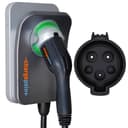
J1772 is the SAE standard connector for AC charging in North America — a five-pin round plug with a flat top, sometimes called the 'J plug'. SAE International published it as J1772 and it covers both Level 1 (120V) and Level 2 (240V) AC charging. Every electric and plug-in hybrid vehicle sold in North America other than a Tesla has a J1772 AC inlet, either on its own or as the top half of a CCS1 combo port. It carries AC only: the DC fast-charging pins on a CCS1 port are a separate pair below the J1772 section.

Is J1772 being replaced by NACS?

It is being joined, not replaced, and the timeline is long. NACS is the Tesla-derived connector now standardised as SAE J3400, and new models are starting to ship with a native NACS port. But the existing fleet is overwhelmingly J1772, the J1772 standard is not being withdrawn, and — the part that matters for a home charger purchase — the connector on the end of a wall unit is a cable. Seven of the nine brands we track publish both cables on otherwise identical hardware. Buying a J1772 charger today does not strand you: if your next car is NACS, you buy a NACS-to-J1772 adapter or you replace a cable, not a charger.

Will a J1772 charger charge a Tesla?

Yes, with an adapter, and this is the direction that works well. Teslas sold in North America ship with a J1772 adapter in the frunk or the glovebox, and Tesla owners have been plugging into J1772 destination chargers for years. The problematic direction is the other one — using a NACS-to-J1772 adapter on an AC Level 2 charger — and it is problematic because carmakers say so: Volkswagen states in writing not to use its NACS adapter with a Level 2 AC charger, and Kia lists no J1772-to-NACS AC adapter at all. If your household is one Tesla and one non-Tesla, a J1772 charger plus the Tesla's own bundled adapter is the cleaner arrangement.

Do I need a different J1772 charger for a plug-in hybrid?

No — the connector is identical, which is the whole point of a standard. What changes is how much of the charger a plug-in hybrid can use. PHEV onboard chargers are typically 3.3 to 7.7 kW, which is 14 to 32 amps, so a 48-amp charger delivers exactly the same charge time as a 32-amp one and you have paid for amps the car cannot take. A 32- or 40-amp unit on an existing circuit is almost always the right buy. Our plug-in hybrid roundup works through the arithmetic for specific cars.

Are all J1772 cables the same?

Electrically, yes — the pinout and the signalling are standardised, so any J1772 charger works with any J1772 car. Physically they differ in the ways that affect daily use: length, and how the cable behaves in the cold. Our picks run from 16 feet (the Lectron portables) to 25 feet (the Emporia, both EVIQO units, the Grizzl-E units and the ELEGRP), and cable stiffness at low temperature is a real difference between brands rather than a marketing line — Grizzl-E and Lectron both make specific published claims about cold flexibility. The ratings and materials guide covers what to read on a spec sheet.

Is a J1772 charger cheaper than a NACS one?

Usually about the same, because most brands build one body and fit either cable — Lectron's 48-amp hardwired Nexus, for instance, is sold in both connectors from the same product line. The structural exception on this page is Grizzl-E, whose NACS option covers the entire connected lineup but not the unconnected Classic 40A, so the brand's cheapest charger is J1772-only and J1772 is the only way to buy it. We do not publish price comparisons in prose: every price on this page comes from our daily check of the live listing and renders on the button with the date it was read.

Can I use a J1772 extension cord to reach my car?

We would not, and no manufacturer we track endorses it. The charging cable is part of a safety-listed assembly with ground monitoring and a specific conductor size; an extension between the station and the car sits outside everything that was tested. The right fix for a reach problem is a longer cable from the factory or a better mounting position — which is why we track published cable length as a spec and rank a long-cable roundup separately. Our extension-cord guide explains the failure modes in detail.

Which J1772 charger should I buy if I might move?

A plug-in or portable unit, and for a specific reason: a hardwired charger is wired into the house and legally becomes part of it, while a plug-in charger comes off the wall and goes in the car. Of our picks, the EVIQO 40A and the Grizzl-E Classic are wall-mounted units on a NEMA 14-50 plug, and the ELEGRP 40A is a portable on the same plug — all three unplug. The Emporia is the interesting middle case: it is sold for either route, so you can plug it in at this house at 40 amps and hardwire it at 48 amps at the next one. Our apartments-and-renters roundup goes further into the renting case.

Sources

  • SAE International — J1772 Conductive Charge Coupler — The SAE J1772 connector standard for AC Level 1 and Level 2 charging in North America (accessed July 19, 2026)
  • SAE International — J3400 North American Charging System (NACS) — The SAE J3400 / NACS standard (the Tesla-derived connector) now being adopted industry-wide (accessed July 19, 2026)
  • U.S. DOE Alternative Fuels Data Center — Electric Vehicles for Consumers — US DOE on connector types: J1772 for Level 1/2, and CCS, CHAdeMO or NACS (J3400) for DC fast charging (accessed July 19, 2026)
  • Emporia - EV Chargers (Classic vs Pro) — Emporia's own Classic-vs-Pro comparison page: both units publish a 25 ft cable, 'NEMA Plug or Hardwire' installation, 'Up to 48A' and a 3-year warranty. The feature rows list Smart Scheduling, Home Energy Monitoring, Solar Charging Integration, Peak Demand Management and PowerSmart Load Management, footnoted for the Classic as 'Requires Vue Home Energy Monitor' and for the Pro as 'Requires Vue Home Energy Monitor and PowerSmart upgrade'. The Classic section states 'Add the Vue Home Energy Monitor and we'll manage Peak Demand and automatically charge with your excess solar power', and Emporia's platform lists 'Excess Solar Management' as a named feature. The page also states 'PowerSmart comes standard with the Emporia Pro, but can be added to the Emporia Classic for an extra cost'. Emporia's own listed prices on the date accessed are not reprinted here. RE-READ October 17, 2026 for the smart-home roundup: every figure above is unchanged, the page additionally publishes 'Intelligent Load Sharing' for multiple chargers on one circuit and an in-app assistant ('Ask questions about your energy usage and get instant answers'), and it names NO third-party or smart-home integration of any kind - no Alexa, Google Home, Apple Home / HomeKit, Matter, Home Assistant, IFTTT, OCPP or public API appears anywhere on it (accessed October 17, 2026)
  • Emporia — Classic Level 2 EV Charger spec sheet (PDF) — Emporia's own spec sheet: watertight NEMA Type 4 indoor/outdoor enclosure, operating temperature -22F to 122F, 25 ft cable (accessed July 20, 2026)
  • Emporia Energy — Pro EV Charger product page — Emporia's own listing for the Pro: up to 48 A hardwired on a 60-amp circuit or up to 40 A on a NEMA 14-50 outlet, 25 ft cable, NEMA 4 rated for indoor or outdoor, UL listed and ENERGY STAR certified, 3-year warranty, and PowerSmart load management that requires the bundled Vue 3 energy monitor (accessed August 18, 2026)
  • ChargePoint — Home Flex datasheet (PDF) — ChargePoint's own datasheet: enclosure rating Type 3R per UL 50E, operating temperature -22F to 122F, 23 ft cable, plus installer notes that an outdoor plug-in install requires an outdoor-rated GFCI breaker upstream while an external GFCI may conflict with the charger's internal ground-fault protection on a hardwired install. RE-READ September 3, 2026 for the review refresh: the same datasheet also publishes maximum 12 kW (240V AC x 50A) with output amperage adjustable via the mobile app to 16A, 24A, 32A, 40A, 48A or 50A; a required dedicated dual-pole breaker rated for 125% of maximum load; 'Software Updates: Firmware updated over-the-air (OTA)'; 2.4/5 GHz Wi-Fi (802.11 a/b/g/n); local storage of up to 90 days of charging session data (100 sessions) if the network drops; power measurement accuracy +/- 2.0%; ground-fault detection by 20 mA CCID with auto retry; and UL and cUL listing per UL 2594, UL 2231-1 and UL 2231-2, NEC Article 625 compliant. Ordering information lists the plug-in station models CPH50-NEMA6-50-L23 and CPH50-NEMA14-50-L23 (accessed September 3, 2026)
  • ChargePoint — Home Flex home charger product page — ChargePoint's own current product page for the Home Flex, read for the 2026-09-03 review refresh: three install configurations are offered — hardwired, NEMA 6-50 plug and NEMA 14-50 plug — with 'up to 50 amps of power delivered to your EV' on the hardwired model and 'up to 40A of power' on the plug-in models. ChargePoint's own range claim is 'up to 37 miles of range per hour' hardwired and '30 miles of range per hour' plug-in. J1772 and NACS connectors are offered across all configurations, and ChargePoint states the unit is 'UL Listed for safety', 'ENERGY STAR certified for efficiency' and carries a '3-year warranty'. RE-READ October 31, 2026 for the 50-amp roundup, and the page publishes one figure our earlier readings had not recorded — the CIRCUIT rating per configuration. The hardwired model 'Works with circuits rated from 20 to 80A'; the NEMA 6-50 and NEMA 14-50 models 'Work with circuits rated 40 or 50A'. ChargePoint publishes NO single required breaker size for 50-amp output anywhere on this page, and advises instead to 'Ask your electrician which Home Flex is best for you' — so the only figure that resolves it is the datasheet's own rule that the dedicated dual-pole breaker be rated for 125% of maximum load, which at 50 A is 62.5 A and therefore a 70-amp breaker, the same requirement Autel and EVIQO publish in plain text. This is what corrected the 60-amp figure this site's registry entry had carried for the Home Flex since launch; no manufacturer source for that 60 was ever recorded. Also unchanged on this visit: 'up to 50A of power for fastest charging' hardwired, 'up to 40A of power (30 miles of range per hour)' on both plug-in SKUs, and the 'up to 37 miles of range per hour' headline. The page gives no kW figure and no list of amperage steps — those are on the datasheet (accessed October 31, 2026)
  • EVIQO - Level 2 EV Charger, 48A hardwired (Gen 2), 240V — EVIQO's own product page for the hardwired unit, read for the Grizzl-E head-to-head. The product title reads '48A (50A Max)', and the description states that 50 A is unlocked by setting DIP switches 4 and 5 with 'a dedicated 70A circuit required'; the dedicated circuit for 48 A is given as 60 A. The FAQ's DIP-switch list offers 16A, 32A, 40A and 48A - it does not list the 50A setting - while the app slider is published as '6-48A' in 1 A steps. Other published figures: 240 V, 11.5 kW at 48 A described as '11.5 kW continuous (hardwired)', an SAE J1772 connector with a metal latch, a 25 ft charging cable on a 40 in input cable, an 'IP66/NEMA-4 weatherproof enclosure', a 3-year standard warranty with a 4-year extension offered at checkout, 'UL/ETL/FCC/Energy Star certified' in the description against 'Certified by ETL, Energy Star, and FCC' in the FAQ and 'UL & ETL listed' in its comparison table, enhanced 2.4 GHz WiFi with start/stop, current setting, reminders, consumption and cost tracking, up to three off-peak schedules and over-the-air updates, and FAQ wiring guidance of THWN-2 copper with 6 AWG L1/L2 and a 10 AWG ground. Temperature is given as 'tested' from -22F to 122F rather than as an operating range. The page's own speed claims are inconsistent with each other: '45 MPH CHARGING', 'Up to 50 miles of range per hour', 'up to 46 miles per hour (48A)' and '~23 miles per hour' in its savings calculator. NOT published: weight, dimensions, an explicit operating-temperature range, solar integration, whole-home load management, or any Alexa, Google Home, HomeKit, Matter, Home Assistant or OCPP integration. A J1772-to-NACS adapter is required for a Tesla and is not included. RE-READ October 24, 2026 for the Autel head-to-head and the NACS roundup. Unchanged on every figure above, with three additions. (1) EVIQO now publishes a 'NACS / Tesla Chargers' category of its own, and states of it: 'This NACS version is plug-and-play with all Tesla models and 2025+ Hyundai IONIQ 5/6. For other EVs (Ford, Chevy, BMW, Kia, Rivian, etc.), use a NACS-to-J1772 adapter' - so the brand sells a NACS unit, while the two hardwired and plug-in SKUs this site tracks remain J1772. (2) A fourth, wider current claim appears in the configurator copy - 'Easily set power (6-50A) for your home's capacity' - which contradicts both the app slider EVIQO publishes as '6-48A' and its own DIP list of 16/32/40/48 A. (3) The install requirements are stated plainly: 'Plug-in: NEMA 14-50 outlet on a 50A dedicated circuit. Hardwired: 60A dedicated circuit with THWN-2 copper wires (L1/L2: 6 AWG, Ground: 10 AWG)', and the plug-in route is described as capped at 40A / 9.6 kW against the hardwired unit's 48A - 'gives you 20% more speed'. RE-READ October 31, 2026 for the 50-amp roundup. The product title still reads 'EVIQO Level 2 EV Charger, 48A (50A Max), 240V, Hardwired, J1772 for Non-Tesla EVs', and the two circuit sentences that matter are still published side by side in plain text: 48 A requires 'a dedicated 60A circuit to deliver 48A (National Electrical Code requirements)' and 50 A requires 'a dedicated 70A circuit'. Two further contradictions are now recorded in full, because the 50-amp page turns on them. (1) EVIQO's own comparison table and 'What's in the Box' section describe the unit as 50A and attribute '11.5 kW continuous (hardwired)' to that 50 A - but 11.5 kW at 240 V is 48 A, not 50, which would be 12 kW. The brand's own kilowatt figure therefore describes the 48-amp setting while being labeled 50. (2) The amperage controls still disagree four ways across one page: the DIP list is '16A / 32A / 40A / 48A', the 50 A setting is reached by 'DIP switches to positions 4, 5', the app slider is published as 'set 6-48A current', and the configurator copy says 'Easily set power (6-50A) for your home's capacity'. Also re-confirmed: 'IP66/NEMA-4 weatherproof enclosure', '-22F to 122F' given as tested, THWN-2 copper with 6 AWG L1/L2 and 10 AWG ground, a 3-year warranty extendable to 4 at checkout, and the four mutually inconsistent speed claims ('45 MPH CHARGING', 'up to 46 miles per hour (48A)', 'Up to 50 miles of range per hour', '~23 miles per hour' in the savings calculator) (accessed October 31, 2026)
  • EVIQO — Level 2 EV Charger, 40A (9.6 kW), NEMA 14-50 plug-in (Gen 2) — EVIQO's own product page: 40A / 9.6 kW on a NEMA 14-50 plug, SAE J1772, 25 ft charging cable plus a 40 in input cable, IP66 / NEMA 4 enclosure, UL / ETL / FCC / ENERGY STAR listings, 3-year standard warranty, app-adjustable 6-40A output, and a note that it needs an EV-grade 4-prong 14-50 receptacle rather than a dryer outlet. RE-READ September 15, 2026 for the garage roundup: the page additionally states an operating temperature range of -22F to 122F, that the app needs a 2.4 GHz WiFi connection, that the standard 3-year warranty is extendable to 4, and that the unit ships in 1-2 business days (accessed September 15, 2026)
  • United Chargers — Grizzl-E Classic 40A product page — Grizzl-E's own current product data for the Classic, re-read September 28, 2026 and unchanged since the September 3 and August 20 readings: Type 1 (SAE J1772) AC Level 2, 40 A, plug types 'NEMA 14-50, NEMA 6-50', UL Type 4 indoor/outdoor rating, certifications 'UL E510712, Energy Star', smart function 'No Internet Connection', 25 ft (7.6 m) output cable, operating temperature -30C to +50C (-22F to 122F), 3-year default warranty, aluminum enclosure, and three finishes — 'Classic Black, Avalanche White, or Extreme Camo'. Grizzl-E sells it directly at $299.99 and it is listed on Amazon again as of the same date (accessed September 28, 2026)
  • United Chargers - Grizzl-E Ultimate 48A product overview — Grizzl-E's own overview for the Ultimate 48A, read alongside the spec page on the same visit and describing only ONE version of the unit - the connected one. It calls the Ultimate 'a smart Wi-Fi-enabled Level 2 EVSE' and states 'Grizzl-E Ultimate connects to Wi-Fi and the Grizzl-E Connect Application', with charging statistics, schedules, cost tracking, remote control and management under an 'Always connected' heading; the smart-function row again reads 'Wi-Fi (2.4 GHz); Mobile Application' and the protocol row 'OCPP'. Current is published as 'Adjustable current: 40A, 32A, 24A, 16A' against a '48A 11.5 kW' headline, the enclosure as 'UL Type 4 Indoor/Outdoor Rating' with no IP figure, the plug type as 'Hardwire Only', and the output cable as J1772 or NACS. The warranty selector again offers '3 Year' and '5 Year' without saying what either includes. No DIP switch is mentioned anywhere on this page, and no Alexa, Google Home, HomeKit, Matter or Home Assistant integration is published (accessed October 17, 2026)
  • Lectron — NEXUS Level 2 J1772 EV Charging Station, 240V, 48 Amp, Hardwired — Lectron's own product page: up to 48 A continuous at 240 V for 11.5 kW, hardwire-only install by a licensed electrician on a dedicated 240 V circuit, IP66 weatherproof housing for indoor or outdoor use, 23 ft output cable of 15.0 mm (±0.3 mm) heavy-duty compound the brand states is 'engineered to stay flexible and easy to wrap around the wall mount, even in freezing weather', wall-mount J-hook and plug holder included, ETL listed to UL 2594 / UL 2231 / UL 2251 with ENERGY STAR and FCC certification, and a 3-year Lectron warranty. No operating-temperature range and no Wi-Fi or app support are published for this model. RE-READ October 31, 2026 for the Grizzl-E head-to-head and every figure above verified again, with the rated output now also given precisely as '11.52 kW' alongside the rounded 11.5. The ABSENCES are what this page contributes to that comparison, and there are six of them: Lectron publishes NO adjustable or selectable current list (the 48 A rating is the only figure), NO breaker or circuit amperage beyond 'a dedicated 240V circuit', NO operating-temperature range (the page names rain, snow, heat and dust without a number), NO Wi-Fi or app support, NO dimensions or weight, and no conductor gauge or jacket material behind the 15.0 mm cable thickness. One disambiguation worth recording: the UL 2252 figure that appears on this page belongs to a separately sold Vortex Plus adapter, not to the charger, whose listings are ETL to UL 2594, UL 2231 and UL 2251. Lectron's own price on this visit was $419.99 against a $479.99 list (accessed October 31, 2026)
  • Lectron — NEXUS Level 2 NACS (Tesla) EV Charging Station, 48A hardwired — Lectron's own product page for the NACS version of the Nexus, read for the NACS roundup. The load-bearing content here is a NAMED list of cars, which no other source in this registry publishes: 'SAE J3400 NACS connector works seamlessly with Tesla Model S/3/X/Y and Cybertruck plus next-gen EVs with native NACS ports including Chevrolet Bolt (2027), Hyundai Ioniq 5 (2025), Kia EV6 (2025), Lexus RZ (2026), Rivian R2 (2026), Toyota bZ4X (2026), Toyota C-HR (2026)'. Published specs: 'up to 48 amps at 240V (11.5 kW)' with Lectron's own range claim of 'up to 46 miles of range per hour' and '300+ miles overnight'; a 23 ft cable; 'IP66-rated, automotive-grade housing'; an included wall-mount J-hook and plug holster; hardwired install only ('It requires a permanent hardwired installation', 'Requires professional installation'); 'ETL listed to rigorous safety benchmarks, including UL 2594, UL 2231, and UL 2251' plus 'official ENERGY STAR and FCC certifications'; and a 'LECTRON 3-YEAR WARRANTY' stated as a term rather than offered as a checkout selector. On compatibility in the other direction the page is explicit: 'J1772 vehicles can also use it when paired with a Tesla/NACS-to-J1772 adapter.' Lectron's own catalog rail on the same page shows the shape of its NACS line - a 'NEXUS L2 NACS (Tesla) Charger | 48A | 240V | Hardwired', a 'NEXUS L2 NACS (Tesla) Charger | 40A | 240V | NEMA 14-50', a 'Portable L1/L2 NACS (Tesla) Charger | 8-40A | 120V/240V', and a 'NACS (Tesla) to J1772 Adapter | 80A | 240V' sold separately. No operating-temperature range is published for the unit (accessed October 24, 2026)
  • Autel Energy — MaxiCharger AC Elite Home 50A product page — Autel's own listing: compliant with NEMA 4X standards, operating temperature -40F to 131F, 25 ft cable, 3-year warranty. RE-READ October 10, 2026 for the Emporia head-to-head, and the page now publishes materially more: 'Maximum Output | 12 kW / 50 A' with output 'Adjustable 16-50 A'; installation given as 'Hardwired - 70 A Circuit for Full Output'; an 'SAE J1772' connector; an enclosure rating of 'IP65 / NEMA 4X'; an operating range of '-40 to 131 F (-40 to 55 C)'; a '3 Years' warranty quoted as a single term with no component split; 'CSA and ENERGY STAR compliance' (no UL listing is claimed on this page); connectivity listed as 'Bluetooth, Wi-Fi, Ethernet, CAN, RS485'; app control to start, stop and schedule charging, monitor activity and adjust current; dimensions of 13.2 x 7.4 x 3.8 in (336 x 187 x 97 mm) and a weight of 15.4 lbs (7 kg); and the load-management sentence this comparison turns on - 'Supports both Adaptive Load Management (ALM) and charger-to-charger Dynamic Load Balancing (DLB). ALM requires compatible additional hardware, while DLB works between chargers without additional hardware.' The page publishes no solar-specific feature. RE-READ October 24, 2026 for the EVIQO head-to-head, and three things are published that the October reading did not record. (1) The amperage steps are DISCRETE, not a continuum: the electrical line reads '208/240 VAC, 60 Hz, single phase @ 16 A, 24 A, 32 A, 40 A, 48 A, 50 A', so '16-50 A adjustable' means six settings, not every value in between. (2) Autel now publishes NACS variants of this hardware alongside the J1772 one - the configuration selector offers 'Hardwired Connection/50A NACS-Tesla' and the related AC Lite 50A is listed both as 'AC Lite 50A EV Charger' and 'AC Lite 50A EV Charger NACS'. (3) The weight is split by configuration - 'Hardwired model: about 14.8 lbs. (6.7 kg) / NEMA plug-in model: about 15.4 lbs. (7 kg)' - where our October 10 note recorded only the 15.4 lb figure. The 70-amp-circuit sentence, the IP65 / NEMA 4X rating, the -40F to 131F range, the 25 ft J1772 cable and the CSA + ENERGY STAR / no-UL certification picture are all unchanged. Autel's own store price on this visit was $525.00 against a $639.00 list. RE-READ October 31, 2026 for the 50-amp roundup. Every figure above is unchanged — '12 kW / 50 A' maximum output, 'Adjustable 16-50 A' over the six discrete steps '16 A, 24 A, 32 A, 40 A, 48 A, 50 A', 'Hardwired - 70 A Circuit for Full Output', 'SAE J1772', 'IP65 / NEMA 4X', '-40 to 131 F (-40 to 55 C)', a 25 ft cable, '3 Years', CSA and ENERGY STAR with no UL claim, and the ALM/DLB sentence. One addition: the holster is a CONFIGURATION, and it changes the depth — 13.2 x 7.4 x 3.8 in with the in-body holster against 13.2 x 7.4 x 3.3 in with a separate holster, which is the half-inch that decides whether the unit clears a tight garage wall. Autel's own store price was again $525.00 against $639.00, shown as '18% OFF' (accessed October 31, 2026)
  • Wallbox — Pulsar Plus North America technical datasheet (NACS edition, version 10/25, PDF) — Wallbox's own current North America datasheet (document version Wallbox_Datasheet_PulsarPlus_NA_NACS_EN_b, 10/25) for the Pulsar Plus, model PUP2. Two electrical models: the 40A model is 9.6 kW with connection type 'NEMA 14-50 or hardwired', and the 48A model is 11.5 kW and hardwired. Charging protocol 'SAE J1772 or NACS'; connector type 'SAE J1772 Type 1 and NACS'; 25 ft cable; 7.8 x 7.9 x 3.9 in and 4.4 lbs without cable; environmental rating 'Indoor & Outdoor: NEMA Type 4 per UL 50E'; operating temperature -22F to 104F and storage -40F to 158F; rated voltage 208/240V (Level 2) 60Hz; configurable current by hardware selector 16A to rated current and by software 6A to rated current; connectivity WiFi and Bluetooth with the Wallbox App and Portal; OCPP 1.6j; energy management listing 'Static Load Management, Dynamic Load Management' and 'Solar Charging supported', both footnoted 'May require power meter accessory'; electrical safety 'UL Certification (NRTL) UL 2594 - UL 2231'; integrated CCID20 plus ground monitoring per UL 2231; ENERGY STAR certification: Yes. The part-number structure confirms both a Type 1 and a NACS EVC code and both a hardwired and a NEMA 14-50P version code. RE-READ October 24, 2026 for the NACS roundup and the Grizzl-E head-to-head: the document is byte-for-byte the same version (…_NACS_EN_b, 10/25) and every figure above verified again. Two details worth pulling out of the part-number table explicitly, because they decide what can be bought: the EVC position codes '1' for Type 1 and 'T' for NACS, and the version position codes 'C' for hardwired and 'N' for NEMA 14-50P, with the power position offering '5' for 9.6 kW and '6' for 11.5 kW. Read against the electrical table - where the 40A model's connection type is 'NEMA 14-50 or hardwired' and the 48A model's is 'Hardwired' - the published combinations mean there is NO 48-amp Pulsar Plus on a plug in either connector, so 40A / 9.6 kW is the ceiling for any Pulsar Plus you can unplug. RE-READ October 31, 2026 for the Pulsar Plus NACS review, and the document is again the identical version (…_NACS_EN_b, 10/25) with every figure verified a third time. Three absences worth recording as findings rather than gaps, because a review has to say what is NOT on the sheet: there is NO warranty row anywhere in the datasheet (the 3-year term this site carries for the unit is Wallbox's published line warranty, not a figure from this document), there is NO amperage-step list of the kind Autel and ChargePoint publish (Wallbox gives a continuous hardware range of '16A to rated current' and a software range of '6A to rated current' instead), and there is NO stated circuit or breaker requirement for either model. The full part-number decode, verbatim: A Model 'PUP1 / PUP2 Pulsar Plus North America'; B Output 'U 25ft'; C EVC '1 Type 1' and 'T NACS'; D Power '5 9.6 kW' and '6 11.5 kW'; E Version 'C Hardwired'; F Custom 'N NEMA 14-50P'; G Color 'XX Custom' and '2 Black' — which makes the plug-in NACS SKU this review covers Wallbox's own PUP2-U-T-5-N-2 (accessed October 31, 2026)
  • ELEGRP Store - 40A Level 2 portable J1772 EV charger (NEMA 14-50) — ELEGRP's own listing: 40 A / 9.6 kW on 240 V AC at 50/60 Hz with selectable output at 16, 20, 24, 32 or 40 A, SAE J1772 connector on a NEMA 14-50 plug ('For NEMA 14-50 Outlets Only'), 25 ft cable (16 ft and 21 ft also offered), IP67 charging station and IP54 connector, operating range -22F to +122F (-30C to +50C), 1-to-12-hour delayed-start timer, 2-year warranty, 'ETL & UL' listed. RE-READ September 5, 2026 for the review: the specification table is unchanged, and the page additionally states 'Fully ETL certified and built with UL-listed components - including the J1772 plug, cable, and NEMA 14-50 connector', a built-in display reporting charging current, voltage, total energy delivered (kWh) and internal temperature with LED fault patterns, a wall-mounted holder plus anchors and a carry bag in the box, Tesla compatibility via a J1772-to-NACS adapter sold separately, a 30-day return window and 60-day price protection. The page does not name the UL standards, publish a weight, publish an ENERGY STAR certification, or publish app support for this SKU, and its marketing copy carries two conflicting range claims ('Up to 37 Miles/H' and '30 Miles Per Hour') plus an operating range ('-21F to 121F') that disagrees with its own specification table (accessed September 5, 2026)
  • UL Solutions — EV Charging Infrastructure Services — UL on EVSE safety certification: ANSI/UL 2594 is the Standard for Electric Vehicle Supply Equipment (accessed July 19, 2026)
  • FuelEconomy.gov — Electric Vehicles: Learn More About the Label — DOE/EPA on EV efficiency: kWh per 100 miles and MPGe, accounting for AC charging losses (accessed July 19, 2026)

Keep reading