Grizzl-E Classic vs Grizzl-E Classic Connect
An unusually clean comparison: the same brand, the same 40 amps, the same cast-aluminum philosophy, differing in one component. Which makes it a good test of what a charger's WiFi is actually worth.
How this is funded: we earn a commission if you buy through our links, at no extra cost to you. It never changes which product we recommend, and we’ll tell you when we’d skip one. Full disclosure.
Most charger comparisons are muddied by variables — different amperages, different cables, different enclosures — which makes it hard to isolate what any single feature is worth. This one is unusually clean. Same brand, same 40 amps, same 25-foot cold-flexible cable, same cast-aluminum NEMA 4 / IP67 body rated -22°F to 122°F, and the same plug-in install on a NEMA 14-50 and a 50-amp circuit. One of them has a WiFi radio. That is the comparison.
One note on availability, updated 28 September 2026: the Grizzl-E Classic was unlisted on Amazon in every plug and finish through most of September, which is why this page spent several weeks with a buy button on only one side. All three variants are listed again with live prices, and the specs in the table below were re-read from Grizzl-E’s own current pages the same day. Grizzl-E never discontinued it — the gap was an Amazon listing gap — but stock has proved patchy, so check the listing before you plan around it.
Two spec footnotes. Grizzl-E also builds the Classic for a NEMA 6-50 receptacle and hardwire-ready, so check the exact variant if you buy one; the Classic Connect is published as a 14-50 only, but with a choice of a J1772 or a NACS cable on the car end.
| Spec | Grizzl-E Classic | Grizzl-E Classic Connect 40A |
|---|---|---|
| Max output | 40 A | 40 A |
| Power | 9.6 kW | 9.6 kW |
| Install | NEMA 14-50 plug | NEMA 14-50 plug |
| Charging cable | 25 ft | 25 ft |
| Enclosure | NEMA 4 (IP67) | NEMA 4 (IP67) |
| WiFi / app | No | Yes |
| ENERGY STAR | Yes | Not published |
| Listings | UL listed (file E510712), ENERGY STAR | UL/cUL listed (file E510712) |
| Warranty | 3 years | 3 years |
What the Classic Connect actually adds
Grizzl-E’s own product overview describes the Classic Connect as “the Wi-Fi Connected Smart Level 2 EVSE for home use”, shipping with the Grizzl-E Connect app. Concretely, that gives you four things:
Scheduling. Tell the charger when to run. Useful on a time-of-use rate — and, importantly, duplicative if your car already schedules charging natively, which nearly all do.
Usage history. The genuinely non-duplicative one. The car reports its own charging, but the charger reports what came through the wall, which is the number your utility bills against. If you want to verify what a session actually cost rather than estimate it, this is the feature that does it.
Remote lockout. Underrated on an outdoor or shared install. If the charger lives on a driveway a neighbor could reach, being able to disable it from a phone is worth something concrete.
Utility Demand/Response.Grizzl-E publishes this one for the connected unit specifically, and it is the feature with actual money attached. Managed-charging programs pay you to let the utility shift or trim your charging at peak, and they need a charger the utility can reach — which the Classic, by design, is not. Check your program’s approved-hardware list before assuming it qualifies.
One thing the Classic Connect does not publish, which the discontinued Smart did, is OCPP 1.6Jsupport — the open protocol that would let third-party software drive the charger instead of Grizzl-E’s own app. It is not on this model’s spec sheet or overview, so we do not credit it.
What the Classic Connect does not add
In-app amperage adjustment. Worth stating clearly because buyers assume it. On both models the current limit is set by a physical DIP switch — 16, 24, 32 or 40 amps — inside the unit. The app does not change it. That is either charmingly honest or annoyingly analog depending on temperament, but it means adding WiFi does not make the charger any more adjustable than the Classic — Grizzl-E’s own overview describes setting the Classic Connect’s maximum power with the DIP switches. If in-app amperage matters, the unit that does it is the ChargePoint Home Flex, at 16 to 50 amps.
Any charging speed. Both are 40 amps, 9.6 kW, about 34 miles of range per hour at our reference efficiency. Identical.
Any weather capability. Same enclosure, same rating, same cable. The thing you are actually buying a Grizzl-E for is unchanged.
The certification wrinkle, which matters if you want a rebate
This is the one substantive place the Classic Connect is behind, and it is a documentation issue rather than a hardware one.
Grizzl-E’s own pages state ENERGY STAR certification for the Classic. For the Classic Connect, neither of Grizzl-E’s pages states one — even though some Amazon listing titles for it carry an ENERGY STAR badge. We record that as Not published rather than guessing in either direction, and we deliberately keep this unit off our ENERGY STAR roundup because of it.
Why it matters: ENERGY STAR is the most common eligibility filter in utility rebate programs, and DOE lists 114 utilities offering residential charger purchase rebates. If yours requires the certification, the model whose manufacturer documents it is the safer buy — and a retail badge is not the evidence a program will accept.
The awkward irony is that the connected model is the one more likely to be wanted by a managed-charging program, and the one whose certification is harder to prove. If you are chasing a specific rebate, verify with the program before ordering either.
Quick picks
Ranked on published specs, charging speed, electrical fit and value. Select a row to jump to the full write-up. We have not bench-tested these chargers — here is exactly what we do instead.
| # | Product | Best for | Price |
|---|---|---|---|
| 1 | 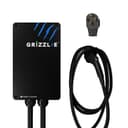 Grizzl-E Classic A deliberately dumb charger, and that is the point: no app, no cloud account, no firmware to fail — just a die-cast aluminum box built for a Canadian winter and rated to keep working outdoors. It went missing from Amazon for most of September 2026 and is listed again as of our 2026-09-28 check. If you want the same build with a WiFi radio in it, that is the Classic Connect. | Same hardware, documented ENERGY STAR — but not listed on Amazon | |
| 2 | 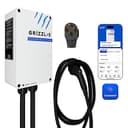 Grizzl-E Classic Connect 40A Grizzl-E's cast-aluminum build with a WiFi radio in it. You get the IP67 body and the cold-flexible 25 ft cable that made the brand's name, plus scheduling, usage history and utility demand-response programs in the Grizzl-E Connect app — in a plug-in unit that comes off the wall when you move. The amperage is still set with a DIP switch, which is either charmingly honest or annoyingly analog depending on your taste. | Add usage history, lockout and utility programs | $349.99 · View on Amazon Price as of October 18, 2026. #ad How we’re funded |
| 3 | 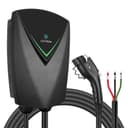 Lectron Nexus 48A J1772 A full 48 amps with nothing to log into. Lectron's Nexus body is IP66-sealed for an outdoor wall, the cable is a heavy 15 mm compound the brand says is built to stay flexible in freezing weather, and the safety paperwork is the real thing — ETL to UL 2594/2231/2251, plus ENERGY STAR. Hardwired only, and there is no app, which is the entire point. | If you need 48 amps and still want no app | $449.99 · View on Amazon Price as of October 18, 2026. #ad How we’re funded |
The verdict
- Your car schedules charging and you just want it to work: the Classic on the hardware — you are not giving anything up that you would notice. But you will have to buy it direct, because it is no longer on Amazon. If it has to come from Amazon, take the Classic Connect and simply ignore the app. (And if the real question is Grizzl-E against a mainstream smart charger, see Grizzl-E vs ChargePoint Home Flex.)
- You want to see what each session cost through the wall: the Classic Connect. The usage history is the one feature the car cannot replace.
- The charger lives outdoors where others could reach it: the Classic Connect, for remote lockout.
- Your utility rebate requires ENERGY STAR: the Classic, on the documentation — bought direct. Verify with the program, and note that a program will ask for the certification, which Grizzl-E publishes for the Classic and not for the Classic Connect.
- Your utility runs a managed-charging program: the Classic Connect, since those need a networked charger — but confirm the certification question first.
- You need 48 amps: neither — both cap at 40. Grizzl-E’s 48-amp answer is the hardwired Ultimate 48A, which the brand sells at $383.99 in J1772 or NACS. (We recorded it as discontinued in August 2026 on the strength of a dead Amazon listing and corrected that on 28 September.) The Lectron Nexus 48A is the other no-app 48-amp option — hardwired, J1772, IP66.
And if your garage has poor signal, note that the Classic Connect’s advantages all depend on it reaching your network. Check that before paying for it — our connectivity guide covers how to find out and what to do about it.
Frequently asked questions
Can I still buy the Grizzl-E Classic?
Yes. All three Classic listings we track carried live prices on our 28 September 2026 check, and Grizzl-E sells it directly as well. The recent history is worth knowing: those same three listings returned 'Currently unavailable' for most of September, which is why this page spent several weeks with a buy button on only one side. Grizzl-E never discontinued it, but stock on Amazon has been patchy, so check before you plan an install around it. If it is dark when you look, the Classic Connect is the same box with a radio in it.
What happened to the Grizzl-E Smart this page used to compare?
Grizzl-E discontinued it. As of 3 September 2026 the Smart's Amazon listing returns 'Currently unavailable' and grizzl-e.com's own shop no longer has a product page for it. Its replacement is the Classic Connect 40A, which Grizzl-E calls the next-generation charger, and the comparison is unchanged in substance: it is still the Classic's cast-aluminum, IP67, 40-amp, 25-foot-cable, DIP-switch box with WiFi and the Grizzl-E Connect app added.
What is the difference between the Grizzl-E Classic and the Grizzl-E Classic Connect?
Connectivity, essentially. Both are 40-amp plug-in chargers in Grizzl-E's cast-aluminum, IP67-sealed body with a cold-flexible cable. The Classic Connect adds WiFi and the Grizzl-E Connect app for scheduling, usage history, remote lockout and utility Demand/Response programs. Amperage is still set by a physical DIP switch on both.
Does the Grizzl-E Classic Connect let me set amperage in the app?
No — and this surprises people. The current is selected with a DIP switch inside the unit on both models, at 16, 24, 32 or 40 amps. The app handles scheduling, usage history and lockout, not the current limit. If in-app amperage adjustment matters to you, the ChargePoint Home Flex is the unit that does it.
Is the Grizzl-E Classic Connect ENERGY STAR certified?
Grizzl-E's own pages do not state an ENERGY STAR certification for the Classic Connect, so we record it as not published. The Classic's pages do state one. Retail listings for the Classic Connect sometimes carry an ENERGY STAR badge, which is why this is worth checking carefully if a utility rebate depends on it — programs ask for the certification, not the listing.
Do I need the app if my car already schedules charging?
Usually not. Nearly every EV can be given a departure time or a charging window natively, and a schedule set in the car is more robust than one that depends on the charger reaching your network. The genuine reasons to want the charger's own app are usage history, remote lockout on a shared or outdoor unit, and utility managed-charging programs.
Are both rated for outdoor and cold-weather use?
Yes. Both use Grizzl-E's cast-aluminum NEMA 4 / IP67 enclosure and both are rated from -22F to 122F, with a 25-foot cable Grizzl-E builds to stay flexible in the cold. That build is the reason the brand has the following it does in northern states, and it is unchanged between the two models.
Which is better value?
On the hardware, the Classic — unless you specifically want remote lockout, usage history or a utility program that needs a networked charger. What you are actually relying on, the enclosure and the cable and the 40 amps, is identical, so the price difference buys software rather than charging. The practical catch is availability: the Classic was unlisted on Amazon for most of September 2026 and was listed again on our 28 September check, so check it is in stock before you count on it. The Classic Connect has stayed orderable throughout.
Sources
- United Chargers — Grizzl-E Classic user manual (PDF) — Grizzl-E's own manual: NEMA 4 indoor/outdoor installation rating, operating temperature -22F to 122F, a caution that the enclosure's water rating cannot be guaranteed if the unit is mounted upside down, and a note to use a 20mA GFCI breaker where one is required because a 5mA breaker may cause disruptions (accessed July 20, 2026)
- United Chargers — Grizzl-E Classic 40A product page — Grizzl-E's own current product data for the Classic, re-read September 28, 2026 and unchanged since the September 3 and August 20 readings: Type 1 (SAE J1772) AC Level 2, 40 A, plug types 'NEMA 14-50, NEMA 6-50', UL Type 4 indoor/outdoor rating, certifications 'UL E510712, Energy Star', smart function 'No Internet Connection', 25 ft (7.6 m) output cable, operating temperature -30C to +50C (-22F to 122F), 3-year default warranty, aluminum enclosure, and three finishes — 'Classic Black, Avalanche White, or Extreme Camo'. Grizzl-E sells it directly at $299.99 and it is listed on Amazon again as of the same date (accessed September 28, 2026)
- United Chargers — Grizzl-E Classic Connect 40A technical specifications — Grizzl-E's own spec table for the Classic Connect: Type 1 (J1772) or NACS Level 2, aluminum enclosure, operating temperature -30C to +50C (-22F to 122F), IP67 protection, 25 ft output cable on an 18 in input lead, 208-240 VAC, nominal input current 16/24/32/40 A set by a DIP-switch power selector, maximum output current 40 A, LED indicator, 21 lb unit weight (accessed September 3, 2026)
- United Chargers — Grizzl-E Classic Connect 40A product overview — Grizzl-E's own overview for the Classic Connect: 'the Wi-Fi Connected Smart Level 2 EVSE for home use' at 40A / 9.6 kW, shipping with the Grizzl-E Connect app for charging statistics, schedules, Demand/Response utility programs, remote control, lockout to prevent unauthorized use, updates and diagnostics; a UL Type 4 water-resistant cast aluminum enclosure with IP67 sealing, a NEMA 14-50 input cable and a 25 ft output cable with a J1772 or NACS connector, 'UL Tested and Certified' with built-in GFCI, over-current, over-voltage, ground-fault and over-temperature protections, and adjustable maximum current set with DIP switches at 40A / 32A / 24A / 16A for a 50A / 40A / 30A / 20A breaker. No ENERGY STAR certification and no OCPP support are published for this model (accessed September 3, 2026)
- ENERGY STAR — Electric Vehicle Chargers — ENERGY STAR on EVSE efficiency: certified chargers use about 40% less energy in standby than non-certified units (accessed July 19, 2026)
- U.S. DOE Alternative Fuels Data Center — Utility Incentives — DOE's catalog of utility incentives by customer type: 114 utilities listed offering residential Level 2 charging station purchase rebates and 74 offering Level 2 installation rebates, plus make-ready/pre-wiring rebates, managed-charging programs and EV time-of-use rates. RE-READ September 3, 2026: the residential counts were unchanged at 114 participating utilities for the EV Level 2 Charging Station Purchase Rebate and 74 for the EV Level 2 Charging Station Installation Rebate, alongside 17 for the Make-Ready or Pre-Wiring Rebate for EV Chargers, 109 for the EV Time-of-Use (TOU) Rate and 9 for the EV Managed Charging Program (accessed September 3, 2026)
- NFPA — Using the Latest NEC for EV Charger Installations — NFPA on NEC (NFPA 70) Article 625: EV charging is a continuous load, so circuits are sized to 125% of load (the 80% rule) (accessed July 19, 2026)
Keep reading
Grizzl-E Classic review
The deliberately dumb charger in full — why no app is a design decision rather than a saving.
Read the reviewGrizzl-E Classic Connect review
The connected version, including what the Connect app does and the certification it doesn't publish.
Read the reviewSmart vs dumb, generally
The same question without the brand — what the smart premium buys across the market.
Read the argumentCold-weather chargers
The segment both of these exist to serve, and the specs that matter in a snowbelt winter.
See winter picks