Why You Cannot Buy a 22 kW Home Charger in the US
22 kW is not a charger specification so much as a description of a European electricity supply: 32 amps across three phases at 400 volts. American houses are single-phase, so the number is unreachable here - and the good news is that almost no car could use it anyway.
How this is funded: we earn a commission if you buy through our links, at no extra cost to you. It never changes which product we recommend, and we’ll tell you when we’d skip one. Full disclosure.
You cannot buy a 22 kW home charger in the United States, and the reason has nothing to do with what manufacturers are willing to build. 22 kW is a description of a European electricity supply — 32 amps across three phases at 400 volts — and American houses do not have that supply. The useful part of this answer is what comes next: the real US ceiling is 19.2 kW, exactly one charger in our registry reaches it, and your car almost certainly cannot use even that.
This question arrives on this site from two directions. People read European charger reviews, where 22 kW is an ordinary domestic product, and wonder why American listings stop so much lower. And people search “best 22 kW EV charger” having seen the figure quoted as though it were the top of the market. Both deserve a real answer rather than a redirect.
Where the number comes from
Charging power is volts times amps. That is the whole trick, and it is why the number changes when you cross the Atlantic.
A European house commonly has a three-phase 400-voltsupply. Three phases multiply the available power by the square root of three — about 1.73 — so 32 amps × 400 V × 1.73 comes out at approximately 22 kW. Nothing clever is happening: 22 kW is simply what a 32-amp three-phase European connection delivers, which is why so many European wallboxes are rated for exactly that.
An American house has single-phase 240 volts. No square root of three, no third phase. To reach 22 kW on 240 volts single-phase you would need over 90 amps continuous, which by the NEC’s 125% continuous-load rule means a circuit of 115 amps or more — a larger circuit than many entire houses are served by.
| Supply | Where you find it | Current | Power | What it is |
|---|---|---|---|---|
| 120 V single-phase | US household outlet | 12 A continuous | 1.4 kW | Level 1 charging |
| 240 V single-phase | US house, range or dryer circuit | 40 A continuous | 9.6 kW | The common US home charger |
| 240 V single-phase | US house, 100 A circuit | 80 A continuous | 19.2 kW | The real US single-phase ceiling |
| 208 V three-phase | US commercial / apartment building | 32 A continuous | 11.5 kW | What 'three-phase' usually means in the US |
| 400 V three-phase | European house or business | 32 A continuous | 22 kW | Where the 22 kW figure comes from |
One row in that table is worth reading twice, because it catches people who think they have found a loophole. Three-phase doesexist in North America — in commercial buildings, in some apartment blocks — but it is usually 208 volts rather than 400. Run the same arithmetic: 32 A × 208 V × 1.73 is about 11.5 kW, not 22. So even a genuine American three-phase supply does not produce the European figure. The voltage is the difference, not the number of phases.
The actual American ceiling: 19.2 kW
US DOE describes Level 2 charging as spanning roughly 2.9 to 19.2 kW, with about 7.2 kW typical for residential installations. That 19.2 is 80 amps at 240 volts, and it is the real top of the AC market here.
| Charger | Rated max | Power | Install | Listings |
|---|---|---|---|---|
| Autel MaxiCharger 80A | 80 A | 19.2 kW | Hardwired | UL 2594, UL 2231-1/2, UL 1998, CSA C22.2 No. 280, ENERGY STAR |
| ChargePoint Home Flex | 50 A | 12 kW | Hardwired, NEMA 6-50 or NEMA 14-50 | UL/cUL listed, ENERGY STAR |
| EVIQO 48A Level 2 Charger | 48 A | 11.5 kW | Hardwired | UL, ETL, FCC, ENERGY STAR |
| Emporia Pro | 48 A | 11.5 kW | Hardwired or NEMA 14-50 plug | UL listed, ENERGY STAR |
In our registry of twenty chargers, exactly one publishes 19.2 kW: the Autel MaxiCharger 80A. Everything else tops out at 48 or 50 amps. And the 80-amp unit comes with a cost most people do not price in — by the continuous-load rule it needs a 100-amp circuit, which in a typical house with a 200-amp service means a serious load calculation and often a service upgrade. Our 48 versus 80 amp comparison is the page that weighs that trade honestly, and the 80A review covers the unit itself.
Why chasing it is usually a mistake anyway
Suppose the supply problem vanished. You still would not benefit, because the ceiling on AC charging is inside the car, and for most cars it is around 11 kW.
Every EV has an onboard charger that converts the AC arriving up the cable into DC for the battery, and its rating is a hard limit. The published figures across the vehicles we have researched cluster tightly: Volkswagen publishes an 11 kW maximum AC acceptance rate for the ID.4; Kia publishes 10.9 kW on every EV6 and EV9 trim; Toyota publishes 11 kW for the bZ. For the Hyundai IONIQ 5, Hyundai publishes no figure at all and our arithmetic from its own charge times lands near 10 kW.
A 22 kW charger feeding an 11 kW car delivers 11 kW. The other 11 go nowhere. Which means a 48-amp charger — 11.5 kW — already feeds the overwhelming majority of EVs completely, and does it on a 60-amp circuit instead of a 115-amp one. That is the practical conclusion of this entire page, and our 48-amp roundup is where it leads.
The exceptions exist and are worth naming, because we have found them in manufacturers’ own documents. Some Cadillac LYRIQ trims publish a 19.2 kWonboard charger — one of the very few vehicles that can genuinely use the top of the American range, and the reason the 80-amp unit is not pointless. Our fastest-chargers roundup names the rest.
What to do instead
If you came here from a European review, translate rather than convert. Their 7.4 kW is roughly our 32 amps. Their 11 kW is roughly our 48 amps — and 48 amps genuinely is the sweet spot of the American market for the same reason 11 kW is theirs: it matches what cars accept. Their 22 kW has no American equivalent, and the connector standard is different too — our J1772 and NACS guide covers that side.
If you wanted 22 kW for speed, work out what you actually need. At 48 amps you get about 40 miles of range per hour by our arithmetic at a reference 3.5 miles per kWh — roughly 320 miles over an eight-hour night, which is more than most batteries hold. Our charger-sizing guide works the mileage question through, and the honest finding is that overnight charging windows are long and daily mileage is short.
If you genuinely need to add hundreds of miles in a couple of hours, AC charging is not the technology. That is what DC fast charging is for, and it is a commercial installation rather than a home one — our AC versus DC guide explains why the rectification has to happen in a cabinet the size of a refrigerator rather than in your car.
Quick picks
Ranked on published specs, charging speed, electrical fit and value. Select a row to jump to the full write-up. We have not bench-tested these chargers — here is exactly what we do instead.
| # | Product | Best for | Price |
|---|---|---|---|
| 1 | 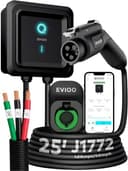 EVIQO 48A Level 2 Charger A lot of charger for the money: a full 48 amps, WiFi with scheduling, ENERGY STAR, and the longest usable reach in this group thanks to a 25 ft cable plus a 40-inch input lead. A strong value alternative to Emporia if you want maximum reach. | 11.5 kW, which most cars max out at | |
| 2 | 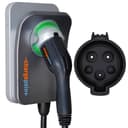 ChargePoint Home Flex The safest default for most homes: you set the amperage in the app to 16, 24, 32, 40, 48 or 50A, so one charger fits whatever circuit your panel can spare today and scales up if you upgrade later. The app is the most mature here, firmware arrives over the air, and the warranty is long. | 12 kW, adjustable 16-50 A | $516.71 · View on Amazon Price as of October 18, 2026. #ad How we’re funded |
| 3 | 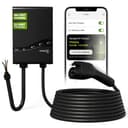 Emporia Pro The answer to a panel that says no. The Pro ships with Emporia's Vue 3 energy monitor in the same box, watches what the rest of the house is drawing, and throttles the car in real time so the total never exceeds what the service can carry — which is how a 48-amp charger ends up on a panel that a load calculation says has no room for one. You pay roughly Home Flex money for it, and only the load management justifies that. | 11.5 kW with load management | $599.00 · View on Amazon Price as of October 18, 2026. #ad How we’re funded |
| 4 | 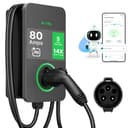 Autel MaxiCharger 80A The ceiling of home AC charging: 19.2 kW on a 100-amp circuit, which is roughly double what a 48-amp charger does. Almost no car can actually take it — most cap their onboard charger somewhere between 7.7 and 11.5 kW — so buy this for a specific vehicle that accepts 80 amps, or for a future-proofed circuit you already have. Otherwise it is a very good, very expensive 48-amp charger. | 19.2 kW, the real US ceiling |
Three of those four deliver 11.5 or 12 kW, which is the number that matters, on circuits a normal house can carry. The fourth is there because the top of the range genuinely exists — it just costs a 100-amp circuit and only pays off in a handful of vehicles. Before buying any of them, check your own panel with our panel-capacity guide and price the whole job with the installation cost breakdown.
Frequently asked questions
Is there a 22 kW home EV charger for the US?
No, and the reason is the supply rather than the hardware. 22 kW is 32 amps across three phases at 400 volts, which is a standard European residential and light-commercial supply. US homes are single-phase at 240 volts, where the arithmetic simply does not reach 22 kW until you get to very high current. The highest-rated AC charger in our registry of twenty units is 19.2 kW at 80 amps, and that is the practical American ceiling.
What is the fastest Level 2 charger available in the US?
US DOE describes Level 2 as spanning roughly 2.9 to 19.2 kW, with about 7.2 kW typical for residential installations. The top of that range is 80 amps at 240 volts, and in our registry exactly one unit reaches it: the Autel MaxiCharger 80A, which publishes 19.2 kW. It needs a 100-amp circuit by the NEC's 125% continuous-load rule, which in most houses means a service upgrade rather than a new breaker.
Do US homes have three-phase power?
Residential almost never. Three-phase is a commercial and industrial supply in North America, and where it appears in apartment buildings and offices it is usually 208 volts rather than Europe's 400. That matters for the arithmetic: 32 amps on 208-volt three-phase is about 11.5 kW by our calculation, not 22. So even a genuine American three-phase supply does not deliver the European 22 kW figure.
Could I use a European 22 kW charger in the US?
We would not attempt it. Beyond the supply mismatch, a charger built for a 400-volt three-phase European installation is not certified for a US installation, and the safety listings that matter here — UL 2594 for the equipment and UL 2231 for personnel protection — are what an American inspector and your insurer will look for. A unit without them is not a bargain; it is an uninsurable installation with a connector standard mismatch on top.
Would 22 kW even charge my car faster?
For almost every car sold in the US, no. The onboard charger inside the vehicle is the hard ceiling on AC charging, and 11 kW is the common published figure — Volkswagen publishes an 11 kW maximum AC acceptance rate for the ID.4, Kia publishes 10.9 kW across the EV6 and EV9 range, Toyota publishes 11 kW for the bZ. A charger offering 22 kW to an 11 kW car delivers 11. Some Cadillac LYRIQ trims are the rare exception at 19.2 kW, which the American 80-amp unit already covers.
Why do European EV guides talk about 22 kW so much?
Because it is genuinely available there. Three-phase 400-volt supply is common in European homes, so a 22 kW wallbox is an ordinary domestic product and the comparison people make is 7.4 kW against 11 kW against 22 kW. Reading European charger reviews is one of the most common ways US buyers end up chasing a figure that does not exist here — along with a different connector standard and a different set of safety marks.
Sources
- U.S. DOE Alternative Fuels Data Center — Electric Vehicle Charging Stations — US DOE on charging levels: Level 1 (~1.9 kW, ~5 mi/hr), Level 2 (2.9-19.2 kW, ~7.2 kW typical residential, ~25 mi/hr), and DC fast charging (accessed July 19, 2026)
- U.S. DOE Alternative Fuels Data Center — Charging Electric Vehicles at Home — US DOE on home EV charging: most owners charge overnight on Level 1 or Level 2, installs follow NEC Article 625, with example home-charging costs (accessed July 19, 2026)
- NFPA — Using the Latest NEC for EV Charger Installations — NFPA on NEC (NFPA 70) Article 625: EV charging is a continuous load, so circuits are sized to 125% of load (the 80% rule) (accessed July 19, 2026)
- SAE International — J1772 Conductive Charge Coupler — The SAE J1772 connector standard for AC Level 1 and Level 2 charging in North America (accessed July 19, 2026)
- UL Solutions — EV Charging Infrastructure Services — UL on EVSE safety certification: ANSI/UL 2594 is the Standard for Electric Vehicle Supply Equipment (accessed July 19, 2026)
- Autel Energy — MaxiCharger 80A 19.2kW Residential EV Charger (US store listing) — Autel's own US listing: 19.2 kW (240V AC 80A), 208/240V AC 50/60 Hz, SAE J1772, hardwired, 25 ft (7.5 m) cable, output adjustable from 6A to 80A in the app and 16/24/32/40/48/50/64/72/80 A by DIP switch, UL 2594, UL 2231-1, UL 2231-2, UL 1998, CSA C22.2 No. 280, FCC Part 15 Class B, ENERGY STAR, OpenADR 2.0b, NEC Article 625, Wi-Fi / Ethernet / RS485 with the Autel Charge app and cloud, and a warranty of 5 years on the charger body, backplate and internal components with 1 year on the display screen, charging cable and connector (accessed August 12, 2026)
- Autel Energy — MaxiCharger AC 80A product page — Autel's own product page for the MaxiCharger AC 80A: NEMA 3S / IK10 enclosure, operating temperature -40F to 131F (-40C to +55C) with derating above 113F, 19 ft or 25 ft cable options, SAE J1772 or NACS connector, hardwired with wall or pedestal mounting, output adjustable 6A to 80A via the mobile app, and a stated warranty of 3 years extendable up to 5 — a figure that differs from the 5-year term on Autel's own US store listing for the same unit (accessed August 12, 2026)
- ChargePoint — Home Flex datasheet (PDF) — ChargePoint's own datasheet: enclosure rating Type 3R per UL 50E, operating temperature -22F to 122F, 23 ft cable, plus installer notes that an outdoor plug-in install requires an outdoor-rated GFCI breaker upstream while an external GFCI may conflict with the charger's internal ground-fault protection on a hardwired install. RE-READ September 3, 2026 for the review refresh: the same datasheet also publishes maximum 12 kW (240V AC x 50A) with output amperage adjustable via the mobile app to 16A, 24A, 32A, 40A, 48A or 50A; a required dedicated dual-pole breaker rated for 125% of maximum load; 'Software Updates: Firmware updated over-the-air (OTA)'; 2.4/5 GHz Wi-Fi (802.11 a/b/g/n); local storage of up to 90 days of charging session data (100 sessions) if the network drops; power measurement accuracy +/- 2.0%; ground-fault detection by 20 mA CCID with auto retry; and UL and cUL listing per UL 2594, UL 2231-1 and UL 2231-2, NEC Article 625 compliant. Ordering information lists the plug-in station models CPH50-NEMA6-50-L23 and CPH50-NEMA14-50-L23 (accessed September 3, 2026)
- EVIQO — Level 2 EV Charger, 40A (9.6 kW), NEMA 14-50 plug-in (Gen 2) — EVIQO's own product page: 40A / 9.6 kW on a NEMA 14-50 plug, SAE J1772, 25 ft charging cable plus a 40 in input cable, IP66 / NEMA 4 enclosure, UL / ETL / FCC / ENERGY STAR listings, 3-year standard warranty, app-adjustable 6-40A output, and a note that it needs an EV-grade 4-prong 14-50 receptacle rather than a dryer outlet. RE-READ September 15, 2026 for the garage roundup: the page additionally states an operating temperature range of -22F to 122F, that the app needs a 2.4 GHz WiFi connection, that the standard 3-year warranty is extendable to 4, and that the unit ships in 1-2 business days (accessed September 15, 2026)
- Emporia Energy — Pro EV Charger product page — Emporia's own listing for the Pro: up to 48 A hardwired on a 60-amp circuit or up to 40 A on a NEMA 14-50 outlet, 25 ft cable, NEMA 4 rated for indoor or outdoor, UL listed and ENERGY STAR certified, 3-year warranty, and PowerSmart load management that requires the bundled Vue 3 energy monitor (accessed August 18, 2026)
- Cadillac - 2027 LYRIQ (official vehicle page, trim features) — Cadillac's own LYRIQ page, read with the 2027 model year selected. Under 'Choose your LYRIQ', the Luxury trim's key standard features list 'Single motor Rear-Wheel Drive propulsion system', '11.5 kW AC onboard charging module', '190 kW DC Fast Charging' and 'North American Charging System (NACS) onboard charge port'; the Premium Luxury, Signature Luxury, Signature Sport and LYRIQ-V Premium trims list '19.2 kW AC onboard charging module' alongside 'Dual motor All-Wheel Drive propulsion system' under available or included features, while the LYRIQ-V lists the 11.5 kW module. The page states 'an EPA-estimated 326 miles of range in RWD models' and, for public DC fast charging, 'Up to 86 miles of range in about 10 minutes'. It does not publish the battery capacity in kWh, a Level 2 charging time, or whether a charge cord or adapter is included, and it carries the note 'Previous model year shown' on some imagery. Trim prices shown on the page are not reprinted (accessed September 20, 2026)
- Volkswagen - 2026 ID.4 (official US model page, charging content slider + FAQs + disclaimers) — Volkswagen's own US ID.4 page. The decisive figure is in disclaimer DIS_0321, attached to the home-charging FAQ answer: 'Vehicle maximum AC acceptance rate is 11kW. Charging times will vary and depend on a variety of factors, including ambient temperature, kW, charging rate of home charger, battery condition and initial state of charge, vehicle condition and others.' The FAQ itself reads: 'In optimal conditions, using DC fast charging, the 2026 Volkswagen ID.4 can charge from 10% to 80% battery in approximately 28 minutes... With home charging, and at up to 11 kW with the available home wall charger, the 2026 Volkswagen all-electric ID.4 EV typically takes up to 8 hours to go from a completely empty battery to a full charge.' The 'At-Home Charging' panel of the charging content slider states: 'We make charging your 2026 ID.4 at home simple with the included 2-in-1 EV Charge Cable, capable of charging from standard 120v household outlets (approx. 1.2kW for about 3 miles per hour), or 240v outlets for quicker charging (approx. 9.6kW for up to 27 miles per hour)', and points owners at Qmerit for installation pricing. Disclaimer 18, attached to the Tesla Supercharger panel, is the other load-bearing line: 'Volkswagen approved NACS DC adapter is sold separately. NACS DC adapter is for use with compatible DC chargers only, including Tesla Superchargers identified by Tesla as an “NACS Partner Site.” ... Do not use NACS DC adapter with any Level 1 or Level 2 AC chargers, including Tesla Destination chargers and home chargers with NACS connectors. The use of any third-party adapters is at your own risk.' EPA-estimated range by trim, from VW's own FAQ: ID.4 Pro 291 miles, Pro S 291, AWD Pro 263, AWD Pro S 263, AWD Pro S Plus 263. The page also lists a 2-year Electrify America Pass+ membership with Plug&Charge. Volkswagen does NOT name the AC connector type (J1772 is never written), does NOT publish the battery's kWh capacity, and does NOT publish a maximum onboard-charger amperage - so the ~46 A figure on our page is our own arithmetic from VW's 11 kW at 240 V, and the 11 kW miles-per-hour figure is ours, scaled from VW's own 9.6 kW / 27 mi-per-hour pair. Vehicle pricing shown on the page is not reprinted here (accessed October 3, 2026)
- FuelEconomy.gov — Electric Vehicles: Learn More About the Label — DOE/EPA on EV efficiency: kWh per 100 miles and MPGe, accounting for AC charging losses (accessed July 19, 2026)
Keep reading
Voltage and power requirements
120, 208 and 240 volts, what each one delivers, and how to find out which one you actually have.
Read the guideFastest Level 2 chargers
The top of the American range ranked properly - and the onboard-charger ceiling that decides whether any of it is usable.
See the picksThe limit inside the car
Why 11 kW is the number that actually matters for most vehicles, and how to find your car's figure.
Read the guide48 amps vs 80 amps
The only amperage step at the top of the range that is a real decision in a US house, with the circuit each one costs.
Read the comparisonHow many amps?
The arithmetic on this page generalized: rated draw, actual draw and the circuit behind them.
Read the guide