How to Choose a Level 2 EV Charger
Most people choose a charger by reading reviews of chargers. That is backwards. The right unit is decided by four facts about your house and your car before any brand enters the picture — and once you have them, most of the market eliminates itself.
How this is funded: we earn a commission if you buy through our links, at no extra cost to you. It never changes which product we recommend, and we’ll tell you when we’d skip one. Full disclosure.
A Level 2 charger is a simple appliance with an unusually confusing market: a dozen brands, amperages from 16 to 80, two connectors, plug-in and hardwired versions of the same unit, and an app on most of them. Reviews compare the boxes. What they rarely say is that the box is the last decision, not the first. Four facts about your house and your car eliminate most of the market before you read a single review, and this page collects them in the order they bite.
Work through the seven questions in sequence. Each one removes chargers from the list. By the end, most buyers are choosing between two or three units, and the choice between those is usually price.
1. What can your panel spare?
This comes first because it is the hard ceiling. A charger draws continuously for hours, so the NEC treats it as a continuous load and requires a circuit rated at 125% of its current: 40 amps needs a 50-amp breaker, 48 amps needs 60, 80 amps needs 100. Your panel has a main breaker rating — commonly 100, 150 or 200 amps — and a load calculation decides how much of that is uncommitted. On a 200-amp service with gas heat, a 60-amp circuit is usually fine. On a 100-amp service with electric heat and a range, it may not be, and the honest options become a smaller charger, a load manager, or a service upgrade. Our panel-capacity guide shows the check you can do yourself before an electrician confirms it.
What it eliminates: every charger whose circuit you cannot add. If the answer is a 40-amp breaker, the 48-amp units are off the list, whatever the reviews say.
2. What does your car accept?
The charger on the wall is a switch. The real charger — the one that turns AC into the DC a battery stores — is inside the car, and it has a fixed maximum that no wall unit can exceed. Most EVs accept somewhere between 7.2 and 11.5 kW; a few trucks and luxury models accept 19.2 kW; many plug-in hybrids accept 3.3 to 7.7 kW. The figure is on the manufacturer’s spec sheet as “onboard charger” or “AC charging.” Divide it by 240 to get the amps that matter: an 11.5 kW car uses 48 amps; a 7.7 kW car uses 32 and cannot tell a 48-amp charger from a 32-amp one. Our onboard charger explainer covers why this number is so rarely mentioned.
What it eliminates:paying for amps your car cannot use. It does not always mean buying the smallest charger — a bigger unit dialed down is future-proof for the next car — but it removes any speed argument for the expensive tiers.
3. Plug-in or hardwired?
Two facts settle most of this. First, plug-in installs top out at 40 amps, because a NEMA 14-50 receptacle sits on a 50-amp circuit and the 125% rule leaves 40 for the charger; ChargePoint’s own datasheet caps its plug-in Home Flex models at 40 amps for exactly this reason. Second, no residential plug is rated for the 60-amp circuit 48 amps needs, so 48 and above is hardwired, full stop. Below that line, plug-in wins for renters, for anyone who may move, and for a garage where the outlet already exists; hardwired wins outdoors, where ChargePoint notes a plug-in install needs an outdoor-rated GFCI breaker upstream anyway. The full argument is in hardwired vs plug-in.
What it eliminates: half the SKUs. Many chargers come in both versions and this question tells you which one to put in the cart.
4. Which connector?
Two shapes: SAE J1772, which fits every non-Tesla EV sold in North America, and NACS (SAE J3400), the Tesla-derived connector now being adopted across the industry. A Tesla charges from a J1772 unit with the adapter Lectron’s FAQ notes is included with most Teslas; a native NACS charger skips the adapter. If the charger will only ever serve one car, match its port. If it may serve a Tesla and a non-Tesla, our mixed-household guide works through the options, and the connector explainer covers what is changing.
5. Will the cable reach?
Measure it. From the mounting point to the car’s charge port — in the position the car actually parks, not the position you imagine — along the route the cable will take, plus a few feet of slack so it is not taut. Charge ports sit on different corners of different cars, and a second car may park the other way round. Published cable lengths in our registry run from 16 to 25 feet; a plug-in unit’s input lead adds a little more. If the number is tight, the long-cable roundup ranks on this alone, and the answer is never an extension cord.
6. Where will it live?
Indoors, on a dry garage wall, any listed charger is fine. Outdoors, look for a published enclosure rating and a published operating temperature range. NEMA’s own definitions have Type 3R covering rain, sleet and snow and Type 4 adding windblown dust, splashing and hose-directed water; IP66 is the IEC equivalent of the latter. Several brands publish -22°F to 122°F; some publish nothing, which is itself an answer. Our outdoor roundup and ratings explainer cover it.
7. Do you want an app?
Last, deliberately. A smart charger earns its premium in three cases: your utility has a time-of-use rate and you want the charger to schedule into it; a rebate or managed-charging program requires ENERGY STAR or a connected unit — DOE’s catalog lists over a hundred utilities with Level 2 rebates and dozens with time-of-use rates; or you want per-session energy records. Otherwise, every modern EV can schedule its own charging from the dashboard, and a no-app charger does the same job with nothing to pair and nothing to drop offline. Our smart vs dumb comparison is the long version.
The rail that applies to every answer
Whatever the seven questions produce, insist on a safety listing to ANSI/UL 2594 — the standard UL names for EV supply equipment — from a named lab: UL, ETL or CSA, with the listing stated on the spec sheet rather than implied by a badge in a product photo. Every charger we link publishes one. Unlisted chargers exist at lower prices and we do not list them.
Where the checklist usually lands
Four units cover the majority of outcomes. They are here at today’s prices so you can see what the shortlist looks like once the questions are answered; every ranked roundup on this site starts from the same registry.
Quick picks
Ranked on published specs, charging speed, electrical fit and value. Select a row to jump to the full write-up. We have not bench-tested these chargers — here is exactly what we do instead.
| # | Product | Best for | Price |
|---|---|---|---|
| 1 | 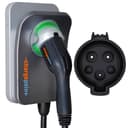 ChargePoint Home Flex The safest default for most homes: you set the amperage in the app to 16, 24, 32, 40, 48 or 50A, so one charger fits whatever circuit your panel can spare today and scales up if you upgrade later. The app is the most mature here, firmware arrives over the air, and the warranty is long. | The default smart charger, any install | $549.00 · View on Amazon Price as of September 18, 2026. #ad How we’re funded |
| 2 | 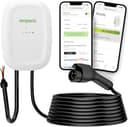 Emporia Level 2 EV Charger The value pick that doesn't feel cheap: a full 48 amps, ENERGY STAR listing, WiFi with genuine energy monitoring, and a 25 ft cable — for well under what the big names charge. It's the one we point most people to first. | 48A hardwired or 40A plug-in, for less | $449.00 · View on Amazon Price as of September 18, 2026. #ad How we’re funded |
| 3 | 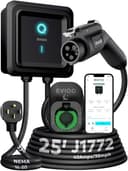 EVIQO 40A NEMA 14-50 Charger The most charger you can get without an electrician's invoice. It plugs into a NEMA 14-50 outlet for a full 40 amps, keeps the WiFi app, the ENERGY STAR listing and the 25 ft cable from EVIQO's hardwired unit, and can be unplugged and taken with you when you move. | Plug-in on an existing 14-50, outdoors too | |
| 4 | 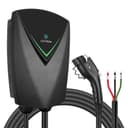 Lectron Nexus 48A J1772 A full 48 amps with nothing to log into. Lectron's Nexus body is IP66-sealed for an outdoor wall, the cable is a heavy 15 mm compound the brand says is built to stay flexible in freezing weather, and the safety paperwork is the real thing — ETL to UL 2594/2231/2251, plus ENERGY STAR. Hardwired only, and there is no app, which is the entire point. | No app, full speed, nothing to configure | $429.99 · View on Amazon Price as of September 18, 2026. #ad How we’re funded |
If your panel answered “40 amps or less,” the EVIQO is the shape of your answer. If it answered “60 amps” and you want an app, the Emporia or the ChargePoint. If it answered “60 amps” and you do not, the Lectron. For a Tesla, swap in the NACS versions from our Tesla roundup; for a driveway, start from the outdoor picks. And before any of it, price the circuit — the install cost guide explains why the charger is frequently the smaller line on the bill.
Frequently asked questions
What should I look for when buying a Level 2 charger?
In order: the amperage your panel can support, the kW your car's onboard charger accepts, plug-in versus hardwired, J1772 or NACS connector, enough cable to reach the charge port, an enclosure rating that suits the location, a safety listing to UL 2594 with a named lab, and only then whether you want WiFi and an app.
How many amps should my EV charger be?
Enough to match your car's onboard charger and no more than your panel can spare. Most EVs accept 7.7 to 11.5 kW on AC, which is 32 to 48 amps. A 48-amp charger needs a 60-amp circuit under the NEC 125% continuous-load rule; a 40-amp charger needs a 50-amp circuit and can plug into a NEMA 14-50 outlet.
Is a smart charger worth it?
It depends on your utility. If you have a time-of-use rate, a smart charger schedules into the cheap window; if a rebate program requires ENERGY STAR or a managed-charging enrollment, it may be mandatory. If you have a flat rate and your car can schedule its own charging, a no-app unit does the same job for less and cannot drop offline.
Should I get a plug-in or hardwired charger?
Plug-in if a NEMA 14-50 outlet exists or is cheap to add, if you rent or may move, and if 40 amps is enough. Hardwired if you want 48 amps or more, if the unit is outdoors, or if a plug-in install would need an outdoor GFCI breaker anyway. Above 40 amps hardwiring is not a choice — no residential plug is rated for the circuit.
Do I need a NACS charger for a Tesla?
No. A Tesla can charge from a J1772 charger using the adapter Lectron's FAQ notes is included with most Teslas. A native NACS charger removes the adapter from the loop, which is worth having if the Tesla is the only car that will ever use it. A household with a Tesla and a non-Tesla usually does better with a J1772 unit plus the adapter.
What certification should an EV charger have?
A listing to ANSI/UL 2594, the standard UL names for EV supply equipment, from a recognized lab — UL, ETL or CSA — with the lab named rather than implied by a badge in a product photo. ENERGY STAR is a separate, optional efficiency mark that many utility rebates require.
Sources
- NFPA — Using the Latest NEC for EV Charger Installations — NFPA on NEC (NFPA 70) Article 625: EV charging is a continuous load, so circuits are sized to 125% of load (the 80% rule) (accessed July 19, 2026)
- U.S. DOE Alternative Fuels Data Center — Electric Vehicle Charging Stations — US DOE on charging levels: Level 1 (~1.9 kW, ~5 mi/hr), Level 2 (2.9-19.2 kW, ~7.2 kW typical residential, ~25 mi/hr), and DC fast charging (accessed July 19, 2026)
- U.S. DOE Alternative Fuels Data Center — Charging Electric Vehicles at Home — US DOE on home EV charging: most owners charge overnight on Level 1 or Level 2, installs follow NEC Article 625, with example home-charging costs (accessed July 19, 2026)
- SAE International — J1772 Conductive Charge Coupler — The SAE J1772 connector standard for AC Level 1 and Level 2 charging in North America (accessed July 19, 2026)
- SAE International — J3400 North American Charging System (NACS) — The SAE J3400 / NACS standard (the Tesla-derived connector) now being adopted industry-wide (accessed July 19, 2026)
- UL Solutions — EV Charging Infrastructure Services — UL on EVSE safety certification: ANSI/UL 2594 is the Standard for Electric Vehicle Supply Equipment (accessed July 19, 2026)
- ENERGY STAR — Electric Vehicle Chargers — ENERGY STAR on EVSE efficiency: certified chargers use about 40% less energy in standby than non-certified units (accessed July 19, 2026)
- NEMA — Enclosure Types (definitions from NEMA 250) — NEMA's own definitions: Type 3R protects against falling dirt and rain, sleet and snow; Type 4 adds windblown dust, splashing and hose-directed water; Type 4X adds protection against corrosion. NEMA also states its NEMA-to-IP table cannot be used to convert IP designations back to NEMA types (accessed July 20, 2026)
- U.S. DOE Alternative Fuels Data Center — Utility Incentives — DOE's catalog of utility incentives by customer type: 114 utilities listed offering residential Level 2 charging station purchase rebates and 74 offering Level 2 installation rebates, plus make-ready/pre-wiring rebates, managed-charging programs and EV time-of-use rates. RE-READ September 3, 2026: the residential counts were unchanged at 114 participating utilities for the EV Level 2 Charging Station Purchase Rebate and 74 for the EV Level 2 Charging Station Installation Rebate, alongside 17 for the Make-Ready or Pre-Wiring Rebate for EV Chargers, 109 for the EV Time-of-Use (TOU) Rate and 9 for the EV Managed Charging Program (accessed September 3, 2026)
- Lectron - EV Charging FAQ — Lectron's own FAQ, read for its plug-and-cord guidance: 'It's recommended to plug the charger directly into a dedicated outlet without extension cords', with a safety list that reads 'Always match plug and outlet ratings (volts/amps)', 'Use GFCI protection for outdoor plugs', 'Avoid extension cords or daisy-chaining', 'Inspect plugs and cables regularly' and 'Hire a licensed electrician for installation'. Its NEMA table publishes 5-15 as 120V / 15A, 5-20 as 120V / 20A, 6-20 as 240V / 20A, 10-30 / 14-30 as 240V / 30A ('Common in older dryers') and 14-50 as 240V / 50A, and states that Lectron offers NEMA 5-15, 14-50 and 10-30 plug options for portable charging. Also states that a Tesla owner can use the J1772-to-Tesla adapter 'included with most Tesla', and that adapters 'don't generate power - they only enable compatibility between chargers and vehicles' (accessed September 17, 2026)
- ChargePoint — Home Flex datasheet (PDF) — ChargePoint's own datasheet: enclosure rating Type 3R per UL 50E, operating temperature -22F to 122F, 23 ft cable, plus installer notes that an outdoor plug-in install requires an outdoor-rated GFCI breaker upstream while an external GFCI may conflict with the charger's internal ground-fault protection on a hardwired install. RE-READ September 3, 2026 for the review refresh: the same datasheet also publishes maximum 12 kW (240V AC x 50A) with output amperage adjustable via the mobile app to 16A, 24A, 32A, 40A, 48A or 50A; a required dedicated dual-pole breaker rated for 125% of maximum load; 'Software Updates: Firmware updated over-the-air (OTA)'; 2.4/5 GHz Wi-Fi (802.11 a/b/g/n); local storage of up to 90 days of charging session data (100 sessions) if the network drops; power measurement accuracy +/- 2.0%; ground-fault detection by 20 mA CCID with auto retry; and UL and cUL listing per UL 2594, UL 2231-1 and UL 2231-2, NEC Article 625 compliant. Ordering information lists the plug-in station models CPH50-NEMA6-50-L23 and CPH50-NEMA14-50-L23 (accessed September 3, 2026)
- Emporia — Classic Level 2 EV Charger spec sheet (PDF) — Emporia's own spec sheet: watertight NEMA Type 4 indoor/outdoor enclosure, operating temperature -22F to 122F, 25 ft cable (accessed July 20, 2026)
- EVIQO — Level 2 EV Charger, 40A (9.6 kW), NEMA 14-50 plug-in (Gen 2) — EVIQO's own product page: 40A / 9.6 kW on a NEMA 14-50 plug, SAE J1772, 25 ft charging cable plus a 40 in input cable, IP66 / NEMA 4 enclosure, UL / ETL / FCC / ENERGY STAR listings, 3-year standard warranty, app-adjustable 6-40A output, and a note that it needs an EV-grade 4-prong 14-50 receptacle rather than a dryer outlet. RE-READ September 15, 2026 for the garage roundup: the page additionally states an operating temperature range of -22F to 122F, that the app needs a 2.4 GHz WiFi connection, that the standard 3-year warranty is extendable to 4, and that the unit ships in 1-2 business days (accessed September 15, 2026)
- Lectron — NEXUS Level 2 J1772 EV Charging Station, 240V, 48 Amp, Hardwired — Lectron's own product page: up to 48 A continuous at 240 V for 11.5 kW, hardwire-only install by a licensed electrician on a dedicated 240 V circuit, IP66 weatherproof housing for indoor or outdoor use, 23 ft output cable of 15.0 mm (±0.3 mm) heavy-duty compound the brand states is 'engineered to stay flexible and easy to wrap around the wall mount, even in freezing weather', wall-mount J-hook and plug holder included, ETL listed to UL 2594 / UL 2231 / UL 2251 with ENERGY STAR and FCC certification, and a 3-year Lectron warranty. No operating-temperature range and no Wi-Fi or app support are published for this model (accessed August 20, 2026)
Keep reading
What size charger do I need?
Questions one and two in detail — the panel math and the onboard-charger lookup, with worked examples.
Work the numbersHardwired vs plug-in
Question three in full: cost, amps, outdoor use and code, and why 48 amps forces the decision.
Read the comparisonBest chargers by segment
Once the checklist has narrowed it, the ranked picks for your situation.
See the roundupsWhat the install costs
The charger is often the smaller number. The circuit, the permit and the panel are the rest.
Price the install