Is Level 2 Charging Bad for Your Battery?
No. Level 2 charging is the mode automakers assume you will use at home, and the power involved is a small fraction of what the same pack accepts from a DC fast charger. The things that actually affect pack life are elsewhere — and we will tell you what the DOE does and does not publish.
How this is funded: we earn a commission if you buy through our links, at no extra cost to you. It never changes which product we recommend, and we’ll tell you when we’d skip one. Full disclosure.
No. Level 2 charging is not bad for your battery, and the strongest version of the argument is not reassurance — it is a ratio. The fastest home AC charger we track delivers 19.2 kW, and almost nobody owns one; the mainstream hardwired unit delivers 11.5 kW. The same battery pack in the same car is engineered to accept 150 to 350 kW from a DC fast charger on a road trip. Home charging is not the hard case for your battery. It is the easy one, by an order of magnitude.
It is also the mode automakers assume. Every manufacturer whose vehicle pages we have read publishes a Level 2 home-charging time as the normal way to charge the car, and several name specific home chargers on their own websites. A 240-volt home charger is not an aftermarket stress you are imposing on the car; it is the design case.
The arithmetic, in one table
| How you are charging | Power into the car | Relative rate |
|---|---|---|
| Level 1 (120 V household outlet) | About 1.4-1.9 kW | 1x |
| Level 2, 32 A (a portable) | 7.7 kW | About 4-5x Level 1 |
| Level 2, 48 A (the hardwired mainstream) | 11.5 kW | About 6-8x Level 1 |
| Level 2, 80 A (the fastest home AC unit we track) | 19.2 kW | About 10-14x Level 1 |
| DC fast charging, 150 kW | 150 kW | About 8x the fastest home charger |
| DC fast charging, 350 kW | 350 kW | About 18x the fastest home charger |
That spread is the entire answer. The jump from Level 1 to Level 2 is a few kilowatts. The jump from Level 2 to DC fast charging is a different order of magnitude, and it is the only one that shows up in the research literature as a question worth asking. Treating a 48-amp wall charger as a risk because it is faster than a wall outlet is like worrying about jogging because sprinting is strenuous.
What the Department of Energy actually publishes
We would rather show you the source than paraphrase it, because this topic attracts confident claims with nothing behind them. The DOE’s own page on EV maintenance and battery life says three relevant things:
- EV batteries are “designed for extended life but will wear out eventually,” and “many manufacturers offer 8-year/100,000-mile warranties” for them.
- The packs have a cycle life— “a limited number of charging cycles” — and owners are told to check battery life and warranty terms with the dealer.
- The battery, motor and electronics “require little to no regular maintenance,” though some packs use liquid coolant whose system may need checks.
And here is the part worth noticing, because it is an absence: the DOE does not name Level 1, Level 2 or DC fast charging as a factor in battery life anywhere on that page, and publishes no guidance that home AC charging shortens pack life. It also states plainly that “comprehensive data on EV battery failures is not available.” That sentence is the honest boundary of this subject. Anyone handing you a percentage of degradation per charging mode is going beyond what the Department of Energy will say.
Where the DOE doespoint is instructive: its battery page links the Department’s own report “Enabling Fast Charging: A Technology Gap Assessment.” The open research question, in the federal government’s own framing, is extreme fast charging — not the box on your garage wall.
What does affect pack life
Three things are published, and none of them is your home charger’s amperage.
Cycles. A pack has a finite number of charge-and-discharge cycles, and miles driven consume them. This is the one you control least, because it is the point of owning the car. Note the quiet implication for the Level 1 crowd: charging slower does not mean charging less.
Temperature.Packs have thermal management because heat and extreme cold both matter, which is also why EVs lose range in winter — the subject of our winter-cost page. One genuine advantage of a home charger here: a car plugged into the wall can precondition the pack and the cabin from the grid rather than from the battery.
Time. Lithium-ion chemistry ages whether you drive or not. A three-year-old pack with low mileage is still a three-year-old pack.
Notice what is not on that list: the number of amps your wall charger is set to. If you want to act on something, the lever that is actually in your hands is state of charge— and your automaker’s owner manual is the authority on what limit it recommends for your specific chemistry. That setting lives in the car, applies identically on every charging level, and is free.
The one way a home charger genuinely helps
It gives you the option to stop worrying about range, which is what makes a conservative charge limit livable. On Level 1 at roughly five miles of range per hour, an owner with a real commute may haveto charge to full every night just to be safe. On Level 2, the same car is topped up in a couple of hours, so you can set the limit your manufacturer recommends and still leave with enough range. The faster charger does not protect the battery directly — it removes the pressure that makes people charge to 100% when they would rather not.
The second real benefit is scheduling, and it is financial rather than chemical. If your utility has an off-peak rate, charging overnight on a timer is where the savings live — see time-of-use charging and the cost-to-charge calculator. Most EVs schedule charging in the vehicle for free, which is why we are consistently sceptical that you need a smart charger to do it.
Chargers that make a conservative routine easy
If anything on this page has you wanting a gentler routine, the useful feature is adjustable amperage— not because lower amps protect the pack, but because it lets one charger match a smaller circuit, share a service, or simply charge at a rate you are comfortable with. These are the units in our registry that publish an adjustable range.
Quick picks
Ranked on published specs, charging speed, electrical fit and value. Select a row to jump to the full write-up. We have not bench-tested these chargers — here is exactly what we do instead.
| # | Product | Best for | Price |
|---|---|---|---|
| 1 | 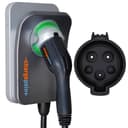 ChargePoint Home Flex The safest default for most homes: you set the amperage in the app to 16, 24, 32, 40, 48 or 50A, so one charger fits whatever circuit your panel can spare today and scales up if you upgrade later. The app is the most mature here, firmware arrives over the air, and the warranty is long. | Adjustable 16-50 A in the app | $516.71 · View on Amazon Price as of October 18, 2026. #ad How we’re funded |
| 2 | 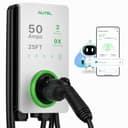 Autel MaxiCharger Home Built for the harshest driveway. The NEMA 4X enclosure is rated to keep charging in extreme cold and heat, it pushes a full 50 amps, and the app is capable. If your charger lives fully exposed to the weather, this is the one. | Adjustable 16-50 A, widest temp range | |
| 3 | 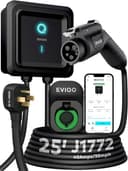 EVIQO 40A NEMA 14-50 Charger The most charger you can get without an electrician's invoice. It plugs into a NEMA 14-50 outlet for a full 40 amps, keeps the WiFi app, the ENERGY STAR listing and the 25 ft cable from EVIQO's hardwired unit, and can be unplugged and taken with you when you move. | Adjustable 6-40 A, full paperwork | |
| 4 | 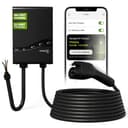 Emporia Pro The answer to a panel that says no. The Pro ships with Emporia's Vue 3 energy monitor in the same box, watches what the rest of the house is drawing, and throttles the car in real time so the total never exceeds what the service can carry — which is how a 48-amp charger ends up on a panel that a load calculation says has no room for one. You pay roughly Home Flex money for it, and only the load management justifies that. | Throttles against whole-home load | $599.00 · View on Amazon Price as of October 18, 2026. #ad How we’re funded |
One closing honesty note. We own none of these chargers, we have run no battery tests, and we are not going to pretend otherwise. What this page does is set the published charging rates against each other and tell you exactly what the Department of Energy does and does not say — including the sentence where it declines to claim more than the data supports. Our methodology page explains how we work, and the charger-lifespan guide answers the same durability question about the hardware on your wall rather than the pack in your car.
Frequently asked questions
Does Level 2 charging damage an EV battery?
No, and there are two reasons to be confident. The first is power: a Level 2 home charger delivers somewhere between 7.7 and 19.2 kW, while the same battery pack is engineered to accept 150 to 350 kW from a DC fast charger -- so home AC charging is a fraction of the stress the pack is designed for. The second is what the US Department of Energy publishes: its own page on EV battery longevity names no charging level as a factor in battery life and offers no guidance that home charging shortens pack life, while noting that many manufacturers warrant their EV batteries for 8 years or 100,000 miles.
Is Level 1 charging better for the battery than Level 2?
There is no published evidence that it is, and the DOE does not distinguish between them on the subject. The intuition behind the question -- slower is gentler -- is directionally real at the extremes of charging rate, which is why DC fast charging is the mode that gets studied. But the gap between Level 1 and Level 2 is a few kilowatts, against a pack built for hundreds. If you prefer Level 1 because it suits your mileage and costs nothing to install, that is a perfectly good reason. Battery anxiety is not one.
Does fast charging hurt an EV battery more than home charging?
High-rate DC charging is the mode the research actually looks at, and the DOE's own battery page links its report 'Enabling Fast Charging: A Technology Gap Assessment' -- which is the Department treating extreme fast charging, not home AC charging, as the open question. What we will not do is give you a percentage of degradation per fast charge, because no source we can cite publishes one for your car. The practical reading: use DC fast charging when you are travelling and it is the right tool, and do the daily charging at home where the rate is low anyway.
What actually shortens an EV battery's life?
Based on what is published rather than what circulates: the number of charge and discharge cycles the pack has been through, which the DOE calls cycle life; temperature, which is why packs have thermal management and why the DOE notes some systems use liquid coolant that may need checks; and time, because the chemistry ages regardless of use. The DOE is explicit that comprehensive data on EV battery failures is not available, so anyone giving you a confident ranking with numbers attached is going past the evidence. Your own automaker's owner manual is the authority on charge limits for your specific pack.
Should I charge to 100% every night on a Level 2 charger?
Ask your automaker, not us, and the answer is in your owner manual -- many manufacturers publish a recommended daily charge limit below 100% for their specific chemistry, and some cars let you set it in the vehicle. What is worth separating is that this is a question about state of charge, not about charging level: whatever limit your maker recommends applies identically on Level 1, Level 2 and DC. Where a Level 2 charger genuinely helps is that it can finish before you leave, so you are not forced to charge to full just to have enough range.
Is it bad to leave an EV plugged in overnight on a Level 2 charger?
No. Charging stops when the car says it is done -- the car, not the charger, controls the session, and the handshake built into the connector is how it does that. Leaving it plugged in afterwards is how most owners live with an EV, and it lets the car run its own thermal management from the wall rather than from the pack in cold weather. We wrote a separate guide on that question, and on the one case where a charge timer matters more: an off-peak electricity rate.
Sources
- U.S. DOE Alternative Fuels Data Center — Maintenance and Safety of Electric Vehicles — The DOE's own page on EV battery longevity, and the one that declines to overclaim. Read in full: 'Like the engines in conventional vehicles, the advanced batteries in electric vehicles (EVs) are designed for extended life but will wear out eventually. While comprehensive data on EV battery failures is not available, many manufacturers offer 8-year/100,000-mile warranties for their EV batteries.' On cycle life: the batteries used in these vehicles 'have a limited number of charging cycles (the number of times the battery can be charged and discharged, also called cycle life)', and the page tells owners to 'Check with the dealer about battery life and warranties'. On maintenance: 'The battery, motor, and associated electronics require little to no regular maintenance', though 'Some automotive battery systems use liquid coolant to maintain safe operating temperatures. These systems may require regular checks.' On replacement: 'Manufacturers typically do not publish pricing for replacement batteries, but if the battery does need to be replaced outside the warranty, it is expected to be a significant expense.' Note what is NOT on this page: the DOE does not name Level 1, Level 2 or DC fast charging as a factor in battery life anywhere on it, and publishes no guidance that home AC charging shortens pack life (accessed October 17, 2026)
- U.S. DOE Alternative Fuels Data Center — Batteries for Electric Vehicles — The DOE's technical page on the battery chemistries used in EVs, read for the battery-health guide. It covers lithium-ion, nickel-metal hydride and lead-acid packs and the federal research programme behind them, and it links the DOE's own report 'Enabling Fast Charging: A Technology Gap Assessment' - which is the Department treating high-rate DC fast charging, not home AC charging, as the open research question. The page publishes no claim that Level 2 charging degrades a pack, and no recommended charging level for longevity (accessed October 17, 2026)
- U.S. DOE Alternative Fuels Data Center — Electric Vehicle Charging Stations — US DOE on charging levels: Level 1 (~1.9 kW, ~5 mi/hr), Level 2 (2.9-19.2 kW, ~7.2 kW typical residential, ~25 mi/hr), and DC fast charging (accessed July 19, 2026)
- U.S. DOE Alternative Fuels Data Center — Charging Electric Vehicles at Home — US DOE on home EV charging: most owners charge overnight on Level 1 or Level 2, installs follow NEC Article 625, with example home-charging costs (accessed July 19, 2026)
- FuelEconomy.gov — Electric Vehicles: Learn More About the Label — DOE/EPA on EV efficiency: kWh per 100 miles and MPGe, accounting for AC charging losses (accessed July 19, 2026)
- FuelEconomy.gov — Fuel Economy in Cold Weather (U.S. DOE / EPA) — DOE/EPA on cold weather: EV range can drop about 41% in mixed driving at 20F versus 75F with the cabin heater running (about 12% with the heater off), roughly two-thirds of the extra energy goes to heating the cabin, and preheating while still plugged in extends range (accessed July 20, 2026)
- SAE International — J1772 Conductive Charge Coupler — The SAE J1772 connector standard for AC Level 1 and Level 2 charging in North America (accessed July 19, 2026)
- Autel Energy — MaxiCharger 80A 19.2kW Residential EV Charger (US store listing) — Autel's own US listing: 19.2 kW (240V AC 80A), 208/240V AC 50/60 Hz, SAE J1772, hardwired, 25 ft (7.5 m) cable, output adjustable from 6A to 80A in the app and 16/24/32/40/48/50/64/72/80 A by DIP switch, UL 2594, UL 2231-1, UL 2231-2, UL 1998, CSA C22.2 No. 280, FCC Part 15 Class B, ENERGY STAR, OpenADR 2.0b, NEC Article 625, Wi-Fi / Ethernet / RS485 with the Autel Charge app and cloud, and a warranty of 5 years on the charger body, backplate and internal components with 1 year on the display screen, charging cable and connector (accessed August 12, 2026)
- ChargePoint — Home Flex datasheet (PDF) — ChargePoint's own datasheet: enclosure rating Type 3R per UL 50E, operating temperature -22F to 122F, 23 ft cable, plus installer notes that an outdoor plug-in install requires an outdoor-rated GFCI breaker upstream while an external GFCI may conflict with the charger's internal ground-fault protection on a hardwired install. RE-READ September 3, 2026 for the review refresh: the same datasheet also publishes maximum 12 kW (240V AC x 50A) with output amperage adjustable via the mobile app to 16A, 24A, 32A, 40A, 48A or 50A; a required dedicated dual-pole breaker rated for 125% of maximum load; 'Software Updates: Firmware updated over-the-air (OTA)'; 2.4/5 GHz Wi-Fi (802.11 a/b/g/n); local storage of up to 90 days of charging session data (100 sessions) if the network drops; power measurement accuracy +/- 2.0%; ground-fault detection by 20 mA CCID with auto retry; and UL and cUL listing per UL 2594, UL 2231-1 and UL 2231-2, NEC Article 625 compliant. Ordering information lists the plug-in station models CPH50-NEMA6-50-L23 and CPH50-NEMA14-50-L23 (accessed September 3, 2026)
Keep reading
Leaving it plugged in
The companion question, answered the same way: what the car controls, what the charger controls, and when a timer is worth setting.
Read the guideAC vs DC charging
Why a home charger is not really a charger at all, and where the conversion actually happens. The technical half of this page.
Read the guideLevel 1 vs Level 2
If this page has you considering the slow route, the honest comparison of what each one keeps up with.
Read the comparisonCharging when power is cheap
The one scheduling decision that reliably saves money -- and the real reason to care about when your car charges.
Read the guide