How Long Does a Home EV Charger Last?
We cannot tell you, and neither can the manufacturers - not one of them publishes a service life, a duty-cycle rating or a mean time between failures. What they do publish is a warranty, and reading those terms carefully tells you more about expected durability than any marketing claim on the box.
How this is funded: we earn a commission if you buy through our links, at no extra cost to you. It never changes which product we recommend, and we’ll tell you when we’d skip one. Full disclosure.
There is no published answer, and we are not going to invent one. Not one of the nineteen chargers in our registry comes with a stated service life, duty cycle or failure rate from its manufacturer. What exists instead is a warranty, and warranties are a better guide than they look — a company setting a term is making a costed bet on its own return rate. Read them against each other and a clear picture emerges of which part of a home charger the industry expects to go first.
That matters commercially, because a charger is one of the few purchases where people reasonably expect a decade. It hangs on a wall, it has no moving parts, and the one in your garage is doing the same job as the one in a public lot that gets used forty times a day. So the honest version of this question is: what is the industry willing to commit to, and where does it hedge?
What the warranties actually say
Across the registry, three years is the industry standard. ChargePoint publishes a three-year warranty on the Home Flex. Emporia publishes three on the Classic and the Pro. EVIQO publishes a three-year standard term, extendable to four. Wallbox publishes three. Grizzl-E publishes a three-year default on the Classic. Lectron publishes three on the Nexus hardwired units. Ampure publishes three on the Go.
Below the line: the ELEGRP 40A portable publishes two years, which is a real differentiator in a field of threes and one we called out honestly in our review of it. And two units publish no warranty term at allin the specifications we can read — the Grizzl-E Duo Connect and the Lectron NACS portable. An unstated warranty is not an absent warranty, but it is a figure the brand has chosen not to print next to the specs, and our product tables say “Not published” rather than filling the gap.
Above the line, the Autel MaxiCharger 80A publishes the longest term we have found — and it is also where this page gets interesting.
The one brand that tells you which part fails
Autel’s own US store listing for the 80-amp MaxiCharger publishes a warranty of five years on the charger body, backplate and internal components with one year on the display screen, charging cable and connector.
Sit with that for a moment, because it is the most useful durability disclosure in the category. A manufacturer confident enough to warrant its electronics for five years is warranting the cable for one fifth as long. That is not a company being stingy; it is a company that knows from returns which component comes back. The cable is the part that gets dragged across concrete, coiled and uncoiled twice a day, driven over, frozen stiff, and pulled taut when it does not quite reach. The connector is the part that gets dropped.
Worth noting in the same breath: Autel’s own product page for that same 80-amp unit states three years extendable to five, which disagrees with its store listing. Where a brand’s own documents conflict we publish both figures rather than choosing the flattering one, and we would ask the seller to confirm in writing before relying on either.
What this means for how you buy
If the cable is the wear item, three decisions follow, and all three are about reducing how hard the cable works.
Buy enough reach the first time.A cable that is permanently stretched to its limit is a cable under tension at the gland every session. The market tops out at 25 feet — Emporia, EVIQO, Autel, Grizzl-E, ELEGRP and Wallbox all publish it — and EVIQO adds a 40-inch input lead on top. Measure before you buy; our long-cable roundup ranks on reach alone and extension cords are not the answer.
Use the holster.Every one of these units ships a way to hang the connector up — Lectron supplies a J-hook and plug holder, ELEGRP a wall holder and carry bag, Autel an in-body holster on the 40A, Grizzl-E a holster. The single cheapest thing you can do for the life of the hardware is never let the handle touch the ground.
Check the cable’s own spec, where one exists.Most brands publish nothing about cable construction. Lectron is the exception, publishing a 23-foot output cable of 15.0 mm (±0.3 mm) heavy-duty compound it describes as “engineered to stay flexible and easy to wrap around the wall mount, even in freezing weather.” Grizzl-E’s overview makes a similar claim for a cable that “remains flexible in cold temperatures.” A stiff cable in January is the one that gets yanked.
What the safety listings do and do not promise
People read UL and ETL marks as longevity claims, and they are not. ANSI/UL 2594 is the standard for electric vehicle supply equipment and UL 2231 covers the personnel-protection systems inside it; those listings test that the unit is safe, including under fault conditions, not that it will still be working in 2040. ENERGY STAR certification is an efficiency programme — certified chargers use about 40% less energy in standby — which saves you money without saying anything about service life. Our certifications guide covers what each label actually tests.
The enclosure rating is the closest thing to a durability spec, because it defines the environment the unit is specified to survive. A Type 4X enclosure is specified against corrosion; a Type 3R one is not. And the published operating temperature range is where a brand tells you the envelope it stands behind — Autel’s -40F to 131F against Wallbox’s -22F to 104F is a real difference for a charger on a sun-struck wall. Install outside that envelope and you are running the hardware somewhere its maker did not promise it would last.
The parts that are not the charger
Two more things age, and neither is covered by the box’s warranty. The first is the receptacle, if you went plug-in: a NEMA 14-50 carrying 40 amps for hours a night is working far harder than the dryer outlet it resembles — as Emporia’s own install notes put it, continuous Level 2 charging is “a fundamentally different demand than the dryers and ranges most NEMA 14-50 outlets were designed for.” A worn or cheap receptacle is a genuine failure point, which is one of the arguments for hardwiring and the reason our outlet guide insists on an EV-grade one.
The second is software. A connected charger depends on an app and a cloud service that will outlive neither the hardware nor, necessarily, the company. There is no published commitment from anyone on how long that service runs. It is the strongest argument for the no-app units in our no-app roundup— a charger with nothing to log into cannot be orphaned — and worth weighing against what the app actually buys you. ChargePoint at least publishes that its station stores up to 90 days of session data locally if the network drops, which is the right instinct.
The units with the strongest published durability terms
| Spec | Autel MaxiCharger 80A | EVIQO 48A Level 2 Charger | Autel MaxiCharger Home | Lectron Nexus 48A J1772 |
|---|---|---|---|---|
| Warranty | 5 years | 3 years | 3 years | 3 years |
| Enclosure | NEMA 3S (IK10) | IP66 / NEMA 4 | IP65 / NEMA 4X | IP66 |
| Cable length | 25 ft | 25 ft | 25 ft | 23 ft |
| Install | Hardwired | Hardwired | Hardwired | Hardwired |
| Listings | UL 2594, UL 2231-1/2, UL 1998, CSA C22.2 No. 280, ENERGY STAR | UL, ETL, FCC, ENERGY STAR | CSA certified, ENERGY STAR | UL 2594/2231/2251 (ETL listed), ENERGY STAR, FCC |
Quick picks
Ranked on published specs, charging speed, electrical fit and value. Select a row to jump to the full write-up. We have not bench-tested these chargers — here is exactly what we do instead.
| # | Product | Best for | Price |
|---|---|---|---|
| 1 | 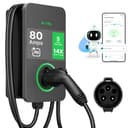 Autel MaxiCharger 80A The ceiling of home AC charging: 19.2 kW on a 100-amp circuit, which is roughly double what a 48-amp charger does. Almost no car can actually take it — most cap their onboard charger somewhere between 7.7 and 11.5 kW — so buy this for a specific vehicle that accepts 80 amps, or for a future-proofed circuit you already have. Otherwise it is a very good, very expensive 48-amp charger. | Longest term: 5 years on the body | |
| 2 | 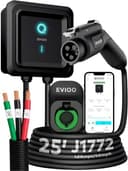 EVIQO 48A Level 2 Charger A lot of charger for the money: a full 48 amps, WiFi with scheduling, ENERGY STAR, and the longest usable reach in this group thanks to a 25 ft cable plus a 40-inch input lead. A strong value alternative to Emporia if you want maximum reach. | 3 years, extendable to 4 | |
| 3 | 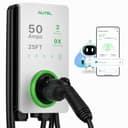 Autel MaxiCharger Home Built for the harshest driveway. The NEMA 4X enclosure is rated to keep charging in extreme cold and heat, it pushes a full 50 amps, and the app is capable. If your charger lives fully exposed to the weather, this is the one. | NEMA 4X and -40F to 131F envelope | |
| 4 | 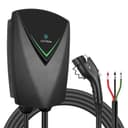 Lectron Nexus 48A J1772 A full 48 amps with nothing to log into. Lectron's Nexus body is IP66-sealed for an outdoor wall, the cable is a heavy 15 mm compound the brand says is built to stay flexible in freezing weather, and the safety paperwork is the real thing — ETL to UL 2594/2231/2251, plus ENERGY STAR. Hardwired only, and there is no app, which is the entire point. | 3 years, with a published cable spec | $449.99 · View on Amazon Price as of October 18, 2026. #ad How we’re funded |
Frequently asked questions
How long should a home EV charger last?
No manufacturer we cite publishes a service life, a duty cycle or a failure rate, so any specific number you read is someone's estimate rather than a published figure. The only durability commitment on the table is the warranty, and in our registry those run from two years to five, with three being the common term. We treat the warranty as the floor of what the maker is prepared to stand behind, not as a prediction of the day it stops working.
What part of an EV charger fails first?
Published evidence points at the cable and the connector rather than the electronics. The clearest signal is Autel's own US store listing for its 80-amp MaxiCharger, which warrants the charger body, backplate and internal components for five years but the charging cable and connector for one. That is a manufacturer telling you which end of its product it expects to be replaced.
Do EV charger warranties cover the cable?
Sometimes separately, and for less time. Most brands publish a single term - three years is the norm - without breaking out the cable. Autel's 80-amp listing is the exception that proves the point, splitting five years on the body from one year on the cable and connector. When you compare warranties, ask whether the term covers the whole unit or only the box.
Which home EV charger has the longest warranty?
In our registry, the Autel MaxiCharger 80A at five years on its US store listing - though Autel's own product page for the same unit says three years extendable to five, and we publish both rather than pick one. Among mainstream units, three years is the standard term from ChargePoint, Emporia, EVIQO, Wallbox, Grizzl-E, Lectron's Nexus line and Ampure. The ELEGRP portable publishes two, and the Grizzl-E Duo Connect and the Lectron NACS portable publish no warranty term at all.
Does leaving an EV charger outside shorten its life?
Not if it is rated for outdoor installation and installed in the orientation the manufacturer specifies - that is what the enclosure rating is for. What does shorten it is mounting a unit upside down, which Grizzl-E's manual warns voids the water rating, leaving the connector lying on the ground, or running a unit near the top of its published temperature range. Wallbox publishes a 104F ceiling against Autel's 131F, and on a sun-struck wall that gap is real.
Sources
- Autel Energy — MaxiCharger 80A 19.2kW Residential EV Charger (US store listing) — Autel's own US listing: 19.2 kW (240V AC 80A), 208/240V AC 50/60 Hz, SAE J1772, hardwired, 25 ft (7.5 m) cable, output adjustable from 6A to 80A in the app and 16/24/32/40/48/50/64/72/80 A by DIP switch, UL 2594, UL 2231-1, UL 2231-2, UL 1998, CSA C22.2 No. 280, FCC Part 15 Class B, ENERGY STAR, OpenADR 2.0b, NEC Article 625, Wi-Fi / Ethernet / RS485 with the Autel Charge app and cloud, and a warranty of 5 years on the charger body, backplate and internal components with 1 year on the display screen, charging cable and connector (accessed August 12, 2026)
- Autel Energy — MaxiCharger AC 80A product page — Autel's own product page for the MaxiCharger AC 80A: NEMA 3S / IK10 enclosure, operating temperature -40F to 131F (-40C to +55C) with derating above 113F, 19 ft or 25 ft cable options, SAE J1772 or NACS connector, hardwired with wall or pedestal mounting, output adjustable 6A to 80A via the mobile app, and a stated warranty of 3 years extendable up to 5 — a figure that differs from the 5-year term on Autel's own US store listing for the same unit (accessed August 12, 2026)
- Autel Energy — MaxiCharger AC Elite Home 50A product page — Autel's own listing: compliant with NEMA 4X standards, operating temperature -40F to 131F, 25 ft cable, 3-year warranty. RE-READ October 10, 2026 for the Emporia head-to-head, and the page now publishes materially more: 'Maximum Output | 12 kW / 50 A' with output 'Adjustable 16-50 A'; installation given as 'Hardwired - 70 A Circuit for Full Output'; an 'SAE J1772' connector; an enclosure rating of 'IP65 / NEMA 4X'; an operating range of '-40 to 131 F (-40 to 55 C)'; a '3 Years' warranty quoted as a single term with no component split; 'CSA and ENERGY STAR compliance' (no UL listing is claimed on this page); connectivity listed as 'Bluetooth, Wi-Fi, Ethernet, CAN, RS485'; app control to start, stop and schedule charging, monitor activity and adjust current; dimensions of 13.2 x 7.4 x 3.8 in (336 x 187 x 97 mm) and a weight of 15.4 lbs (7 kg); and the load-management sentence this comparison turns on - 'Supports both Adaptive Load Management (ALM) and charger-to-charger Dynamic Load Balancing (DLB). ALM requires compatible additional hardware, while DLB works between chargers without additional hardware.' The page publishes no solar-specific feature (accessed October 10, 2026)
- EVIQO — Level 2 EV Charger, 40A (9.6 kW), NEMA 14-50 plug-in (Gen 2) — EVIQO's own product page: 40A / 9.6 kW on a NEMA 14-50 plug, SAE J1772, 25 ft charging cable plus a 40 in input cable, IP66 / NEMA 4 enclosure, UL / ETL / FCC / ENERGY STAR listings, 3-year standard warranty, app-adjustable 6-40A output, and a note that it needs an EV-grade 4-prong 14-50 receptacle rather than a dryer outlet. RE-READ September 15, 2026 for the garage roundup: the page additionally states an operating temperature range of -22F to 122F, that the app needs a 2.4 GHz WiFi connection, that the standard 3-year warranty is extendable to 4, and that the unit ships in 1-2 business days (accessed September 15, 2026)
- Lectron — NEXUS Level 2 J1772 EV Charging Station, 240V, 48 Amp, Hardwired — Lectron's own product page: up to 48 A continuous at 240 V for 11.5 kW, hardwire-only install by a licensed electrician on a dedicated 240 V circuit, IP66 weatherproof housing for indoor or outdoor use, 23 ft output cable of 15.0 mm (±0.3 mm) heavy-duty compound the brand states is 'engineered to stay flexible and easy to wrap around the wall mount, even in freezing weather', wall-mount J-hook and plug holder included, ETL listed to UL 2594 / UL 2231 / UL 2251 with ENERGY STAR and FCC certification, and a 3-year Lectron warranty. No operating-temperature range and no Wi-Fi or app support are published for this model (accessed August 20, 2026)
- ChargePoint — Home Flex home charger product page — ChargePoint's own current product page for the Home Flex, read for the 2026-09-03 review refresh: three install configurations are offered — hardwired, NEMA 6-50 plug and NEMA 14-50 plug — with 'up to 50 amps of power delivered to your EV' on the hardwired model and 'up to 40A of power' on the plug-in models. ChargePoint's own range claim is 'up to 37 miles of range per hour' hardwired and '30 miles of range per hour' plug-in. J1772 and NACS connectors are offered across all configurations, and ChargePoint states the unit is 'UL Listed for safety', 'ENERGY STAR certified for efficiency' and carries a '3-year warranty' (accessed September 3, 2026)
- United Chargers — Grizzl-E Classic 40A product page — Grizzl-E's own current product data for the Classic, re-read September 28, 2026 and unchanged since the September 3 and August 20 readings: Type 1 (SAE J1772) AC Level 2, 40 A, plug types 'NEMA 14-50, NEMA 6-50', UL Type 4 indoor/outdoor rating, certifications 'UL E510712, Energy Star', smart function 'No Internet Connection', 25 ft (7.6 m) output cable, operating temperature -30C to +50C (-22F to 122F), 3-year default warranty, aluminum enclosure, and three finishes — 'Classic Black, Avalanche White, or Extreme Camo'. Grizzl-E sells it directly at $299.99 and it is listed on Amazon again as of the same date (accessed September 28, 2026)
- ELEGRP Store - 40A Level 2 portable J1772 EV charger (NEMA 14-50) — ELEGRP's own listing: 40 A / 9.6 kW on 240 V AC at 50/60 Hz with selectable output at 16, 20, 24, 32 or 40 A, SAE J1772 connector on a NEMA 14-50 plug ('For NEMA 14-50 Outlets Only'), 25 ft cable (16 ft and 21 ft also offered), IP67 charging station and IP54 connector, operating range -22F to +122F (-30C to +50C), 1-to-12-hour delayed-start timer, 2-year warranty, 'ETL & UL' listed. RE-READ September 5, 2026 for the review: the specification table is unchanged, and the page additionally states 'Fully ETL certified and built with UL-listed components - including the J1772 plug, cable, and NEMA 14-50 connector', a built-in display reporting charging current, voltage, total energy delivered (kWh) and internal temperature with LED fault patterns, a wall-mounted holder plus anchors and a carry bag in the box, Tesla compatibility via a J1772-to-NACS adapter sold separately, a 30-day return window and 60-day price protection. The page does not name the UL standards, publish a weight, publish an ENERGY STAR certification, or publish app support for this SKU, and its marketing copy carries two conflicting range claims ('Up to 37 Miles/H' and '30 Miles Per Hour') plus an operating range ('-21F to 121F') that disagrees with its own specification table (accessed September 5, 2026)
- Lectron - Portable Level 2 Tesla (NACS) EV Charger, 240V, 40 Amp, NEMA 14-50 — Lectron's own product page: 40 A / 240 V / 9.6 kW on a NEMA 14-50 plug with a native NACS connector for Tesla Models S/3/X/Y/Cybertruck and any NACS EV, 16 ft cable, ETL listed to UL 2594 / UL 2231 with a UL 2251 handle plus ENERGY STAR and FCC, LED status indicators on the base SKU with app control only on the separate WiFi version. Lectron describes the unit as weather-resistant for indoor or outdoor use while advising against extreme weather exposure, and its spec block publishes no enclosure rating, no operating-temperature range and no warranty term. RE-READ October 17, 2026 for the review, and the page is unchanged on every spec above. Additional detail captured on that visit: the page sells two SKUs at different prices, a WiFi version and a 'Plug & Play' version, and states that the Lectron App works on the 'WiFi version ONLY'; the range claims are inconsistent across the same page - '260+ miles overnight', 'up to 36 miles of range per hour' and '30+ miles of range per hour' - with a disclaimer that actual speed depends on the vehicle, state of charge and temperature; the enclosure figures appear only in image copy and disagree with each other (IP65 described as dust and water resistance, IP54 described as dust-tight and splash-resistant), while the body copy publishes no rating at all; the UL references are likewise inconsistent (the sidebar and FAQ read 'UL2594 / UL2231 Certified' while the body text attributes UL 2251 to the handle); a carrying case is included; a CCS1-to-NACS adapter is offered as a paid bundle add-on rather than included; J1772 cars are said to work through a Tesla/NACS-to-J1772 adapter; shipping is quoted at 1-2 working days with 30-day returns. Still NOT published anywhere on the page: operating-temperature range, warranty term, weight, dimensions, a complete box inventory, a single consistent IP rating or a single consistent UL standard for the charger itself (accessed October 17, 2026)
- Ampure Store - Ampure Go Level 2 plug-in EV charger — Ampure's own store listing for the same unit, read for the warranty term the product page omits: 3-year warranty, 32 A, 20 ft cable, NEMA 14-50 with 120 V/240 V cords, IP67, UL / ENERGY STAR / FCC / RoHS. RE-READ October 10, 2026 for the review: the listing publishes 'up to 32 amps' on 'Level 2, 240V power', a '20-foot premium cable', 'included grid cords for 110V/240V charging', 'IP67 waterproof', 'reliable indoor and outdoor use in any weather', 'UL, and ENERGY STAR certified' plus 'UL Certified', 'FCC Compliant', 'RoHS Compliant' and 'SAE J1772 & NACS Compatible', a '3 Years' warranty, and an 'Ampure Go 2 (NACS)' sold as a separate model. It publishes NO operating-temperature range, NO weight and NO box contents, and - the finding the review is built on - it claims 'up to 35 miles of range per hour' where Ampure's own product page for the same unit claims '25 miles of range per hour'. Neither figure states the vehicle efficiency it assumes (accessed October 10, 2026)
- United Chargers — Grizzl-E Classic user manual (PDF) — Grizzl-E's own manual: NEMA 4 indoor/outdoor installation rating, operating temperature -22F to 122F, a caution that the enclosure's water rating cannot be guaranteed if the unit is mounted upside down, and a note to use a 20mA GFCI breaker where one is required because a 5mA breaker may cause disruptions (accessed July 20, 2026)
- UL Solutions — EV Charging Infrastructure Services — UL on EVSE safety certification: ANSI/UL 2594 is the Standard for Electric Vehicle Supply Equipment (accessed July 19, 2026)
- ENERGY STAR — Electric Vehicle Chargers — ENERGY STAR on EVSE efficiency: certified chargers use about 40% less energy in standby than non-certified units (accessed July 19, 2026)
Keep reading
Who publishes the longest warranty
Every charger in our registry sorted by its published warranty term. The flatness of the result is the finding.
See the tableDoes a charger need surge protection?
No maker we track publishes a surge rating. What the NEC requires at the service panel instead, and when to spend the money.
Read the guideUL, ETL and ENERGY STAR
What each listing tests for - the standards behind the labels, and what they do not cover.
Read the guideCan a charger get wet?
What an outdoor rating covers, and the mounting mistake that voids the one you paid for.
Read the guideBest chargers with long cables
The cable is the part that wears. Buying enough reach means you are not dragging it taut every session.
See the picksTaking it with you when you move
A charger that outlives your time in the house raises a different question: does it come off the wall?
Read the guide