Utility Rebates for Home EV Chargers
The company that sells you the electricity often pays for part of the charger. It is the most reliably overlooked money in home charging — and the one incentive you have to claim in the right order.
How this is funded: we earn a commission if you buy through our links, at no extra cost to you. It never changes which product we recommend, and we’ll tell you when we’d skip one. Full disclosure.
There is a strange asymmetry in home charging. People will spend a fortnight comparing chargers over a $60 price difference, and never spend ten minutes finding out whether their electric company will pay for a chunk of the whole project. The second is usually worth more.
DOE’s Alternative Fuels Data Center — the federal catalog of alternative fuel incentives — currently lists 114 utilities offering residential rebates toward buying a Level 2 charging station and 74 offering rebates toward the installation. Those are not two ways of counting the same thing; a good number of programs cover both, and several also list make-ready or pre-wiring rebates for the circuit itself.
Why utilities pay you to charge at home
It helps to understand the motive, because the motive explains every condition attached. A utility does not mind selling you more electricity — an EV is a large, reliable new load. What it minds is when you use it. EIA notes that the cost of supplying electricity is highest in the afternoon and early evening peak, even though most customers pay a seasonal average rate.
So a rebate is not charity; it is the cheapest way to buy influence over a new load before the habit sets. Get you onto a Level 2 charger with a scheduler, get you onto an overnight window, and the utility gains a load it can plan around instead of a car plugged in at 6pm alongside everyone’s air conditioning. That is why so many programs bundle a rebate with a time-of-use plan or a managed-charging agreement.
Finding your program in ten minutes
Start with the name on your bill, not your state.This is the mistake that makes people conclude they have no program. Incentives belong to individual utilities, and two towns twenty miles apart can have entirely different offers — or one and none. Municipal utilities and rural co-ops frequently run programs that never appear in state-level summaries.
Then search the federal catalog.The AFDC’s Utility Incentives listing organizes incentives by customer type — residential against commercial and fleet — and by category: charging station purchase, installation, make-ready wiring, managed charging and EV time-of-use rates. It names the participating utilities and links each program, and its U-Finder tool searches partners by state or ZIP.
Cross-check your state page.AFDC’s state index lists every state and DC with a count of applicable laws and incentives, which catches state-level rebates and sales-tax exemptions that sit alongside the utility offer. Some of the largest states list hundreds of programs; most people qualify for one or two of them.
Finally, check the utility’s own site.The federal catalog is good and it is not instantaneous. A program that opened or closed recently will be current on the utility’s page first, and the utility’s page is what the claim will be judged against.
The conditions that disqualify people
Rebate programs are rarely refused for the reason people fear. They are refused on sequence and paperwork. These are the recurring conditions worth knowing before you order anything:
- Pre-approval. A meaningful number of programs require you to apply before purchase or before installation. Buy first and the claim can be dead on arrival, however eligible the hardware.
- A specific certification.ENERGY STAR is the common one, and it is a hard filter: if the model you want does not carry it, no amount of arguing about equivalent quality will help. Which is why we record certification honestly per unit and mark it “Not published” when a manufacturer does not state it.
- A licensed electrician and a pulled permit.Many programs want the itemized invoice from a licensed contractor and evidence of inspection. This is also the point where a DIY install quietly costs more than it saved — see can I install it myself and permits and inspection.
- A networked charger.Managed-charging programs need to be able to talk to the hardware, which rules out deliberately offline units — a real trade-off if you were leaning toward one of our no-app picks.
- Enrollment commitments.Some rebates are contingent on staying on a time-of-use or managed plan for a period. Usually fine, occasionally not — read it if you work night shifts and charge during the day.
The order of operations that works
Do it in this sequence and you rarely lose money: find the program, read its conditions, choose a charger that satisfies them, get pre-approval if required, hire a licensed electrician, pull the permit, keep the invoice, claim. The federal 30C creditis no longer a second bite at this for a new install — it ended for property placed in service after June 30, 2026 — so the utility program is the offset to get right.
If your charger wasplaced in service on or before that date, one interaction still matters on your return: a utility rebate reduces what you actually paid, and the federal credit was calculated on what you paid. That was never a reason to skip either — it just means the two did not simply add. How that lands is a question for a tax professional, and we will not pretend otherwise.
Chargers that satisfy the usual conditions
Because ENERGY STAR is the most common eligibility filter, the practical shortlist for anyone chasing a rebate is narrower than the market as a whole. These three all publish the certification, which is the box most programs tick against.
Quick picks
Ranked on published specs, charging speed, electrical fit and value. Select a row to jump to the full write-up. We have not bench-tested these chargers — here is exactly what we do instead.
| # | Product | Best for | Price |
|---|---|---|---|
| 1 | 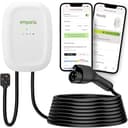 Emporia Level 2 EV Charger The value pick that doesn't feel cheap: a full 48 amps, ENERGY STAR listing, WiFi with genuine energy monitoring, and a 25 ft cable — for well under what the big names charge. It's the one we point most people to first. | ENERGY STAR, networked, value price | |
| 2 | 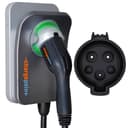 ChargePoint Home Flex The safest default for most homes: you set the amperage in the app to 16, 24, 32, 40, 48 or 50A, so one charger fits whatever circuit your panel can spare today and scales up if you upgrade later. The app is the most mature here, firmware arrives over the air, and the warranty is long. | ENERGY STAR with the most mature managed-charging support | $516.71 · View on Amazon Price as of October 17, 2026. #ad How we’re funded |
| 3 | 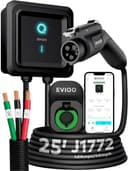 EVIQO 48A Level 2 Charger A lot of charger for the money: a full 48 amps, WiFi with scheduling, ENERGY STAR, and the longest usable reach in this group thanks to a 25 ft cable plus a 40-inch input lead. A strong value alternative to Emporia if you want maximum reach. | ENERGY STAR at the lowest 48-amp cost |
A caution on reading spec sheets for this purpose: an Amazon listing badge is not a certification. We only record ENERGY STAR where the manufacturer’s own documentation states it — the Grizzl-E Classic Connect is a live example, where the retail listing carries a badge the brand’s own pages do not confirm, so we record it as not published. If a rebate depends on it, verify on the manufacturer’s site and keep a copy. Our certifications guide explains which marks are safety claims and which are efficiency claims, because programs ask for both and they are not interchangeable.
Frequently asked questions
How many utilities actually offer an EV charger rebate?
DOE's Alternative Fuels Data Center currently lists 114 utilities offering residential rebates toward the purchase of a Level 2 charging station and 74 offering rebates toward the installation. It also catalogs make-ready or pre-wiring rebates, managed-charging programs and EV-specific time-of-use rates as separate categories.
How do I find out whether my utility has one?
Start from the name on your electricity bill rather than your state, because programs belong to individual providers. DOE's Utility Incentives listing names the participating utilities and links each program, and its U-Finder tool searches local utility partners by state or ZIP code. Your state's page in the AFDC state index is a useful cross-check.
Can I claim a utility rebate and the federal tax credit together?
Not on a new install — the federal 30C credit terminated for property placed in service after June 30, 2026, so a utility rebate is the whole of what you can claim. If your charger was placed in service on or before that date, then yes: they were separate programs from separate bodies and a utility rebate did not disqualify you, though the rebate reduced the cost basis the credit was calculated against, so the two did not simply add. Our federal incentives page covers 30C and its end date in detail.
Why do so many programs require an ENERGY STAR charger?
Because the utility's motivation is efficiency and grid management, not generosity. ENERGY STAR certified chargers use about 40% less energy in standby than non-certified units, which is the state a wall charger spends most of its life in. Requiring the certification is the simplest way for a program to avoid subsidizing inefficient hardware.
What is a managed charging program?
An arrangement where you let the utility influence when — and sometimes how fast — your car charges, in exchange for a bill credit or a larger rebate. In practice it usually means charging in an overnight window and occasionally being paused during grid stress. It generally requires a networked charger the utility can communicate with, or an enrolled vehicle.
Is the rebate taxable?
It can be treated differently by different programs, and some issue tax paperwork for larger amounts. This is a question for a tax professional and for the program's own terms — we are not qualified to answer it for your situation, and any site that gives you a confident universal answer is guessing.
Sources
- U.S. DOE Alternative Fuels Data Center — Utility Incentives — DOE's catalog of utility incentives by customer type: 114 utilities listed offering residential Level 2 charging station purchase rebates and 74 offering Level 2 installation rebates, plus make-ready/pre-wiring rebates, managed-charging programs and EV time-of-use rates. RE-READ September 3, 2026: the residential counts were unchanged at 114 participating utilities for the EV Level 2 Charging Station Purchase Rebate and 74 for the EV Level 2 Charging Station Installation Rebate, alongside 17 for the Make-Ready or Pre-Wiring Rebate for EV Chargers, 109 for the EV Time-of-Use (TOU) Rate and 9 for the EV Managed Charging Program (accessed September 3, 2026)
- U.S. DOE Alternative Fuels Data Center — State Laws and Incentives — DOE's searchable index of laws and incentives for all 50 states and DC, with a per-state count of applicable programs and a separate utility-incentive search (accessed August 18, 2026)
- IRS — Alternative Fuel Vehicle Refueling Property Credit — IRS on the 30C credit: 30% (max $1,000 per item) for a home charger in an eligible census tract, claimed on Form 8911 — terminated for property placed in service after June 30, 2026 (accessed July 19, 2026)
- ENERGY STAR — Electric Vehicle Chargers — ENERGY STAR on EVSE efficiency: certified chargers use about 40% less energy in standby than non-certified units (accessed July 19, 2026)
- U.S. Energy Information Administration — Electricity prices and factors affecting prices — EIA on US electricity pricing: residential electricity averaged 17.30 cents per kWh in 2025; some utilities offer time-of-day pricing to reduce peak demand; prices are usually highest in summer, and the cost to supply electricity is higher in the afternoon and early-evening peak hours even though most customers pay a seasonal average rate (accessed August 11, 2026)
- U.S. DOE Alternative Fuels Data Center — Charging Electric Vehicles at Home — US DOE on home EV charging: most owners charge overnight on Level 1 or Level 2, installs follow NEC Article 625, with example home-charging costs (accessed July 19, 2026)
Keep reading
The federal 30C credit
The national incentive that ended on June 30, 2026 — what it covered, who can still claim it, and what is left.
Check the federal creditENERGY STAR chargers
The certification most rebate programs require, and the units that carry it.
See certified picksWhat the install costs
The bill a rebate is reducing — hardware, labor, permit and the panel-upgrade wildcard.
See the breakdownEV time-of-use rates
Often run by the same utility, often worth more over time than the one-off rebate.
Read about TOU