How to Charge an EV at Home Without a Garage
Most home-charging advice quietly assumes a garage with a spare wall and a panel ten feet away. Plenty of houses do not have one. The good news is that a garage was never a requirement - every charger worth buying is sold for outdoor installation. What changes is the mounting, the enclosure rating and the cable run.
How this is funded: we earn a commission if you buy through our links, at no extra cost to you. It never changes which product we recommend, and we’ll tell you when we’d skip one. Full disclosure.
A garage was never a requirement. Outdoor installation is a normal, manufacturer-supported configuration for almost every charger we rank, and the only genuinely hard case is having no off-street parking at all. What a garage gives you is a free mounting surface, a short run from the panel and shelter. Without one, you buy those three things back — with an enclosure rating, a mounting plan and some trenching. The order you think about them in matters, so work from the parking space outward rather than from the panel.
Start with what you can mount to
The single question that decides your project is whether a solid mounting surface exists within cable reach of the car’s charge port. Four situations, in rising order of cost:
An exterior house wall beside the driveway.This is the easy case and it is more common than people assume — a charger on the outside of the same wall the panel is on the inside of is a short, cheap run. It is effectively a garage install with weather added, so you specify an outdoor-rated unit and you are done.
A carport post or beam.Usually workable, with two caveats: the structure has to be substantial enough to carry the unit and take a cable run safely, and a carport is open on its sides, so treat it as outdoors regardless of the roof. The roof is worth having — it keeps direct rain and sun off the enclosure, and sun is the one most people forget — but it does not downgrade your rating requirement.
A detached structure — shed, barn, standalone garage. Now the run from the house is the job, and it is a feeder or a subpanel question rather than a charger question. We have a whole page on it: installing in a detached garage, and do you need a subpanel.
Nothing at all — an open driveway or a parking pad. This is the pedestal case. You set a post and run buried conduit to it, and the trench is normally the dominant cost of the whole project. It is a standard install, not an improvisation, and our pedestal and post guide covers the options.
Measure before you choose a charger
With no garage, reach stops being a convenience spec and becomes the thing that decides whether the install works at all. Measure from each candidate mounting point to the charge port in the position the car actually parks, along the path the cable will take, with a few feet of slack so it is never taut. Then do it again for the other car, if there is one — charge ports sit on different corners of different cars.
Published cables in our registry run from 16 feet to 25, and 25 is the top of the market. EVIQO adds a 40-inch input lead on top of its 25-foot cable, which lets the box itself sit some distance from the supply point — genuinely useful when the only good mounting spot is not the only good electrical spot. Our long-cable roundup ranks on reach alone. And to be explicit about the shortcut: an extension cord is not a fix— Lectron’s own FAQ tells owners to plug the charger directly into a dedicated outlet without one.
Specify the enclosure for full exposure
With no roof, the enclosure rating is the spec that matters most, and it is worth knowing exactly what you are buying. Using NEMA’s own definitions, Type 3R protects against falling dirt and rain, sleet and snow — which is what an open driveway delivers most of the time. Type 4 adds windblown dust, splashing and hose-directed water, which is the spec to want if you will ever wash the car near the charger or if wind drives rain sideways at your house. Type 4X adds protection against corrosion, which is the coastal and road-salt rating.
On the IP side, a first digit of 6 is dust-tight and a second digit of 6 is protection against powerful water jets. Do not read IP67 as automatically better: IEC 60529 is explicit that a second digit of 7, covering temporary immersion, does not imply water-jet protection unless the product is dual-coded. Our ratings explainer and what an outdoor rating actually covers have the detail.
Two things to get right at install, both cheap and both commonly missed. Mount the unit in the orientation the manufacturer intends — Grizzl-E’s manual states the water rating cannot be guaranteed if the unit is mounted upside down — and mount it high enough that the bottom of the enclosure clears whatever your driveway does in a heavy storm. Our placement guide covers heights.
Hardwired or plug-in, outdoors
Outdoors, the argument for hardwiring is stronger than it is in a garage, and it is not about amperage. A plug-in install adds a receptacle, and that receptacle is where water gets in and where heat concentrates under a continuous load. Hardwiring deletes the junction.
If you still want plug-in — and the flexibility is a real benefit — budget for the extra protection. ChargePoint’s own datasheet notes that an outdoor plug-in install requires an outdoor-rated GFCI breaker upstream, and Lectron’s safety list says to use GFCI protection for outdoor plugs. Our GFCI guide covers which install needs what, including the 20 mA sensitivity Grizzl-E specifies where a GFCI breaker is required. And either way the circuit is sized the same: the NEC treats charging as a continuous load, so the breaker is 125% of the charger’s draw — see wire size and breaker.
Theft, tampering and the connector
A charger on the front of the house is reachable by anyone. Hardwiring makes the unit harder to simply unplug and walk off with, which is worth something on an unfenced property. For unauthorised userather than theft, app lockout is the published feature to look for — Grizzl-E’s Connect app lists lockout to prevent unauthorised use, which is why that unit leads our rental-property roundup. And give the connector a holster so it is not lying across the path: every unit we list ships one.
The case we cannot solve
If you have no off-street parking — the car lives at the kerb — there is no home-charging product we are willing to recommend. Running a cable across a public sidewalk is a trip hazard and generally not permitted, and we are not going to dress a workaround up as a solution. The realistic pattern for kerbside parkers is public or workplace charging as the primary source, with a portable dual-voltage unit for the times you do have access to a 120-volt or 240-volt outlet — a relative’s driveway, a holiday rental, a job site. The Ampure Go is the unit built for exactly that, publishing both a NEMA 14-50 and a NEMA 5-15 cord, IP67 and a nine-pound module. Our portable roundup and renters roundup are the right places to start.
Chargers specified for a wall with no roof
| Spec | Autel MaxiCharger Home | EVIQO 48A Level 2 Charger | Grizzl-E Classic Connect 40A | Ampure Go Portable Level 2 Charger |
|---|---|---|---|---|
| Enclosure | IP65 / NEMA 4X | IP66 / NEMA 4 | NEMA 4 (IP67) | IP67 (NEMA 6P watertight) |
| Outdoor rated | Yes | Yes | Yes | Yes |
| Install | Hardwired | Hardwired | NEMA 14-50 plug | NEMA 14-50 cord for 240V, NEMA 5-15 cord for 120V |
| Cable length | 25 ft | 25 ft | 25 ft | 20 ft |
| Max output | 50 A | 48 A | 40 A | 32 A |
Quick picks
Ranked on published specs, charging speed, electrical fit and value. Select a row to jump to the full write-up. We have not bench-tested these chargers — here is exactly what we do instead.
| # | Product | Best for | Price |
|---|---|---|---|
| 1 | 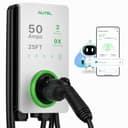 Autel MaxiCharger Home Built for the harshest driveway. The NEMA 4X enclosure is rated to keep charging in extreme cold and heat, it pushes a full 50 amps, and the app is capable. If your charger lives fully exposed to the weather, this is the one. | NEMA 4X and -40F to 131F, hardwired | |
| 2 | 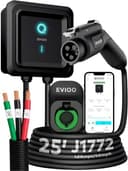 EVIQO 48A Level 2 Charger A lot of charger for the money: a full 48 amps, WiFi with scheduling, ENERGY STAR, and the longest usable reach in this group thanks to a 25 ft cable plus a 40-inch input lead. A strong value alternative to Emporia if you want maximum reach. | IP66 / NEMA 4 with 25 ft plus a 40 in lead | |
| 3 | 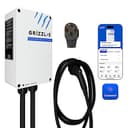 Grizzl-E Classic Connect 40A Grizzl-E's cast-aluminum build with a WiFi radio in it. You get the IP67 body and the cold-flexible 25 ft cable that made the brand's name, plus scheduling, usage history and utility demand-response programs in the Grizzl-E Connect app — in a plug-in unit that comes off the wall when you move. The amperage is still set with a DIP switch, which is either charmingly honest or annoyingly analog depending on your taste. | IP67 plug-in with app lockout | $349.99 · View on Amazon Price as of October 18, 2026. #ad How we’re funded |
| 4 | 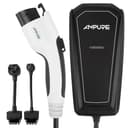 Ampure Go Portable Level 2 Charger The only portable charger we track that is certified like a permanent one. UL 2594 / UL 2231, ENERGY STAR and an IP67 / NEMA 6P body rated from -22F to 122F, in a nine-pound module that ships with a NEMA 14-50 cord for 240V and a standard 5-15 cord for 120V. You give up eight amps against the 40A units and get, in exchange, a charger genuinely rated to live in a trunk and be rained on. | Dual-voltage portable for no-driveway cases | $299.00 · View on Amazon Price as of October 18, 2026. #ad How we’re funded |
Frequently asked questions
Can you install an EV charger outside without a garage?
Yes. Every charger we rank except two portables publishes an outdoor enclosure rating, and several publish operating temperature ranges from -22F to 122F or wider. Outdoor installation is a normal, manufacturer-supported configuration - what you need is a solid mounting surface within cable reach of the car, a published outdoor rating, and a circuit run to that point.
What do I do if there is no wall near where the car parks?
A pedestal or post, which is a standard install rather than an improvisation. It means setting a post and running buried conduit from the panel to it, so it is a bigger job than bolting a box to the house - the trench is usually the dominant cost. Our pedestal and post-mounting guide covers the options.
Is it safe to leave an EV charger outside in all weather?
If it is rated for it and installed in the orientation the manufacturer specifies. Grizzl-E's manual warns that the enclosure's water rating cannot be guaranteed if the unit is mounted upside down, so orientation is not a detail. Mount high enough that the bottom of the enclosure clears anything the driveway does in a storm, and give the connector a holster so it never lies in water.
Can I charge an EV if I only have street parking?
Honestly, usually not from your own supply. Running a cable across a public sidewalk is a trip hazard and generally not permitted, and there is no home-charging product we can recommend for that situation. If you have no off-street parking at all, the realistic answer is workplace or public charging as your primary source, with a portable unit for the occasions you do get a driveway or a 240-volt outlet.
Does a carport count as outdoors for charger purposes?
Treat it as outdoors. A roof keeps direct rain off the enclosure, which is genuinely useful, but a carport is open to windblown rain, humidity, temperature swings and salt air, and the charger will experience all of them. Specify the outdoor rating; the roof is a bonus, not a substitute.
Sources
- NEMA — Enclosure Types (definitions from NEMA 250) — NEMA's own definitions: Type 3R protects against falling dirt and rain, sleet and snow; Type 4 adds windblown dust, splashing and hose-directed water; Type 4X adds protection against corrosion. NEMA also states its NEMA-to-IP table cannot be used to convert IP designations back to NEMA types (accessed July 20, 2026)
- IEC 60529 — Degrees of protection provided by enclosures (IP Code), full text — The IP code standard (verbatim national adoption, IS/IEC 60529:2001): first numeral 6 = dust-tight; second numeral 6 = protected against powerful water jets; second numeral 7 = protected against temporary immersion, and a 7 alone does not imply water-jet protection unless dual coded (accessed July 20, 2026)
- ChargePoint — Home Flex datasheet (PDF) — ChargePoint's own datasheet: enclosure rating Type 3R per UL 50E, operating temperature -22F to 122F, 23 ft cable, plus installer notes that an outdoor plug-in install requires an outdoor-rated GFCI breaker upstream while an external GFCI may conflict with the charger's internal ground-fault protection on a hardwired install. RE-READ September 3, 2026 for the review refresh: the same datasheet also publishes maximum 12 kW (240V AC x 50A) with output amperage adjustable via the mobile app to 16A, 24A, 32A, 40A, 48A or 50A; a required dedicated dual-pole breaker rated for 125% of maximum load; 'Software Updates: Firmware updated over-the-air (OTA)'; 2.4/5 GHz Wi-Fi (802.11 a/b/g/n); local storage of up to 90 days of charging session data (100 sessions) if the network drops; power measurement accuracy +/- 2.0%; ground-fault detection by 20 mA CCID with auto retry; and UL and cUL listing per UL 2594, UL 2231-1 and UL 2231-2, NEC Article 625 compliant. Ordering information lists the plug-in station models CPH50-NEMA6-50-L23 and CPH50-NEMA14-50-L23 (accessed September 3, 2026)
- United Chargers — Grizzl-E Classic user manual (PDF) — Grizzl-E's own manual: NEMA 4 indoor/outdoor installation rating, operating temperature -22F to 122F, a caution that the enclosure's water rating cannot be guaranteed if the unit is mounted upside down, and a note to use a 20mA GFCI breaker where one is required because a 5mA breaker may cause disruptions (accessed July 20, 2026)
- Autel Energy — MaxiCharger AC Elite Home 50A product page — Autel's own listing: compliant with NEMA 4X standards, operating temperature -40F to 131F, 25 ft cable, 3-year warranty. RE-READ October 10, 2026 for the Emporia head-to-head, and the page now publishes materially more: 'Maximum Output | 12 kW / 50 A' with output 'Adjustable 16-50 A'; installation given as 'Hardwired - 70 A Circuit for Full Output'; an 'SAE J1772' connector; an enclosure rating of 'IP65 / NEMA 4X'; an operating range of '-40 to 131 F (-40 to 55 C)'; a '3 Years' warranty quoted as a single term with no component split; 'CSA and ENERGY STAR compliance' (no UL listing is claimed on this page); connectivity listed as 'Bluetooth, Wi-Fi, Ethernet, CAN, RS485'; app control to start, stop and schedule charging, monitor activity and adjust current; dimensions of 13.2 x 7.4 x 3.8 in (336 x 187 x 97 mm) and a weight of 15.4 lbs (7 kg); and the load-management sentence this comparison turns on - 'Supports both Adaptive Load Management (ALM) and charger-to-charger Dynamic Load Balancing (DLB). ALM requires compatible additional hardware, while DLB works between chargers without additional hardware.' The page publishes no solar-specific feature (accessed October 10, 2026)
- EVIQO — Level 2 EV Charger, 40A (9.6 kW), NEMA 14-50 plug-in (Gen 2) — EVIQO's own product page: 40A / 9.6 kW on a NEMA 14-50 plug, SAE J1772, 25 ft charging cable plus a 40 in input cable, IP66 / NEMA 4 enclosure, UL / ETL / FCC / ENERGY STAR listings, 3-year standard warranty, app-adjustable 6-40A output, and a note that it needs an EV-grade 4-prong 14-50 receptacle rather than a dryer outlet. RE-READ September 15, 2026 for the garage roundup: the page additionally states an operating temperature range of -22F to 122F, that the app needs a 2.4 GHz WiFi connection, that the standard 3-year warranty is extendable to 4, and that the unit ships in 1-2 business days (accessed September 15, 2026)
- Ampure - Ampure Go portable Level 2 EV charger product page — Ampure's own specifications for the Go: 32 A / 7.7 kW at 240 V or 12 A / 1.4 kW at 120 V, input range 85-265 VAC at 45-65 Hz, SAE J1772 coupler, NEMA 14-50 and NEMA 5-15 cords, 20 ft (6 m) cable, IP67 rated 'submersible up to 3 feet' with a NEMA 6P watertight enclosure, operating range -30C to +50C (-22F to 122F), 9 lb (4.1 kg) module, and listings to UL, cUL, UL 2594, UL 2231, UL 817, ICES, FCC, ENERGY STAR, REACH and RoHS. Ampure states 'up to 25 miles of range per hour' at 240 V. RE-READ October 10, 2026 for the review: every figure above is unchanged on the page. Confirmed again that this page publishes NO warranty term (that figure is on the store listing), NO app, WiFi or scheduling feature, and NO description of the unit's internal safety protections (no GFCI / CCID figure, no over-temperature behavior). The page describes the unit as an 'IP67-rated IC-CPD', i.e. an in-cable control and protection device, and the specification block gives the plug types as 'NEMA 14-50 & NEMA 5-15' alongside an 'IEC grid plug'. Ampure's current line separates this unit from a distinct 'Go 2 (NACS)' model; the specifications above are the Gen 1 J1772 unit Amazon lists as the 'Go 1' (accessed October 10, 2026)
- NFPA — Using the Latest NEC for EV Charger Installations — NFPA on NEC (NFPA 70) Article 625: EV charging is a continuous load, so circuits are sized to 125% of load (the 80% rule) (accessed July 19, 2026)
- U.S. DOE Alternative Fuels Data Center — Charging Electric Vehicles at Home — US DOE on home EV charging: most owners charge overnight on Level 1 or Level 2, installs follow NEC Article 625, with example home-charging costs (accessed July 19, 2026)
- Lectron - EV Charging FAQ — Lectron's own FAQ, read for its plug-and-cord guidance: 'It's recommended to plug the charger directly into a dedicated outlet without extension cords', with a safety list that reads 'Always match plug and outlet ratings (volts/amps)', 'Use GFCI protection for outdoor plugs', 'Avoid extension cords or daisy-chaining', 'Inspect plugs and cables regularly' and 'Hire a licensed electrician for installation'. Its NEMA table publishes 5-15 as 120V / 15A, 5-20 as 120V / 20A, 6-20 as 240V / 20A, 10-30 / 14-30 as 240V / 30A ('Common in older dryers') and 14-50 as 240V / 50A, and states that Lectron offers NEMA 5-15, 14-50 and 10-30 plug options for portable charging. Also states that a Tesla owner can use the J1772-to-Tesla adapter 'included with most Tesla', and that adapters 'don't generate power - they only enable compatibility between chargers and vehicles' (accessed September 17, 2026)
Keep reading
Pedestals and post mounting
When there is no wall at all: setting a post, the buried conduit run, and what it adds to the job.
Read the guideBest outdoor chargers
Ranked on what the enclosure actually protects against - the picks for a wall with no roof over it.
See the picksDetached garage installs
If the structure exists but is not attached to the house, the run from the panel is the whole job.
Read the guideBest chargers for renters
If you do not own the wall you would be drilling into, the shortlist changes.
See the picks