NEMA and IP Ratings for EV Chargers
Two rating systems, from two different bodies, describing overlapping but not identical things. Product pages quote whichever sounds better — here is how to read them and what your install actually needs.
How this is funded: we earn a commission if you buy through our links, at no extra cost to you. It never changes which product we recommend, and we’ll tell you when we’d skip one. Full disclosure.
Charger listings throw two kinds of code at you, often in the same sentence: NEMA 3R, NEMA 4, NEMA 4X on one hand, and IP65, IP66, IP67 on the other. They are not the same system, they are not interchangeable, and the number being bigger does not reliably mean the charger is better protected.
This page is the decoder. It matters because enclosure rating is one of the few charger specs that is genuinely install-dependent — the right answer for a driveway post in Minnesota is not the right answer for an attached garage in Phoenix, and paying for the first when you have the second is money that would have bought a longer cable.
NEMA types: American, and about more than water
NEMA enclosure types are defined in NEMA 250. Each type is a description of what the enclosure is constructed to withstand, and crucially the definitions cover things the IP system does not address at all — corrosion resistance, the effects of ice formation, and gasket ageing among them.
Three types account for essentially every home charger on the market:
- Type 3R— indoor or outdoor use, protection against falling rain, sleet and external ice formation. The ordinary outdoor rating. Fine on a sheltered wall, under an eave, in a carport.
- Type 4 — adds windblown dust, splashing water and hose-directed water. This is the step that matters for a fully exposed install or anywhere the unit might get washed down.
- Type 4X— Type 4 plus corrosion resistance. Earns its keep near salt: coastal air, or a garage that sees road salt all winter.
You will occasionally see other types on chargers — the Autel 80-amp unit publishes NEMA 3S with an IK10 impact rating, for instance, where the IK code is about resistance to mechanical impact rather than weather. Different question again.
IP codes: international, and two digits with separate jobs
The IP code comes from IEC 60529. It is two digits, and each digit is a separate scale: the first is protection against solid objects, the second against water.
First digit — solids
| IP4x | Protected against solid objects over 1 mm |
|---|---|
| IP5x | Dust-protected — some ingress permitted, but not enough to interfere |
| IP6x | Dust-tight — no ingress at all |
Second digit — water
| IPx4 | Splashing water from any direction |
|---|---|
| IPx5 | Water jets from a nozzle |
| IPx6 | Powerful water jets |
| IPx7 | Temporary immersion |
| IPx8 | Continuous immersion under stated conditions |
So IP66 reads as: dust-tight, and protected against powerful water jets. IP67 reads as: dust-tight, and protected against temporary immersion.
The trap: IP67 is not simply “better” than IP66
This is worth stating flatly, because chargers are marketed on it. Under IEC 60529 the second digit is a scale of test conditions, not a cumulative ladder in which each level includes the ones below. A product tested to level 7 — temporary immersion — has not thereby demonstrated protection against powerful water jets at level 6. The standard is explicit that a 7 alone does not imply jet protection unless the product is dual coded, for example “IP66/IP67”.
Which matters in a specific real scenario: a charger you occasionally hose down or that takes wind-driven rain against its face is being tested at level 6, not level 7. A single IP67 claim does not cover that case, and the honest manufacturers dual-code precisely because they know it.
Note too that IP says nothing about corrosion, ice or UV. A NEMA 4X enclosure is making a claim about salt air that no IP code makes.
Can you convert between the two?
Not honestly. The systems come from different bodies, are verified against different tests, and cover different failure modes. A rough correspondence is sometimes drawn — and even then it only runs one direction, because NEMA types include requirements the IP tests do not evaluate.
Practically: when a manufacturer publishes both, as EVIQO does with “IP66 / NEMA 4”, take it at face value — they have tested to both. When a listing converts one into the other for you, treat it as marketing rather than certification. And when a brand publishes neither, that itself is a finding, which is why we record Not published in our spec tables rather than assuming.
What your install actually needs
Attached garage, indoors.Almost anything is adequate. Do not pay a premium here — put the money into cable length, amperage headroom or the ENERGY STAR listing your utility rebate may require.
Exterior wall, under an eave. NEMA 3R is a reasonable floor; Type 4 or IP66 is the comfortable answer and costs little more.
Fully exposed — open post, carport, no shelter. Type 4 or IP66 at minimum, and check the operating-temperature range separately. This is also where mounting itself gets interesting, which we cover in mounting with no wall.
Coastal or heavy road salt. Type 4X, for the corrosion resistance specifically. No IP code substitutes.
Cold climate.Read the temperature range, not the enclosure code. It is a separate published spec and manufacturers differ sharply in whether they state one at all — the units that do tend to be the ones designed for it.
Quick picks
Ranked on published specs, charging speed, electrical fit and value. Select a row to jump to the full write-up. We have not bench-tested these chargers — here is exactly what we do instead.
| # | Product | Best for | Price |
|---|---|---|---|
| 1 | 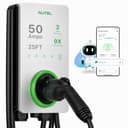 Autel MaxiCharger Home Built for the harshest driveway. The NEMA 4X enclosure is rated to keep charging in extreme cold and heat, it pushes a full 50 amps, and the app is capable. If your charger lives fully exposed to the weather, this is the one. | NEMA 4X — the corrosion-resistant one | |
| 2 | 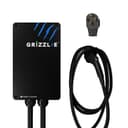 Grizzl-E Classic A deliberately dumb charger, and that is the point: no app, no cloud account, no firmware to fail — just a die-cast aluminum box built for a Canadian winter and rated to keep working outdoors. It went missing from Amazon for most of September 2026 and is listed again as of our 2026-09-28 check. If you want the same build with a WiFi radio in it, that is the Classic Connect. | NEMA 4 / IP67 cast aluminum, rated to -22°F | |
| 3 | 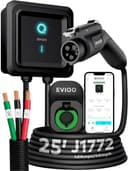 EVIQO 48A Level 2 Charger A lot of charger for the money: a full 48 amps, WiFi with scheduling, ENERGY STAR, and the longest usable reach in this group thanks to a 25 ft cable plus a 40-inch input lead. A strong value alternative to Emporia if you want maximum reach. | Dual-coded IP66 / NEMA 4 at a value price |
One last point that outranks all of the above: an enclosure rating is not a safety certification. UL 2594 is the safety standard for EV supply equipment, and that listing — not the weather code — is the one you should refuse to compromise on. We separate the two in UL, ETL and ENERGY STAR explained, and apply all of it to actual products in our outdoor charger roundup.
Frequently asked questions
What does NEMA 4 mean on an EV charger?
It is an enclosure type defined in NEMA 250, indicating construction intended for indoor or outdoor use that provides protection against windblown dust and rain, splashing water and hose-directed water. In EV charging terms it is a strong outdoor rating and the most common one on chargers marketed for exposed installs.
Is NEMA 3R good enough for outdoors?
For most installs, yes. NEMA 3R covers falling rain, sleet and external ice formation — the ordinary weather a wall-mounted charger sees under an eave or on a garage wall. What it does not claim is protection against hose-directed water or windblown dust, so a charger that will be pressure-washed or sits fully exposed on an open post is better served by a Type 4.
Is IP67 better than IP66?
Not necessarily, and this is the single most misread thing in charger specs. Under IEC 60529 the second digit is a scale of test conditions, not a cumulative ladder: 6 means protected against powerful water jets, 7 means protected against temporary immersion. A 7 alone does not imply water-jet protection unless the product is dual-coded, for example IP66/IP67.
Can I convert a NEMA rating to an IP rating?
Not reliably, and manufacturers should not claim you can. The two systems are defined by different bodies against different tests — NEMA types also cover things like corrosion resistance and gasket ageing that IP does not address at all. A rough correspondence exists but it only runs one way, and a claimed equivalence is a marketing statement rather than a certification.
What rating does a charger in an attached garage need?
Less than most buyers assume. Indoors, out of the weather, almost any rating is adequate and the enclosure should not drive your choice. Spend the money on cable length, amperage headroom or an ENERGY STAR listing instead. The rating matters when the unit lives outside, on a post, or in a place that gets hosed down.
What about the cold — is that in the rating?
No, and this catches people out. NEMA and IP describe ingress protection, not temperature. Operating range is a separate published specification, and manufacturers vary widely in whether they publish one at all. In a cold climate, that number and the cable's cold flexibility matter more than the enclosure code.
Sources
- NEMA — Enclosure Types (definitions from NEMA 250) — NEMA's own definitions: Type 3R protects against falling dirt and rain, sleet and snow; Type 4 adds windblown dust, splashing and hose-directed water; Type 4X adds protection against corrosion. NEMA also states its NEMA-to-IP table cannot be used to convert IP designations back to NEMA types (accessed July 20, 2026)
- IEC 60529 — Degrees of protection provided by enclosures (IP Code), full text — The IP code standard (verbatim national adoption, IS/IEC 60529:2001): first numeral 6 = dust-tight; second numeral 6 = protected against powerful water jets; second numeral 7 = protected against temporary immersion, and a 7 alone does not imply water-jet protection unless dual coded (accessed July 20, 2026)
- UL Solutions — EV Charging Infrastructure Services — UL on EVSE safety certification: ANSI/UL 2594 is the Standard for Electric Vehicle Supply Equipment (accessed July 19, 2026)
- Autel Energy — MaxiCharger AC Elite Home 50A product page — Autel's own listing: compliant with NEMA 4X standards, operating temperature -40F to 131F, 25 ft cable, 3-year warranty. RE-READ October 10, 2026 for the Emporia head-to-head, and the page now publishes materially more: 'Maximum Output | 12 kW / 50 A' with output 'Adjustable 16-50 A'; installation given as 'Hardwired - 70 A Circuit for Full Output'; an 'SAE J1772' connector; an enclosure rating of 'IP65 / NEMA 4X'; an operating range of '-40 to 131 F (-40 to 55 C)'; a '3 Years' warranty quoted as a single term with no component split; 'CSA and ENERGY STAR compliance' (no UL listing is claimed on this page); connectivity listed as 'Bluetooth, Wi-Fi, Ethernet, CAN, RS485'; app control to start, stop and schedule charging, monitor activity and adjust current; dimensions of 13.2 x 7.4 x 3.8 in (336 x 187 x 97 mm) and a weight of 15.4 lbs (7 kg); and the load-management sentence this comparison turns on - 'Supports both Adaptive Load Management (ALM) and charger-to-charger Dynamic Load Balancing (DLB). ALM requires compatible additional hardware, while DLB works between chargers without additional hardware.' The page publishes no solar-specific feature (accessed October 10, 2026)
- United Chargers — Grizzl-E Classic user manual (PDF) — Grizzl-E's own manual: NEMA 4 indoor/outdoor installation rating, operating temperature -22F to 122F, a caution that the enclosure's water rating cannot be guaranteed if the unit is mounted upside down, and a note to use a 20mA GFCI breaker where one is required because a 5mA breaker may cause disruptions (accessed July 20, 2026)
- ENERGY STAR — Electric Vehicle Chargers — ENERGY STAR on EVSE efficiency: certified chargers use about 40% less energy in standby than non-certified units (accessed July 19, 2026)
Keep reading
Ampure Go review
The only portable we track that is certified like a permanent install - UL 2594, ENERGY STAR and an IP67 / NEMA 6P body - reviewed in full.
Read the reviewCan an EV charger get wet?
These codes applied to the questions people actually ask: rain, snow, a hose, and a connector in a puddle.
Read the guideChargers built for outside
The picks, with each unit's published enclosure rating and what it really protects against.
See outdoor picksMounting with no wall
Where enclosure ratings stop being academic — an open post takes weather from every direction.
Read the install guideUL, ETL and ENERGY STAR
The other marks on the box — which are safety claims, which are efficiency claims, and which is non-negotiable.
Decode the marksCold weather costs
The specification that matters more than the enclosure code in a northern winter.
See the winter math