Do You Need a GFCI Breaker for an EV Charger?
This is the question that holds up more EV charger installs than any other, and the reason it is confusing is that the charger already does the job. Here is what is inside the box, what that means for a plug-in versus a hardwired install, and the one combination that reliably goes wrong.
How this is funded: we earn a commission if you buy through our links, at no extra cost to you. It never changes which product we recommend, and we’ll tell you when we’d skip one. Full disclosure.
The short answer: your charger almost certainly already has ground-fault protection built in, a plug-in install is the case where an upstream GFCI breaker is usually required anyway, and a hardwired install is the case where adding one can cause more problems than it solves. Your local inspector decides the final answer, and you should get that answer before the circuit is run.
That is more hedged than most pages on the internet will tell you, and the hedging is the honest part. The code requirement itself lives in the National Electrical Code, which is adopted on different cycles and with local amendments across the country — so no national page can tell you what your jurisdiction enforces. What a national page can do is tell you what the chargers themselves contain and what their manufacturers instruct, because that is published, and it settles most of the confusion on its own.
What is already inside the charger
A Level 2 charger is not a dumb switch. The safety listing for charging equipment includes charge-circuit interrupting and ground-monitoring functions, and the brands publish the specifics. ChargePoint’s Home Flex datasheet lists ground-fault detection by a 20 mA CCID with auto retry, alongside UL and cUL listing per UL 2594, UL 2231-1 and UL 2231-2. Wallbox’s North America datasheet lists an integrated CCID20 plus ground monitoring per UL 2231. Grizzl-E’s overview lists built-in GFCI along with over-current, over-voltage, ground-fault and over-temperature protection. Lectron lists ETL listing to UL 2594, UL 2231 and UL 2251 on the Nexus units.
CCID stands for charge-circuit interrupting device, and the number is its sensitivity in milliamps. Note that all of those are 20 mAdevices, not the 5 mA you find in a bathroom GFCI receptacle. That difference is deliberate — a charging cable carrying 40 amps for eight hours has more normal leakage than a hair dryer — and it is the root of the most common install failure, which we come back to below.
Plug-in: the receptacle is the question
If your charger ends in a NEMA 14-50 or 6-50 plug, the install now involves a receptacle, and receptacles in garages, outdoors and other damp or wet locations are what the code’s GFCI provisions are aimed at. They are about protecting a person who plugs something into that outlet, which is a different purpose from protecting the charging circuit.
The manufacturers reflect this in their own install guidance. ChargePoint’s datasheet notes that an outdoor plug-in install requires an outdoor-rated GFCI breaker upstream. Lectron’s safety list says to “use GFCI protection for outdoor plugs.” So for the common case — a plug-in charger on a 14-50 in a garage or on an exterior wall — plan on a GFCI breaker being part of the job and part of the cost. Our NEMA 14-50 guide covers what else that receptacle needs to be, including why an EV-grade outlet is not the same thing as the cheapest one on the shelf, and our plug-in roundup covers the chargers themselves.
Hardwired: no receptacle, and a real conflict to avoid
A hardwired charger has no plug and no receptacle. That removes the part of the question the receptacle rules were written for, and it is one of the quiet reasons hardwiring is often the simpler permit conversation as well as the more durable install.
It also introduces a trap. ChargePoint’s datasheet is explicit that an external GFCI may conflict with the charger’s internal ground-fault protection on a hardwired install. Two devices watching the same circuit for leakage, with different thresholds and different retry behaviour, interact badly: the more sensitive one trips on normal operation, and because the charger is doing nothing wrong, nothing you change about the charger fixes it. This is the single most common way a correctly specified charger ends up labelled faulty. Our troubleshooting page works through it, and it is a much better outcome to avoid it at the specification stage.
If a GFCI breaker is required, specify 20 mA
There are jurisdictions and situations where a GFCI breaker goes in front of a charger regardless. In that case the sensitivity is the thing to get right, and Grizzl-E publishes the clearest instruction we can cite from a manufacturer: use a 20 mA GFCI breakerwhere one is required, because a 5 mA breaker “may cause disruptions.”
That is the fix for the conflict above, stated by a charger maker in its own manual: match the upstream device’s threshold to the charger’s rather than putting a bathroom-grade device in front of an appliance that draws 40 amps for eight hours. Twenty-milliamp GFCI breakers exist and your electrician can source them, but they are not what a supply house hands over by default, so it needs to be specified.
Breaker amperage is a separate question
It is worth separating the two things people mean by “what breaker do I need.” Ground-fault protection is one axis. Amperage is the other, and it is set by the circuit rather than by anything to do with GFCI. Because the NEC classifies EV charging as a continuous load, the circuit is sized at 125% of the charger’s draw — the 80% rule from the other direction. A 40-amp charger needs a 50-amp circuit; a 48-amp charger needs a 60-amp one. Our wire size and breaker guide covers that properly, including voltage drop on a long run, and panel capacity covers whether you have the room at all.
Who actually decides
The authority having jurisdiction — your local building department and the inspector who signs the permit. They are working from the code cycle your jurisdiction has adopted, which may be several years behind the current NEC, plus any local amendments. That is why the useful version of this question is not “what does the code say” but “what will my inspector require, asked before the wire is pulled.” Our permits guide covers how that conversation goes, and hiring an electrician has the questions that separate someone who has done twenty of these from someone who has done one.
Chargers that publish their ground-fault specification
If this page has convinced you of anything, let it be that a brand willing to print its CCID rating is a brand that has thought about the install. These four publish theirs, and all four are units we rank elsewhere on the site.
| Spec | ChargePoint Home Flex | Wallbox Pulsar Plus | Grizzl-E Classic Connect 40A | EVIQO 40A NEMA 14-50 Charger |
|---|---|---|---|---|
| Install | Hardwired, NEMA 6-50 or NEMA 14-50 | Hardwired (40A model plugs in) | NEMA 14-50 plug | NEMA 14-50 plug |
| Max output | 50 A | 48 A | 40 A | 40 A |
| Circuit at 125% | 70 A | 60 A | 50 A | 50 A |
| Enclosure | NEMA 3R | NEMA 4 | NEMA 4 (IP67) | IP66 / NEMA 4 |
| Listings | UL/cUL listed, ENERGY STAR | UL 2594/2231, ENERGY STAR | UL/cUL listed (file E510712) | UL, ETL, FCC, ENERGY STAR |
Quick picks
Ranked on published specs, charging speed, electrical fit and value. Select a row to jump to the full write-up. We have not bench-tested these chargers — here is exactly what we do instead.
| # | Product | Best for | Price |
|---|---|---|---|
| 1 | 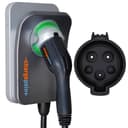 ChargePoint Home Flex The safest default for most homes: you set the amperage in the app to 16, 24, 32, 40, 48 or 50A, so one charger fits whatever circuit your panel can spare today and scales up if you upgrade later. The app is the most mature here, firmware arrives over the air, and the warranty is long. | Publishes 20 mA CCID and the install note above | $516.71 · View on Amazon Price as of October 18, 2026. #ad How we’re funded |
| 2 | 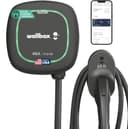 Wallbox Pulsar Plus The one to buy when wall space is tight: it's among the smallest 48A units you can get, with dynamic load management so it can share a circuit without tripping the main. A polished premium charger — and priced like one. | Publishes integrated CCID20 per UL 2231 | |
| 3 | 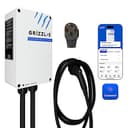 Grizzl-E Classic Connect 40A Grizzl-E's cast-aluminum build with a WiFi radio in it. You get the IP67 body and the cold-flexible 25 ft cable that made the brand's name, plus scheduling, usage history and utility demand-response programs in the Grizzl-E Connect app — in a plug-in unit that comes off the wall when you move. The amperage is still set with a DIP switch, which is either charmingly honest or annoyingly analog depending on your taste. | Manual specifies the 20 mA breaker to use | $349.99 · View on Amazon Price as of October 18, 2026. #ad How we’re funded |
| 4 | 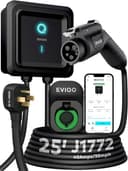 EVIQO 40A NEMA 14-50 Charger The most charger you can get without an electrician's invoice. It plugs into a NEMA 14-50 outlet for a full 40 amps, keeps the WiFi app, the ENERGY STAR listing and the 25 ft cable from EVIQO's hardwired unit, and can be unplugged and taken with you when you move. | Plug-in 40A with UL, ETL and ENERGY STAR listings |
Frequently asked questions
Does an EV charger need a GFCI breaker?
It depends on whether the charger plugs in or is hardwired, and on your local code. Listed Level 2 chargers already contain ground-fault protection as part of their UL 2231 listing - ChargePoint's datasheet, for example, publishes ground-fault detection by a 20 mA CCID with auto retry. For a plug-in install, the receptacle is what the code's GFCI rules address, and ChargePoint's own installer note says an outdoor plug-in install requires an outdoor-rated GFCI breaker upstream. For a hardwired install there is no receptacle, and the same note warns that an external GFCI may conflict with the charger's internal protection. Your inspector has the final word.
What size GFCI breaker do I need for an EV charger?
Sensitivity matters more than amperage here. Where a GFCI breaker is required in front of a charger, Grizzl-E's own manual instructs using a 20 mA GFCI breaker and warns that a 5 mA breaker may cause disruptions. On amperage, the breaker is sized by the circuit, not the charger - the NEC treats EV charging as a continuous load and requires the circuit at 125% of it, so a 40-amp charger needs a 50-amp breaker and a 48-amp charger needs a 60-amp one.
Why does my EV charger trip the GFCI breaker?
The most common cause is two layers of ground-fault protection fighting each other - a 5 mA GFCI breaker upstream of a charger that already has its own CCID20 device. Moisture at a receptacle and a genuinely faulty circuit are the other usual causes. We have a full troubleshooting page that works through them in order.
Is a hardwired EV charger safer than a plug-in one?
It removes a failure point rather than adding safety features. A hardwired charger has no plug-and-receptacle junction, and that junction is where heat concentrates under a continuous load and where water gets in outdoors. The ground-fault protection inside the charger is the same either way.
Can I use a standard breaker for a hardwired EV charger?
Often yes, and ChargePoint's datasheet is explicit that an external GFCI may conflict with the charger's internal ground-fault protection on a hardwired install. But whether a plain breaker satisfies your jurisdiction depends on the code cycle it has adopted and any local amendments, so this is a question for your electrician and inspector before the circuit is run - not a decision to make from a web page.
Sources
- ChargePoint — Home Flex datasheet (PDF) — ChargePoint's own datasheet: enclosure rating Type 3R per UL 50E, operating temperature -22F to 122F, 23 ft cable, plus installer notes that an outdoor plug-in install requires an outdoor-rated GFCI breaker upstream while an external GFCI may conflict with the charger's internal ground-fault protection on a hardwired install. RE-READ September 3, 2026 for the review refresh: the same datasheet also publishes maximum 12 kW (240V AC x 50A) with output amperage adjustable via the mobile app to 16A, 24A, 32A, 40A, 48A or 50A; a required dedicated dual-pole breaker rated for 125% of maximum load; 'Software Updates: Firmware updated over-the-air (OTA)'; 2.4/5 GHz Wi-Fi (802.11 a/b/g/n); local storage of up to 90 days of charging session data (100 sessions) if the network drops; power measurement accuracy +/- 2.0%; ground-fault detection by 20 mA CCID with auto retry; and UL and cUL listing per UL 2594, UL 2231-1 and UL 2231-2, NEC Article 625 compliant. Ordering information lists the plug-in station models CPH50-NEMA6-50-L23 and CPH50-NEMA14-50-L23 (accessed September 3, 2026)
- United Chargers — Grizzl-E Classic user manual (PDF) — Grizzl-E's own manual: NEMA 4 indoor/outdoor installation rating, operating temperature -22F to 122F, a caution that the enclosure's water rating cannot be guaranteed if the unit is mounted upside down, and a note to use a 20mA GFCI breaker where one is required because a 5mA breaker may cause disruptions (accessed July 20, 2026)
- Lectron - EV Charging FAQ — Lectron's own FAQ, read for its plug-and-cord guidance: 'It's recommended to plug the charger directly into a dedicated outlet without extension cords', with a safety list that reads 'Always match plug and outlet ratings (volts/amps)', 'Use GFCI protection for outdoor plugs', 'Avoid extension cords or daisy-chaining', 'Inspect plugs and cables regularly' and 'Hire a licensed electrician for installation'. Its NEMA table publishes 5-15 as 120V / 15A, 5-20 as 120V / 20A, 6-20 as 240V / 20A, 10-30 / 14-30 as 240V / 30A ('Common in older dryers') and 14-50 as 240V / 50A, and states that Lectron offers NEMA 5-15, 14-50 and 10-30 plug options for portable charging. Also states that a Tesla owner can use the J1772-to-Tesla adapter 'included with most Tesla', and that adapters 'don't generate power - they only enable compatibility between chargers and vehicles' (accessed September 17, 2026)
- Wallbox — Pulsar Plus North America technical datasheet (NACS edition, version 10/25, PDF) — Wallbox's own current North America datasheet (document version Wallbox_Datasheet_PulsarPlus_NA_NACS_EN_b, 10/25) for the Pulsar Plus, model PUP2. Two electrical models: the 40A model is 9.6 kW with connection type 'NEMA 14-50 or hardwired', and the 48A model is 11.5 kW and hardwired. Charging protocol 'SAE J1772 or NACS'; connector type 'SAE J1772 Type 1 and NACS'; 25 ft cable; 7.8 x 7.9 x 3.9 in and 4.4 lbs without cable; environmental rating 'Indoor & Outdoor: NEMA Type 4 per UL 50E'; operating temperature -22F to 104F and storage -40F to 158F; rated voltage 208/240V (Level 2) 60Hz; configurable current by hardware selector 16A to rated current and by software 6A to rated current; connectivity WiFi and Bluetooth with the Wallbox App and Portal; OCPP 1.6j; energy management listing 'Static Load Management, Dynamic Load Management' and 'Solar Charging supported', both footnoted 'May require power meter accessory'; electrical safety 'UL Certification (NRTL) UL 2594 - UL 2231'; integrated CCID20 plus ground monitoring per UL 2231; ENERGY STAR certification: Yes. The part-number structure confirms both a Type 1 and a NACS EVC code and both a hardwired and a NEMA 14-50P version code (accessed September 3, 2026)
- Lectron — NEXUS Level 2 J1772 EV Charging Station, 240V, 48 Amp, Hardwired — Lectron's own product page: up to 48 A continuous at 240 V for 11.5 kW, hardwire-only install by a licensed electrician on a dedicated 240 V circuit, IP66 weatherproof housing for indoor or outdoor use, 23 ft output cable of 15.0 mm (±0.3 mm) heavy-duty compound the brand states is 'engineered to stay flexible and easy to wrap around the wall mount, even in freezing weather', wall-mount J-hook and plug holder included, ETL listed to UL 2594 / UL 2231 / UL 2251 with ENERGY STAR and FCC certification, and a 3-year Lectron warranty. No operating-temperature range and no Wi-Fi or app support are published for this model (accessed August 20, 2026)
- UL Solutions — EV Charging Infrastructure Services — UL on EVSE safety certification: ANSI/UL 2594 is the Standard for Electric Vehicle Supply Equipment (accessed July 19, 2026)
- NFPA — Using the Latest NEC for EV Charger Installations — NFPA on NEC (NFPA 70) Article 625: EV charging is a continuous load, so circuits are sized to 125% of load (the 80% rule) (accessed July 19, 2026)
- EVIQO — Level 2 EV Charger, 40A (9.6 kW), NEMA 14-50 plug-in (Gen 2) — EVIQO's own product page: 40A / 9.6 kW on a NEMA 14-50 plug, SAE J1772, 25 ft charging cable plus a 40 in input cable, IP66 / NEMA 4 enclosure, UL / ETL / FCC / ENERGY STAR listings, 3-year standard warranty, app-adjustable 6-40A output, and a note that it needs an EV-grade 4-prong 14-50 receptacle rather than a dryer outlet. RE-READ September 15, 2026 for the garage roundup: the page additionally states an operating temperature range of -22F to 122F, that the app needs a 2.4 GHz WiFi connection, that the standard 3-year warranty is extendable to 4, and that the unit ships in 1-2 business days (accessed September 15, 2026)
- U.S. DOE Alternative Fuels Data Center — Charging Electric Vehicles at Home — US DOE on home EV charging: most owners charge overnight on Level 1 or Level 2, installs follow NEC Article 625, with example home-charging costs (accessed July 19, 2026)
Keep reading
Why your charger keeps tripping the GFCI
The troubleshooting page for a charger that is already installed and will not stay on.
Work through the causesWire size and breaker sizing
The 125% continuous-load rule, voltage drop over distance, and why we will not tell you a wire gauge.
Read the guideThe NEMA 14-50 outlet
What it takes to put a proper EV-grade receptacle where the car parks.
Read the guidePermits and inspection
Who the authority having jurisdiction is, what they look at, and why the answer on this page ends with them.
Read the guide