One Charger for a Tesla and a Non-Tesla
A Model Y in one bay and a Bolt, an Ioniq or a Mach-E in the other is now an ordinary household. It does not need two chargers, and it does not need a charger with two plugs. It needs one decision: which car gets the native connector, and how the other one bridges to it.
How this is funded: we earn a commission if you buy through our links, at no extra cost to you. It never changes which product we recommend, and we’ll tell you when we’d skip one. Full disclosure.
Two cars, two plug shapes, one driveway. The instinct is to search for a charger with both connectors, and one exists — we cover it below. But for most households that is the expensive answer to a problem a single adapter already solves, and often an adapter you already own. This page lays out the three routes, what each costs, and which driver ends up holding the adapter under each one.
The two connectors, briefly
Every non-Tesla EV sold in North America until recently uses SAE J1772 for Level 1 and Level 2 charging. Teslas use NACS, now standardized as SAE J3400 and being adopted across the industry. They are different shapes carrying the same AC power and the same signaling, which is why a passive adapter between them works. Lectron’s FAQ puts it plainly: adapters “don’t generate power — they only enable compatibility between chargers and vehicles.” Our connector guide has the history and the transition timeline.
| Route | The Tesla | The J1772 car | What it costs | Best when |
|---|---|---|---|---|
| J1772 charger + the Tesla's own adapter | Plugs in through the J1772-to-Tesla adapter | Plugs straight in | Nothing extra - the adapter ships with most Teslas | The non-Tesla charges most often, or you want the widest choice of chargers |
| NACS charger + a NACS-to-J1772 adapter | Plugs straight in | Plugs in through a NACS-to-J1772 adapter you buy | One adapter | The Tesla is the daily driver; the other car charges occasionally |
| Dual-cable charger with one of each | Own NACS cable | Own J1772 cable | The premium for a two-cable unit | Both cars charge nightly and nobody wants to touch an adapter |
Route one: a J1772 charger and the adapter in the trunk
This is the route that costs nothing extra, and it is the one most mixed households should start from. A J1772 charger serves the non-Tesla directly. The Tesla charges through the J1772-to-Tesla adapter that, per Lectron’s FAQ, is included with most Teslas — the same adapter Tesla drivers use at public J1772 stations. Lectron rates its own version of that adapter to 80 amps, which is more than any home charger delivers, so the adapter is not the bottleneck; the car’s onboard charger and the wall unit are.
The cost is a small ritual: the Tesla driver clips the adapter on before plugging in and takes it off after, or leaves it on the charger handle permanently, in which case the J1772 driver removes it. Households where the Tesla charges every night and the other car charges twice a week find that mildly annoying. Households where it is the other way round barely notice. The upside is the widest choice of chargers on the market, at the lowest prices, with no purchase beyond the charger.
Route two: a NACS charger and an adapter for the other car
Flip it. A NACS charger — the Lectron Nexus NACS, the ChargePoint Home Flex NACS, or the NACS versions of the Wallbox and Grizzl-E units, all of which the brands list — plugs straight into the Tesla. The J1772 car charges through a NACS-to-J1772 adapter, which Lectron’s FAQ lists as the “Tesla to J1772” type used to charge J1772 EVs at Tesla equipment and rates at 48 A and 250 V. That adapter is a purchase, and it lives on the second car’s side of the arrangement.
This route makes sense when the Tesla is the daily driver, or when you expect your next non-Tesla to arrive with a NACS port — which SAE J3400’s industry adoption makes increasingly likely. Buy the charger for the connector you will have in five years, and adapt the car you will not.
Route three: a charger with both cables
Grizzl-E’s Duo Connect is a single cast-aluminum unit with two 25-foot output cables, and its spec page lists J1772 and NACS Level 2 connections. Both cars plug in with no adapter, and both can charge at once — with a catch Grizzl-E states directly: the 40 amps is shared, splitting in half automatically or by the per-connector limits you set in the app. One car alone gets the full 9.6 kW; two at once get about 4.8 kW each by our arithmetic, roughly 17 miles of range per hour apiece. For two commuters charging overnight that is usually plenty.
One honest caveat: the Amazon listing we link is the NACS-to-NACS cable pairing. Grizzl-E sells the mixed J1772-plus-NACS version direct. If you want route three for a mixed household, that is the SKU to ask for. Our Duo Connect review and the two-car roundup cover the load-sharing arithmetic and the alternatives, including two chargers on one circuit.
What stays the same on every route
The circuit. One charger is one continuous load, and the NEC sizes its circuit at 125% of the charger’s current whether one car or two will use it: a 50-amp breaker for a 40-amp unit, 60 for a 48. The dual-cable Duo does not need more, because it shares rather than doubles. And the speed ceiling is set per car by its onboard charger, not by the plug shape — a Tesla and a non-Tesla on the same 48-amp charger may charge at different rates for reasons that have nothing to do with the adapter. Our onboard charger guide explains why.
The chargers, by route
Four from our registry, one for each way of doing this: two J1772 units for route one, the native NACS unit for route two, and the dual-cable Grizzl-E for route three.
Quick picks
Ranked on published specs, charging speed, electrical fit and value. Select a row to jump to the full write-up. We have not bench-tested these chargers — here is exactly what we do instead.
| # | Product | Best for | Price |
|---|---|---|---|
| 1 | 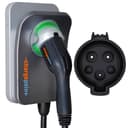 ChargePoint Home Flex The safest default for most homes: you set the amperage in the app to 16, 24, 32, 40, 48 or 50A, so one charger fits whatever circuit your panel can spare today and scales up if you upgrade later. The app is the most mature here, firmware arrives over the air, and the warranty is long. | Route one: J1772, best app, NACS version also sold | $549.00 · View on Amazon Price as of September 18, 2026. #ad How we’re funded |
| 2 | 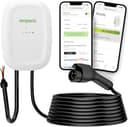 Emporia Level 2 EV Charger The value pick that doesn't feel cheap: a full 48 amps, ENERGY STAR listing, WiFi with genuine energy monitoring, and a 25 ft cable — for well under what the big names charge. It's the one we point most people to first. | Route one: J1772 value, 48 A hardwired | $449.00 · View on Amazon Price as of September 18, 2026. #ad How we’re funded |
| 3 | 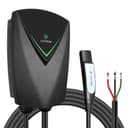 Lectron Nexus NACS (Tesla) Charger For a Tesla owner who doesn't want to babysit an adapter: a native NACS (J3400) connector plugs straight into the car, at a full 48 amps, with the safety listings you want. No app, but Teslas schedule charging in the car anyway. | Route two: native NACS, no app | |
| 4 | 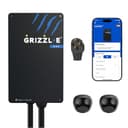 Grizzl-E Duo Connect 40A One box, two cables, one circuit. The Duo Connect lets a two-EV household charge both cars overnight without a second charger, a second breaker or a panel upgrade — because it splits one 40-amp supply between the connectors rather than doubling it. That is the whole trade: convenience and a much cheaper install, at half the speed each when both cars are plugged in. | Route three: two cables (ask for the mixed pair) | $899.99 · View on Amazon Price as of September 18, 2026. #ad How we’re funded |
Which route, in one paragraph
If the non-Tesla charges most, or you want the cheapest good charger: a J1772 unit, and the Tesla uses its own adapter. If the Tesla charges most, or your next car will be NACS: a NACS unit, and one adapter for the other car. If both cars charge every night and nobody wants to touch an adapter, and you can accept shared amps: the dual-cable Grizzl-E in its mixed pairing. Most households are the first case, and most of them already own everything they need except the charger.
Frequently asked questions
Can a Tesla and a non-Tesla share one home charger?
Yes, with a single adapter. A J1772 charger serves the non-Tesla directly and the Tesla through the J1772-to-Tesla adapter that Lectron's FAQ notes is included with most Teslas. A NACS charger serves the Tesla directly and the other car through a NACS-to-J1772 adapter you buy. Either way, one circuit and one charger cover both cars.
Is there a charger with both a NACS and a J1772 plug?
Yes. Grizzl-E's Duo Connect is a two-cable unit whose spec page lists J1772 and NACS Level 2 connections; it splits one 40-amp supply between the two cables. The Amazon listing we link is the NACS-to-NACS cable pairing, so a mixed household would want the mixed-cable version Grizzl-E sells direct. No single-cable charger in our registry has a swappable head.
Should I buy a J1772 or a NACS charger for a mixed household?
J1772 if the non-Tesla is the car that charges most, or if you want the widest choice of chargers — the Tesla already owns the adapter. NACS if the Tesla is the daily driver and the other car charges occasionally, since the adapter it needs is a purchase. Either is fine; the question is which driver you would rather have reaching for an adapter.
Does charging through an adapter slow the car down?
Not on its own. Lectron's FAQ describes adapters as enabling compatibility rather than generating power, and rates its J1772-to-Tesla adapter to 80 amps — more than any home charger delivers. The car's onboard charger and the wall unit's amperage set the speed; a listed adapter in good condition passes it through.
Can two cars charge at the same time from one charger?
Only from a dual-cable unit like the Grizzl-E Duo Connect, and then the 40 amps is shared: Grizzl-E states dual charging automatically splits the available current in half, or you can set each connector's current in the app. Two cars at once get about 4.8 kW each by our arithmetic. A single-cable charger charges one car at a time; most households simply alternate nights.
Will new non-Tesla EVs still need J1772?
Increasingly not. SAE J3400 — the NACS standard — is being adopted industry-wide, and newer non-Tesla models are arriving with NACS ports. If your next car will be NACS, a NACS charger plus one adapter for the current J1772 car is the choice that ages best. Our connector guide covers what is changing and when.
Sources
- Lectron - EV Charging FAQ — Lectron's own FAQ, read for its plug-and-cord guidance: 'It's recommended to plug the charger directly into a dedicated outlet without extension cords', with a safety list that reads 'Always match plug and outlet ratings (volts/amps)', 'Use GFCI protection for outdoor plugs', 'Avoid extension cords or daisy-chaining', 'Inspect plugs and cables regularly' and 'Hire a licensed electrician for installation'. Its NEMA table publishes 5-15 as 120V / 15A, 5-20 as 120V / 20A, 6-20 as 240V / 20A, 10-30 / 14-30 as 240V / 30A ('Common in older dryers') and 14-50 as 240V / 50A, and states that Lectron offers NEMA 5-15, 14-50 and 10-30 plug options for portable charging. Also states that a Tesla owner can use the J1772-to-Tesla adapter 'included with most Tesla', and that adapters 'don't generate power - they only enable compatibility between chargers and vehicles' (accessed September 17, 2026)
- SAE International — J1772 Conductive Charge Coupler — The SAE J1772 connector standard for AC Level 1 and Level 2 charging in North America (accessed July 19, 2026)
- SAE International — J3400 North American Charging System (NACS) — The SAE J3400 / NACS standard (the Tesla-derived connector) now being adopted industry-wide (accessed July 19, 2026)
- U.S. DOE Alternative Fuels Data Center — Electric Vehicles for Consumers — US DOE on connector types: J1772 for Level 1/2, and CCS, CHAdeMO or NACS (J3400) for DC fast charging (accessed July 19, 2026)
- United Chargers — Grizzl-E Duo Connect 40A technical specifications — Grizzl-E's own spec table for the Duo Connect 40A: two output cables, Type 1 (J1772) and NACS Level 2 connections, aluminum enclosure, operating temperature -30C to +50C, IP67 protection, 25 ft output cable length, 18 in input cable, 208-240 VAC, nominal input current 16/24/32/40 A, maximum output current 40 A, one LED indicator per connector, DIP-switch power selector, 40 lb unit weight (accessed August 12, 2026)
- United Chargers — Grizzl-E Duo Connect 40A product overview — Grizzl-E's own overview for the Duo Connect 40A: a dual-port Wi-Fi connected 40A plug-in charger whose dual charging 'automatically splits the available current in half, or you can set individual charging currents for each connector with the Grizzl-E Connect app', with scheduling, usage history, remote lockout, monitoring and diagnostics in the app (accessed August 12, 2026)
- Wallbox — Pulsar Plus (US) product page — Wallbox's own US product page for the Pulsar Plus: sold in '40 and 48 Amps', with the 40A variant offering 'easy NEMA 14-50 plug installation'; 'Up to 11.5kW'; available with 'J1772 or NACS connectors' and 'No adapters needed'; 25 ft cable; Bluetooth and WiFi controlled through the Wallbox app; 'Dynamic Load Management' described as 'Maximize charging speed while staying within your home's power limit'; solar charging supported with the separately sold Power Meter accessory, with the caveat that 'Solar charging is not compatible with multiple-charger installations and OCPP'. Wallbox's own listed starting price on this page was $649.99 and the Power Meter accessory $299.00 on the date accessed (accessed September 3, 2026)
- ChargePoint — Home Flex home charger product page — ChargePoint's own current product page for the Home Flex, read for the 2026-09-03 review refresh: three install configurations are offered — hardwired, NEMA 6-50 plug and NEMA 14-50 plug — with 'up to 50 amps of power delivered to your EV' on the hardwired model and 'up to 40A of power' on the plug-in models. ChargePoint's own range claim is 'up to 37 miles of range per hour' hardwired and '30 miles of range per hour' plug-in. J1772 and NACS connectors are offered across all configurations, and ChargePoint states the unit is 'UL Listed for safety', 'ENERGY STAR certified for efficiency' and carries a '3-year warranty' (accessed September 3, 2026)
- Lectron — NEXUS Level 2 J1772 EV Charging Station, 240V, 48 Amp, Hardwired — Lectron's own product page: up to 48 A continuous at 240 V for 11.5 kW, hardwire-only install by a licensed electrician on a dedicated 240 V circuit, IP66 weatherproof housing for indoor or outdoor use, 23 ft output cable of 15.0 mm (±0.3 mm) heavy-duty compound the brand states is 'engineered to stay flexible and easy to wrap around the wall mount, even in freezing weather', wall-mount J-hook and plug holder included, ETL listed to UL 2594 / UL 2231 / UL 2251 with ENERGY STAR and FCC certification, and a 3-year Lectron warranty. No operating-temperature range and no Wi-Fi or app support are published for this model (accessed August 20, 2026)
- Emporia — Classic Level 2 EV Charger spec sheet (PDF) — Emporia's own spec sheet: watertight NEMA Type 4 indoor/outdoor enclosure, operating temperature -22F to 122F, 25 ft cable (accessed July 20, 2026)
- NFPA — Using the Latest NEC for EV Charger Installations — NFPA on NEC (NFPA 70) Article 625: EV charging is a continuous load, so circuits are sized to 125% of load (the 80% rule) (accessed July 19, 2026)
Keep reading
J1772 vs NACS connectors
The plug-shape difference, why a Tesla uses NACS, and how the adapter bridges to J1772.
Read the connector guideBest chargers for two cars
Dual-port units, load-sharing pairs and the one-charger-two-cars routine, with the amps math.
See the two-car picksBest chargers for Tesla
The native NACS units ranked, plus the J1772-plus-adapter route in full.
See the Tesla picksGrizzl-E Duo Connect review
The two-cable charger in full — how it splits current, and which cable pairings exist.
Read the review