Does an EV Charger Need a Dedicated Circuit?
Yes. Every manufacturer's installation instruction we have read says so, and the reason is the load rather than the paperwork: an EV charger draws near its rating for hours on end, which is unlike anything else in a house. That one answer kills the splitters and the shared-dryer plans - and leaves two legitimate ways to run two cars from one circuit.
How this is funded: we earn a commission if you buy through our links, at no extra cost to you. It never changes which product we recommend, and we’ll tell you when we’d skip one. Full disclosure.
Yes, and it is not a close call. Every charger installation instruction we have read specifies a dedicated 240-volt circuit, and US DOE guidance is that home charging installs follow NEC Article 625. That answer is worth more than its length, because it quietly rules out almost every clever plan people arrive with: the splitter, the dryer circuit, the welder outlet in the garage, the spare 240-volt line that used to feed a hot tub and still feeds the pump.
One note on sourcing before the argument. We cite the manufacturers’ own installation statementsand DOE’s pointer to Article 625 rather than reprinting code text, because we fetch what we cite and NFPA’s own pages do not return readable code language to a plain request. Adopted editions vary by jurisdiction. Your local inspector is the authority, and on a permitted install they will tell you.
Why the answer is about hours, not amps
The interesting part of this question is why, because the why is what tells you which workarounds are hopeless and which are merely expensive.
An EV charger is unlike anything else in a house. It draws close to its full rating continuously, for six, eight or ten hours at a stretch. Your oven cycles. Your dryer runs 40 minutes on a varying load. Your air conditioner duty-cycles against a thermostat. A car charging from 20% to 90% simply pulls, all night, without pause.
Electrical code recognizes that by treating EV charging as a continuous load and sizing the branch circuit to 125% of the charger’s draw— the “80% rule” — which is why a 40-amp charger needs a 50-amp circuit and a 48-amp charger needs 60. Our wire size and breaker guide works through the conductor side of that.
Now put a second load on the same circuit. The charger is not going to get out of the way. There is no window where the car pauses and lets the dryer have its forty minutes. So a shared circuit is not “two loads taking turns” — it is one load that is always present, plus something else. The breaker is the only arbitrator, and a breaker is protection of last resort rather than a design.
That framing also explains why the other direction works fine. Dialing a charger down on a smaller dedicated circuit is completely legitimate: 24 amps on a dedicated 30-amp circuit is a clean install, and our 30-amp roundup covers the units that publish that setting. The problem is never a small circuit. It is a shared one.
The workarounds, assessed honestly
People do not arrive at this page in the abstract. They arrive with a specific plan. Here are the plans, in order of how often we see them.
“I will share the dryer circuit.” This is the most common one and it has its own page, because the answer has more parts than a paragraph can hold. The short version: a 30-amp dryer circuit supports 24 amps continuous, no charger we track has the right plug, and the dryer is still on it. Our dryer-outlet guide goes through all three obstacles and the two routes that work.
“I will use a splitter.” Products exist that let two chargers alternate on one circuit, and the engineering principle behind the good ones is sound: make simultaneous full draw impossible, rather than unlikely. We do not track any splitter product, so we will not name one. What we will give you is the test to apply: does it prevent simultaneous draw by design rather than by scheduling? Does it carry a safety listing from a recognized lab to a relevant standard? Will your inspector pass it? A passive Y-adapter that just doubles a receptacle fails all three and is the thing you must not buy.
“I will use the welder outlet.” Better than the dryer, because a welder outlet is often a genuine 50-amp circuit and a welder is used occasionally rather than nightly. It is still a shared circuit, and a NEMA 6-50 has no neutral, which matters for some chargers. If the welder has effectively retired, converting that circuit to a dedicated EV circuit is a short, cheap job and the best outcome on this page.
“I will use an interlock.”A mechanical interlock or manual transfer device makes simultaneous use physically impossible, and that is a real answer rather than a dodge. It is an electrician’s install, governed by local acceptance, and by the time it is fitted and inspected its cost is often within range of a new circuit — which gets you 40 amps instead of 24 and your laundry back. Worth pricing, not worth assuming.
“I will just not run them at the same time.” The failure mode is somebody else in the household, at 11pm, with wet towels. We would not build an electrical installation on a household convention.
The two legitimate ways to run two cars
This is where the dedicated-circuit rule stops being a restriction and starts being a design constraint with good solutions. If what you actually want is two EVs on one circuit, both legitimate answers keep the circuit dedicated to EV charging — they just put more than one car on it.
| Charger | How it shares | Rated max | Install | WiFi / app | Connector |
|---|---|---|---|---|---|
| Grizzl-E Duo Connect 40A | Two cables, 40 A shared between them | 40 A | NEMA 14-50 plug or hardwired | Yes | NACS |
| Emporia Pro | PowerSmart throttles against whole-home load (needs the bundled Vue 3) | 48 A | Hardwired or NEMA 14-50 plug | Yes | J1772 |
| ChargePoint Home Flex | Amperage set 16-50 A in the app, one car at a time | 50 A | Hardwired, NEMA 6-50 or NEMA 14-50 | Yes | J1772 |
| Autel MaxiCharger Home | Charger-to-charger Dynamic Load Balancing; ALM needs extra hardware | 50 A | Hardwired | Yes | J1772 |
One: a dual-cable charger. The Grizzl-E Duo Connect 40A has two connectors and shares its output between them. The number to understand before you buy is that 40 amps is the total for the unit, not per connector, so two cars charging simultaneously each get roughly half — about 17 miles of range per hour each by our arithmetic at a reference 3.5 miles per kWh. For two cars that both sit from 7pm to 7am that is plenty. For two high-mileage drivers on opposite shifts it is not.
Two: load management.This is the only technology that genuinely creates headroom rather than dividing it, and it is worth understanding what each brand actually ships. Emporia’s Probundles the Vue 3 energy monitor and its PowerSmart feature throttles the car against real-time whole-home load — which is how a 48-amp charger ends up on a service a load calculation says has no room for one. Read the dependency though: PowerSmart needs the bundled monitor installed in your panel, it is not a charger-only feature, and Emporia says so. Autel is the same shape in reverse: it states that its Adaptive Load Management “requires compatible additional hardware” while charger-to-charger Dynamic Load Balancing does not. Our load-management guide goes through the distinction properly, and our small-panel roundup is the page for anyone whose real constraint is the service rather than the circuit.
And the free option. One charger, and you move the cable. A 25-foot cable reaches two bays in most garages, both cars are parked for twelve hours, and neither needs a full charge most nights. It costs nothing, it adds no hardware to fail, and it is what most two-car households settle into. Our two-car roundup makes the case properly.
What to do next
Confirm what is actually spare. A free breaker space is not a circuit, and a 240-volt circuit that still feeds something is not spare. Our panel-capacity guide has a load check you can run yourself before anyone quotes you.
Size the circuit for the charger you want, not the one you have room for. If the panel can carry 60 amps, a 48-amp charger is the end of the conversation. If it can only spare 30, dial a good charger down to 24 and you will still charge overnight without noticing — see what size charger do I need.
If the service itself is the limit, that is a different page. A 100-amp service with electric heat may genuinely have no room, and the answer is either a service upgrade or a load-managed charger. Both are real; one is far cheaper. And get the whole bill in view first with our installation cost breakdown, because the circuit run is usually a bigger line than the charger.
Quick picks
Ranked on published specs, charging speed, electrical fit and value. Select a row to jump to the full write-up. We have not bench-tested these chargers — here is exactly what we do instead.
| # | Product | Best for | Price |
|---|---|---|---|
| 1 | 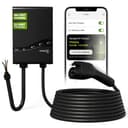 Emporia Pro The answer to a panel that says no. The Pro ships with Emporia's Vue 3 energy monitor in the same box, watches what the rest of the house is drawing, and throttles the car in real time so the total never exceeds what the service can carry — which is how a 48-amp charger ends up on a panel that a load calculation says has no room for one. You pay roughly Home Flex money for it, and only the load management justifies that. | Load management, if the service is tight | $599.00 · View on Amazon Price as of October 18, 2026. #ad How we’re funded |
| 2 | 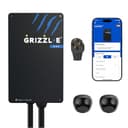 Grizzl-E Duo Connect 40A One box, two cables, one circuit. The Duo Connect lets a two-EV household charge both cars overnight without a second charger, a second breaker or a panel upgrade — because it splits one 40-amp supply between the connectors rather than doubling it. That is the whole trade: convenience and a much cheaper install, at half the speed each when both cars are plugged in. | Two cables, one dedicated circuit | $899.99 · View on Amazon Price as of October 18, 2026. #ad How we’re funded |
| 3 | 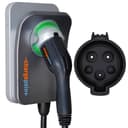 ChargePoint Home Flex The safest default for most homes: you set the amperage in the app to 16, 24, 32, 40, 48 or 50A, so one charger fits whatever circuit your panel can spare today and scales up if you upgrade later. The app is the most mature here, firmware arrives over the air, and the warranty is long. | Dial to whatever the circuit allows | $516.71 · View on Amazon Price as of October 18, 2026. #ad How we’re funded |
| 4 | 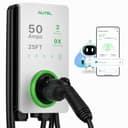 Autel MaxiCharger Home Built for the harshest driveway. The NEMA 4X enclosure is rated to keep charging in extreme cold and heat, it pushes a full 50 amps, and the app is capable. If your charger lives fully exposed to the weather, this is the one. | Charger-to-charger load balancing |
Frequently asked questions
Does an EV charger need its own circuit?
Yes. Every installation instruction we have read for the chargers in our registry specifies a dedicated 240-volt circuit - Lectron's documentation for its hardwired Nexus is explicit about a dedicated circuit and a licensed electrician, and the rest are the same. US DOE guidance is that home charging installations follow NEC Article 625. We cite the manufacturers' own instructions here rather than reprinting code text we could not fetch from the issuing authority, and your local inspector is the final word on what your jurisdiction requires.
Why does an EV charger need a dedicated circuit when a dryer does not?
Because of how long it draws. A dryer runs 40 minutes at a varying load; a Level 2 charger pulls close to its full rating for six, eight, ten hours. The code treats EV charging as a continuous load and sizes the branch circuit to 125% of the charger's draw for exactly that reason - the 80% rule. Anything sharing that circuit is sharing it with a load that never gets out of the way, and the only thing arbitrating is the breaker.
Do EV charger splitters work?
Products exist that let two chargers alternate on one circuit, and the good ones work by making simultaneous draw physically or electronically impossible rather than by hoping. We do not track any splitter product, so we are not going to recommend a model we have not verified. What we would say is this: judge one on whether it prevents simultaneous full draw by design, whether it carries a safety listing from a recognized lab, and whether your inspector will pass it. A passive Y-adapter that simply doubles the outlet is not a splitter; it is an overload waiting for a coincidence.
Can two EVs share one charger?
Yes, two ways. A dual-cable charger like the Grizzl-E Duo Connect has two connectors and divides its output between them - and the critical detail is that 40 amps is the total for the unit, not per connector, so two cars at once each get roughly half. Or you use one charger and move the cable, which costs nothing and is what most two-car households actually do once the novelty wears off. Our two-car roundup compares both against the cost of a second circuit.
Can I share a circuit with the dryer using an interlock?
A mechanical interlock or manual transfer device makes simultaneous use physically impossible, which is a legitimate engineering answer rather than a workaround. It is also an electrician's installation governed by what your local inspector accepts, and by the time it is installed and inspected the cost is often competitive with running a new circuit - which gets you a dedicated 50-amp circuit, 40 amps instead of 24, and your laundry back. Price both on the same visit.
What happens if I overload a shared circuit?
The breaker trips, which is the system working as designed - and then the car does not charge overnight, which is the part that matters to you. The worse scenario is a circuit that is marginally over its rating for hours without tripping, warming conductors and connections that were sized for an intermittent load. That is the failure mode the continuous-load rule exists to prevent, and it is why we treat shared-circuit plans as off the table rather than as a trade-off.
Sources
- NFPA — Using the Latest NEC for EV Charger Installations — NFPA on NEC (NFPA 70) Article 625: EV charging is a continuous load, so circuits are sized to 125% of load (the 80% rule) (accessed July 19, 2026)
- U.S. DOE Alternative Fuels Data Center — Charging Electric Vehicles at Home — US DOE on home EV charging: most owners charge overnight on Level 1 or Level 2, installs follow NEC Article 625, with example home-charging costs (accessed July 19, 2026)
- U.S. DOE Alternative Fuels Data Center — Electric Vehicle Charging Stations — US DOE on charging levels: Level 1 (~1.9 kW, ~5 mi/hr), Level 2 (2.9-19.2 kW, ~7.2 kW typical residential, ~25 mi/hr), and DC fast charging (accessed July 19, 2026)
- Lectron — NEXUS Level 2 J1772 EV Charging Station, 240V, 48 Amp, Hardwired — Lectron's own product page: up to 48 A continuous at 240 V for 11.5 kW, hardwire-only install by a licensed electrician on a dedicated 240 V circuit, IP66 weatherproof housing for indoor or outdoor use, 23 ft output cable of 15.0 mm (±0.3 mm) heavy-duty compound the brand states is 'engineered to stay flexible and easy to wrap around the wall mount, even in freezing weather', wall-mount J-hook and plug holder included, ETL listed to UL 2594 / UL 2231 / UL 2251 with ENERGY STAR and FCC certification, and a 3-year Lectron warranty. No operating-temperature range and no Wi-Fi or app support are published for this model (accessed August 20, 2026)
- Emporia Energy — Pro EV Charger product page — Emporia's own listing for the Pro: up to 48 A hardwired on a 60-amp circuit or up to 40 A on a NEMA 14-50 outlet, 25 ft cable, NEMA 4 rated for indoor or outdoor, UL listed and ENERGY STAR certified, 3-year warranty, and PowerSmart load management that requires the bundled Vue 3 energy monitor (accessed August 18, 2026)
- Autel Energy — MaxiCharger AC Elite Home 50A product page — Autel's own listing: compliant with NEMA 4X standards, operating temperature -40F to 131F, 25 ft cable, 3-year warranty. RE-READ October 10, 2026 for the Emporia head-to-head, and the page now publishes materially more: 'Maximum Output | 12 kW / 50 A' with output 'Adjustable 16-50 A'; installation given as 'Hardwired - 70 A Circuit for Full Output'; an 'SAE J1772' connector; an enclosure rating of 'IP65 / NEMA 4X'; an operating range of '-40 to 131 F (-40 to 55 C)'; a '3 Years' warranty quoted as a single term with no component split; 'CSA and ENERGY STAR compliance' (no UL listing is claimed on this page); connectivity listed as 'Bluetooth, Wi-Fi, Ethernet, CAN, RS485'; app control to start, stop and schedule charging, monitor activity and adjust current; dimensions of 13.2 x 7.4 x 3.8 in (336 x 187 x 97 mm) and a weight of 15.4 lbs (7 kg); and the load-management sentence this comparison turns on - 'Supports both Adaptive Load Management (ALM) and charger-to-charger Dynamic Load Balancing (DLB). ALM requires compatible additional hardware, while DLB works between chargers without additional hardware.' The page publishes no solar-specific feature (accessed October 10, 2026)
- United Chargers — Grizzl-E Duo Connect 40A technical specifications — Grizzl-E's own spec table for the Duo Connect 40A: two output cables, Type 1 (J1772) and NACS Level 2 connections, aluminum enclosure, operating temperature -30C to +50C, IP67 protection, 25 ft output cable length, 18 in input cable, 208-240 VAC, nominal input current 16/24/32/40 A, maximum output current 40 A, one LED indicator per connector, DIP-switch power selector, 40 lb unit weight (accessed August 12, 2026)
- United Chargers — Grizzl-E Duo Connect 40A product overview — Grizzl-E's own overview for the Duo Connect 40A: a dual-port Wi-Fi connected 40A plug-in charger whose dual charging 'automatically splits the available current in half, or you can set individual charging currents for each connector with the Grizzl-E Connect app', with scheduling, usage history, remote lockout, monitoring and diagnostics in the app (accessed August 12, 2026)
- ChargePoint — Home Flex datasheet (PDF) — ChargePoint's own datasheet: enclosure rating Type 3R per UL 50E, operating temperature -22F to 122F, 23 ft cable, plus installer notes that an outdoor plug-in install requires an outdoor-rated GFCI breaker upstream while an external GFCI may conflict with the charger's internal ground-fault protection on a hardwired install. RE-READ September 3, 2026 for the review refresh: the same datasheet also publishes maximum 12 kW (240V AC x 50A) with output amperage adjustable via the mobile app to 16A, 24A, 32A, 40A, 48A or 50A; a required dedicated dual-pole breaker rated for 125% of maximum load; 'Software Updates: Firmware updated over-the-air (OTA)'; 2.4/5 GHz Wi-Fi (802.11 a/b/g/n); local storage of up to 90 days of charging session data (100 sessions) if the network drops; power measurement accuracy +/- 2.0%; ground-fault detection by 20 mA CCID with auto retry; and UL and cUL listing per UL 2594, UL 2231-1 and UL 2231-2, NEC Article 625 compliant. Ordering information lists the plug-in station models CPH50-NEMA6-50-L23 and CPH50-NEMA14-50-L23 (accessed September 3, 2026)
- UL Solutions — EV Charging Infrastructure Services — UL on EVSE safety certification: ANSI/UL 2594 is the Standard for Electric Vehicle Supply Equipment (accessed July 19, 2026)
Keep reading
Load management, properly explained
The one technology that genuinely creates headroom on a constrained service - and what each brand gates behind extra hardware.
Read the guideBest chargers for two EVs
Dual-cable units, power sharing and the free option most two-car households end up using.
See the picksThe dryer-outlet question
The most common version of this question, worked through end to end - including where the adapter route survives scrutiny.
Read the guideDoes your panel have room?
If a dedicated circuit is the requirement, this is the page that tells you whether you have space for one.
Check your panel