What Winter Does to Your Charging Bill
Cold weather does not make electricity more expensive. It makes each mile need more of it — and at 20 degrees with the heater on, DOE and EPA put that penalty at around 41%.
How this is funded: we earn a commission if you buy through our links, at no extra cost to you. It never changes which product we recommend, and we’ll tell you when we’d skip one. Full disclosure.
Nothing about winter changes what a kilowatt-hour costs. What changes is how many of them a mile takes — and that difference is far larger than most new EV owners expect, because it is the one number the sticker never shows.
DOE and EPA publish the figure directly: EV range can fall by about 41% in mixed driving at 20°F compared with 75°F when the cabin heater is running, and by about 12% with the heater off. Both numbers matter, because the gap between them is where your money goes.
What that costs, in dollars
| Condition | Effective efficiency | kWh for 1,000 mi | Cost |
|---|---|---|---|
| Mild weather (75°F reference)The baseline every spec sheet is quoted at | 3.50 mi/kWh | 286 kWh | $52.69 |
| 20°F, cabin heater offDOE/EPA: about a 12% range loss | 3.08 mi/kWh | 325 kWh | $59.87 |
| 20°F, cabin heater runningDOE/EPA: about a 41% range loss in mixed driving | 2.06 mi/kWh | 484 kWh | $89.30 |
The middle row is the honest floor: even with no cabin heat at all, a cold car uses more energy than a warm one. The bottom row is what actually happens, because nobody drives at 20°F without heat.
So on a thousand miles a month, the swing is roughly $53 to $90 at the national average rate — about $37 a month, or a little over $110 across a three-month cold snap. In a high-rate state the same percentages hurt proportionally more: at Massachusetts’ 28.82 cents the same swing is about $58 a month. Our cost-by-state table has your rate.
Worth keeping in proportion, though. Even the worst row here is still cheap per mile against gasoline — and gas cars lose economy in winter too, for several of the same reasons. The comparison is in EV charging vs gas.
Where the energy actually goes
The cabin heater, mostly. DOE and EPA note that roughly two-thirds of the extra energy consumed in cold weather goes into heating the cabin. A gas car heats itself with waste engine heat it was producing anyway; an EV has no such waste, so cabin heat is a genuine additional load — often several kilowatts, drawn continuously while you drive. That single fact explains the gap between the 12% and 41% figures above.
The battery, secondly. A cold pack is less willing to deliver and accept energy, and many EVs will spend some of their own charge warming the battery to a workable temperature. This is also why charging itself can slow down on a freezing night: the car limits current to protect cold cells.
Drag, thirdly. Cold air is denser, cold tires roll harder, winter tires roll harder still, and snow or slush adds resistance directly. None of these is large on its own; together they are the reason the heater-off case still costs 12%.
Three habits that claw most of it back
Preheat while still plugged in. This is the one DOE and EPA call out explicitly, and it is worth more than everything else combined. Warming the cabin — and, on cars that support it, the battery — while the car is still on the charger means that energy comes from the wall instead of the pack. You still pay for the electricity, but at your home rate, and you keep the range. Almost every EV can be told to do this on a schedule.
Use seat and wheel heaters before cabin heat. Heating a person directly takes a small fraction of the power that heating the air around them does. On a short commute this alone can move you a long way back toward the heater-off row.
Charge on the cheapest hours you have. Winter increases the kilowatt-hours; a time-of-use plan reduces the price of each one. The two multiply, and in a cold high-rate state that combination is the largest single lever available. Our time-of-use guide covers how to set it up, and the practical requirement is simply that something — the car or the charger — can be told when to run.
What this means for the hardware
Winter does not argue for more amps. A cold car is often the limiting factor, so a bigger charger will not fill it faster. What winter argues for is a charger that keeps working when it is unpleasant outside — which is a specification question, and one where manufacturers differ sharply in what they will commit to in writing.
Two published specs are worth checking before you buy for a cold climate. The operating temperature range: Grizzl-E states -22°F to 122°F for its cast-aluminum units, and Autel states -40°F to 131°F for the MaxiCharger AC Elite. And the cable, which is what you actually handle at 6am — Grizzl-E specifically builds theirs to stay flexible in cold weather, and a cable that does not is the complaint owners in northern states raise most.
Enclosure ratings matter too, but less than people assume, and not in the way the numbers suggest. We take that apart in NEMA and IP ratings explained.
Quick picks
Ranked on published specs, charging speed, electrical fit and value. Select a row to jump to the full write-up. We have not bench-tested these chargers — here is exactly what we do instead.
| # | Product | Best for | Price |
|---|---|---|---|
| 1 | 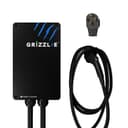 Grizzl-E Classic A deliberately dumb charger, and that is the point: no app, no cloud account, no firmware to fail — just a die-cast aluminum box built for a Canadian winter and rated to keep working outdoors. It went missing from Amazon for most of September 2026 and is listed again as of our 2026-09-28 check. If you want the same build with a WiFi radio in it, that is the Classic Connect. | Rated to -22°F, with a cold-flexible cable | |
| 2 | 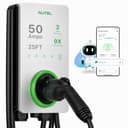 Autel MaxiCharger Home Built for the harshest driveway. The NEMA 4X enclosure is rated to keep charging in extreme cold and heat, it pushes a full 50 amps, and the app is capable. If your charger lives fully exposed to the weather, this is the one. | Widest published range, -40°F to 131°F | |
| 3 | 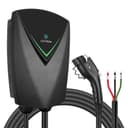 Lectron Nexus 48A J1772 A full 48 amps with nothing to log into. Lectron's Nexus body is IP66-sealed for an outdoor wall, the cable is a heavy 15 mm compound the brand says is built to stay flexible in freezing weather, and the safety paperwork is the real thing — ETL to UL 2594/2231/2251, plus ENERGY STAR. Hardwired only, and there is no app, which is the entire point. | 48 amps, with a cable built for freezing weather | $449.99 · View on Amazon Price as of October 18, 2026. #ad How we’re funded |
The full segment write-up, with the reasoning behind each pick, is in our cold-weather charger roundup. And if the winter numbers above have you reconsidering how much charger you need at all, what size charger do I need works it from your panel, your car and your actual mileage — which is the order that gets the right answer in any season.
Frequently asked questions
How much more does it cost to charge an EV in winter?
At 20F in mixed driving with the cabin heater running, DOE and EPA data show range dropping about 41% against a 75F reference — which means the same miles need about 70% more energy. On 1,000 miles a month at the U.S. average rate that is roughly $53 becoming $90. With the heater off the loss is closer to 12%, or about $7 a month.
Why does cold weather use more energy?
Three things at once. The cabin heater is the biggest: DOE and EPA note roughly two-thirds of the extra energy in cold weather goes to heating the cabin, and unlike a gas car there is no waste engine heat to use. The battery itself is less efficient when cold and may spend energy warming itself. And cold air, cold tires and winter tires all add rolling and aerodynamic drag.
Does preheating the car while plugged in save money?
Yes, and it is the single most effective habit. DOE and EPA specifically note that preheating while still plugged in extends range — because the energy for heating the cabin and warming the battery comes from the wall rather than the pack. You still pay for it, but you pay for it once at the home rate rather than losing range you would replace later.
Does the charger itself charge more slowly in the cold?
Often, yes — but that is the car, not the charger. A cold battery accepts current more slowly to protect the cells, so a session that takes six hours in summer can take longer on a freezing night even at the same amperage. Cars with battery preconditioning warm the pack before or during charging to reduce this.
Do I need a special charger for cold weather?
You need one whose enclosure and cable are rated for your climate, which is a specification question rather than a premium one. Look for a published operating-temperature range that covers your winter lows and a cable the maker states stays flexible in cold — a cable that turns into a length of frozen rope at -10F is the failure people actually experience.
Is it cheaper to charge indoors in a garage?
Slightly, and mostly indirectly. A car kept in an unheated but enclosed garage starts each trip warmer than one on a driveway, so less energy goes into warming the cabin and the pack at the start of a journey. The charging hardware itself does not become more efficient indoors.
Sources
- FuelEconomy.gov — Fuel Economy in Cold Weather (U.S. DOE / EPA) — DOE/EPA on cold weather: EV range can drop about 41% in mixed driving at 20F versus 75F with the cabin heater running (about 12% with the heater off), roughly two-thirds of the extra energy goes to heating the cabin, and preheating while still plugged in extends range (accessed July 20, 2026)
- FuelEconomy.gov — Electric Vehicles: Learn More About the Label — DOE/EPA on EV efficiency: kWh per 100 miles and MPGe, accounting for AC charging losses (accessed July 19, 2026)
- U.S. Energy Information Administration — Electric Power Monthly, Table 5.6.A — EIA's official state-by-state average price of electricity to ultimate customers by end-use sector, May 2026: US residential average 18.44 cents per kWh, from 12.35 in Idaho to 52.00 in Hawaii (accessed August 18, 2026)
- U.S. DOE Alternative Fuels Data Center — Charging Electric Vehicles at Home — US DOE on home EV charging: most owners charge overnight on Level 1 or Level 2, installs follow NEC Article 625, with example home-charging costs (accessed July 19, 2026)
- United Chargers — Grizzl-E Classic user manual (PDF) — Grizzl-E's own manual: NEMA 4 indoor/outdoor installation rating, operating temperature -22F to 122F, a caution that the enclosure's water rating cannot be guaranteed if the unit is mounted upside down, and a note to use a 20mA GFCI breaker where one is required because a 5mA breaker may cause disruptions (accessed July 20, 2026)
- Autel Energy — MaxiCharger AC Elite Home 50A product page — Autel's own listing: compliant with NEMA 4X standards, operating temperature -40F to 131F, 25 ft cable, 3-year warranty. RE-READ October 10, 2026 for the Emporia head-to-head, and the page now publishes materially more: 'Maximum Output | 12 kW / 50 A' with output 'Adjustable 16-50 A'; installation given as 'Hardwired - 70 A Circuit for Full Output'; an 'SAE J1772' connector; an enclosure rating of 'IP65 / NEMA 4X'; an operating range of '-40 to 131 F (-40 to 55 C)'; a '3 Years' warranty quoted as a single term with no component split; 'CSA and ENERGY STAR compliance' (no UL listing is claimed on this page); connectivity listed as 'Bluetooth, Wi-Fi, Ethernet, CAN, RS485'; app control to start, stop and schedule charging, monitor activity and adjust current; dimensions of 13.2 x 7.4 x 3.8 in (336 x 187 x 97 mm) and a weight of 15.4 lbs (7 kg); and the load-management sentence this comparison turns on - 'Supports both Adaptive Load Management (ALM) and charger-to-charger Dynamic Load Balancing (DLB). ALM requires compatible additional hardware, while DLB works between chargers without additional hardware.' The page publishes no solar-specific feature (accessed October 10, 2026)
Keep reading
Chargers built for winter
The hardware side of this page — published temperature ranges, sealed enclosures and cables that stay flexible.
See cold-weather picksThe baseline math
What charging costs in ordinary weather, with a calculator for your own rate and car.
See the methodOff-peak scheduling
Winter costs more kilowatt-hours. A cheaper rate on those kilowatt-hours is the obvious counter.
Read about TOUWhat the weather ratings mean
NEMA 3R, NEMA 4, IP66, IP67 — what each is tested against, and which one a snowbelt driveway needs.
Decode the ratings