Cost to Charge by Battery Size
Two numbers give you the answer: your pack in kilowatt-hours and your rate in cents. Find both on the tables below and you never have to ask this question again.
How this is funded: we earn a commission if you buy through our links, at no extra cost to you. It never changes which product we recommend, and we’ll tell you when we’d skip one. Full disclosure.
Most cost-to-charge questions are really lookup questions. You know roughly what your car’s battery is, you can find your rate on a bill, and what you actually want is the number where those two meet. So here are both tables, and then the small print that makes them accurate.
Step one: find your usable pack size
Battery capacity is quoted in kilowatt-hours— a measure of energy, the same unit your utility bills you in. That is the whole reason this calculation is so simple: the car’s tank and the electricity meter speak the same language, which is not true of gallons and miles per gallon.
Two figures often appear on a spec sheet: gross (or nameplate) and usable capacity. Manufacturers reserve a buffer at each end of the pack to protect the cells from being run truly flat or truly full, so usable is the smaller and the honest number for this sum. If only one is published, use it and read your answer as a slight overestimate.
The ladder below spans the current market, from small commuter packs to the largest trucks and SUVs. Find the row closest to yours.
Cost of a full charge
| Pack | 12¢ | 15¢ | 18.44¢ | 22¢ | 26¢ | 30¢ | 35¢ | 52¢ |
|---|---|---|---|---|---|---|---|---|
| 28 kWh | $3.36 | $4.20 | $5.16 | $6.16 | $7.28 | $8.40 | $9.80 | $14.56 |
| 40 kWh | $4.80 | $6.00 | $7.38 | $8.80 | $10.40 | $12.00 | $14.00 | $20.80 |
| 50 kWh | $6.00 | $7.50 | $9.22 | $11.00 | $13.00 | $15.00 | $17.50 | $26.00 |
| 60 kWh | $7.20 | $9.00 | $11.06 | $13.20 | $15.60 | $18.00 | $21.00 | $31.20 |
| 65 kWh | $7.80 | $9.75 | $11.99 | $14.30 | $16.90 | $19.50 | $22.75 | $33.80 |
| 75 kWh | $9.00 | $11.25 | $13.83 | $16.50 | $19.50 | $22.50 | $26.25 | $39.00 |
| 85 kWh | $10.20 | $12.75 | $15.67 | $18.70 | $22.10 | $25.50 | $29.75 | $44.20 |
| 100 kWh | $12.00 | $15.00 | $18.44 | $22.00 | $26.00 | $30.00 | $35.00 | $52.00 |
| 115 kWh | $13.80 | $17.25 | $21.21 | $25.30 | $29.90 | $34.50 | $40.25 | $59.80 |
| 131 kWh | $15.72 | $19.65 | $24.16 | $28.82 | $34.06 | $39.30 | $45.85 | $68.12 |
Read one row across and the honest headline of home charging appears: even a large 100 kWh pack costs about $18 to fill at the national average, and about $12in a cheap-power state. Read one column down and you see the other half — a big battery is not expensive per mile, it is expensive per fill, because it holds more.
The far-right column is not a hypothetical. It is Hawaii, whose 52 cents per kWh in EIA’s May 2026 table is the highest residential rate in the country and roughly 2.8 times the national average. Every other state falls somewhere between the second and seventh columns — see cost by state.
Cost per mile, where battery size disappears
Per-mile cost is the figure worth internalizing, because it is the one you compare with a gas car. And it is governed by two things only: price per kWh ÷ miles per kWh.
| Efficiency | 12¢ | 15¢ | 18.44¢ | 22¢ | 26¢ | 30¢ | 35¢ | 52¢ |
|---|---|---|---|---|---|---|---|---|
| 2.5 mi/kWh | 4.8¢ | 6.0¢ | 7.4¢ | 8.8¢ | 10.4¢ | 12.0¢ | 14.0¢ | 20.8¢ |
| 3.0 mi/kWh | 4.0¢ | 5.0¢ | 6.1¢ | 7.3¢ | 8.7¢ | 10.0¢ | 11.7¢ | 17.3¢ |
| 3.5 mi/kWh | 3.4¢ | 4.3¢ | 5.3¢ | 6.3¢ | 7.4¢ | 8.6¢ | 10.0¢ | 14.9¢ |
| 4.0 mi/kWh | 3.0¢ | 3.8¢ | 4.6¢ | 5.5¢ | 6.5¢ | 7.5¢ | 8.8¢ | 13.0¢ |
| 4.5 mi/kWh | 2.7¢ | 3.3¢ | 4.1¢ | 4.9¢ | 5.8¢ | 6.7¢ | 7.8¢ | 11.6¢ |
Battery size is nowhere in that table, and that is the point. What moves your per-mile cost is efficiency — a 4.5 mi/kWh compact and a 2.5 mi/kWh electric truck differ by nearly a factor of two at the same rate, which is a bigger swing than most people will ever get from changing utility plans. DOE and EPA publish each model’s efficiency as kWh per 100 miles on the vehicle’s label; divide 100 by that figure to get miles per kWh.
The three corrections that make it real
Charging losses, about 10%.Not all the energy leaving your meter reaches the battery — some becomes heat in the charger, the cable, the car’s onboard charger and the cells. For Level 2 charging, adding a tenth is a good working allowance. It is also one reason an ENERGY STAR listing is worth having: certified chargers draw substantially less in standby, which is the state a wall charger spends most of its life in.
You rarely charge from empty.Home charging is a top-up. If your day used 25% of the pack, you are buying 25% of the full-charge figure — on a 75 kWh car at the national average, about $3.50. That is the number that should sit in your head, not the full-charge one.
Winter is not a rounding error.DOE and EPA data put EV range loss at around 41% in mixed driving at 20°F with the cabin heater running. Those are miles you paid for and did not get, and across a northern winter it is a real line on the bill. We do that arithmetic in what winter does to your charging bill.
Does the charger change any of this?
Not the total. A 48-amp charger and a 16-amp charger delivering the same kilowatt-hours cost the same — speed moves energy faster, it does not make it cheaper. What a charger can change is when the energy moves, and on a time-of-use plan that is worth real money: shifting a whole session into an off-peak window can cut the effective rate substantially, as we set out in time-of-use charging.
So the earned recommendation from this page is narrow, and it is about scheduling and standby draw rather than amps. If your rate varies by time of day, buy something that can be told when to run — either a charger with a scheduler or a car that has one. If it does not vary, the cheapest reliable box on the wall costs you nothing extra to own.
Quick picks
Ranked on published specs, charging speed, electrical fit and value. Select a row to jump to the full write-up. We have not bench-tested these chargers — here is exactly what we do instead.
| # | Product | Best for | Price |
|---|---|---|---|
| 1 |  Emporia Level 2 EV Charger The value pick that doesn't feel cheap: a full 48 amps, ENERGY STAR listing, WiFi with genuine energy monitoring, and a 25 ft cable — for well under what the big names charge. It's the one we point most people to first. | Scheduling plus per-session energy data | |
| 2 | 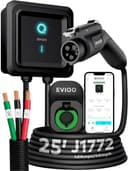 EVIQO 48A Level 2 Charger A lot of charger for the money: a full 48 amps, WiFi with scheduling, ENERGY STAR, and the longest usable reach in this group thanks to a 25 ft cable plus a 40-inch input lead. A strong value alternative to Emporia if you want maximum reach. | ENERGY STAR value pick for low standby draw | |
| 3 | 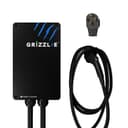 Grizzl-E Classic A deliberately dumb charger, and that is the point: no app, no cloud account, no firmware to fail — just a die-cast aluminum box built for a Canadian winter and rated to keep working outdoors. It went missing from Amazon for most of September 2026 and is listed again as of our 2026-09-28 check. If you want the same build with a WiFi radio in it, that is the Classic Connect. | Flat-rate homes, where scheduling adds nothing |
If you would rather not read off a table at all, the calculator on our cost-to-charge page takes your own rate, pack and efficiency and returns the same answer. And if you are still deciding whether the hardware is worth buying in the first place, is a Level 2 charger worth it runs the payback against the free cable that came with the car.
Frequently asked questions
How much does it cost to fully charge a 60 kWh EV?
At the U.S. residential average of 18.44 cents per kWh, about $11 of energy into the battery, or roughly $12 once you add the 10% or so lost in charging. At 12 cents it is about $7.20; at 30 cents, about $18. A 60 kWh pack at a typical 3.5 miles per kWh covers roughly 210 miles, so that is about 5.3 cents a mile at the national average.
Is the battery size on the spec sheet the number I should use?
Use the usable capacity if the manufacturer publishes it. Many EVs hold back a buffer at the top and bottom of the pack to protect the cells, so the nameplate or gross figure can be a few kWh larger than what you can actually put in. If only one number is published, use it and treat your result as a slight overestimate.
Does a bigger battery cost more per mile?
No. Cost per mile is your price per kWh divided by your car's efficiency in miles per kWh — battery size does not appear in that sum at all. A bigger pack costs more to fill because it holds more energy and goes further on it. What genuinely does change cost per mile is efficiency, which is why a heavy truck costs roughly twice a small hatchback to run.
Do I ever actually charge from 0 to 100%?
Almost never. Real charging is a top-up: home charging typically refills whatever the day used, often 20 to 40% of the pack. To cost a realistic session, multiply the full-charge figure by the fraction you are adding — 30% of a 75 kWh pack is 22.5 kWh, which is about $4.15 at the national average.
How much do charging losses add?
For Level 2 charging, on the order of 10% — energy lost as heat in the charger, the cable, the car's onboard charger and the battery itself. The tables here show energy delivered to the battery, so multiply by about 1.1 for what the meter records. Level 1 charging is typically less efficient again, because the overheads run for far longer to move the same energy.
What does an EV cost to charge per month?
Take your monthly miles, divide by your car's miles per kWh, and multiply by your rate. A thousand miles a month at 3.5 miles per kWh is about 286 kWh, which is roughly $53 at the U.S. average of 18.44 cents — before losses, and before winter, which can push it up by a third or more in a cold climate.
Sources
- U.S. Energy Information Administration — Electric Power Monthly, Table 5.6.A — EIA's official state-by-state average price of electricity to ultimate customers by end-use sector, May 2026: US residential average 18.44 cents per kWh, from 12.35 in Idaho to 52.00 in Hawaii (accessed August 18, 2026)
- U.S. Energy Information Administration — Electricity prices and factors affecting prices — EIA on US electricity pricing: residential electricity averaged 17.30 cents per kWh in 2025; some utilities offer time-of-day pricing to reduce peak demand; prices are usually highest in summer, and the cost to supply electricity is higher in the afternoon and early-evening peak hours even though most customers pay a seasonal average rate (accessed August 11, 2026)
- FuelEconomy.gov — Electric Vehicles: Learn More About the Label — DOE/EPA on EV efficiency: kWh per 100 miles and MPGe, accounting for AC charging losses (accessed July 19, 2026)
- FuelEconomy.gov — Save Money (U.S. DOE / EPA) — The official DOE/EPA calculator comparing vehicle fuel costs, including EV electricity price per kWh (accessed July 19, 2026)
- U.S. DOE Alternative Fuels Data Center — Charging Electric Vehicles at Home — US DOE on home EV charging: most owners charge overnight on Level 1 or Level 2, installs follow NEC Article 625, with example home-charging costs (accessed July 19, 2026)
- ENERGY STAR — Electric Vehicle Chargers — ENERGY STAR on EVSE efficiency: certified chargers use about 40% less energy in standby than non-certified units (accessed July 19, 2026)
Keep reading
The method behind the table
The same arithmetic explained slowly, with a calculator to drop in your own rate and battery.
Work it throughYour state's electricity rate
If you don't have a bill in front of you, start with EIA's published average for your state.
Find your rateWhat it does to your bill
Monthly kilowatt-hours, tier effects, and the demand charges that occasionally bite.
See the bill impactHow long it takes
The same pack size, the other question: hours on the wall at each charger amperage.
Check charging time